 Easy Tech Tuts
How to Short in TradingView Paper Trading Easily 2026
By Impran M N
Shorting is the trade most beginners get wrong first, because the profit and loss run in the opposite direction to everything their instincts expect: your stop sits above the entry, your target sits below it, and the loss has no natural ceiling. TradingView's built-in Paper Trading account is the right place to build that muscle memory, since it runs on live market data with a simulated balance.
This guide walks the whole loop — switching the account on, opening the order ticket, submitting a short with a proper size, attaching the two exit levels, and reading the open position while it moves against you. Everything below happens inside a normal TradingView chart, with no broker connection and nothing at risk.
01Know what you're actually doing when you short
A short position sells an instrument you don't own, with the intention of buying it back cheaper. You profit when the price falls and lose when it rises, which flips the geometry of every risk control you've learned on long trades.
It also creates the one asymmetry that matters: a long can only fall to zero, while a short can be squeezed upward without limit, so the loss side is theoretically unbounded. That's precisely why practising it on a simulated account first is worth the effort — the mechanics are simple, but the reflexes are not.
02Open the Paper Trading panel on your chart
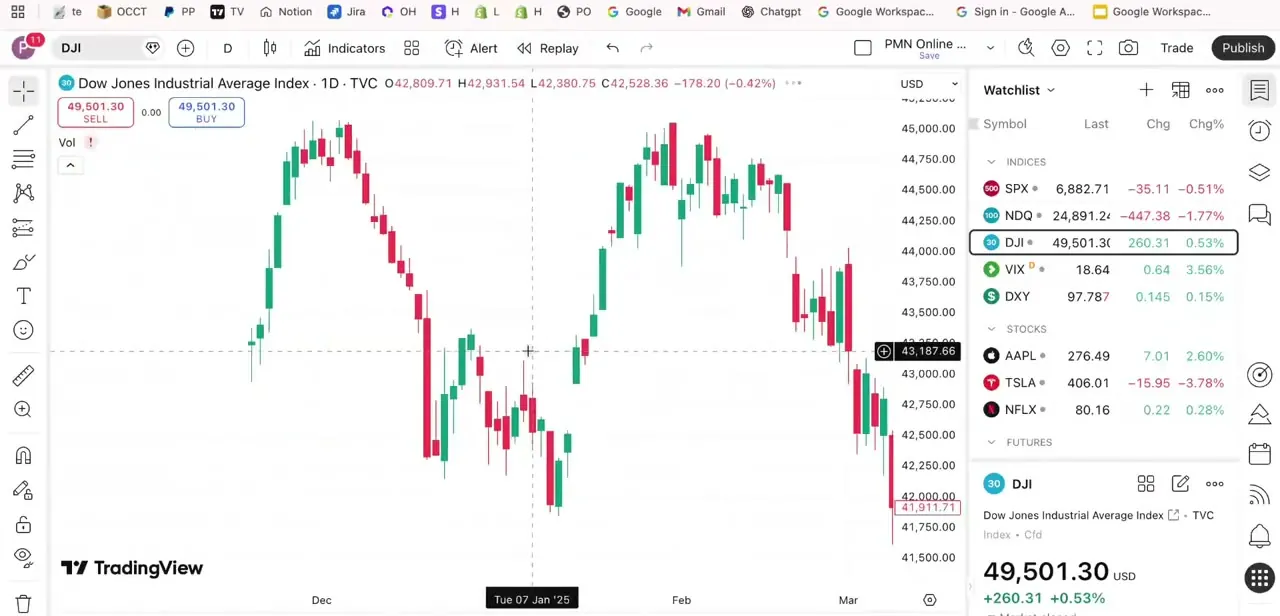
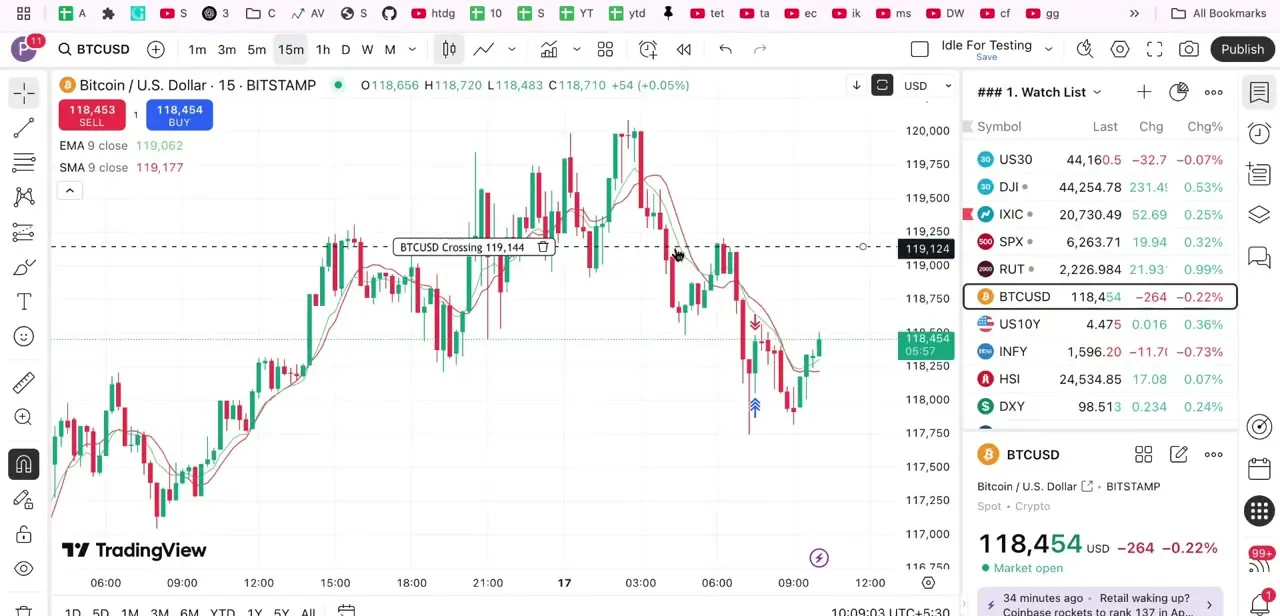
Open any chart on TradingView and look at the bottom of the window for the Trading Panel; select Paper Trading from the broker dropdown. The panel loads a simulated account preloaded with roughly 100,000 in virtual funds and a row of live figures — Account Balance, Equity, Realized P&L, Unrealized P&L, Account margin, Available funds and Orders margin.
Underneath sit the tabs you'll live in: Positions, Orders, Order History, Balance History and Trading Journal. Because the panel is docked to the chart, the account follows you as you switch symbols, so you can set your interval and instrument first and the paper account stays connected.
03Open the order ticket and choose Sell
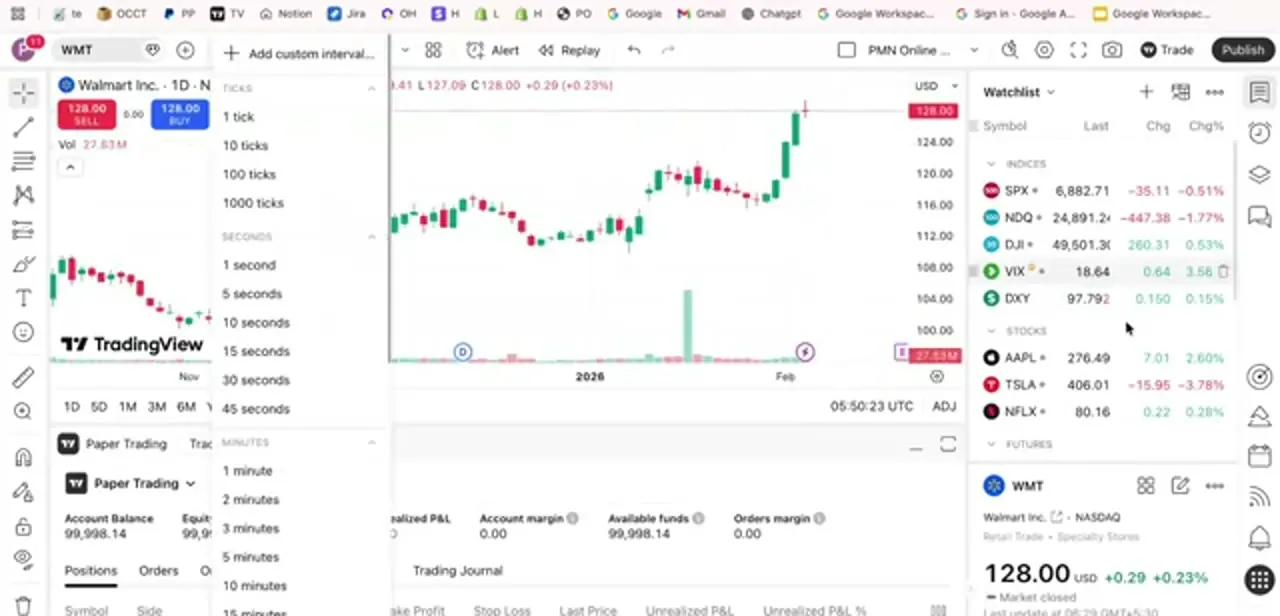
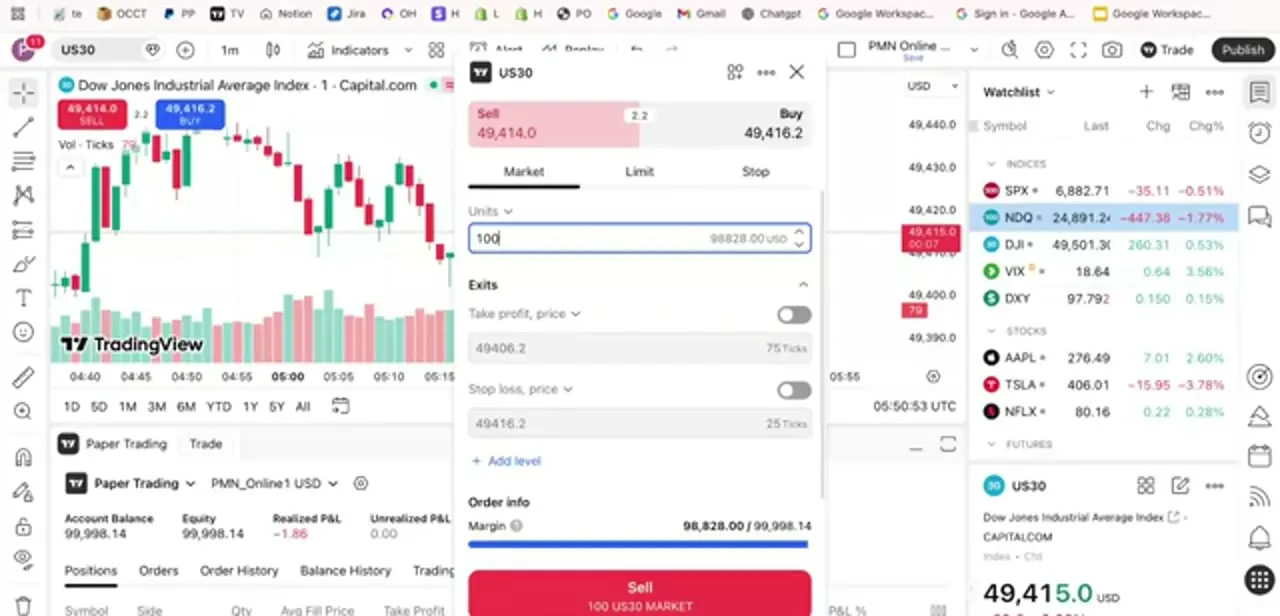
With the symbol loaded, open the order ticket — the Trade button at the top right of the chart, or the red SELL block in the top-left price widget, both get you there. The ticket that opens is split at the top into a red Sell price and a blue Buy price with the spread shown between them; for a short you work from the Sell side, which fills at the lower of the two.
Below that sit three order types: Market fills immediately at the current price, Limit waits for a better (higher) price before selling, and Stop triggers a short only once price breaks down through a level you set. Market is the right choice while you're learning the flow, since it gives you an open position to watch straight away.
04Size the position before you touch anything else
The Units field decides everything about how the trade will feel. Watch the Order info block underneath as you type: it shows the margin this order will consume against your balance, and on a leveraged index instrument a seemingly modest 100 units can eat almost the entire account — leaving only a few hundred in Available funds.
That is the single most useful lesson paper trading teaches, because a size that leaves no free margin will be liquidated by a move that a properly sized position would have shrugged off. Set the units so the margin bar stays well short of full, and treat any order that consumes most of your funds as a mistake even in simulation.
05Attach the take profit and stop loss before submitting
Under Exits the ticket offers Take profit, price and Stop loss, price, each with its own toggle and a suggested level measured in ticks from your entry. On a short, the two invert from what you may be used to: take profit goes below your entry price, because that's where the trade wins, and stop loss goes above it, because that's where the trade is wrong.
Switch both toggles on and edit the prices directly, or use the tick figures to work in distance rather than absolute price. Then press the red Sell button at the bottom, which restates the whole order — side, size, symbol and order type — as a final check before it fills.
06Read and manage the open short
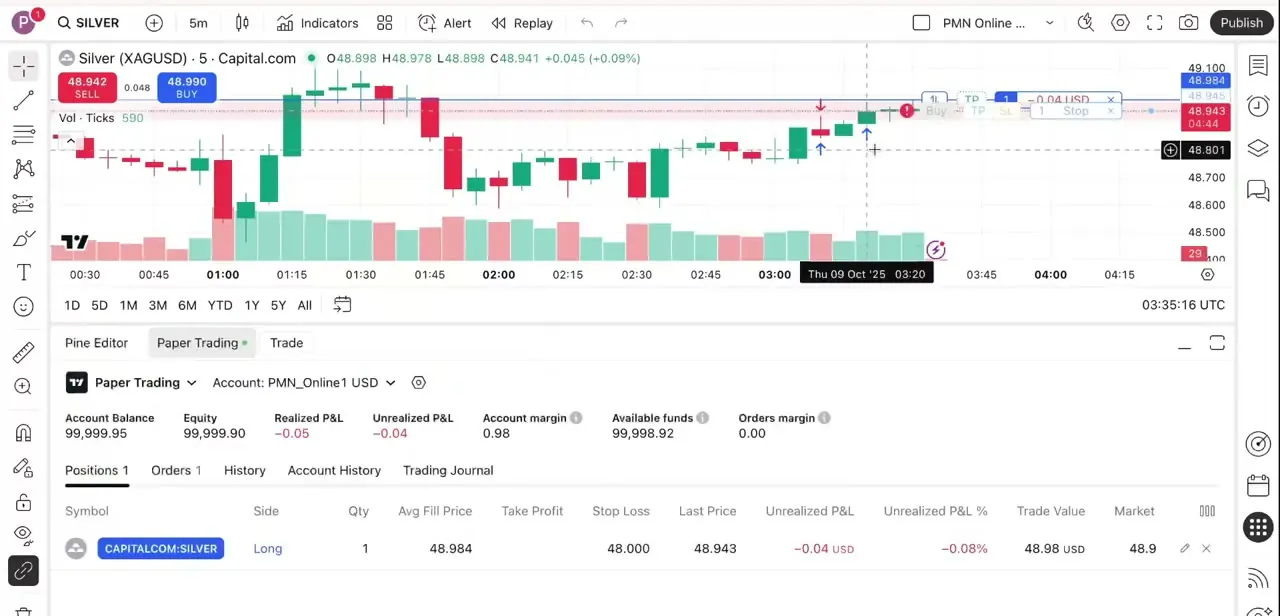
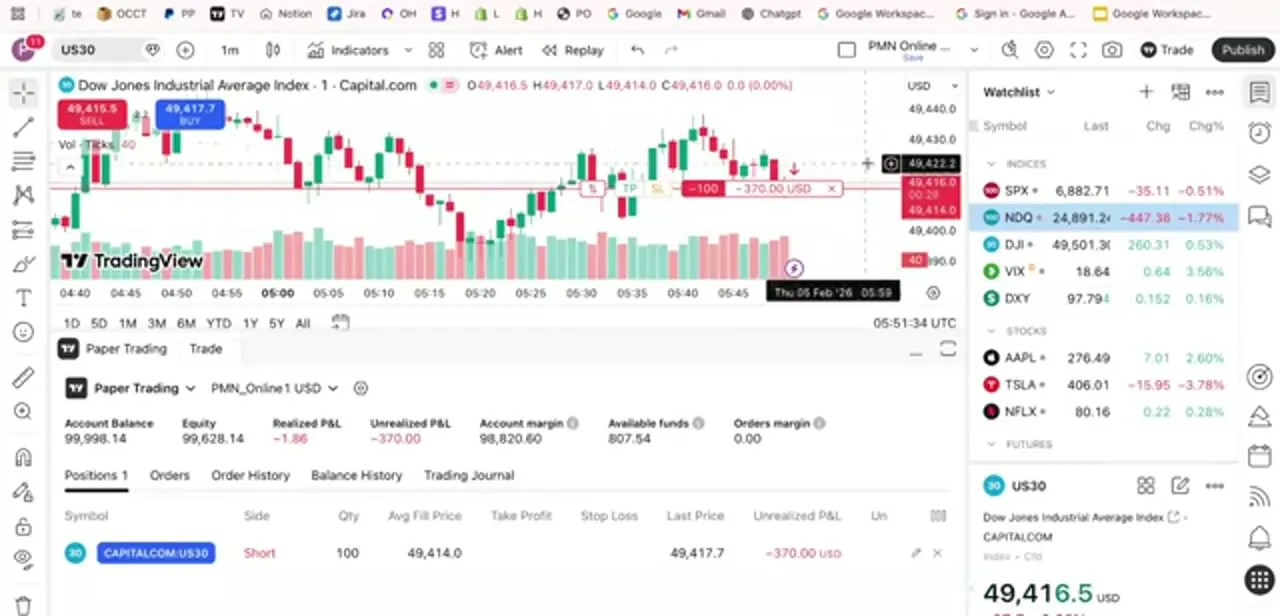
Once filled, the position appears under the Positions tab with Side listed as Short, along with Qty, Avg Fill Price, Last Price and a live Unrealized P&L. When the last price sits above your fill price, that P&L is negative — the trade is moving against you, which is the normal and correct behaviour for a short in a rising market.
TradingView also draws the position on the chart itself, with the entry line plus the TP and SL markers and a running money figure, so you can see exactly how much room is left before either exit triggers. Close manually with the small x on the position row, or leave the two exit orders to do the job. Either way, check Order History and the Trading Journal afterwards: reviewing why a stop was hit is where the practice actually converts into skill.
Frequently asked questions
Is TradingView Paper Trading free?
Yes. Paper Trading is a built-in simulated broker available from the trading panel on any chart, at no cost and with no broker account required.
Where do the stop loss and take profit go on a short trade?
The stop loss goes above your entry price and the take profit goes below it — the reverse of a long position. The order ticket shows both as prices and as a tick distance from entry.
Why is my short showing a loss immediately after opening?
Two reasons. You sell at the lower Sell side of the spread, so you start slightly behind, and any upward tick after that adds to the unrealized loss because a short profits only when price falls.
How much can I lose on a short position?
In theory there's no cap, since price can keep rising indefinitely. That's why a stop loss matters more on shorts than on longs, and why position size should leave plenty of free margin.
Does paper trading use real market prices?
Yes. Fills come from live market data for the symbol on the chart, so the price action, spread and P&L behave like a real account — only the money is simulated.
About the author

Impran M N
I've been hooked on technology for as long as I can remember — especially the new tools and AI apps that seem to land every other week. Easy Tech Tuts is where I write up whatever I've just worked out: I do the task in the real product, record the screen, and turn it into the guide I wish I'd found first.