 Easy Tech Tuts
How to Set TradingView Time Zone Easily 2026
By Impran M N
When your chart's candles don't line up with your local market hours, the time zone setting is usually the culprit, and it's an easy thing to overlook because the chart still loads and looks normal — the data is just displayed against the wrong clock. This guide covers exactly where the time zone control lives on a TradingView chart, what changing it actually does to the candles, and the difference between exchange time and your own local time zone. It's aimed at intraday and swing traders who need their sessions to line up correctly before they trust any time-based analysis.
01Start from a live chart
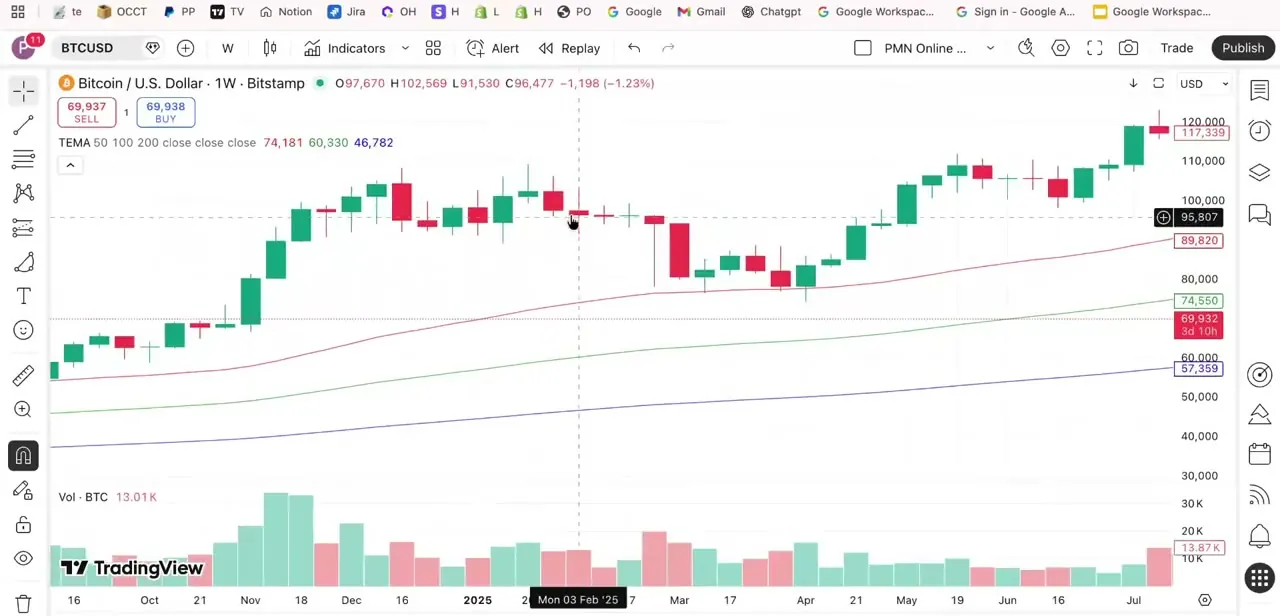
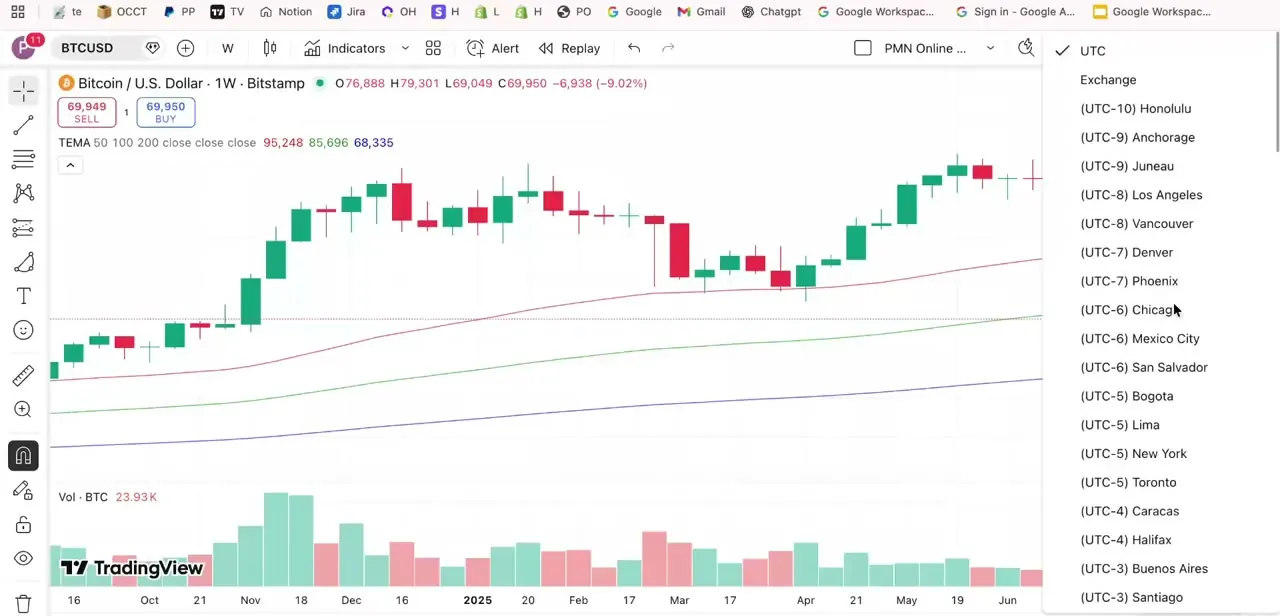
Open any symbol on TradingView — the example here uses BTCUSD on the weekly timeframe with TEMA moving averages plotted — and locate the timestamp control in the bottom-right corner of the chart, next to the price scale. This is a small clock-style control that's easy to miss among the drawing tools and indicator panel, but it's the entry point for every time zone change on the chart.
02Open the time zone list
Clicking that timestamp control opens a dropdown list of time zones, starting with UTC and Exchange at the top, followed by a long alphabetical-by-offset list of cities — Honolulu, Anchorage, Los Angeles, Denver, Chicago, New York, and onward through every major UTC offset. The current selection is marked with a checkmark, so you can confirm exactly what your chart is set to before changing anything.
03Choose Exchange time or your local time zone
Selecting Exchange sets the chart to the local time of whatever venue the symbol actually trades on — Bitstamp, in this example, or NYSE hours for a US stock — which is the standard choice if you're timing entries around a specific market's open and close. Selecting a city instead, like New York or Chicago, displays candle times converted to that zone, which is more convenient if you think in your own local time but don't need to track exchange-specific session boundaries precisely.
04Confirm the candles shifted correctly
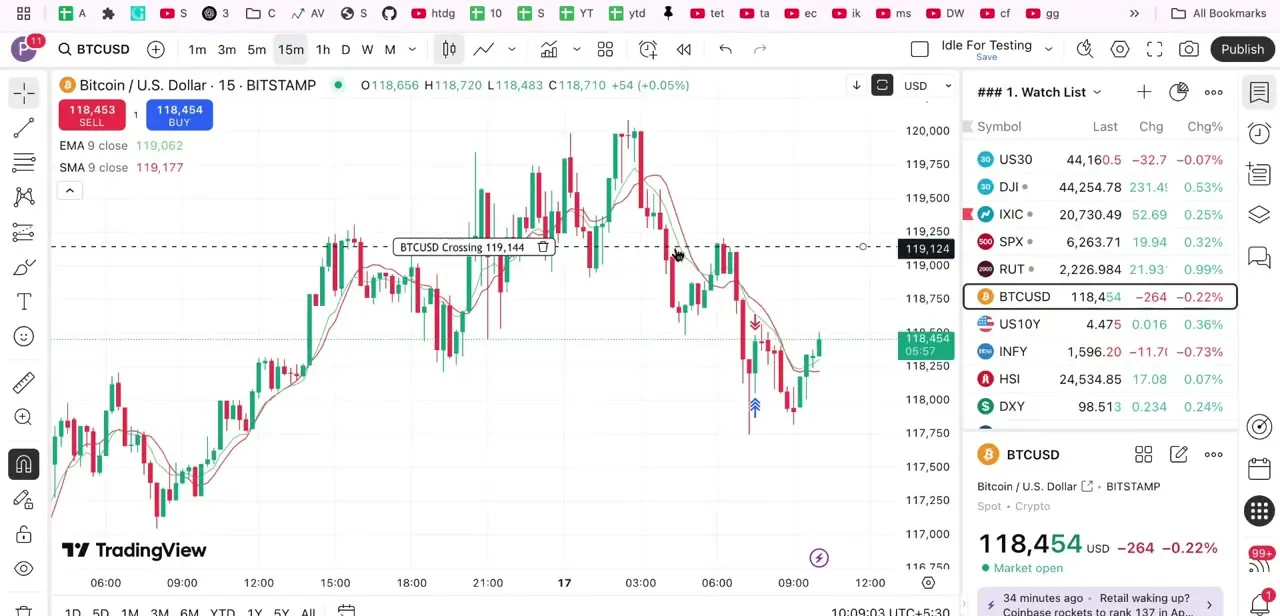
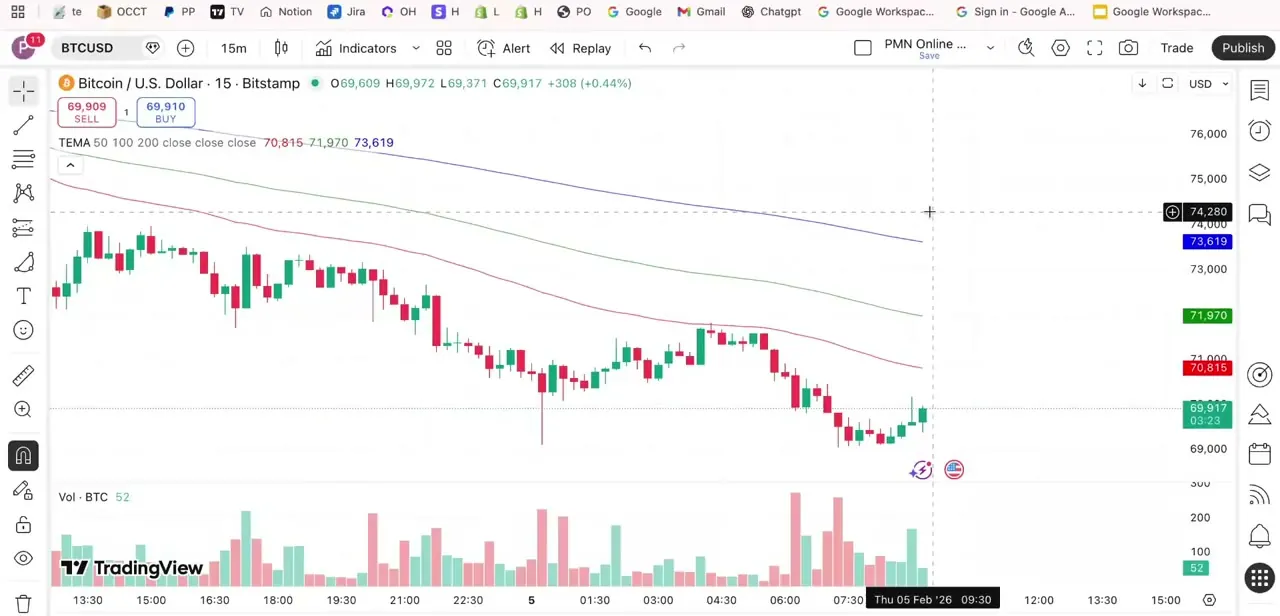
After picking a time zone, switch to a lower timeframe like 15 minutes and check the x-axis timestamps at the bottom of the chart — they should now read in the zone you selected, and the timestamp readout near your cursor confirms the exact time of any candle you hover over. On the example chart here, after the change the candle timestamps read against a specific date and time in the new zone, which is the confirmation that the setting actually applied rather than just closing the menu.
05Watch for shifts on higher timeframes
Time zone changes matter most on daily and weekly charts, where a shift of even a few hours can move which calendar day a candle's open and close get attributed to — this can make a candle that closed at 11 PM in one zone appear to close the next day in another. If your strategy depends on daily candle closes, recheck your higher-timeframe charts specifically after any time zone change, since this is the timeframe where a mismatch is most likely to distort your read of the market.
06Avoid mixing time zones across tools
A common mistake is setting TradingView to one time zone while a broker platform, alert service, or trading journal runs on another — session-based indicators, economic calendar alerts, and manually logged trade times can all drift out of sync with your chart if they're not aligned. Once you've picked a time zone in TradingView, standardize on the same one everywhere else you track time-sensitive market activity.
Frequently asked questions
Why do my candles look shifted after changing symbols?
Different symbols can trade on different exchanges with their own local hours, so switching between them may require rechecking your time zone setting, especially if you rely on Exchange time.
Should I use exchange time or my local time zone?
This depends on personal preference; some traders prefer exchange time for consistency with market hours, while others prefer their own local time for convenience.
Does the time zone setting affect indicator calculations?
Time zone settings mainly affect how time is displayed and how candles are grouped on certain timeframes, rather than the core calculation logic of most indicators.
Will my time zone setting be saved for future sessions?
Yes, once you set your preferred time zone and save your chart layout, it should persist the next time you open TradingView.
Where exactly is the time zone control on the chart?
It's the small timestamp control in the bottom-right corner of the chart, next to the price scale — clicking it opens the full list of UTC, Exchange, and city-based time zones.
About the author

Impran M N
I've been hooked on technology for as long as I can remember — especially the new tools and AI apps that seem to land every other week. Easy Tech Tuts is where I write up whatever I've just worked out: I do the task in the real product, record the screen, and turn it into the guide I wish I'd found first.