 Easy Tech Tuts
How to Reset TradingView Paper Trading Easily 2026
By Impran M N
After a string of practice losses or a testing session, starting fresh in TradingView Paper Trading can help you reset your mindset along with your balance. This guide covers how to open the Paper Trading panel, close out any open positions first, run the actual reset, and choose a new starting balance and leverage setup for your next round of practice. It's aimed at beginners and strategy testers who want a clean slate without hunting through menus to find it.
01Open the Paper Trading panel
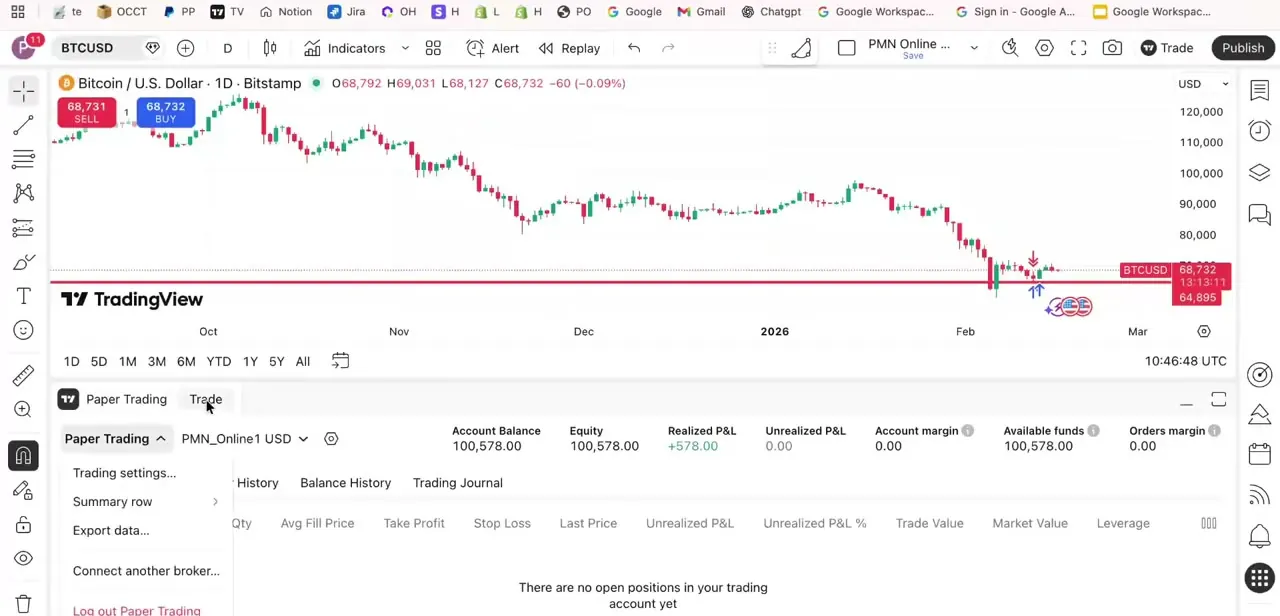
With a chart open on TradingView, look for the Paper Trading tab docked at the bottom of the screen next to Trade. Clicking it expands a panel showing your simulated account — its name, current Account Balance, Equity, Realized and Unrealized P&L, and available funds, along with tabs for Positions, Orders, Order History, Balance History, and Trading Journal. Click the small dropdown arrow next to your account name (something like PMN_Online1 USD) to open the account menu, which is where the reset option and other account-level actions live.
02Close any open positions first
Before resetting, check the Positions tab for anything still open. TradingView's reset wipes the account's orders, history, and positions outright, so there's technically no need to close trades manually first — but doing it anyway gives you a clean read on how your last session actually performed before that data disappears for good. If the panel already shows "There are no open positions in your trading account yet," you're clear to move straight to the reset.
03Run the account reset
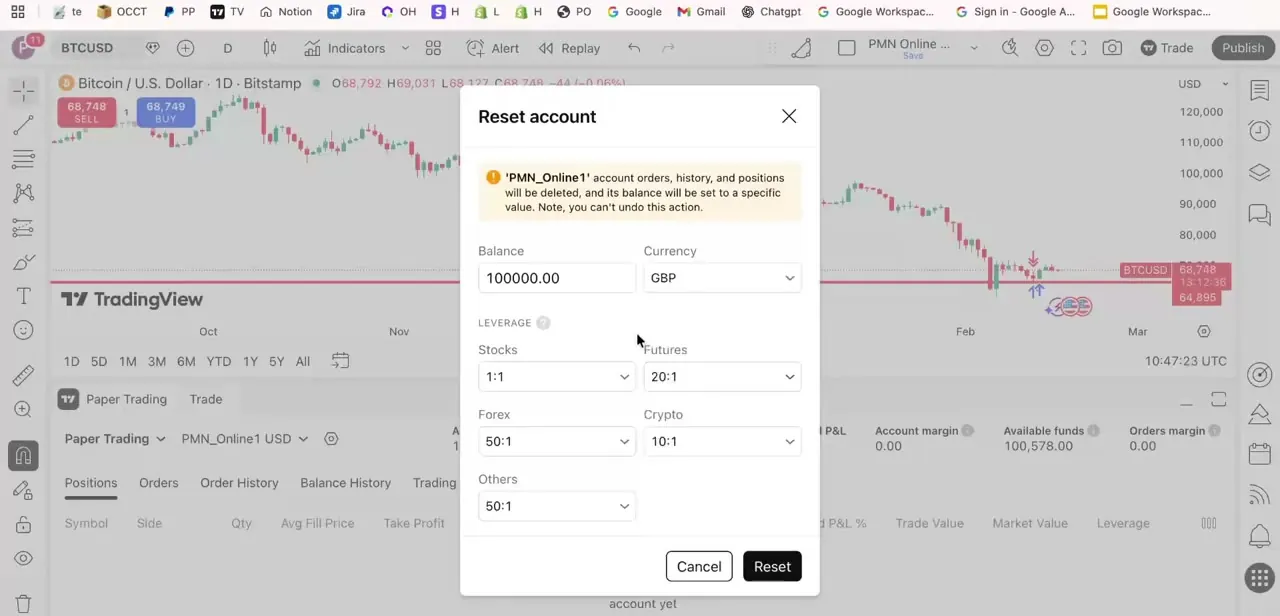
Selecting the reset option from the account dropdown opens a Reset account dialog with a clear warning: your account's orders, history, and positions will be deleted, and the balance will be set to whatever value you specify — and the action can't be undone. Enter a Balance and pick a Currency, then set leverage separately for Stocks, Futures, Forex, Crypto, and Others if you want different simulated leverage than your last setup. Click Reset to confirm, or Cancel if you just wanted to see what the dialog looked like.
04Confirm the balance actually reset
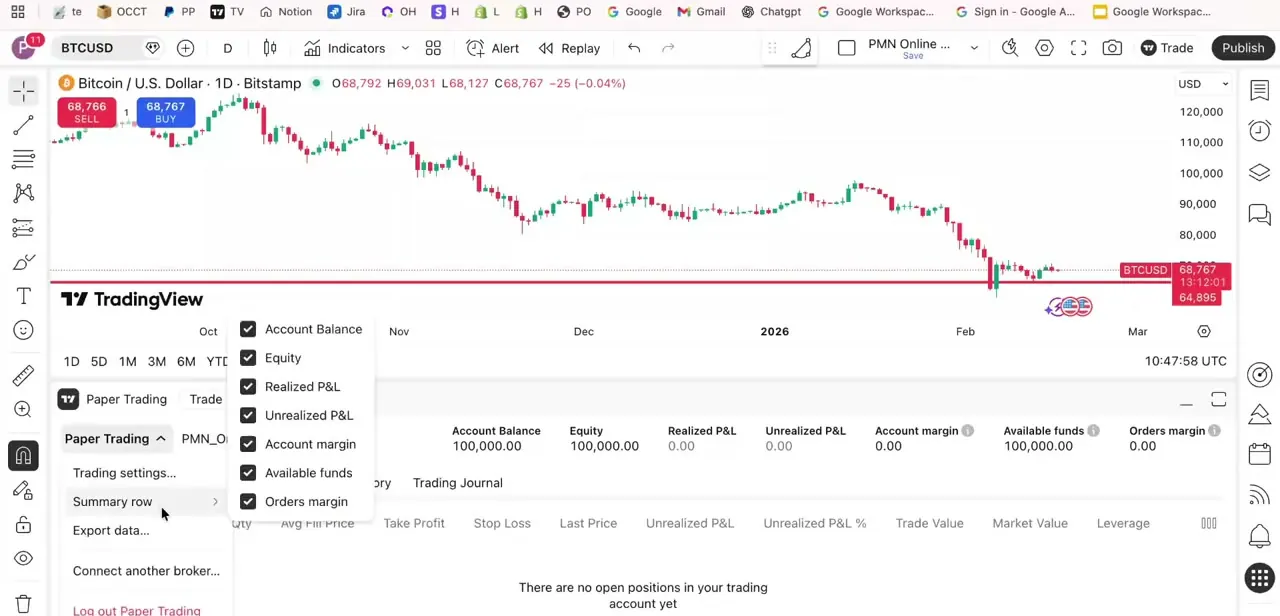
After confirming, the panel's Account Balance and Equity figures should immediately reflect the new starting number you entered, with Realized P&L, Unrealized P&L, and margin figures all back at zero. The Summary row menu — accessible from the small icon in the corner of the panel — lets you toggle which of these figures show up in the row at a glance, which is a quick way to double-check the reset landed correctly across balance, equity, and margin all at once rather than opening each tab individually.
05If the reset option isn't showing up
Occasionally the account dropdown loads without the reset entry visible, usually because the panel hasn't fully refreshed or a browser extension is interfering with the layout. Refresh the page, or close and reopen the Paper Trading panel from the bottom bar, and check the dropdown again — the option is there, it's a rendering hiccup rather than a missing feature. If it still won't appear, try a different browser or disable ad blockers and script blockers temporarily, since those can occasionally strip UI elements from TradingView's web app.
06Set better rules before your next session
A reset is a good moment to fix habits, not just numbers. Decide your position size as a fixed percentage of the new balance rather than picking round numbers on the fly, and set a hard rule for how much of the account you're willing to risk on a single trade before you place it. Since paper trading carries no real financial consequence, it's tempting to oversize positions just to see what happens — resist that, because the whole value of practicing here is building habits that transfer directly to a live account.
Frequently asked questions
Do I need to close open trades before resetting Paper Trading?
Not strictly — the reset deletes all orders, history, and positions regardless. But closing them first lets you review how your last session performed before that data is gone.
Will resetting Paper Trading affect my real trading account?
No, Paper Trading is a separate simulated account and resetting it has no impact on any real money trading account.
What should I do if the reset option isn't visible?
Refresh the page or reopen the Paper Trading panel and check the account dropdown again. If it's still missing, try disabling browser extensions like ad blockers, which can occasionally interfere with the panel's UI.
Can I choose my own starting balance and currency when resetting?
Yes. The Reset account dialog lets you set a custom Balance and Currency, plus separate leverage for stocks, futures, forex, crypto, and other instruments.
How often can I reset my Paper Trading balance?
You can typically reset your Paper Trading balance whenever you want, since it's designed for repeated practice sessions.
About the author

Impran M N
I've been hooked on technology for as long as I can remember — especially the new tools and AI apps that seem to land every other week. Easy Tech Tuts is where I write up whatever I've just worked out: I do the task in the real product, record the screen, and turn it into the guide I wish I'd found first.