 Easy Tech Tuts
How to Get Nifty Futures Chart in TradingView 2026 Easily
By Impran M N
Nifty traders often mix up the spot index chart with the futures chart, which can throw off analysis if the wrong one is used — support and resistance levels, volume, and even the price itself can differ between the two. This guide shows exactly where to look inside TradingView's symbol search to find the real NSE-listed Nifty Futures contract, how to tell a continuous chart apart from a specific monthly expiry, and which mistakes send beginners to the wrong symbol entirely.
01Start from your TradingView watchlist
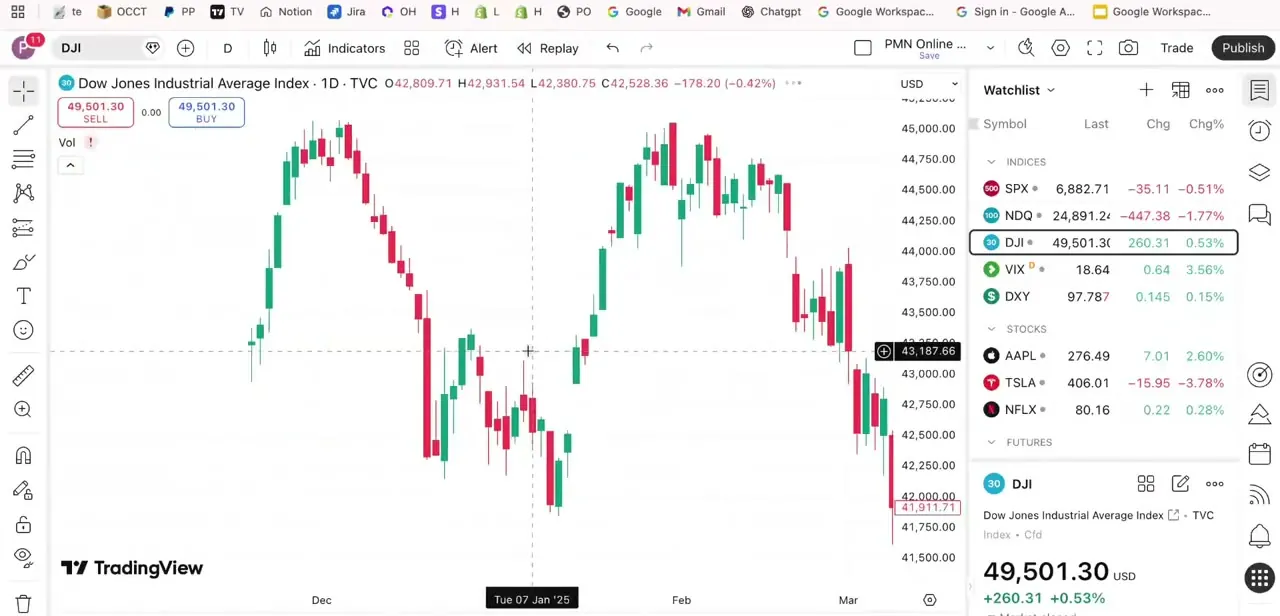
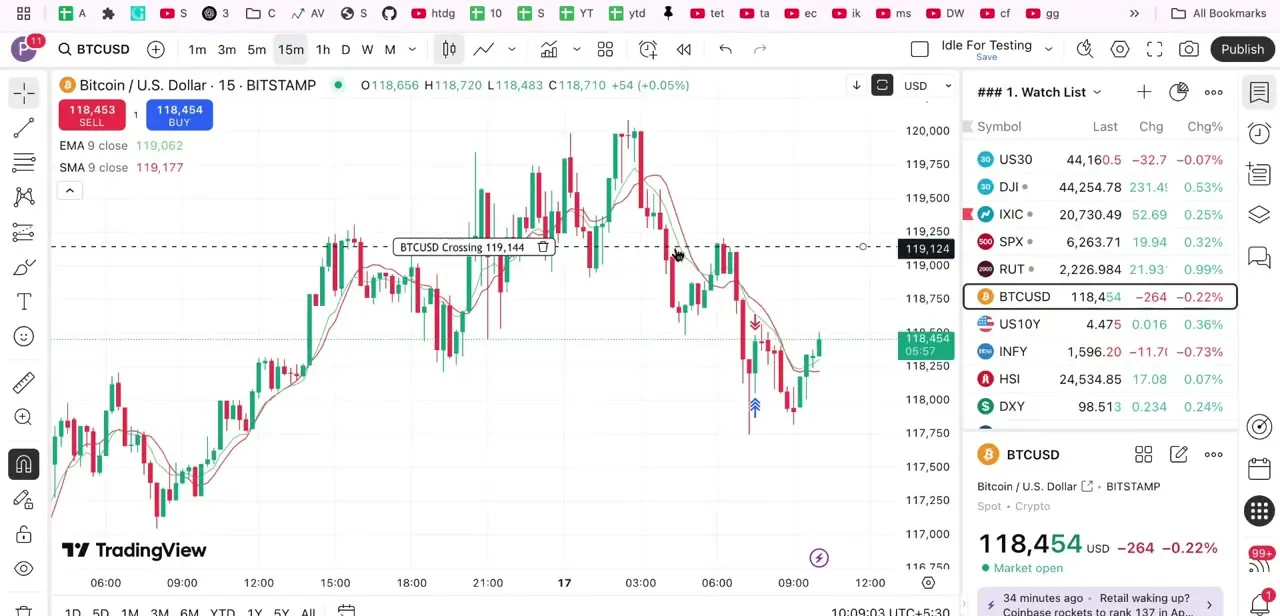
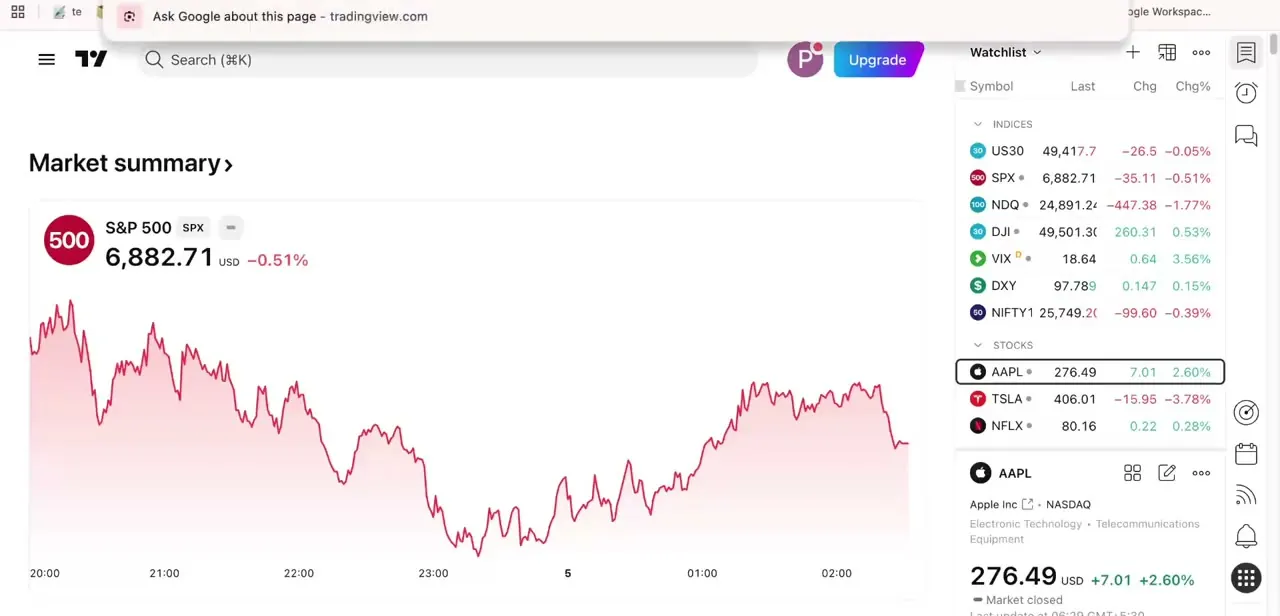
Open TradingView and land on your normal workspace — the chart on the left and a watchlist on the right showing whatever indices and stocks you already track. This is also where you'd notice the index listing labeled NIFTY1 sitting alongside US30, SPX, and other global indices in the watchlist panel, which is a reminder that TradingView treats Nifty as just one symbol among many and won't default to the futures version for you. Getting to the futures contract means using the search bar rather than assuming the watchlist entry is already the right one.
02Open Symbol Search and type the futures ticker
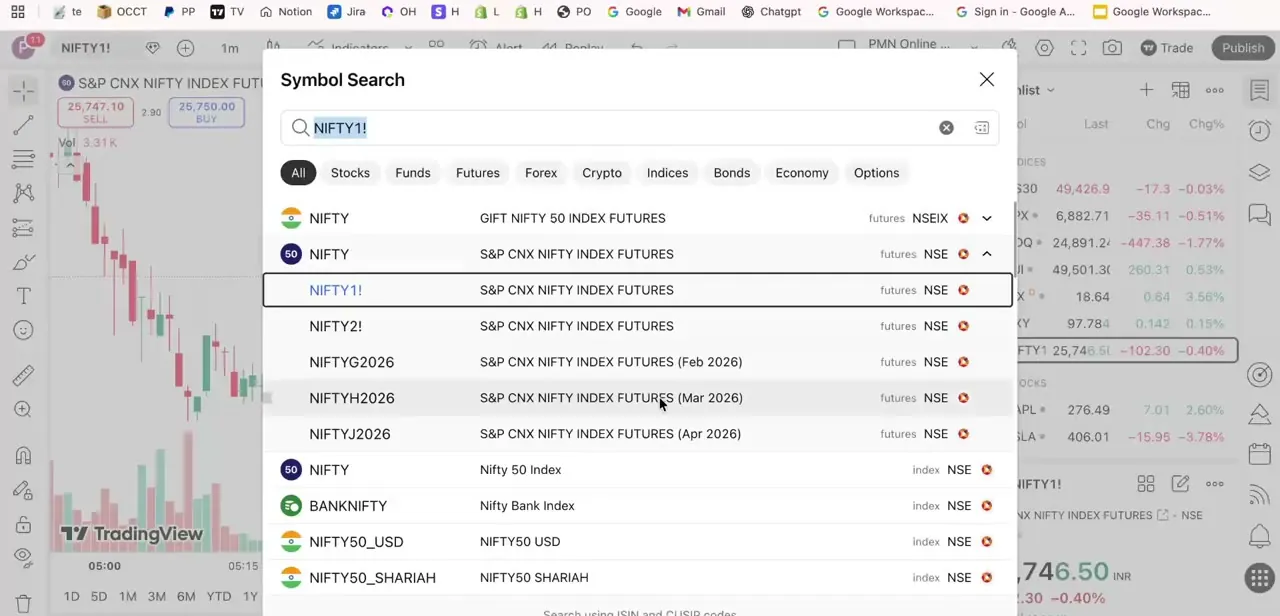
Click the search bar (or press the keyboard shortcut) to open Symbol Search, then type NIFTY1. TradingView returns a filtered list rather than a single result, which is exactly where the confusion usually happens — the list mixes GIFT NIFTY, spot NIFTY 50 Index, BANKNIFTY, and several futures contracts together. Take a moment here rather than clicking the first match; the field labeled "futures" next to a row is what separates a tradable contract from an index listing.
03Pick the NSE row marked as futures
In the results, look for the row reading S&P CNX NIFTY INDEX FUTURES with NSE as the exchange and "futures" as the type — this is distinct from the plain NIFTY row above it, which is tagged "index" and represents the spot value, not a contract you can actually trade. The search results also show GIFT NIFTY 50 INDEX FUTURES on the NSEIX exchange, a different product traded on a different exchange entirely, so matching both the NSE exchange tag and the futures type matters, not just the name.
04Understand what separates spot from futures
Nifty Spot (the plain NIFTY index row) tracks the live value of the underlying 50 stocks in real time and can't be traded directly — it's a reference number. Nifty Futures is a separate, tradable contract that settles against that index on a future date, and because it prices in time value and market expectations, it trades at a premium or discount to spot rather than matching it tick for tick. If your analysis mixes candles from the spot chart with levels drawn on the futures chart, or vice versa, the numbers won't line up cleanly.
05Choose a continuous or a specific monthly contract
The search results list several ways to load Nifty Futures: NIFTY1! and NIFTY2! are continuous contracts that automatically roll from one expiry to the next, giving you an unbroken historical chart useful for trend and pattern analysis. Below those, symbols like NIFTYG2026, NIFTYH2026, and NIFTYJ2026 are specific monthly contracts (the letter and year identify the expiry month) that stop updating once that contract expires. Use a continuous chart for backtesting or spotting longer-term trends, and switch to the exact monthly contract when you're actually trading that expiry, since its price and open interest are what will match your broker.
06Adjust the chart settings for how you trade
Once the correct futures symbol is loaded, the settings that matter most depend on your timeframe. Intraday traders typically want shorter candle intervals with volume and a couple of moving averages visible, while swing traders lean toward daily or a few-hour candles with wider indicators like a longer moving average or pivot points. There's no universal "best" setting — the point is to match candle interval and indicator set to how long you actually hold positions, rather than copying a generic layout.
07Double-check you didn't grab the wrong index
The most common beginner mistake in that search list is clicking BANKNIFTY instead of NIFTY, since both sit close together and share similar naming. A close second is loading NIFTY50_USD or NIFTY50_SHARIAH, which are different index products entirely and not the standard futures contract most Indian traders mean by "Nifty Futures." Before you start analyzing or placing trades, glance at the symbol name in the chart header and confirm it reads the S&P CNX NIFTY INDEX FUTURES contract on NSE, not a lookalike.
Frequently asked questions
Is Nifty Futures the same as Nifty Spot?
No. Nifty Spot is the plain NIFTY index row in TradingView's search results, tagged as an index — it tracks the live value of the underlying stocks but isn't directly tradable. Nifty Futures is a separate row tagged futures on the NSE exchange, and it can trade at a premium or discount to spot.
What's the difference between NIFTY1! and a symbol like NIFTYG2026?
NIFTY1! is a continuous contract that automatically rolls between expiries, giving you an unbroken chart for trend analysis. NIFTYG2026 (and similar symbols like NIFTYH2026) are specific monthly contracts tied to one expiry date, useful when you want the exact price and open interest for the contract you're actually trading.
Can I trade Nifty Futures directly through TradingView?
TradingView is primarily for charting and analysis. Whether you can execute trades directly depends on whether you have a connected broker integration that supports NSE futures.
Why does the Nifty Futures price differ slightly from Nifty Spot?
Futures prices reflect time value, interest rate expectations, and cost of carry on top of the underlying index value, so they trade at a small premium or discount to spot rather than an exact match.
How do I avoid picking the wrong Nifty symbol by accident?
In the Symbol Search results, confirm the row is labeled futures (not index), the exchange reads NSE, and the name says S&P CNX NIFTY INDEX FUTURES — not BANKNIFTY, GIFT NIFTY, or a USD/Shariah variant, which all sit nearby in the same list.
About the author

Impran M N
I've been hooked on technology for as long as I can remember — especially the new tools and AI apps that seem to land every other week. Easy Tech Tuts is where I write up whatever I've just worked out: I do the task in the real product, record the screen, and turn it into the guide I wish I'd found first.