 Easy Tech Tuts
How To Clear Chart In TradingView 2026, Delete Drawing & Indicators Easily
By Impran M N
A chart accumulates junk faster than anyone expects: a trendline drawn three sessions ago, a Fibonacci retracement from a setup that never triggered, two moving averages you stopped using. Left alone it becomes genuinely harder to read price, which is the whole point of the chart.
TradingView gives you four different ways to clean it, and they are not interchangeable — one removes drawings but leaves indicators, another wipes both, and the object tree lets you pick off single items without touching anything else. This guide covers each, plus the part most tutorials skip: how to clear a chart without destroying the layout you spent time building.
01Delete one drawing at a time
For a single stray object, click it on the chart — the drawing's handles appear along with a small floating toolbar — then press Delete or Backspace. Right-clicking the object gives you the same Remove option in a context menu, along with settings, clone and lock.
If clicking selects the wrong thing, which happens when drawings overlap, click once to grab whatever is on top and press Escape to deselect before trying again. Ctrl+Z (Cmd+Z on a Mac) undoes a deletion immediately, so an accidental removal is cheap to fix as long as you notice straight away.
02Wipe every drawing from the toolbar's remove button
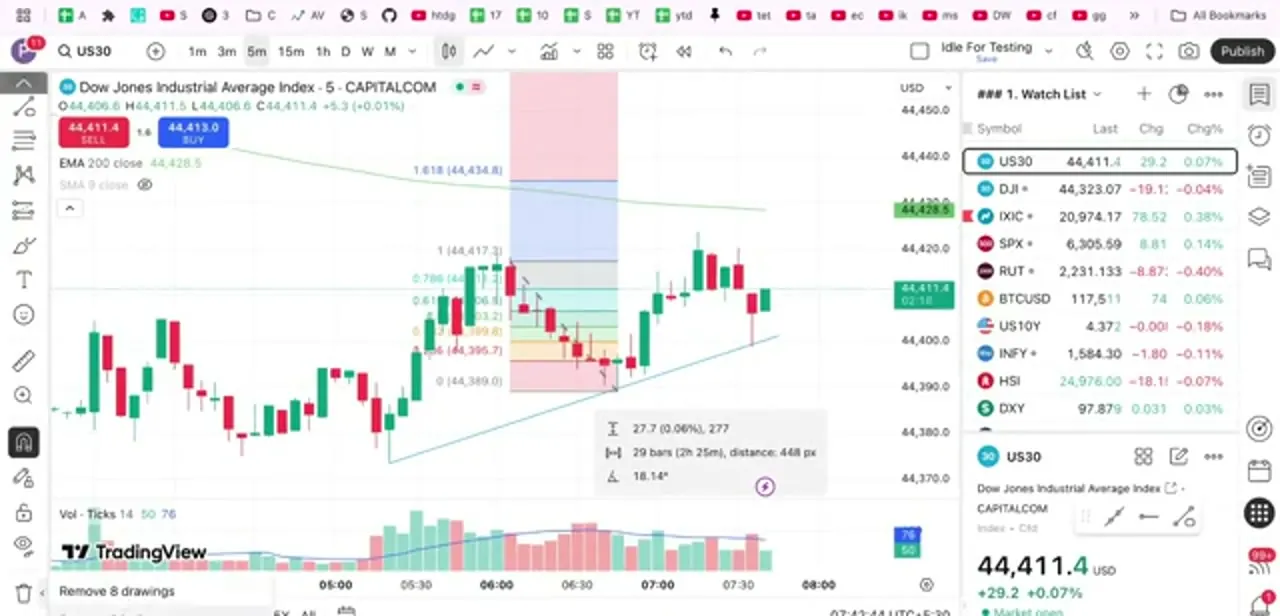
The fastest full reset lives at the bottom of the drawing toolbar down the left edge of the chart: a trash icon that opens a short menu. The top entry counts what it is about to delete — "Remove 8 drawings" on a chart carrying eight objects — and below it sit options for removing indicators and for clearing drawings and indicators together.
Read the wording before clicking, because this is the step where people wipe a set of studies they meant to keep. The count is a useful sanity check too: if it says 30 on a chart that looks fairly clean, you've got objects sitting off-screen or hidden behind the price action.
03Remove indicators from the chart legend
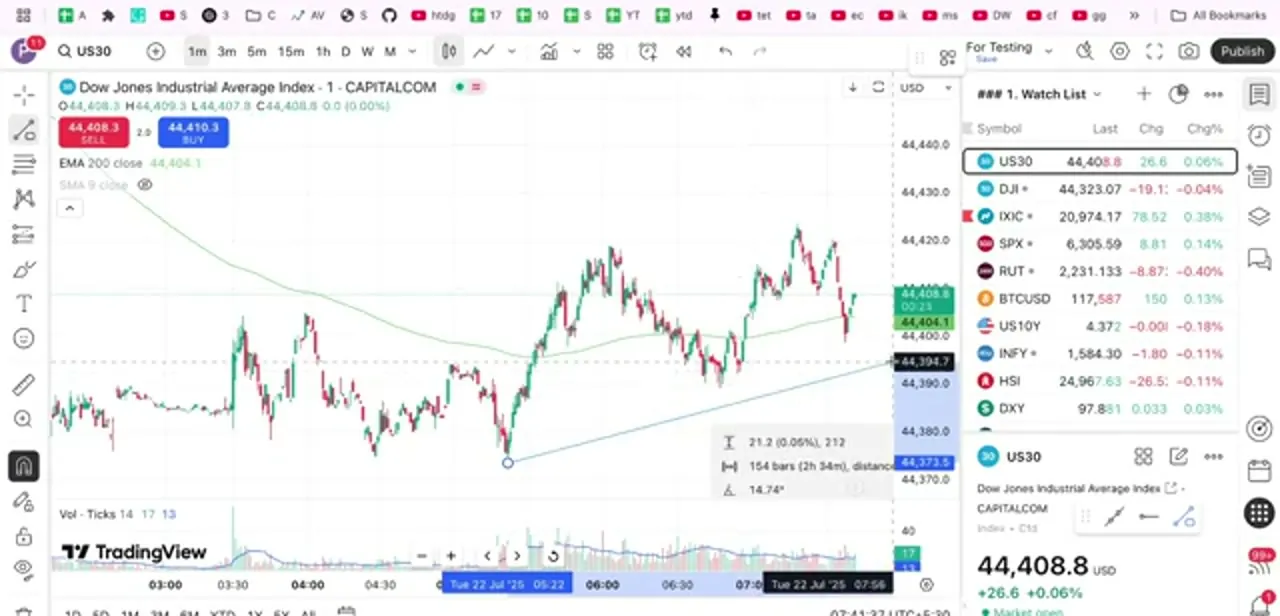
Indicators are not drawings, and the toolbar's drawing-removal option won't touch them. Each study you've added appears as its own line in the legend at the top left of the chart, labelled with its name and settings — EMA 200 close, SMA 9 close, and so on.
Hover a line and a row of small controls appears: an eye to hide it without deleting, a gear for its settings, and a more menu containing Remove. Hiding is the better first move when you're only decluttering temporarily, because a hidden indicator keeps its exact parameters and comes back with a single click, whereas a removed one has to be re-added and reconfigured from scratch.
04Use the object tree when you need precision
The object tree, opened from the icon column on the right-hand edge of the chart, lists everything on the chart as a structured panel: each drawing, each indicator, and which pane it belongs to. This is the tool for a chart where objects overlap so heavily that clicking the right one is guesswork, or where a drawing has drifted far enough off-screen that you can't find it at all.
From the tree you can select, hide, reorder or delete individual items, and because everything is named, you can tell a Fibonacci retracement from a trend channel without hunting for it visually. It's also the quickest way to spot duplicates — two copies of the same trendline stacked on top of each other is a common cause of "I deleted it and it's still there."
05Protect the layout before you clear it
This is the part worth being careful about. If you're working inside a saved chart layout, clearing it changes that layout, and there is no separate confirmation asking whether you meant to.
Before a big cleanup, use the layout menu at the top of the chart to make a copy under a new name, then clear the copy — that way the original setup with all its drawings survives intact. If you've already cleared and want the drawings back, undo repeatedly before doing anything else; once you've navigated away or reloaded, that history is gone. For layouts you genuinely care about, keeping one pristine named copy that you never trade from is cheap insurance.
06Rebuild fast with templates
If you clear charts often — testing strategies, teaching, or switching between instruments — set up indicator templates so a clean chart is one click away from being your working chart again. Add the studies you want, configure them, then save the set as a named template from the indicators menu; applying it later restores the whole group with your settings.
Pair that with two saved layouts, one clean and one loaded, and clearing stops being destructive: you're just switching views. The same clearing options exist in the TradingView mobile app through the drawing toolbar and the indicator list, though the object tree is more comfortable on a desktop screen.
Frequently asked questions
Can I clear my whole chart with one click?
Yes. The trash icon at the bottom of the left drawing toolbar opens a menu with options to remove all drawings, all indicators, or both at once — the top entry even counts how many objects will be deleted.
Does removing drawings also remove my indicators?
No. Drawings and indicators are cleared separately. The remove menu has a distinct option for each, plus a combined one if you want the chart completely bare.
How do I remove a single indicator?
Hover its line in the legend at the top left of the chart and use the more menu to remove it — or click the eye icon to hide it instead, which keeps its settings for later.
What is the object tree for?
It lists every drawing and indicator on the chart in one panel, so you can select and delete specific items precisely — invaluable when objects overlap or a drawing has scrolled off-screen.
Will clearing the chart destroy my saved layout?
It changes the layout you're working in, so duplicate it under a new name before a big cleanup if you want the original preserved. Ctrl+Z undoes a clear immediately, but only before you reload or switch layouts.
About the author

Impran M N
I've been hooked on technology for as long as I can remember — especially the new tools and AI apps that seem to land every other week. Easy Tech Tuts is where I write up whatever I've just worked out: I do the task in the real product, record the screen, and turn it into the guide I wish I'd found first.