 Easy Tech Tuts
How to Change Font Size in TradingView 2026 Easily
By Impran M N
Small chart text is easy to ignore until you're presenting a setup to someone else or squinting at price labels on a laptop screen across the room. TradingView lets you resize that text without touching a single indicator, and the control lives in the same Settings panel you'd use to change the chart's background or grid. This guide shows exactly where that font size control sits and what it looks like before and after you bump the number up.
01Open the chart you want to adjust
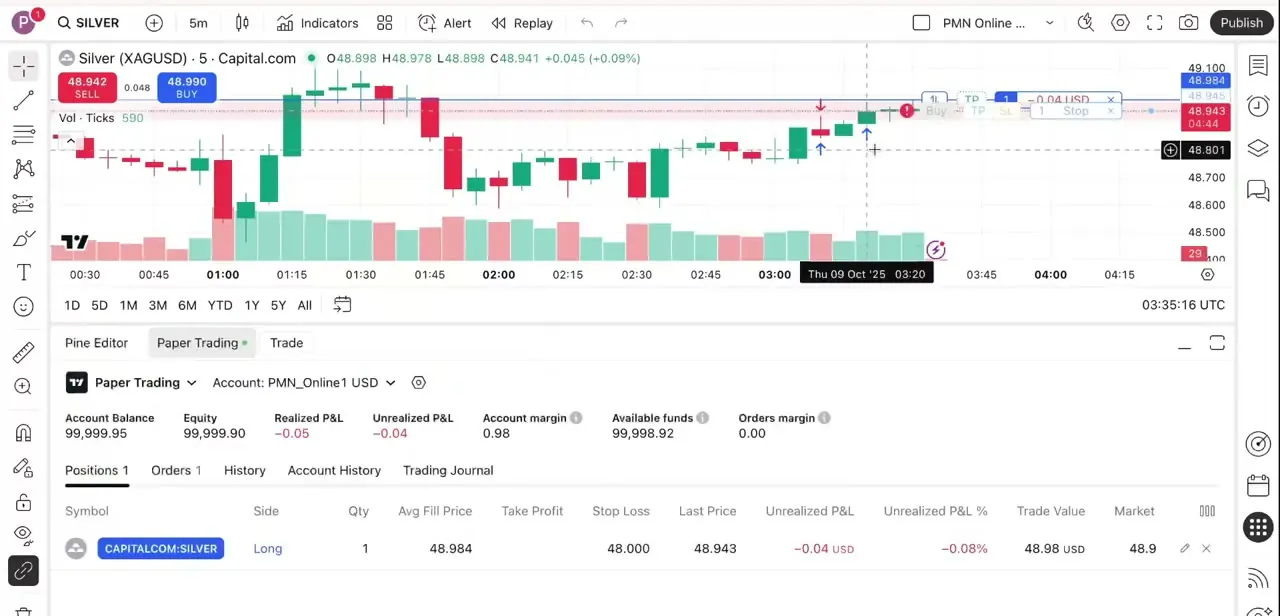
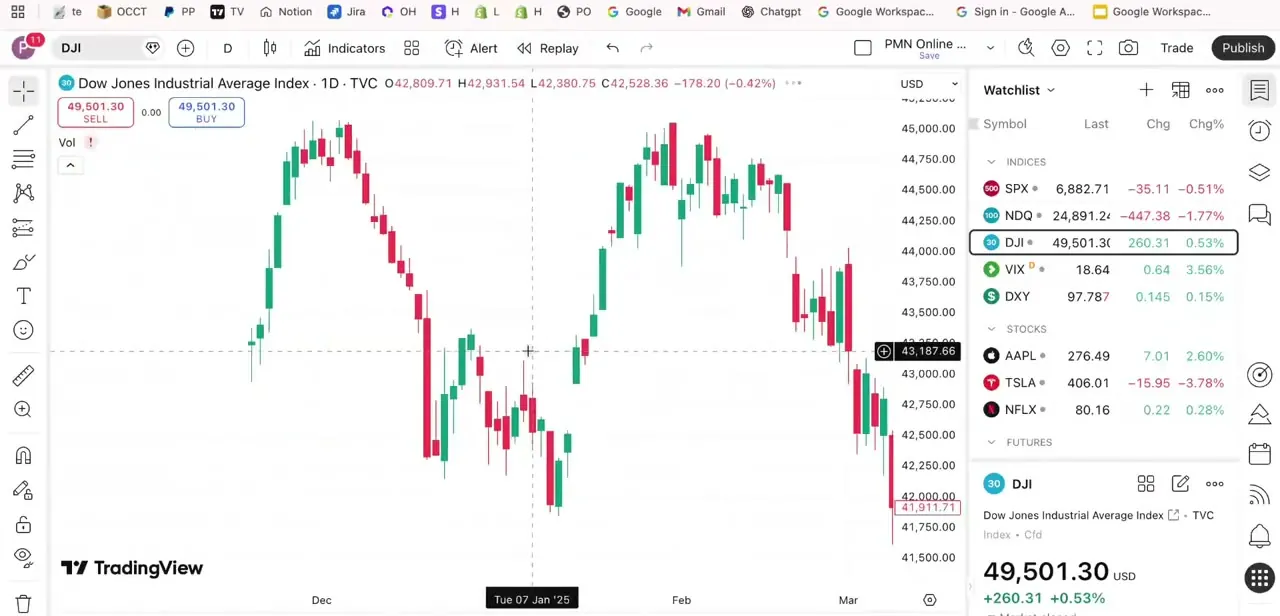
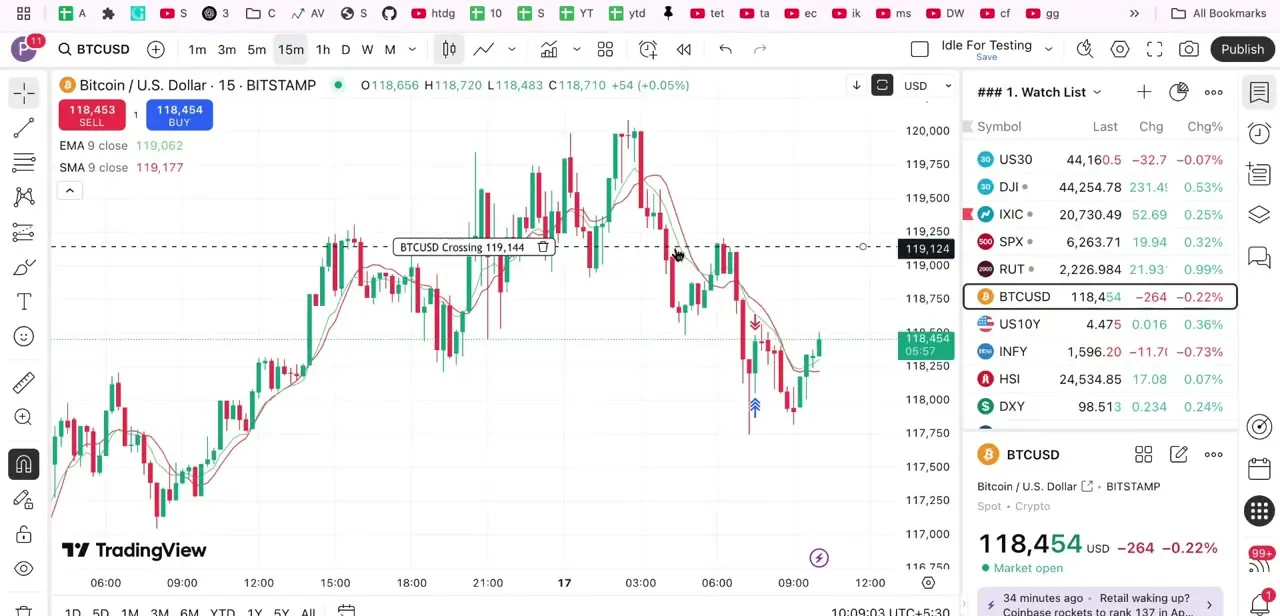
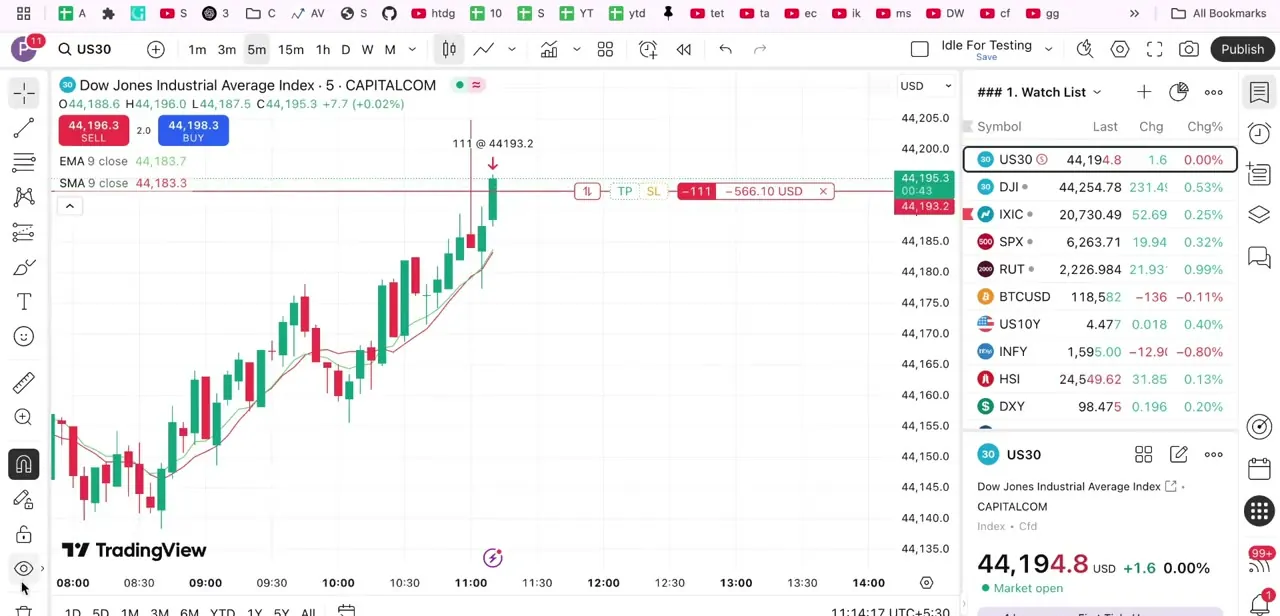
Load any symbol on TradingView's chart view — the example here uses the Dow Jones Industrial Average (US30) on a 5-minute timeframe, but the font settings apply the same way regardless of what you're charting. The toolbar along the top holds the timeframe selector and chart-type icons, and the gear-style settings icon near the top right is what you'll use next.
02Open chart Settings
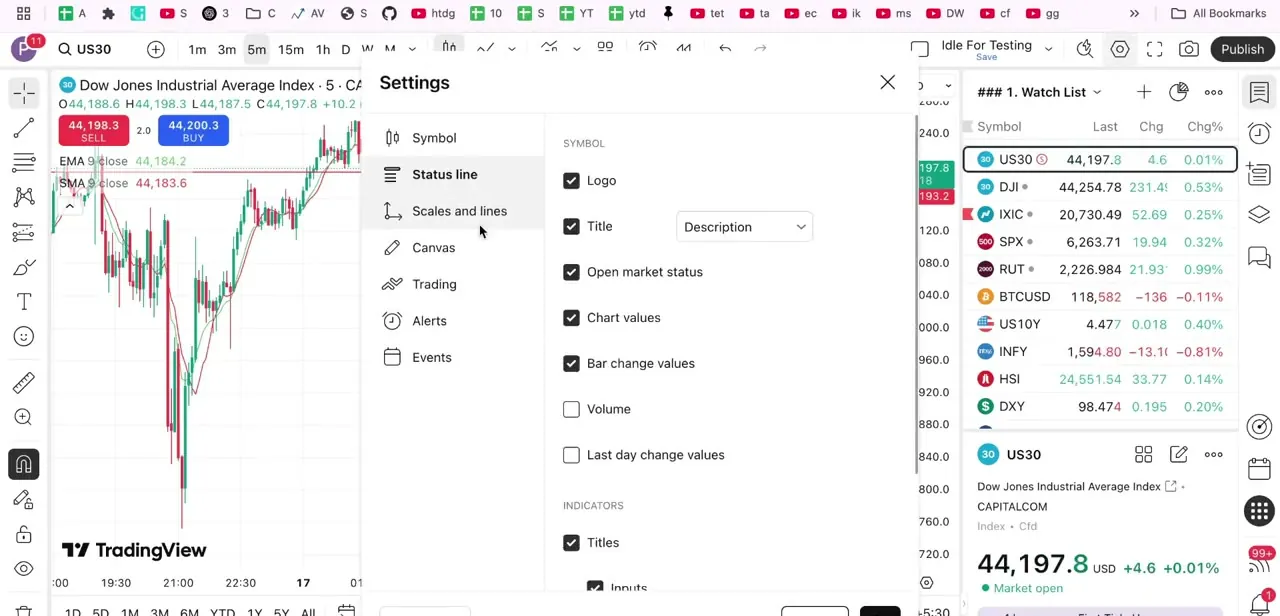
Click the settings icon and a Settings window opens as an overlay on top of your chart, with a vertical list of tabs down the left side: Symbol, Status line, Scales and lines, Canvas, Trading, Alerts, and Events. Text formatting for the chart itself isn't under Status line despite that being one of the first tabs listed — it's under Canvas, a couple of items further down.
03Find the Text size field under Scales
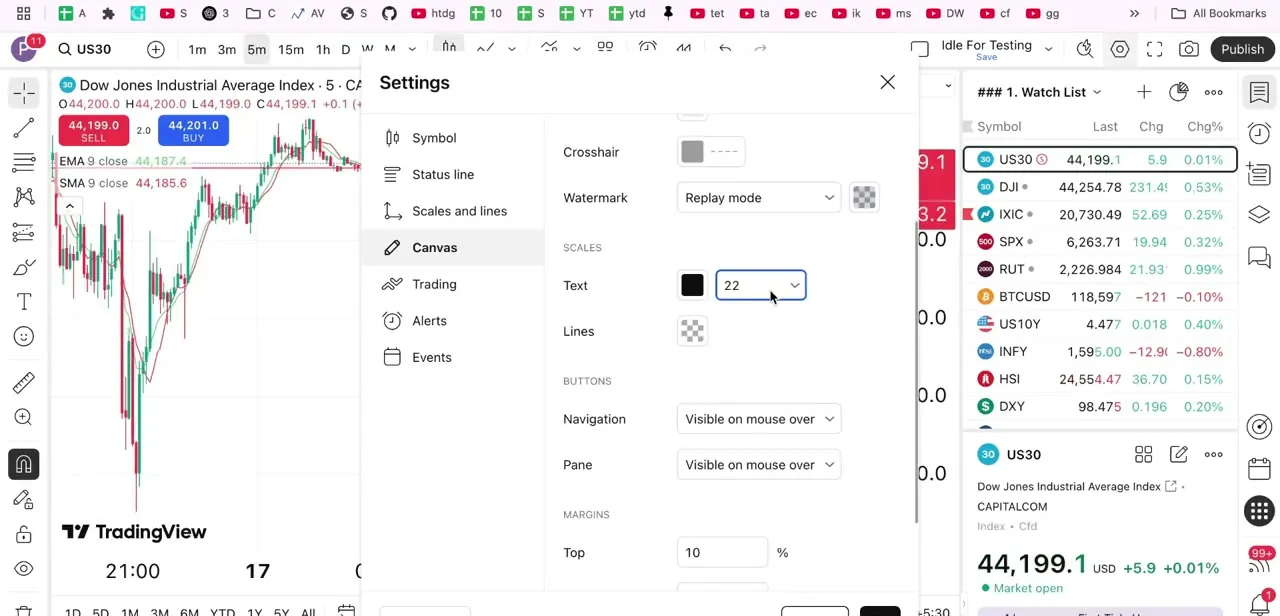
Click Canvas, then scroll to the Scales section. Here you'll find a Text row with a small color swatch and a number field next to it — that number is the font size applied to the price and time labels along your chart's edges. In a default setup it's commonly set around 22; clicking the dropdown lets you pick a different value from the list rather than typing one freehand.
04Increase the size and watch it apply live
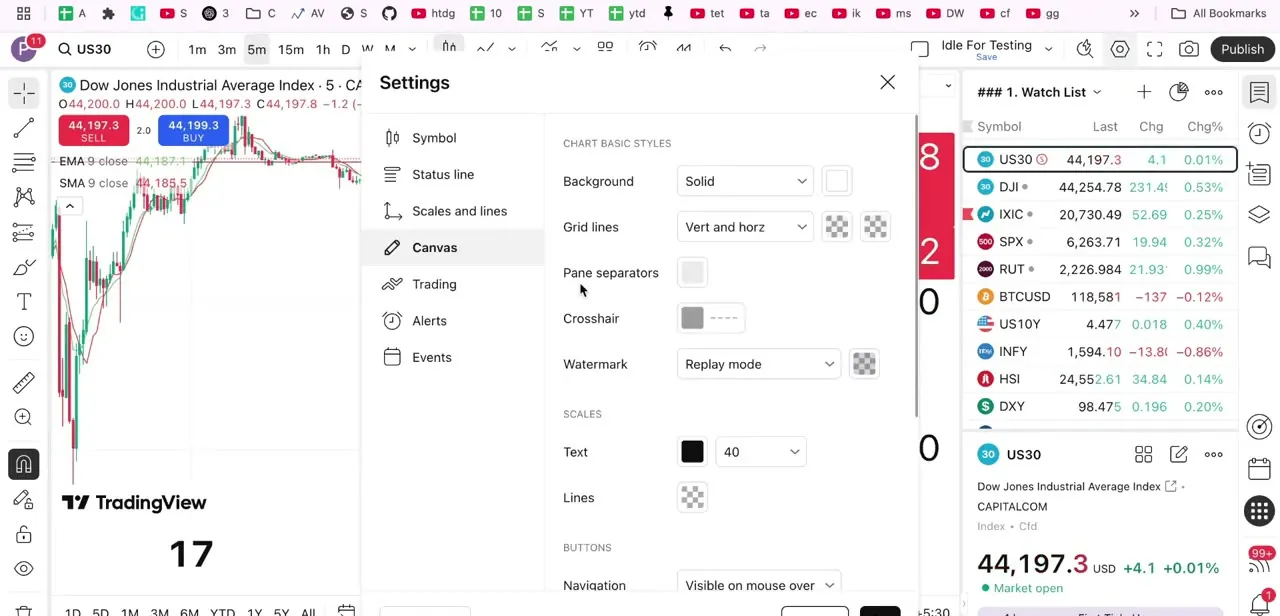
Select a larger value from the Text dropdown and the change reflects immediately on the chart behind the Settings panel — you don't need to close the window to see the result. Pushing the number up to something like 40 makes a noticeable difference for screen recordings or presentations, though for regular day-to-day trading a more moderate increase usually keeps the chart from feeling cramped.
05Adjust the text color for better contrast
Right next to the size dropdown is a color swatch for that same text. If you've switched to a lighter or darker chart background under Chart basic styles, revisit this swatch afterward — text that was legible on a dark background can wash out once you switch to a light one, and vice versa. Picking a color with strong contrast against your background keeps the larger text actually easier to read, not just bigger.
06Close the panel to keep your changes
TradingView applies settings changes as you make them, so once the text size and color look right, simply close the Settings overlay by clicking the X in its top corner. Your layout, including the new font size, is saved to that chart layout going forward until you change it again.
Frequently asked questions
Where do I change font size on TradingView?
Open chart settings via the gear icon, then go to the Canvas tab and look under the Scales section for the Text field, which controls the font size of your price and time labels.
Can I change font color as well as size?
Yes, the same Text row in the Canvas tab's Scales section has a color swatch right next to the size dropdown, so you can adjust both together.
Does this affect all annotations on my chart?
The Scales Text setting controls the price and time axis labels. Individual drawings and annotations you add manually can often have their own separate text size set when you place them.
Will my font settings be saved automatically?
Yes, TradingView applies the change as soon as you select it from the dropdown — there's no separate save button, just close the Settings window once you're happy with it.
Why does my chart text look too small by default?
TradingView's default text size is tuned for a fairly standard monitor and zoom level, so if you're on a large display, presenting to others, or recording your screen, bumping the Scales Text size up a notch or two usually helps.
About the author

Impran M N
I've been hooked on technology for as long as I can remember — especially the new tools and AI apps that seem to land every other week. Easy Tech Tuts is where I write up whatever I've just worked out: I do the task in the real product, record the screen, and turn it into the guide I wish I'd found first.