 Easy Tech Tuts
How to Add Dow Jones in TradingView Easily 2026
By Impran M N
Searching 'Dow Jones' in TradingView brings up more than a dozen similar-looking symbols from different exchanges and brokers, and picking the wrong one can quietly throw off your analysis with slightly different prices or trading hours. This guide walks through the actual symbol search results, explains what the index, CFD, and futures versions really are, and covers how to set the timeframe depending on whether you're trading intraday or watching the bigger trend. It's aimed at index traders and investors who want accurate data from the start instead of guessing between near-identical tickers.
01Start from any chart and open Symbol Search
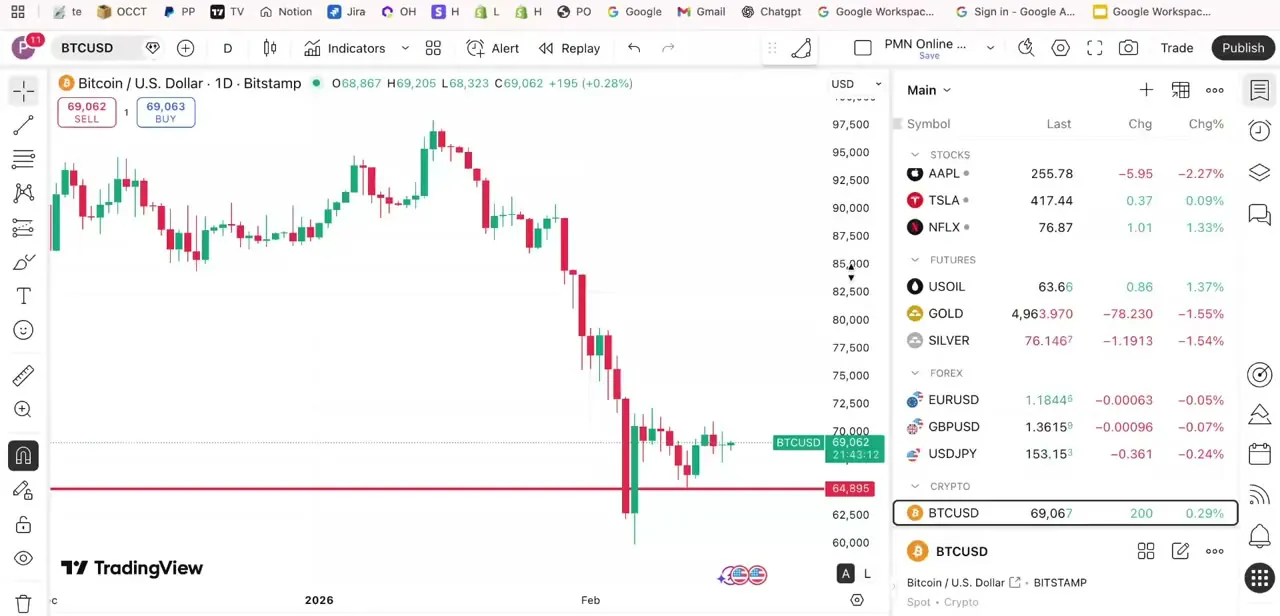
The symbol name in the top-left corner of any TradingView chart — right next to the pencil-and-magnifier icon — is your entry point. Click it, and the search dialog opens with categories across the top for Stocks, Funds, Futures, Forex, Crypto, Indices, Bonds, Economy, and Options, letting you narrow results before you've even typed anything.
02Search 'Dow Jones' and read the results carefully
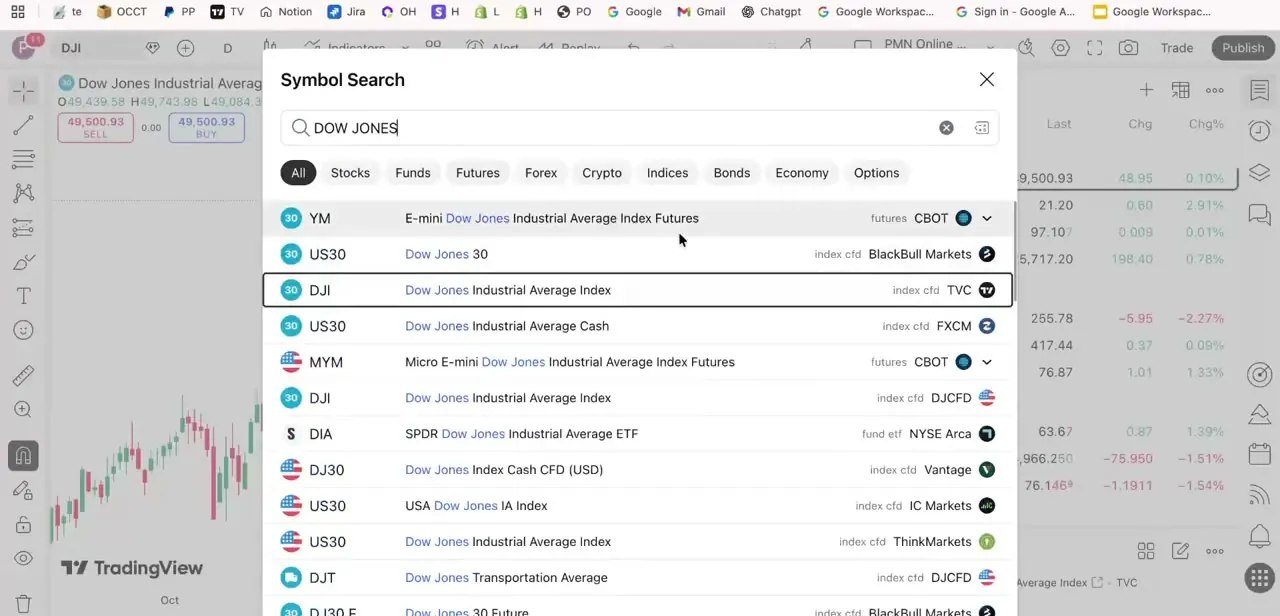
Typing Dow Jones into the search returns a long list: YM (E-mini Dow Jones Industrial Average Index Futures on CBOT), several US30 entries from different CFD providers like BlackBull Markets, FXCM, IC Markets, ThinkMarkets, and Vantage, a DJI index symbol from TVC, another DJI from DJCFD, DIA (the SPDR Dow Jones ETF on NYSE Arca), DJ30 from Vantage, DJT (Dow Jones Transportation Average), and MYM (Micro E-mini futures). Every one of these tracks the same underlying average, but the exchange or provider column on the right tells you exactly where the price feed comes from — and that source is what determines the price you'll actually see.
03Know the difference between DJIA, US30, and futures
DJI on TVC is the closest thing to the official cash index — it reflects the actual Dow Jones Industrial Average during market hours and is the standard reference for long-term charting. US30 is a broker-specific CFD symbol, and because each broker (FXCM, IC Markets, BlackBull, and so on) runs its own price feed, you'll see small differences between them and slightly different spreads. YM and MYM are futures contracts traded on CBOT that track the same index but move nearly around the clock, including outside regular stock market hours, which is why many active traders prefer them for anything happening pre-market or overnight.
04Choose the symbol that matches your analysis
For long-term investing research, the TVC DJI index feed is the cleanest choice since it mirrors the official index without broker-specific spread quirks. For CFD or forex-style trading, pick the US30 symbol tied to your actual broker so the price on your chart matches what you'd be trading. For overnight or pre-market analysis, YM futures are the only option in this list that actually trade during those hours — the cash index simply doesn't move when the market is closed.
05Set your chart timeframe for the analysis you're doing
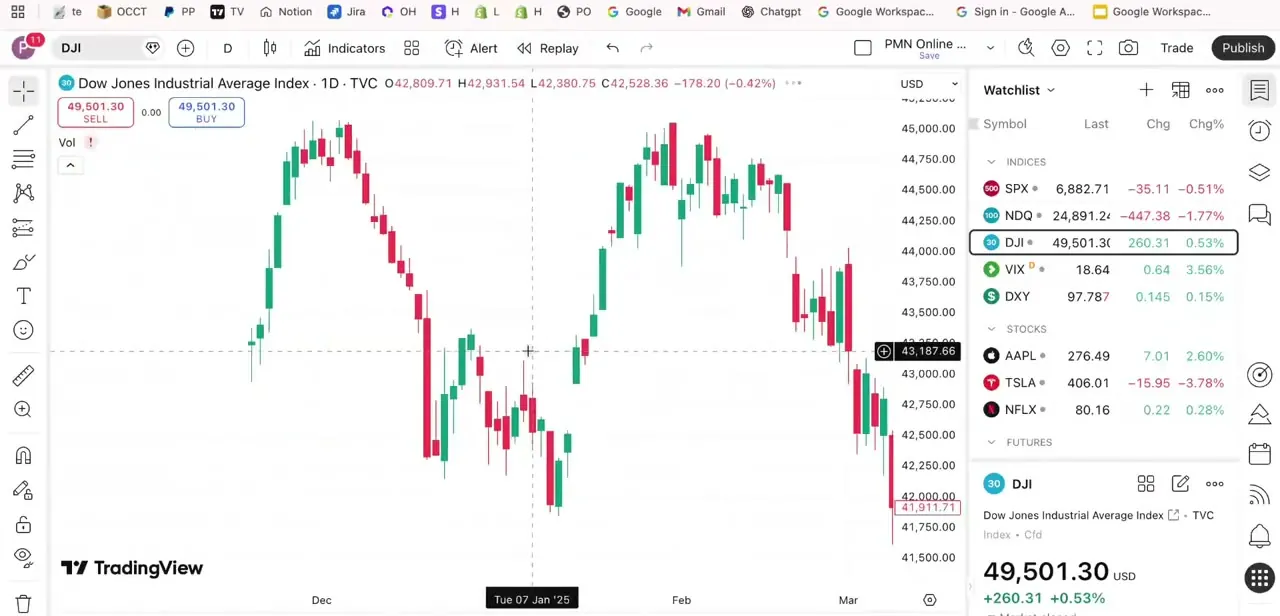
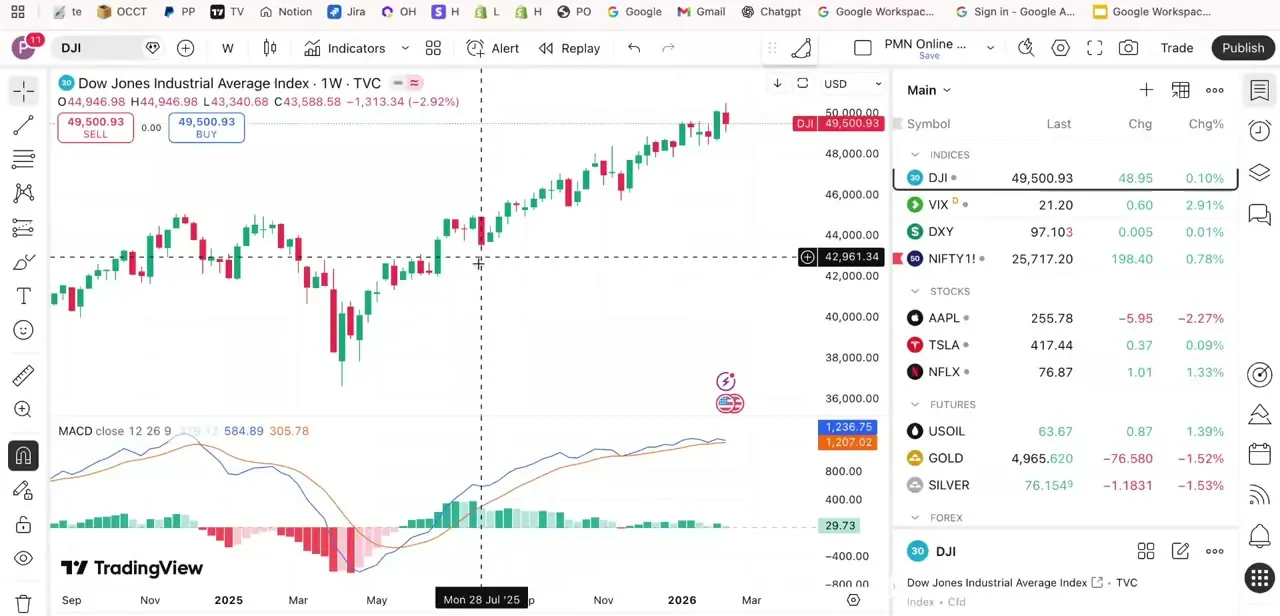
Once DJI is loaded, the timeframe selector next to the symbol name switches between intervals. A weekly view with MACD in a lower pane smooths out daily noise and is useful for spotting the broader trend direction over months, which is exactly the kind of setup long-term Dow watchers rely on.
06Switch to a daily view for shorter-term reads
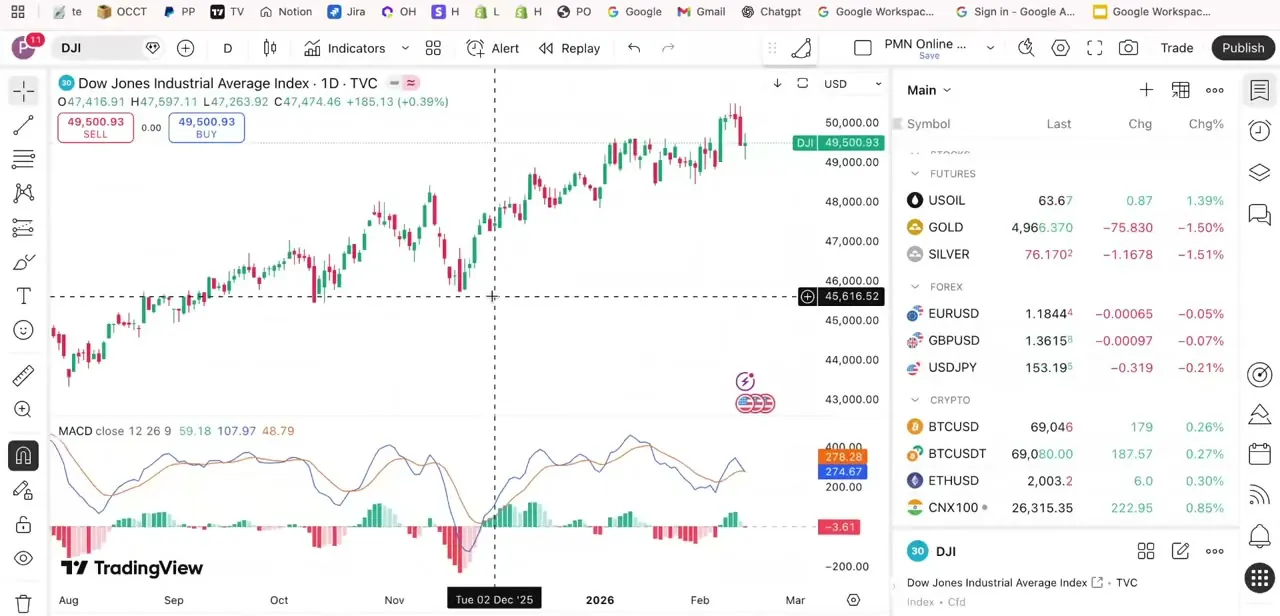
Dropping down to a daily timeframe on the same DJI symbol shows more granular price action and reacts faster to recent moves, which suits traders watching for shorter swings rather than the multi-month trend. Keeping the same MACD setup across both timeframes makes it easy to compare what the indicator is saying on the daily chart against the broader weekly picture before committing to a trade.
Frequently asked questions
What's the difference between DJIA and US30 on TradingView?
DJI on TVC is the cash index feed closest to the official Dow Jones Industrial Average, while US30 is a broker-provided CFD symbol — FXCM, IC Markets, BlackBull, and others each run their own feed with slightly different pricing.
Should I use futures or the index for intraday trading?
Many intraday traders prefer YM or MYM futures because they trade nearly around the clock on CBOT, while the cash index (DJI on TVC) only reflects official market hours.
Why do I see so many Dow Jones symbols when I search?
Different data providers and brokers each list their own version — TradingView's search for 'Dow Jones' returns more than a dozen results including YM, several US30 variants, DJI, DIA, DJ30, and DJT, each from a different exchange or provider.
Does the exchange source affect the price shown?
Yes — since each CFD provider runs its own price feed, US30 symbols from different brokers can show noticeably different prices and spreads even though they track the same underlying index.
About the author

Impran M N
I've been hooked on technology for as long as I can remember — especially the new tools and AI apps that seem to land every other week. Easy Tech Tuts is where I write up whatever I've just worked out: I do the task in the real product, record the screen, and turn it into the guide I wish I'd found first.