 Easy Tech Tuts
How to Setup Products and Prices in Stripe, Add Recurring Subscription Price Type Easily 2026
By Impran M N
Whether you're selling a single digital download or running a subscription business, Stripe's product and pricing setup is the foundation everything else builds on — checkout, invoices, and customer billing all trace back to how a product and its prices are configured. This guide walks through the actual Add a product dialog in the Stripe dashboard, including where the Recurring versus One-off toggle lives and how billing period and tax settings fit together.
01Sign in to your Stripe dashboard
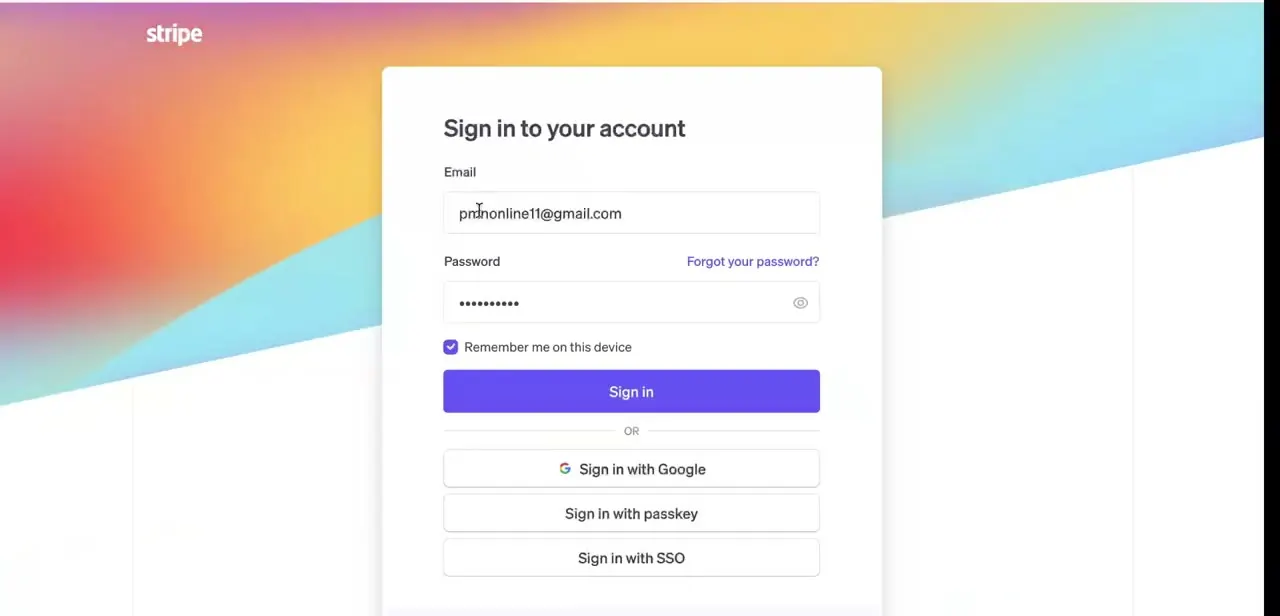
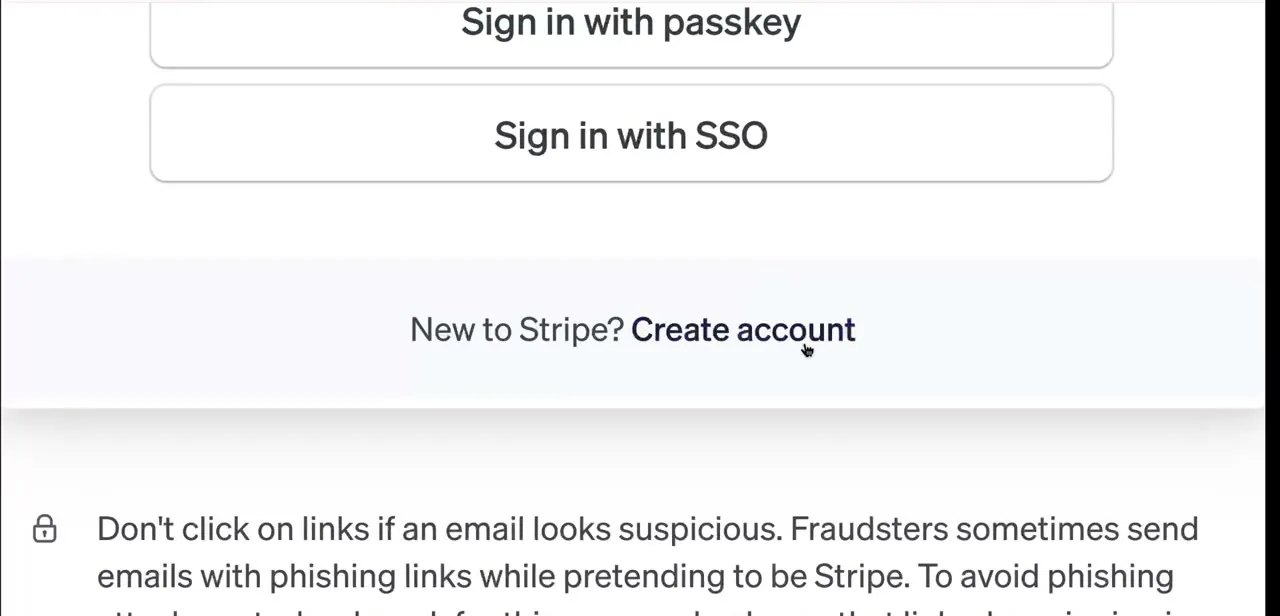
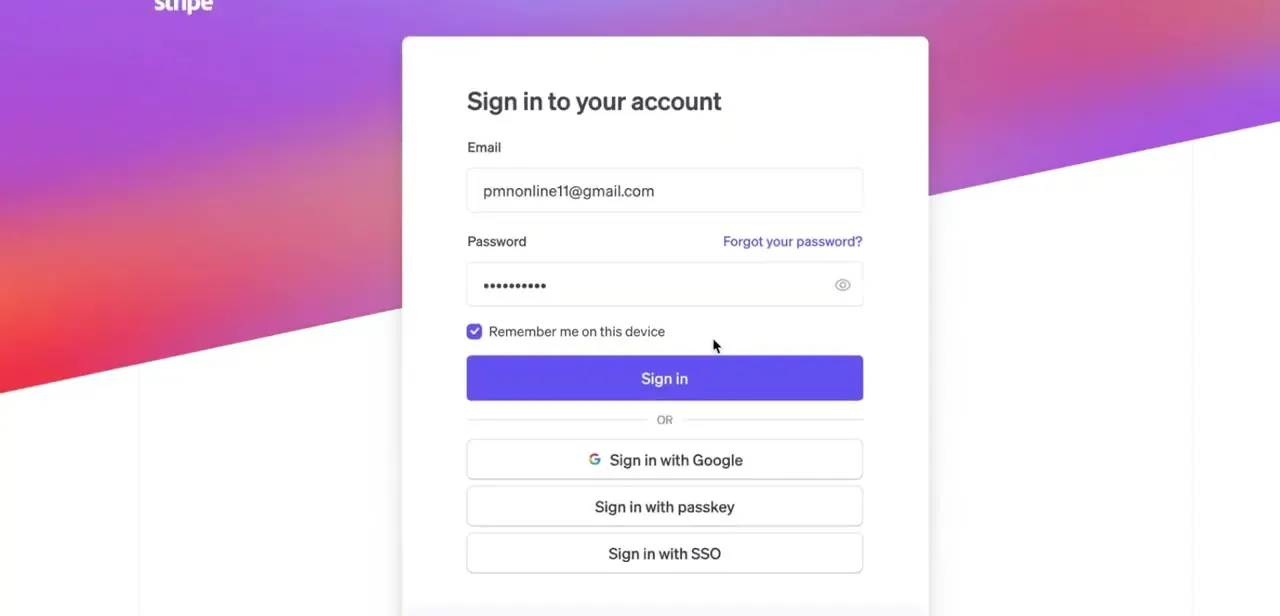
Go to Stripe and sign in with your account email and password, or use Google, a passkey, or SSO if your account is set up that way. Product and price management lives inside the dashboard rather than on Stripe's public marketing pages, so this is the first real step regardless of which pricing model you're building toward.
02Open Product catalog and start a new product
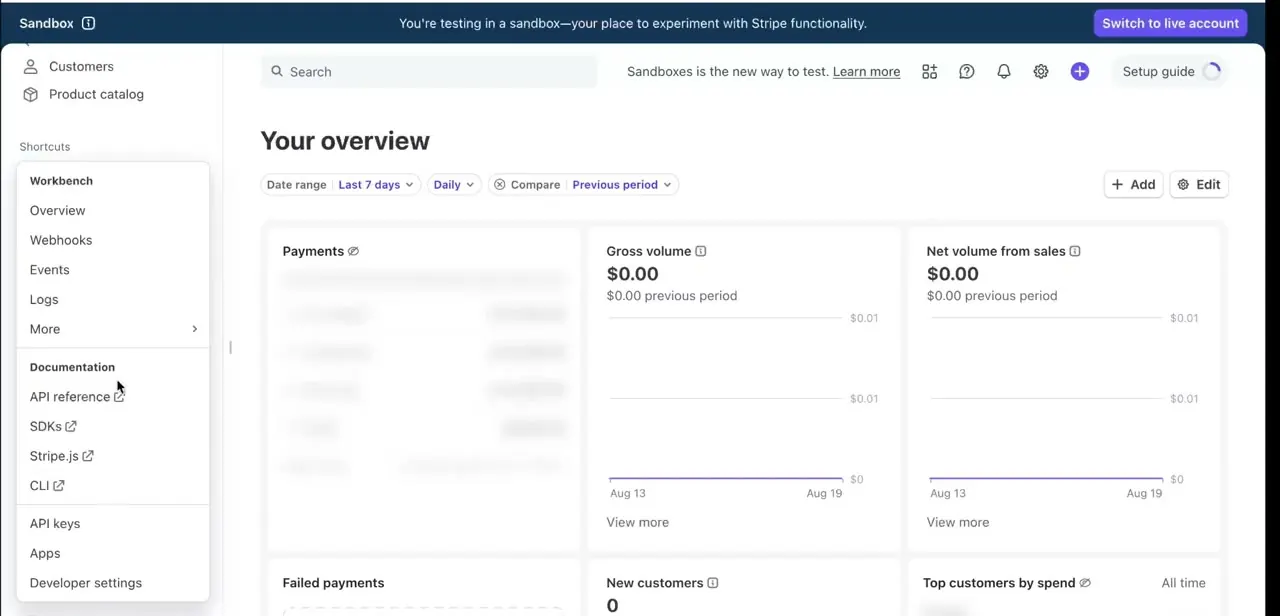
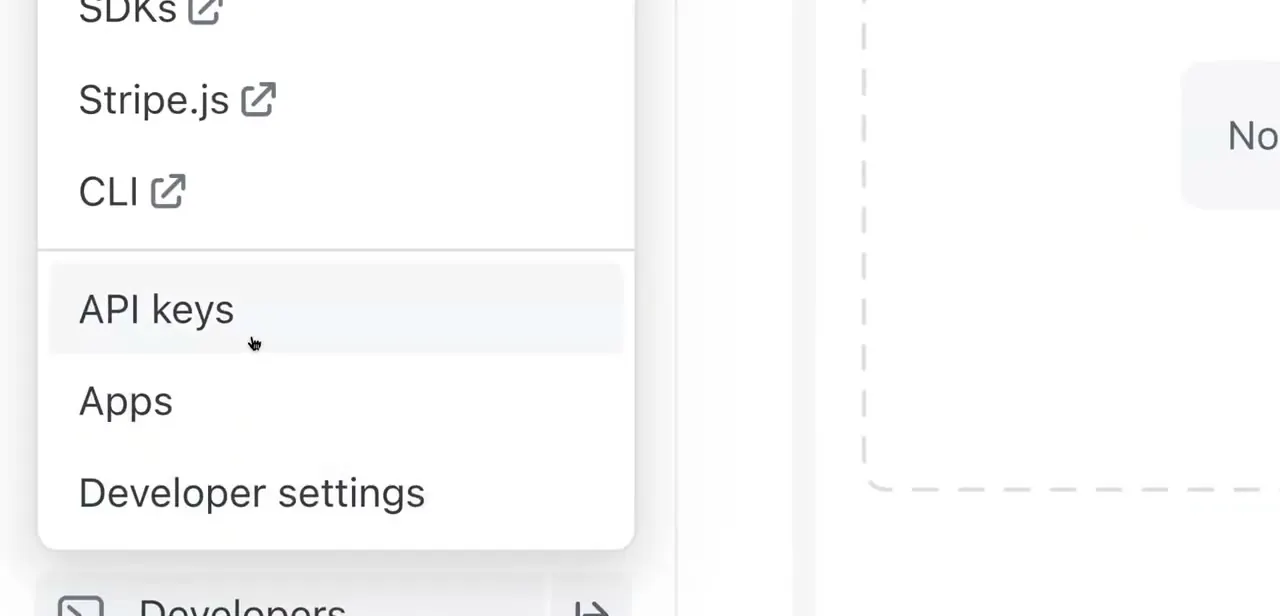
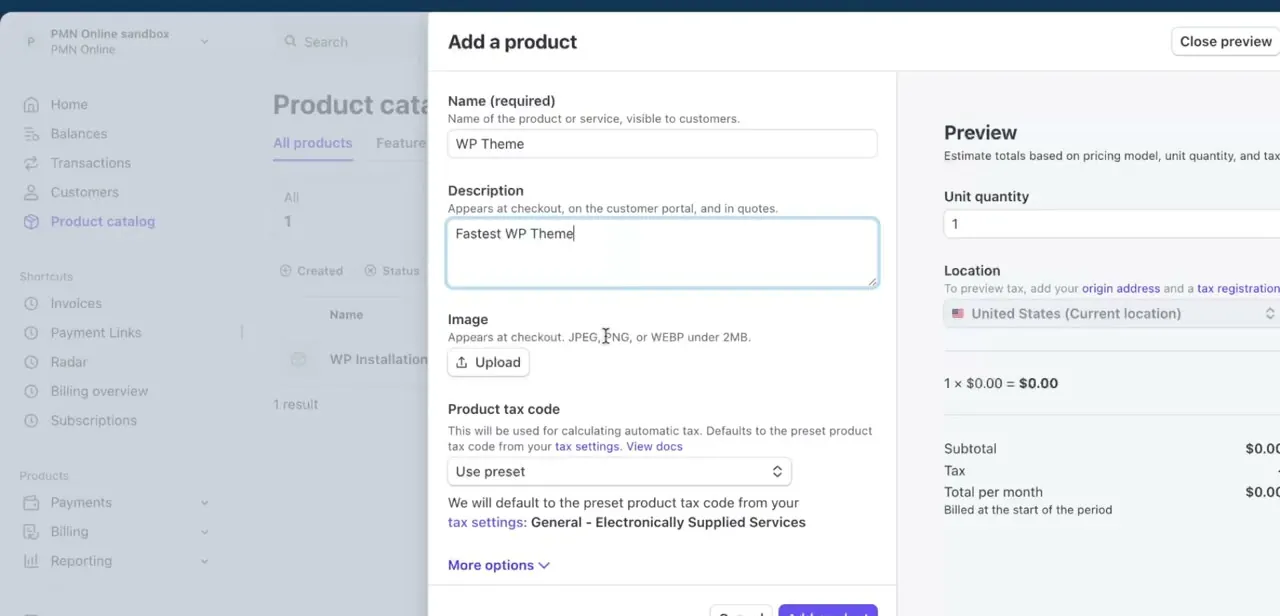
In the left-hand menu, under Shortcuts, click Product catalog, then start adding a new entry. The Add a product panel opens with a live Preview alongside it that estimates totals based on the pricing model and quantity you set, which is a fast way to sanity-check a price before saving it.
Fill in the Name field — this is what customers see at checkout, in the customer portal, and on quotes — and add a Description if you want more context to appear alongside it. You can also upload a product image (JPEG, PNG, or WEBP under 2MB) that shows up at checkout.
03Set the product tax code
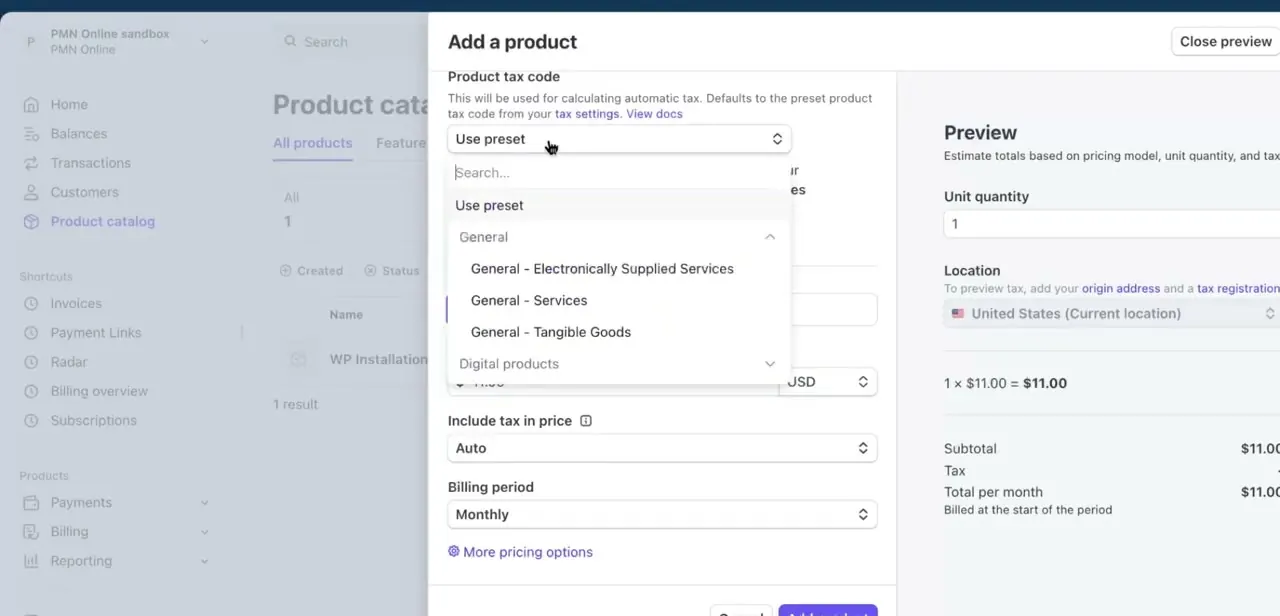
Below the image upload, Product tax code controls how Stripe calculates automatic tax for this item. Clicking the dropdown opens a searchable list grouped into categories like General (with sub-options such as Electronically Supplied Services, Services, and Tangible Goods) and Digital products. Leaving it on Use preset defaults to whatever your account's tax settings specify, which is fine for most stores, but picking the closest matching category here — especially Digital products or Electronically Supplied Services for anything non-physical — keeps your automatic tax calculations accurate from the start.
04Choose Recurring or One-off pricing
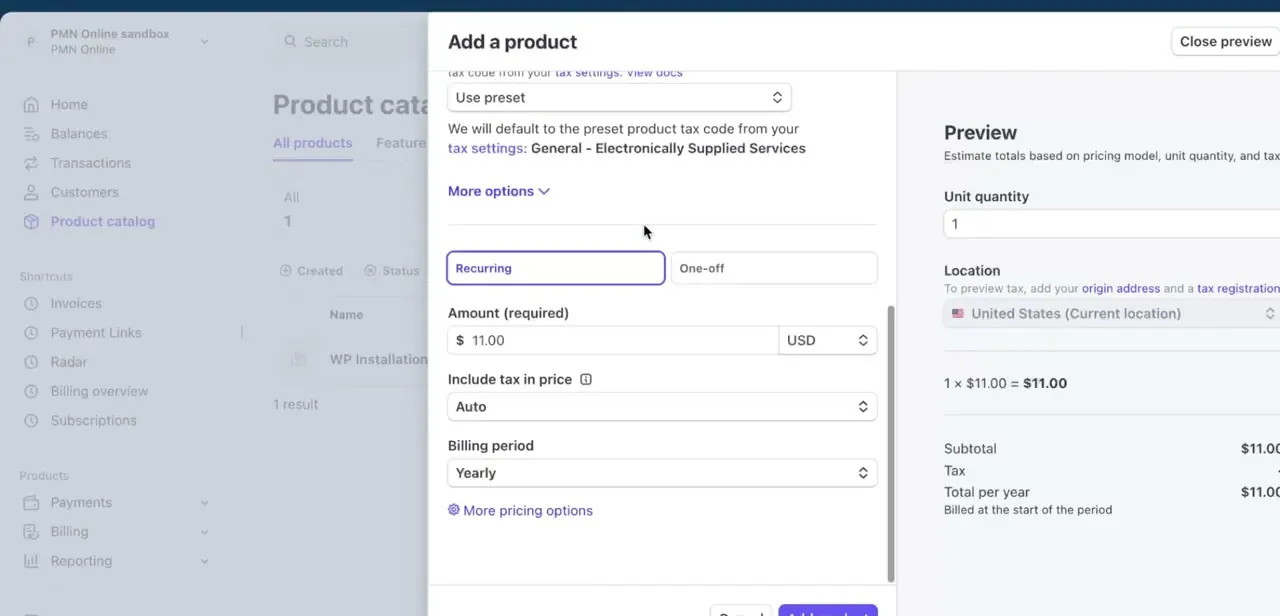
Under More options, the pricing section splits into two tabs: Recurring and One-off. Recurring is what turns a product into a subscription — set the Amount (for example $11.00 USD) and choose the Billing period, such as Monthly or Yearly, and Stripe will automatically charge the customer on that schedule until they cancel. One-off works the same way but charges the amount a single time with no repeat billing, which is the right choice for a straightforward digital download or one-time service fee.
05Decide between monthly and yearly billing
If you're offering a subscription, the billing period you choose has real business implications, not just a checkout label. Monthly billing lowers the barrier to a first purchase and gives you more frequent renewal touchpoints, while yearly billing improves cash flow up front and tends to reduce churn since customers commit for longer. Nothing stops you from creating both — a monthly price and a yearly price on the same product — so customers can pick the option that fits them.
06Add more than one price to the same product
A single product in Stripe isn't limited to one price. Once your first price is saved, you can return to the product and add another — for instance, a Recurring monthly price alongside a Recurring yearly price, or a One-off price next to a subscription option for customers who'd rather pay once. Each price gets its own ID, so your checkout or billing code references whichever specific price you want to offer in a given context.
07Connect the price to checkout or a customer
With the product and its price (or prices) saved, the final step is putting them to use — either by adding the price ID to a Stripe Checkout session or Payment Link, or by attaching it directly to a customer record if you're billing them outside of a storefront flow. Recurring prices specifically require a subscription to be created against the customer, while one-off prices can be charged through a simple payment. Test the flow end to end before sending it to real customers, since a wrong billing period or amount is much easier to catch here than after someone's already been charged.
Frequently asked questions
What's the difference between one-time and recurring prices in Stripe?
In the Add a product panel, One-off charges a customer once with no repeat billing, while Recurring automatically bills them on a set Billing period — Monthly or Yearly, for example — until the subscription is canceled.
Can one product have both a one-time and recurring price?
Yes. A single product in Stripe can have multiple prices attached — for example a Recurring monthly price and a One-off price — each with its own ID that you reference separately at checkout.
Do I need to write code to set up products and prices?
No. Products and prices can be created entirely from the Add a product panel in the Stripe dashboard, including the Recurring/One-off toggle, amount, and billing period — no code required until you connect the price to your own checkout flow.
How do I bill customers on a monthly vs. annual cycle?
When adding a Recurring price, use the Billing period dropdown to choose Monthly or Yearly (among other intervals). You can create separate prices for each interval on the same product if you want to offer both.
Why does Stripe ask for a Product tax code?
The Product tax code determines how Stripe calculates automatic tax for that item. Choosing a specific category, such as Digital products or General - Electronically Supplied Services, keeps tax calculations accurate instead of relying on your account's generic preset.
About the author

Impran M N
I've been hooked on technology for as long as I can remember — especially the new tools and AI apps that seem to land every other week. Easy Tech Tuts is where I write up whatever I've just worked out: I do the task in the real product, record the screen, and turn it into the guide I wish I'd found first.