 Easy Tech Tuts
How to Manually Charge a Customer in Stripe with Credit Cards 2026 Easily
By Impran M N
Not every payment needs a checkout page built into a website. If you're a freelancer or small business billing someone for one-off work, Stripe's Dashboard lets you create and send a payable invoice directly, with the customer entering their own card details on a secure Stripe-hosted page. This guide walks through that actual flow — starting from the Dashboard home, into the Invoices section, and through building an invoice with line items, currency, and tax settings — so you can bill a customer today without writing a line of checkout code.
01Start from the Stripe Dashboard home
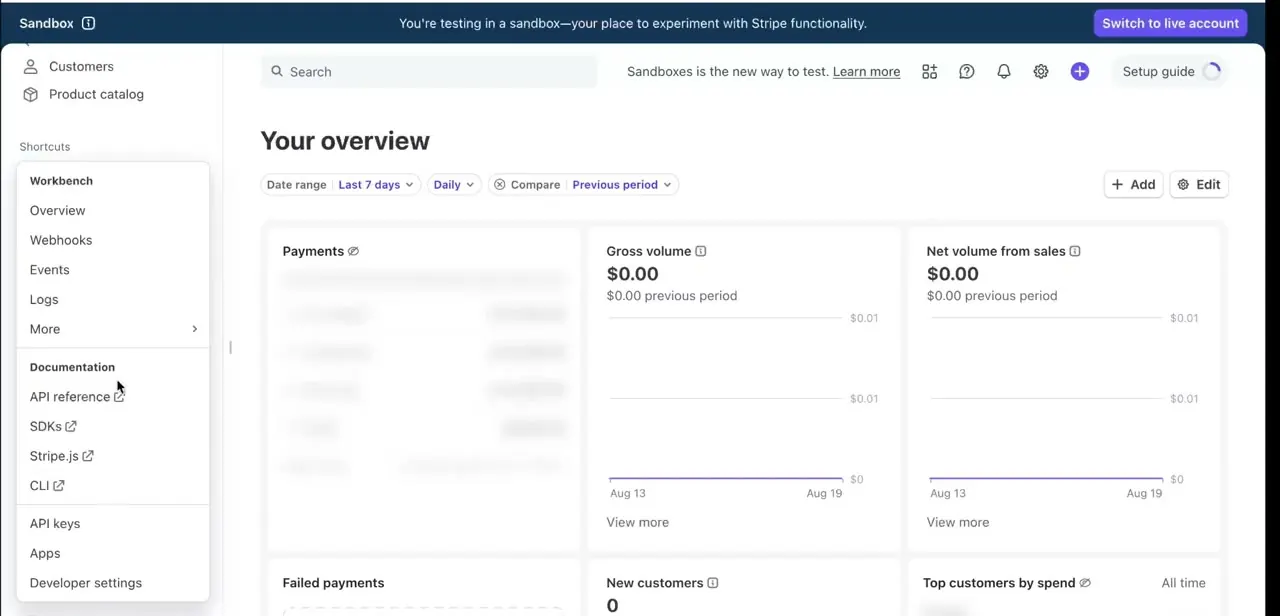
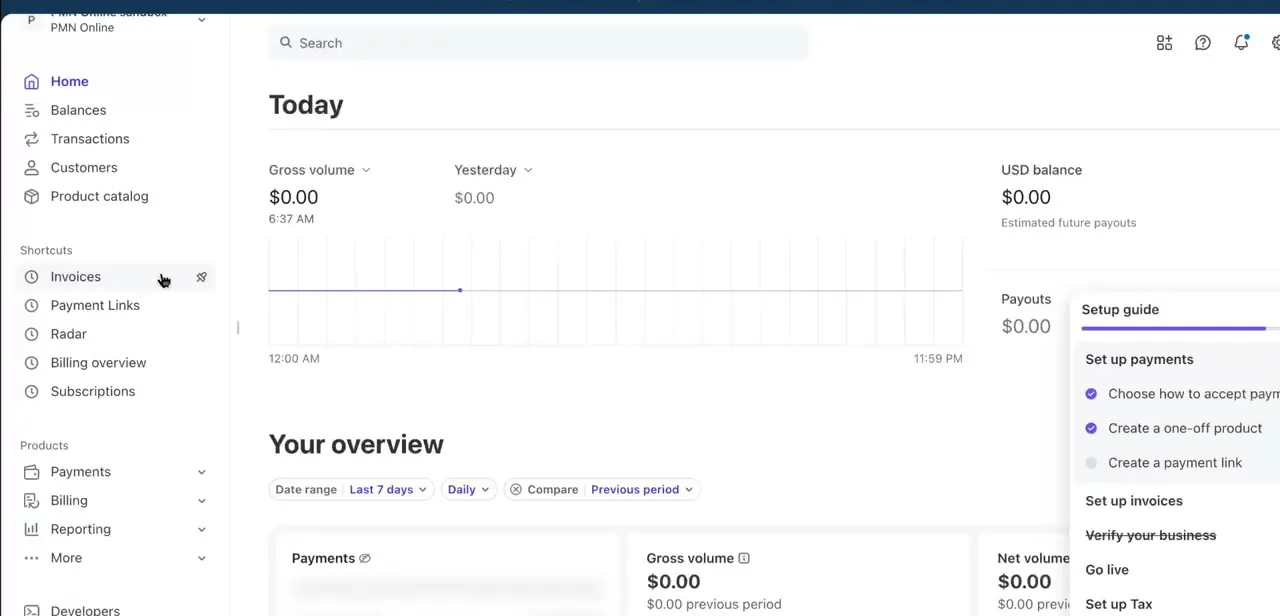
After logging in, you land on the Home view, which shows a Today summary with gross volume, USD balance, and payouts, plus a Setup guide panel on the right walking new accounts through choosing how to accept payments and verifying your business. The left sidebar is where every billing tool lives: Home, Balances, Transactions, Customers, and Product catalog at the top, followed by a Shortcuts section with Invoices, Payment Links, Radar, Billing overview, and Subscriptions. For a manual one-off charge, Invoices is the shortcut you want.
02Open Invoices and start a new one
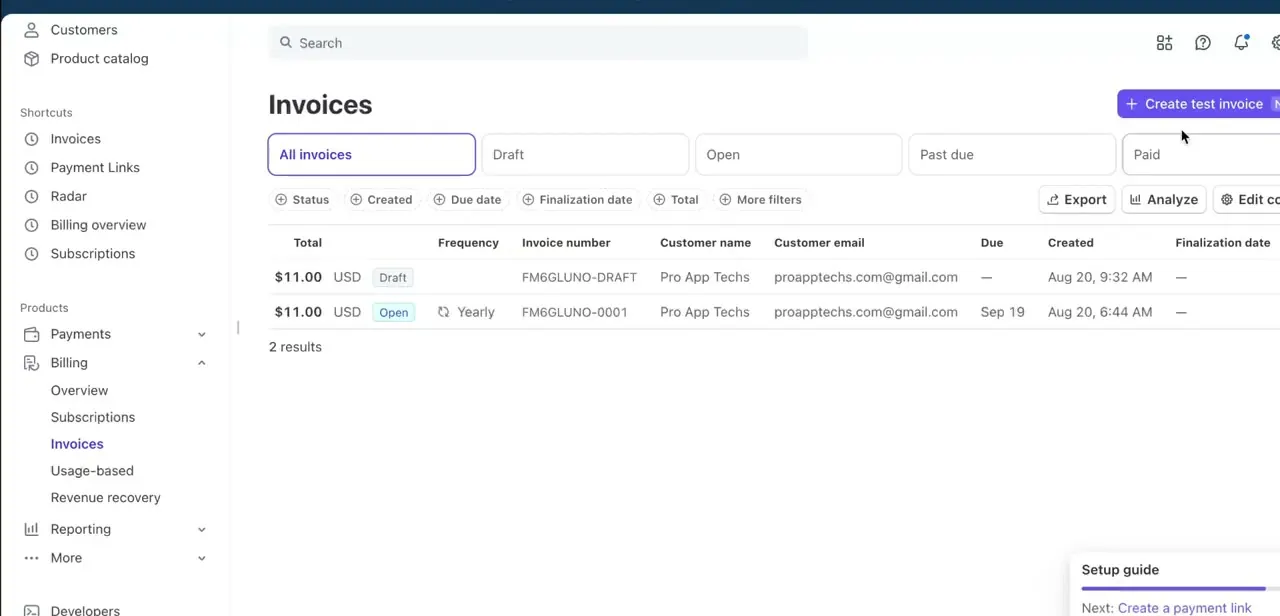
Click Invoices in the sidebar to reach the Invoices list, which is organized into tabs for All invoices, Draft, Open, Past due, and Paid. Any invoice you've created shows up here with its total, frequency, invoice number, customer name and email, due date, and creation date, which is genuinely useful once you're billing more than one or two people and need to see who's actually paid. Click Create test invoice (or Create invoice on a live account) in the top-right corner to start a new one.
03Add the customer and line items
The invoice editor opens with the customer's billing details on one side — name, email, and address, which populate the "Bill to" section of the invoice preview — and the invoice's actual content on the other. Set your Currency first, since switching it later clears any items you've already added.
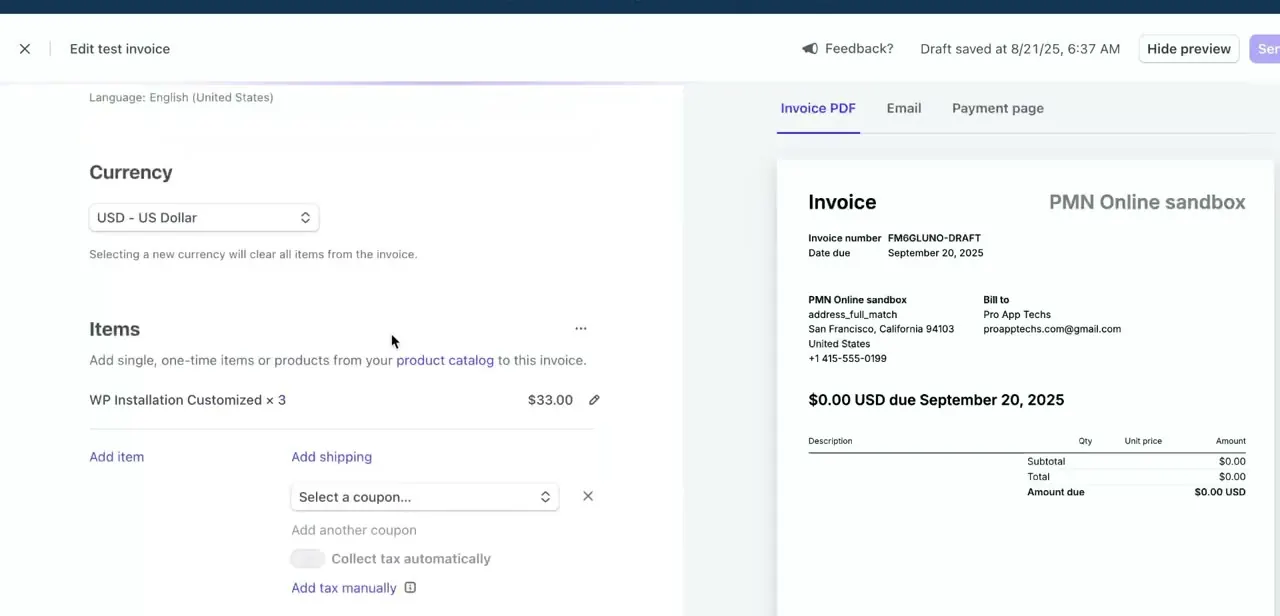
Under Items, click Add item to add single, one-time charges, or pull from your product catalog if you've already set up recurring products. In the frame captured here, a single line item — "WP Installation Customized x3" — totals $33.00, which is exactly the kind of one-off service charge this flow is built for.
04Apply shipping, coupons, or tax if the charge needs them
Below the item list, Add shipping lets you add a delivery charge as its own line, a coupon selector lets you apply a discount code you've already created in Stripe, and a Collect tax automatically toggle hands tax calculation to Stripe rather than you working it out by hand. None of these are required for a simple service charge, but they matter the moment you're billing for anything with a shipped component or a location-based tax obligation.
05Review the invoice preview before sending
The right-hand panel mirrors exactly what the customer will see, with tabs for Invoice PDF, Email, and Payment page. The PDF view shows the invoice number, due date, your business address, the customer's billing address, and the itemized total — check this over carefully, since it's what represents your business to the client. The Payment page tab is the one that matters for actually collecting money: it's the hosted Stripe page where the customer enters their own card number, expiry, and CVC to pay, which is what makes this a manual charge without you ever touching their raw card details.
06Finalize and send the invoice
Once the items, currency, and any tax or coupon settings look right, finalize the invoice to lock in its contents and move it out of Draft status, then send it to the customer's email on file. Stripe emails them a link straight to the Payment page, they enter their card and pay, and the invoice automatically flips to Paid in your Invoices list — which is also where you'd go to check on anything still sitting in Open or Past due.
07Confirm payment and keep the receipt trail
After payment, Stripe automatically emails the customer a receipt and updates the invoice status in your dashboard, so you don't need a separate confirmation step. If you ever need to issue a refund, open the paid invoice or its underlying payment in Transactions and refund it from there — partial and full refunds are both supported. This whole flow, invoice created and sent from the Dashboard rather than a page you built, is Stripe's intended way to bill a customer manually for one-time work.
Frequently asked questions
Is it safe to bill a customer this way?
Yes — the customer enters their own card details on Stripe's hosted Payment page, so you never handle or store their raw card number yourself.
Can I issue a refund on an invoice charged this way?
Yes, once an invoice is paid you can refund it in full or in part from the underlying payment in Transactions, the same as any other Stripe charge.
Do I need the customer present to send an invoice?
No — you build and send the invoice from the Dashboard, and the customer pays whenever they open the emailed link to the Payment page.
Is this method good for recurring billing?
One-off invoices work best for single charges. For anything recurring, use Stripe's Subscriptions or Billing tools, both reachable from the same sidebar shortcuts.
What's the difference between a Draft and an Open invoice?
A Draft invoice is still editable and hasn't been sent. Finalizing it moves it to Open, which locks the contents and makes it payable by the customer.
About the author

Impran M N
I've been hooked on technology for as long as I can remember — especially the new tools and AI apps that seem to land every other week. Easy Tech Tuts is where I write up whatever I've just worked out: I do the task in the real product, record the screen, and turn it into the guide I wish I'd found first.