 Easy Tech Tuts
How to Connect Stripe With QuickBooks Easily 2026
By Impran M N
If you take payments through Stripe, connecting it to QuickBooks means those charges, fees, and refunds flow into your books instead of you re-typing them from a Stripe export. There isn't one single official path here — QuickBooks surfaces several Stripe-compatible connector apps rather than a single built-in toggle, so part of the job is picking the right one. This guide covers signing into Stripe, finding the connector options inside QuickBooks, and getting through the authorization screen that actually links the two accounts.
01Confirm your Stripe account is active
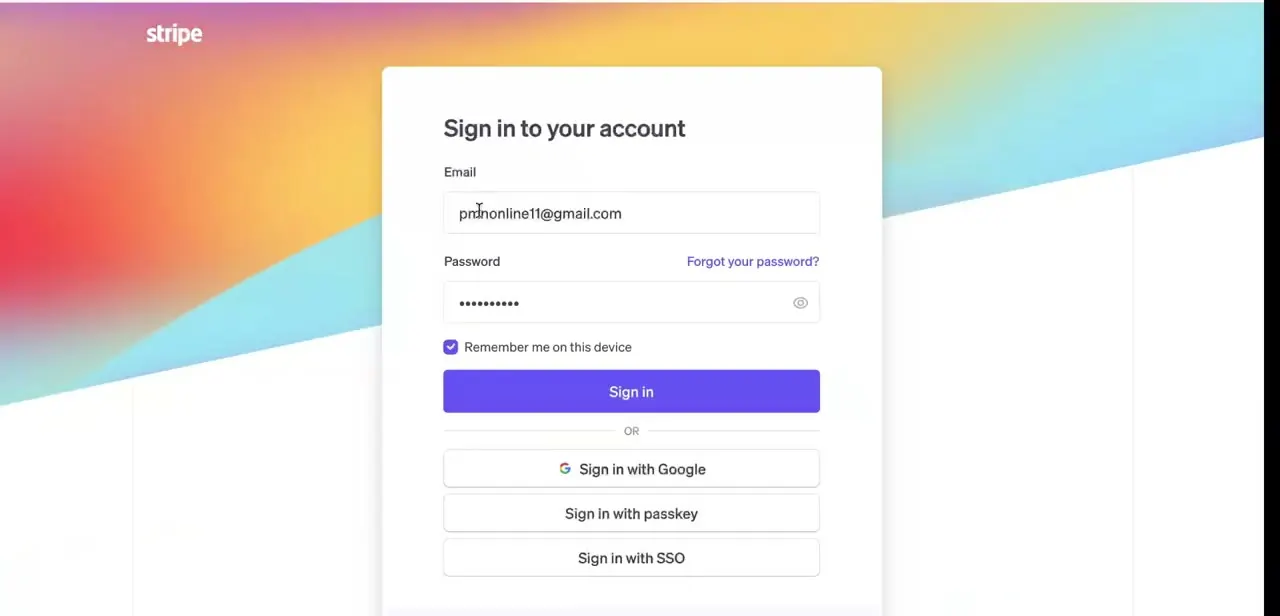
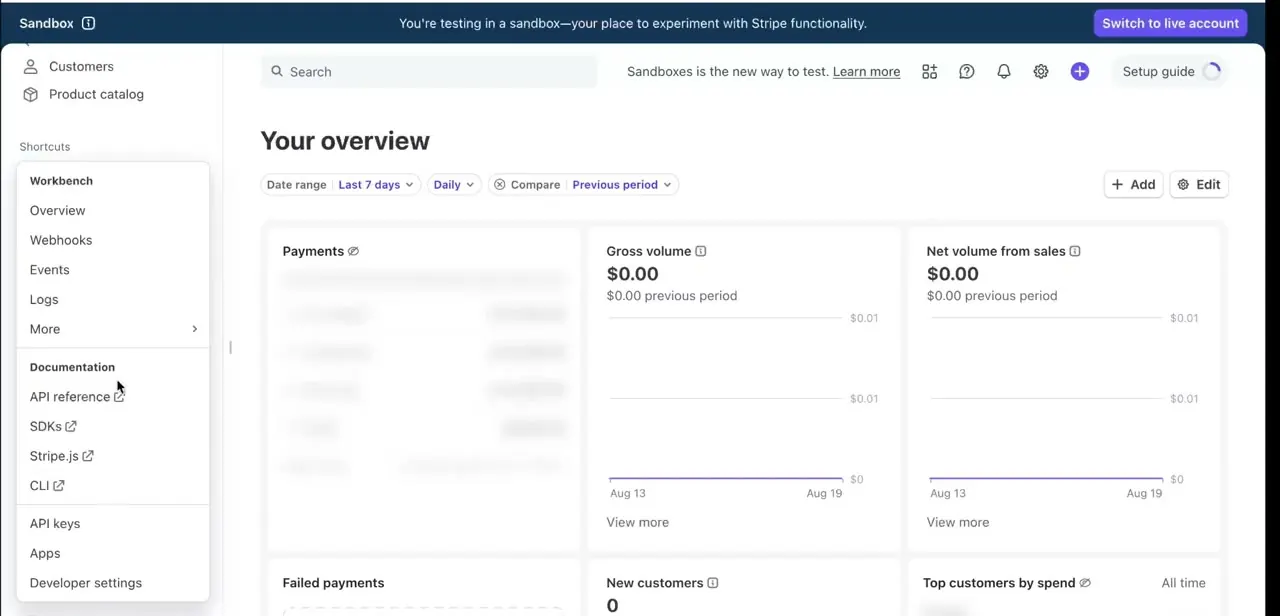
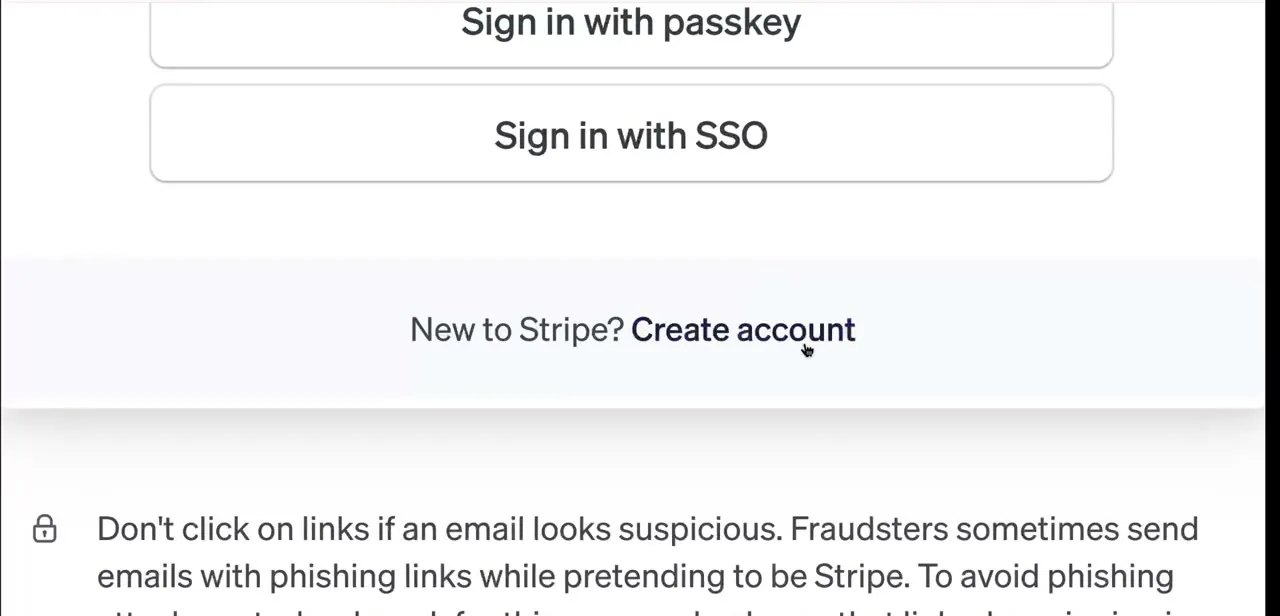
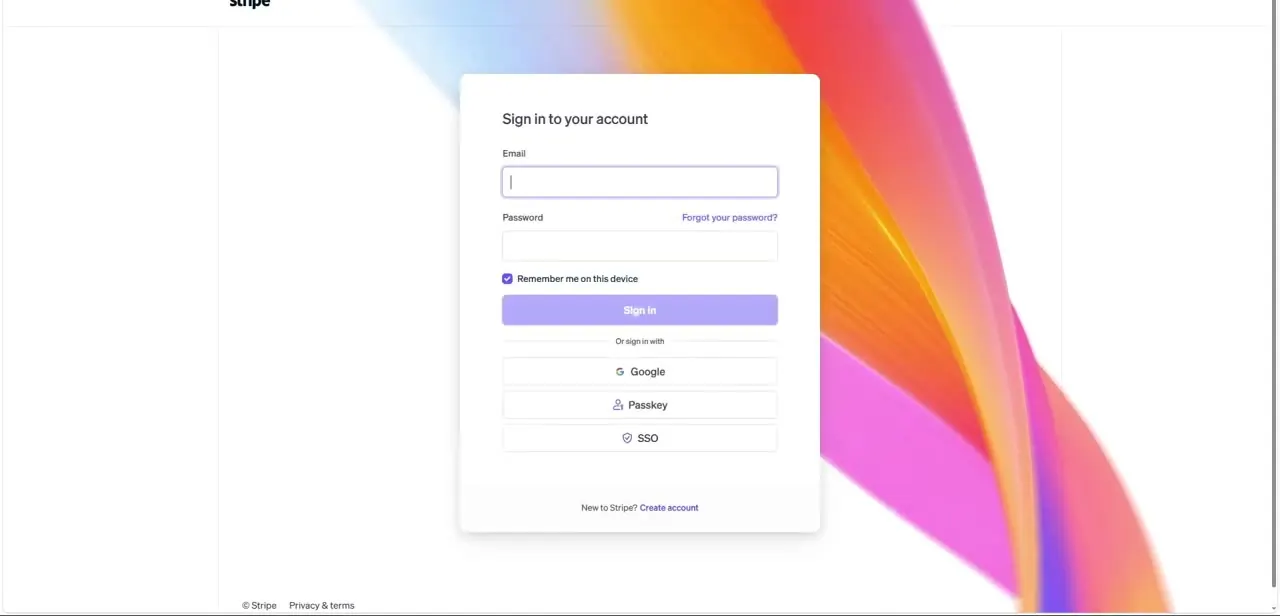
Before connecting anything, sign into Stripe directly and make sure the account is fully set up — payouts enabled, business details confirmed, and at least a few transactions or a payments product live. Stripe's sign-in screen accepts email and password or single sign-on through Google, a passkey, or SSO, and if you're setting up a brand-new account you'll go through Stripe's own verification steps first. Do this before touching QuickBooks, since the connector apps expect an account that's already functional rather than one still pending Stripe's review.
02Start the link from Bank transactions in QuickBooks
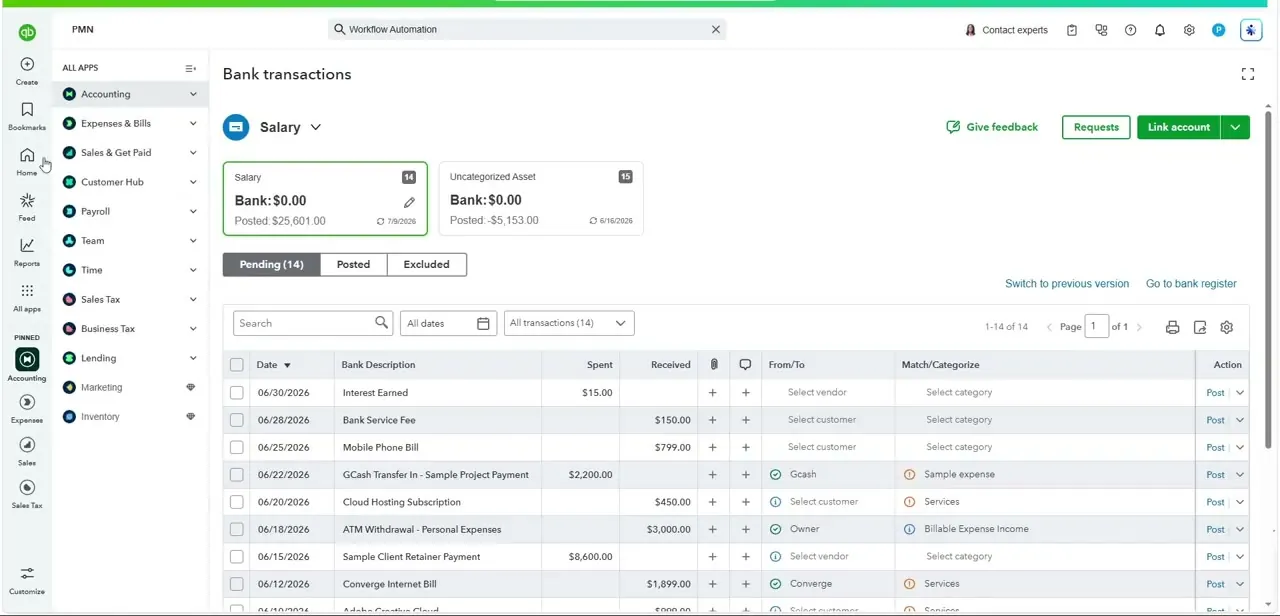
In QuickBooks Online, go to Bank transactions under the Accounting or Sales area of the left menu. This screen lists your connected accounts as tabs along the top — in a fresh account you might just see something like Salary or Uncategorized Asset — with a green Link account button in the top right. That button is the entry point for adding any new payment source, Stripe included, and it opens into QuickBooks' broader integrations search rather than a Stripe-specific form.
03Search "stripe" and compare the connector options
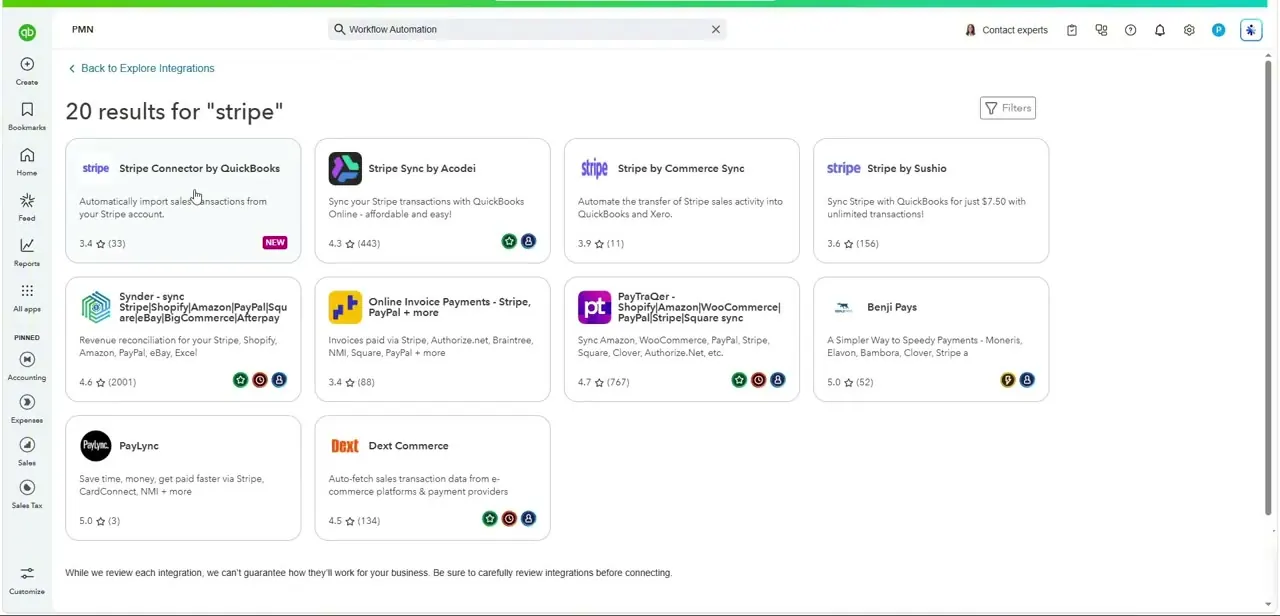
Searching "stripe" in QuickBooks' integrations search returns roughly twenty results, not one — Stripe Connector by QuickBooks sits alongside third-party options like Stripe Sync by Acodei, Stripe by Commerce Sync, and Stripe by Sushio, each with different pricing and star ratings shown right on the card. QuickBooks itself notes it can't guarantee how each integration will perform for your business, so it's worth reading a few descriptions rather than clicking the first result — Stripe Connector by QuickBooks is the most direct native option, while the others add features like multi-platform reconciliation across Stripe, Shopify, and PayPal at different price points.
04Authorize the data-sharing consent screen
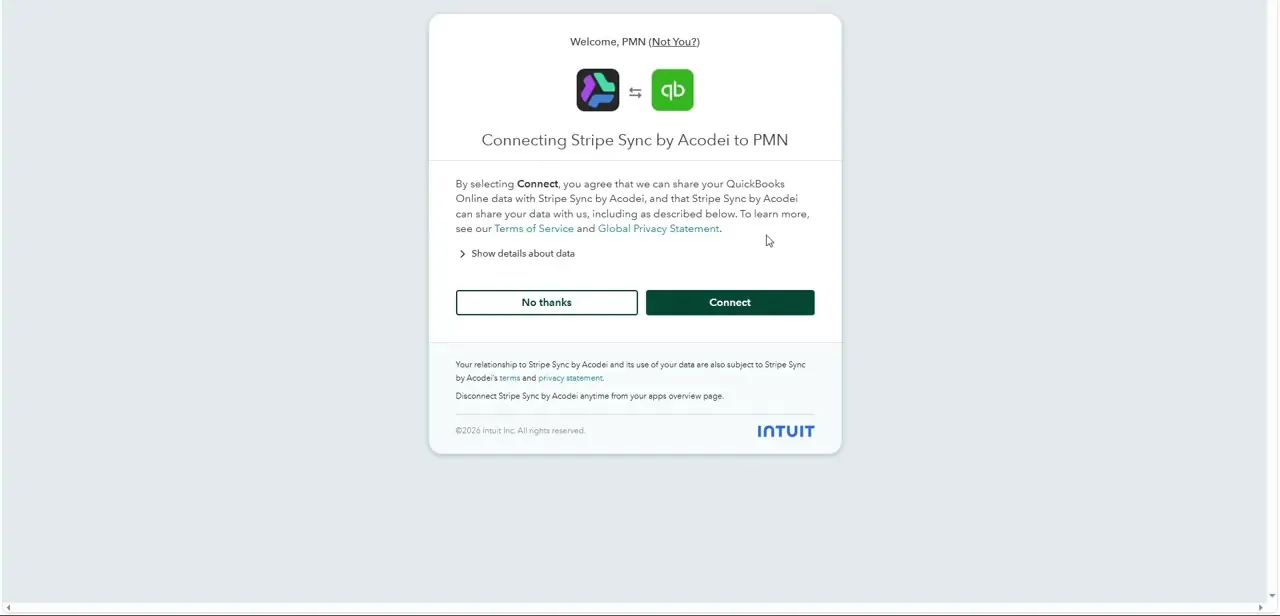
Selecting a connector opens an authorization screen confirming which QuickBooks company you're connecting — shown by name, with a "Not You?" link if it's the wrong one — and stating plainly what you're agreeing to: that QuickBooks will share your company data with the connector app, and that the app can share data back with Intuit. Read the "Show details about data" link if you want the specifics of what's shared before clicking Connect, since this consent is what actually creates the live link between your Stripe activity and your books.
05Check how transactions land once the sync runs
After connecting, give the app its first sync cycle and then check Bank transactions again for new rows tied to Stripe activity — charges, payouts, and Stripe's own processing fees typically arrive as separate line items rather than one net figure. Match Stripe payouts to the invoices they cover rather than posting them as generic income, since a single payout often bundles several days of charges together. Most connector apps also have their own dashboard outside QuickBooks where you can see sync history and catch errors before they show up as mismatched numbers in your books.
06Troubleshoot a stalled or partial connection
If transactions stop appearing after previously working, check the connector app's own settings page first — most of these third-party apps have usage tiers or transaction limits that can quietly pause a sync once you exceed them. Re-authorization is the other common cause, particularly if you changed your Stripe or QuickBooks password since connecting; revisit the same integrations search, find your connected app, and look for a reconnect or repair option rather than adding a second, duplicate connection.
Frequently asked questions
Is there only one way to connect Stripe to QuickBooks?
No. Searching "stripe" in QuickBooks' integrations panel returns around twenty results, including the native Stripe Connector by QuickBooks and several third-party sync apps with different pricing and features.
Where do I start the connection process in QuickBooks?
From Bank transactions, using the Link account button in the top right — it opens QuickBooks' broader integrations search rather than a Stripe-specific setup screen.
What am I agreeing to on the consent screen?
That QuickBooks can share your company data with the connector app, and the app can share data back with Intuit — the details link on that screen spells out exactly what's included.
Will Stripe payouts show as one lump sum in QuickBooks?
Often yes, since a single payout can bundle several days of charges. Match each payout back to the invoices it covers rather than posting it as one generic income line.
What should I do if transactions aren't syncing?
Check the connector app's own settings for a usage limit or paused status first, then look for a reconnect option in QuickBooks' integrations search rather than creating a duplicate connection.
About the author

Impran M N
I've been hooked on technology for as long as I can remember — especially the new tools and AI apps that seem to land every other week. Easy Tech Tuts is where I write up whatever I've just worked out: I do the task in the real product, record the screen, and turn it into the guide I wish I'd found first.