 Easy Tech Tuts
How to Accept ACH Payments With Stripe, Does Stripe Accept it, Know Easily 2026
By Impran M N
Stripe does support ACH payments, but the option isn't switched on by default the way card payments are — you have to enable ACH Direct Debit specifically in your payment methods settings and connect it to a way of verifying customer bank accounts. For US businesses handling larger invoices or subscriptions, ACH is worth the extra setup step since bank-to-bank transfers carry lower processing fees than cards. This guide covers where the toggle lives in the Stripe Dashboard, what account-connection options you'll be asked to choose, and how to confirm it's working before relying on it for real customer payments.
01Open Settings in your Stripe Dashboard
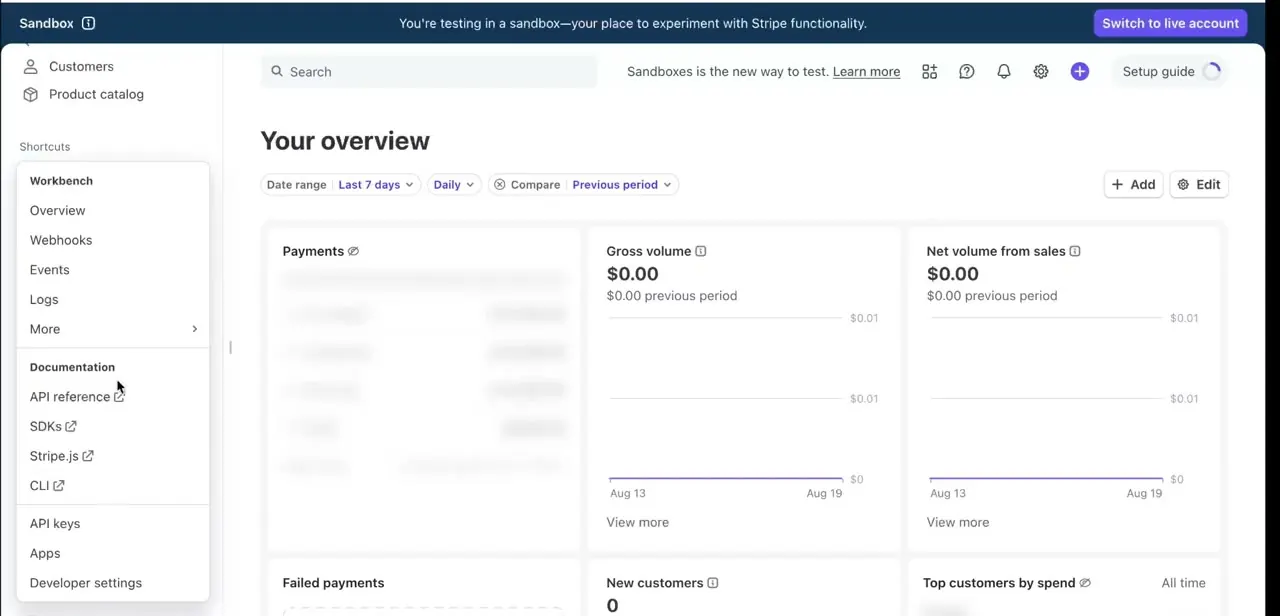
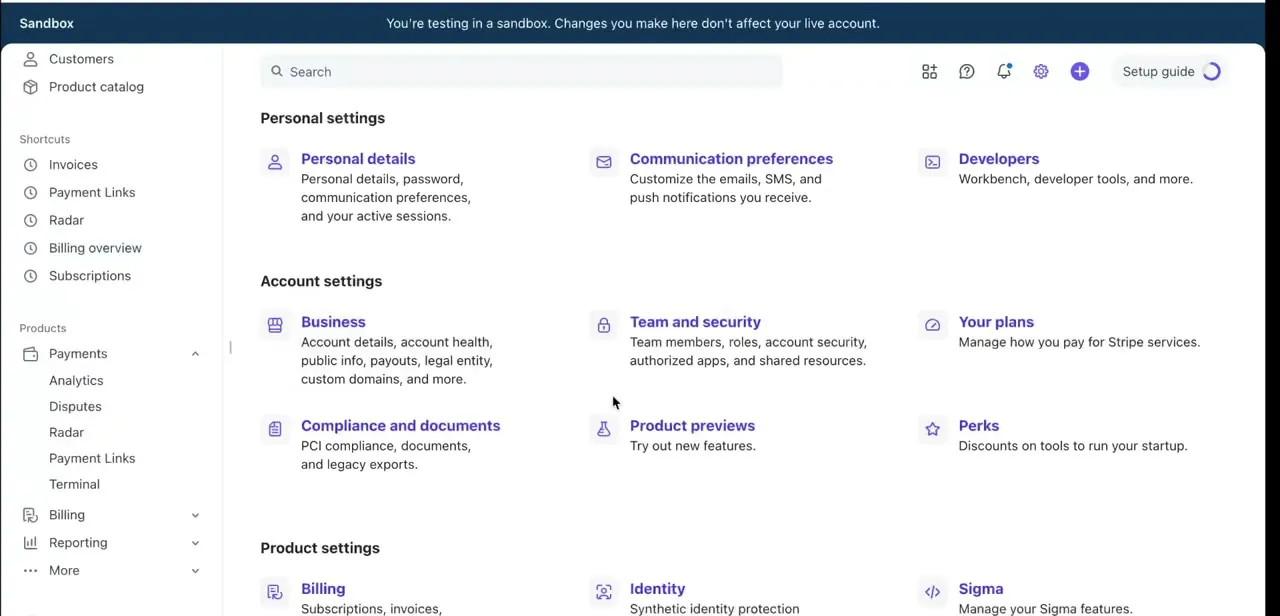
From the Stripe Dashboard, click the gear icon to reach Settings, which is organized into Personal settings and Account settings sections — Personal details, Communication preferences, and Developers on one row, then Business, Team and security, and Your plans below that. ACH itself isn't configured from this general settings page, but it's the starting point for reaching Payments, where the actual payment methods list lives. If you're working in a sandbox, a blue banner across the top confirms you're testing and that changes here won't touch your live account.
02Know the difference between ACH debit and ACH credit
ACH debit is what most businesses mean when they say "accept ACH payments" — you pull funds directly from a customer's bank account once they've authorized it, which works well for one-time purchases, invoices, and recurring subscriptions. ACH credit runs the opposite direction: the customer pushes funds to you from their own bank, which is less common for typical checkout flows and used more for things like payouts or B2B transfers initiated by the payer. Stripe supports both, but ACH Direct Debit under Payment methods is the one you'll set up for a standard storefront or invoicing use case.
03Enable ACH Direct Debit under Payment methods
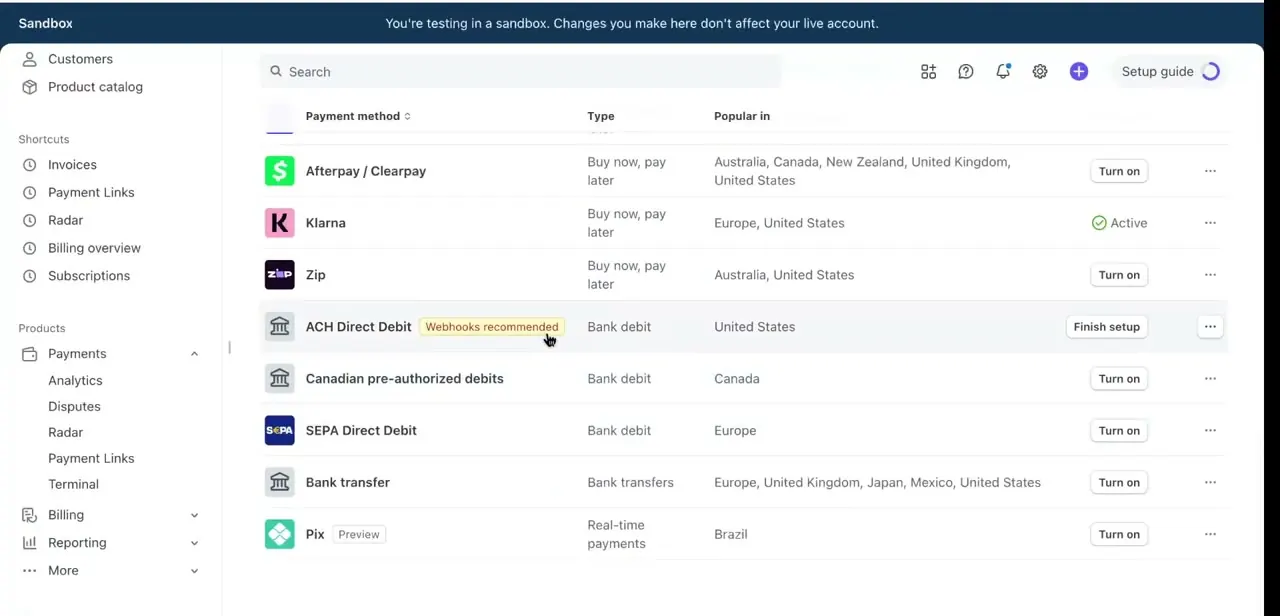
Go to Payments in the left sidebar, then Payment methods, where Stripe lists every option available for your account alongside its type and where it's popular — Afterpay/Clearpay and Klarna under buy-now-pay-later, SEPA Direct Debit for Europe, Pix for Brazil, and ACH Direct Debit tagged Bank debit, popular in the United States. Click Finish setup next to ACH Direct Debit; Stripe flags it with a "Webhooks recommended" note, meaning you should have a webhook endpoint ready to catch the asynchronous status updates ACH payments generate, since they don't confirm instantly the way a card charge does.
04Connect bank accounts through Stripe Financial Connections
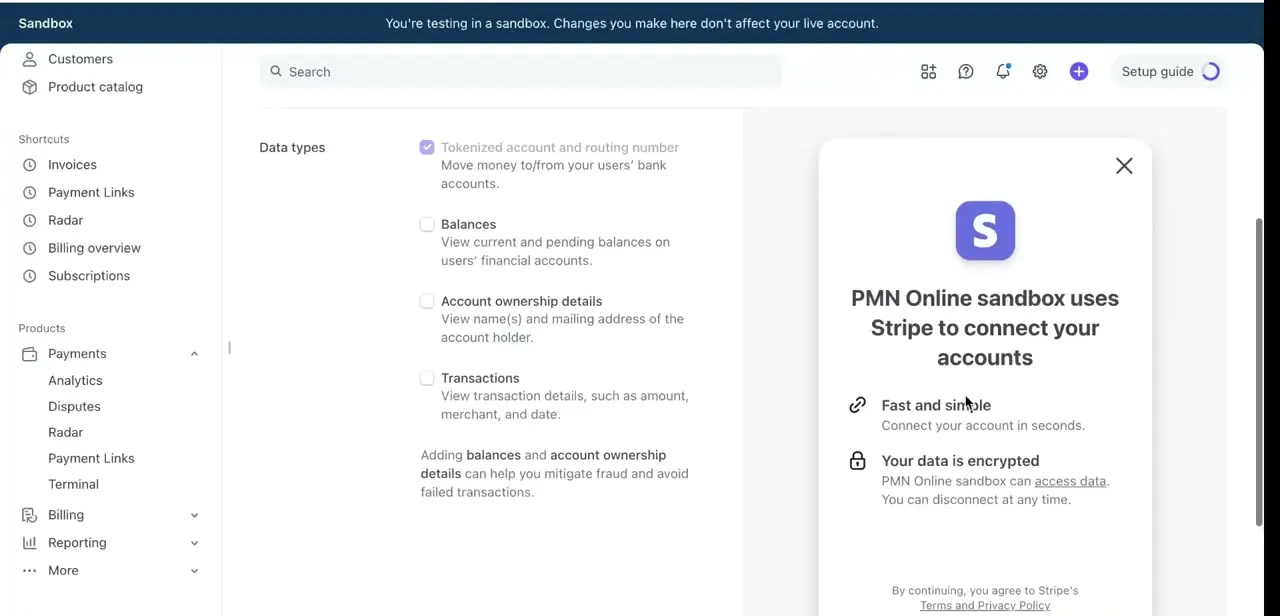
Finishing ACH setup routes you through Stripe Financial Connections, which handles verifying that a customer's bank account is real and able to receive a debit. You'll choose which data types to request — Tokenized account and routing number is required to move money at all, while Balances, Account ownership details, and Transactions are optional add-ons that help catch fraud and reduce failed payments by confirming the account holder's name matches and funds are actually available. Stripe's own guidance on this screen recommends adding balances and ownership details specifically to cut down on failed transactions, so it's worth enabling them even though they're not mandatory.
05Understand ACH fees and processing time
ACH payments cost less per transaction than cards, but they settle far slower — typically several business days rather than the near-instant confirmation of a card charge, since the payment has to clear through the banking network. Because of that delay, ACH is a better fit for invoices, subscriptions, and larger purchases where a short wait is acceptable, rather than anything where a customer expects instant access to a digital product immediately after paying.
06Test ACH payments before going live
Stay in the sandbox environment and run a test transaction using Stripe's documented test bank account and routing numbers, which simulate a successful ACH debit without touching a real bank. Confirm your webhook correctly receives and handles the payment_intent status changes, since ACH transactions move through pending, processing, and succeeded (or failed) states over time rather than resolving in a single response the way a card payment does. Only switch to live mode once you've watched a full test payment move through each of those states correctly.
Frequently asked questions
Does Stripe accept ACH payments?
Yes. Stripe supports ACH Direct Debit for pulling payments from US bank accounts, plus ACH credit for the reverse direction. It has to be enabled specifically under Payment methods in your Stripe Dashboard.
What's the difference between ACH debit and ACH credit on Stripe?
ACH debit pulls funds from a customer's bank account with their authorization — the standard setup for checkout and subscriptions. ACH credit is the customer pushing funds to you, used less often for typical storefronts.
Why does Stripe recommend webhooks for ACH payments?
ACH payments don't confirm instantly like card charges — they move through pending, processing, and succeeded or failed states over several days, and webhooks are how your system gets notified as that status changes.
How long does an ACH payment take to process on Stripe?
Typically several business days, since the transfer has to clear through the banking network, unlike a card payment which confirms in seconds.
Do I need Stripe Financial Connections to accept ACH payments?
Yes — it's how Stripe verifies a customer's bank account details before a debit can be attempted, and it's part of the standard ACH Direct Debit setup flow.
About the author

Impran M N
I've been hooked on technology for as long as I can remember — especially the new tools and AI apps that seem to land every other week. Easy Tech Tuts is where I write up whatever I've just worked out: I do the task in the real product, record the screen, and turn it into the guide I wish I'd found first.