 Easy Tech Tuts
How to Change Paragraph Spacing on Squarespace, Line Spacing in CSS Style 2026
By Impran M N
Cramped body text is the single fastest way to make an otherwise good Squarespace site feel amateur, and it is also one of the easiest things to fix. Squarespace 7.1 exposes line height and letter spacing as sliders inside Site Styles, so you can loosen or tighten every paragraph on the site without touching a line of CSS.
The controls are live — the page behind the panel re-flows as you drag, which is both the best and the most dangerous part of the feature, because it is very easy to overshoot. This guide walks the exact path through the editor, explains what each slider actually does to your type, and gives you sane numbers to land on instead of guessing.
01Open the site you want to restyle
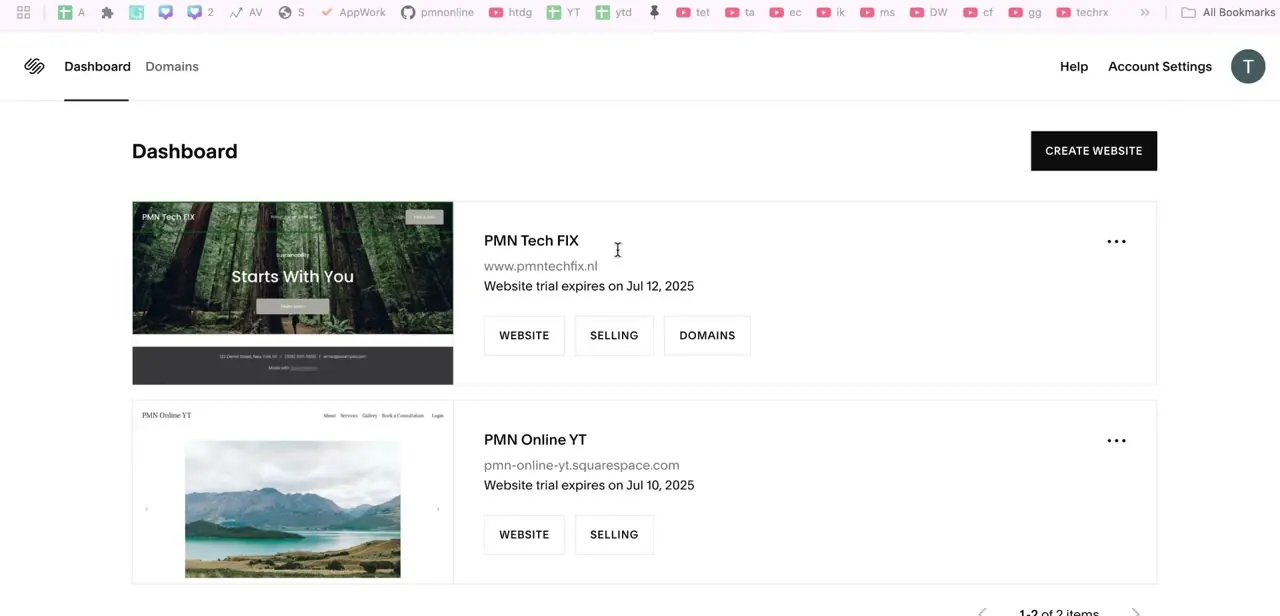
Sign in at squarespace.com and pick the site from your dashboard. Spacing set through Site Styles is global — it applies to every page that uses the same text style, which is exactly what you want for consistency but also means a bad value shows up everywhere at once.
If you run more than one site on the account, double-check you opened the right one before you start dragging sliders. From the dashboard, click Edit to open the page editor, since the styling panel lives inside the editor rather than in the settings area.
02Open Site Styles from the editor
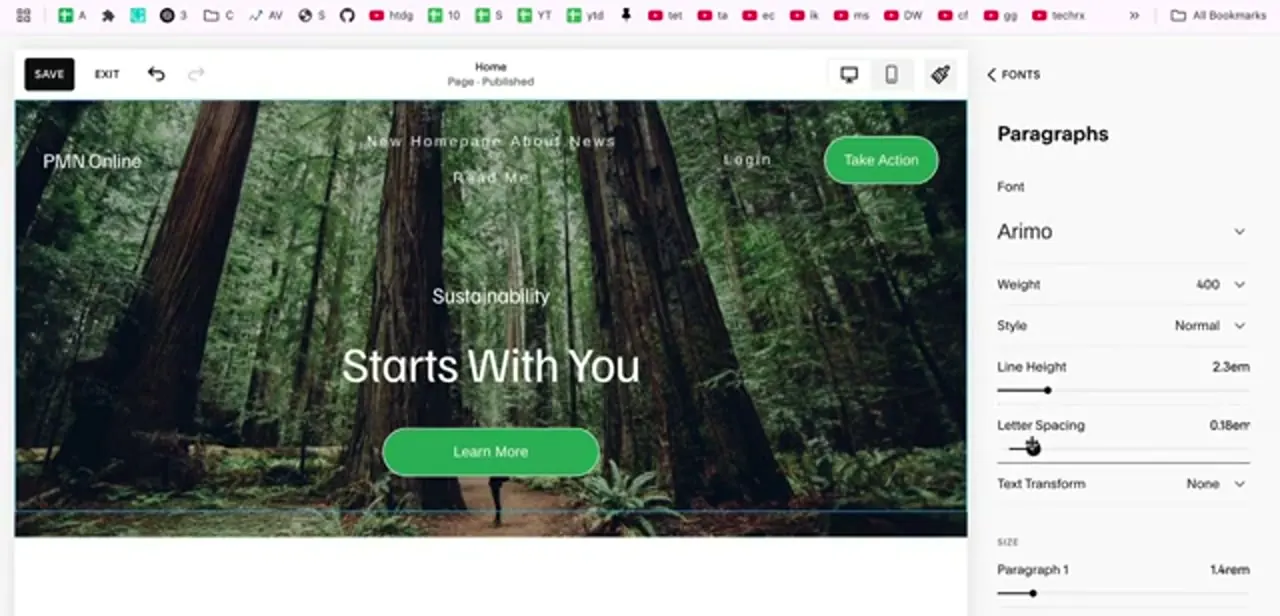
Inside the editor, look at the toolbar across the top of the preview. Alongside the desktop and mobile view toggles there is a paintbrush icon — that is Site Styles.
Clicking it slides a panel in from the right with the site-wide design controls: Fonts, Colors, Buttons, Animations and so on. Everything in this guide happens under Fonts, so open that section first. Note the desktop and mobile icons in that same toolbar; you will want them shortly, because spacing that reads well on a wide screen often falls apart on a phone.
03Go to Fonts and open Paragraphs
Under Fonts you'll find your text groups broken out separately — Headings, Paragraphs, Buttons and so on. Choose Paragraphs to control body copy.
The panel gives you Font, Weight, Style, Line Height, Letter Spacing and Text Transform, with a SIZE section underneath holding Paragraph 1, 2 and 3. Line Height and Letter Spacing are the two sliders that matter for spacing, and both are measured in em, so they scale with the font size rather than being locked to pixels. That is why a value that looks right at one size usually still looks right when you bump the text up.
04Set line height for readable body copy
Line height is the vertical gap between lines within a paragraph, and it does more for readability than font size does. For body text, somewhere between 1.4em and 1.7em is the comfortable range for most fonts; below about 1.3em lines start to collide and the eye loses its place returning to the left margin.
Pushing it far higher, as in the 2.3em setting shown above, does the opposite damage — the lines stop reading as one paragraph and start looking like a list. Drag the slider slowly and watch a real paragraph of your own copy in the preview, not a heading, because headings and body text need very different values.
05Use letter spacing sparingly on body text
Letter spacing controls the horizontal gap between individual characters. On paragraphs it should be almost invisible — anything past roughly 0.05em starts to slow reading down noticeably, because the words stop holding together as shapes.
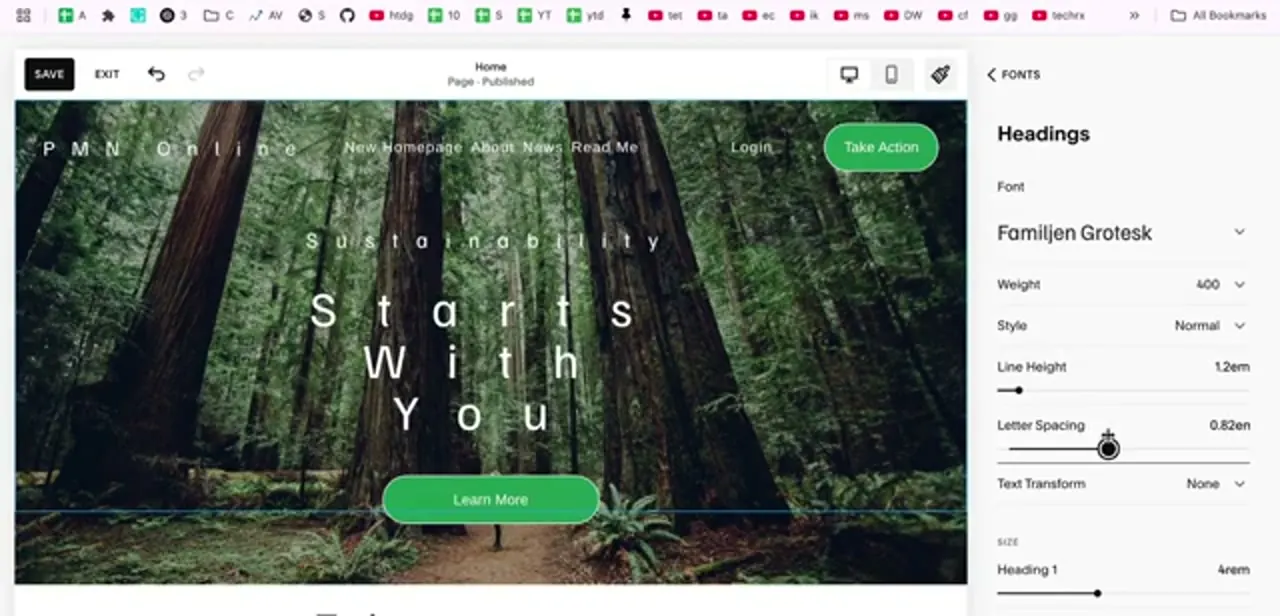
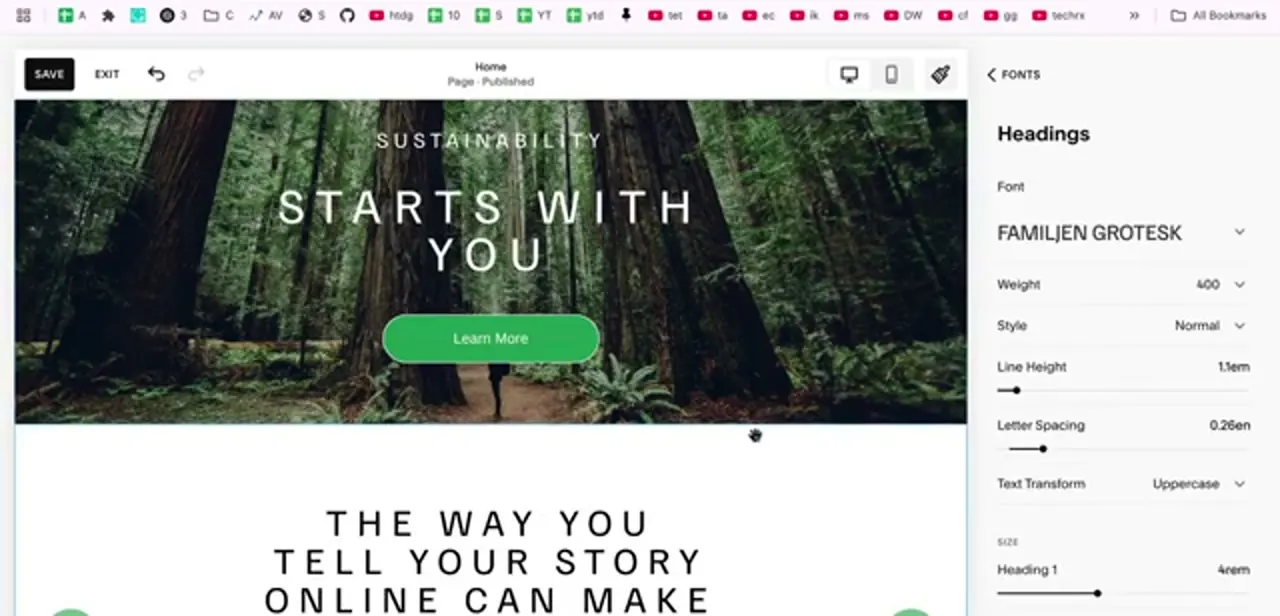
Where letter spacing genuinely earns its place is on headings and small caps, and that lives in the Headings panel rather than Paragraphs. Open Headings the same way and you get the identical set of controls for your display type, including Text Transform, which is how you get an uppercase heading style with generous tracking without retyping any of your text.
06Check the result on mobile before saving
Extra line height and letter spacing cost horizontal and vertical room, and phones have far less of both. A heading that fits on two tidy lines at desktop width can wrap to four on a phone once you widen the tracking, and generous line height on paragraphs can push your call-to-action well below the fold.
Switch to the mobile view with the phone icon in the top toolbar and scroll through a text-heavy page before you commit. Squarespace scales type down on small screens automatically, but it does not rescue a layout you have deliberately stretched.
07Save, and know when CSS is actually needed
Click SAVE in the top-left of the editor to publish the change; until you do, everything you've adjusted is only a preview. If you decide you went too far, the undo arrow next to SAVE steps back through your edits before you commit them.
For most sites the built-in sliders are the whole answer, and they are safer than code because they survive template updates. Reach for Custom CSS only when you need something the panel genuinely cannot express — spacing on one specific block, a different line height inside a single page, or spacing that changes at a particular breakpoint. In that case target the block's own ID rather than a global paragraph selector, so your override doesn't quietly fight the Site Styles setting everywhere else.
Frequently asked questions
Do I need to know CSS to change paragraph spacing on Squarespace?
No. Line height and letter spacing are sliders inside Site Styles → Fonts → Paragraphs on Squarespace 7.1, and they apply site-wide with no code at all.
Where exactly is the paragraph spacing setting?
Open the page editor, click the paintbrush icon in the top toolbar to open Site Styles, then choose Fonts and open the Paragraphs group. Line Height and Letter Spacing sit under Font, Weight and Style.
What's the difference between line height and letter spacing?
Line height is the vertical gap between lines of a paragraph; letter spacing is the horizontal gap between individual characters. Line height affects readability most, so change it first and leave letter spacing near zero on body text.
What line height should I use for body text?
Roughly 1.4em to 1.7em suits most fonts. Below 1.3em lines start crowding each other, and much above 1.8em the paragraph stops reading as a single block.
Can I change spacing on just one text block instead of the whole site?
Site Styles is global by design. For a single block you need Custom CSS targeting that block's ID, which is the one case where code beats the built-in controls.
Will my spacing changes break on mobile?
They can. Wider tracking and taller line height make text take more room, so headings wrap more on narrow screens. Preview with the mobile toggle in the editor toolbar before saving.
About the author

Impran M N
I've been hooked on technology for as long as I can remember — especially the new tools and AI apps that seem to land every other week. Easy Tech Tuts is where I write up whatever I've just worked out: I do the task in the real product, record the screen, and turn it into the guide I wish I'd found first.