 Easy Tech Tuts
How to Build a Course in Squarespace Easily 2026
By Impran M N
Squarespace builds course selling directly into its Content & Memberships tools, so you don't need a separate course platform bolted onto your site — chapters, lessons, pricing tiers, and paywalls all live in the same dashboard as the rest of your website. This guide walks through creating a course from a Squarespace dashboard, naming it, deciding what gets locked behind a paywall and what tier unlocks it, and styling the course page to match your site before it goes live. It's aimed at anyone who wants to sell structured video or text lessons without stitching together a separate course app.
01Start from your Squarespace dashboard
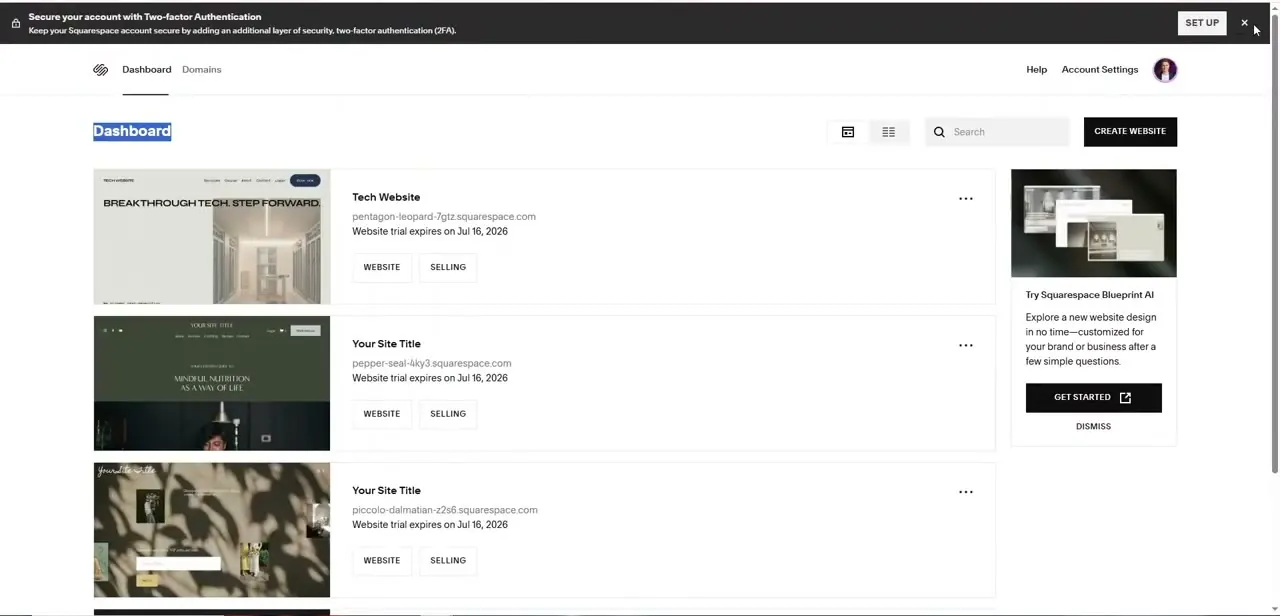
Every site you've created shows up as a card on the main Dashboard, complete with its trial expiration date and quick links to Website and Selling settings. This is also where Squarespace surfaces Blueprint AI as a shortcut for generating a new site design from a short questionnaire — useful if you're starting a dedicated course site from scratch, though it's optional if you're adding a course to a site you've already built.
02Create the course and name it
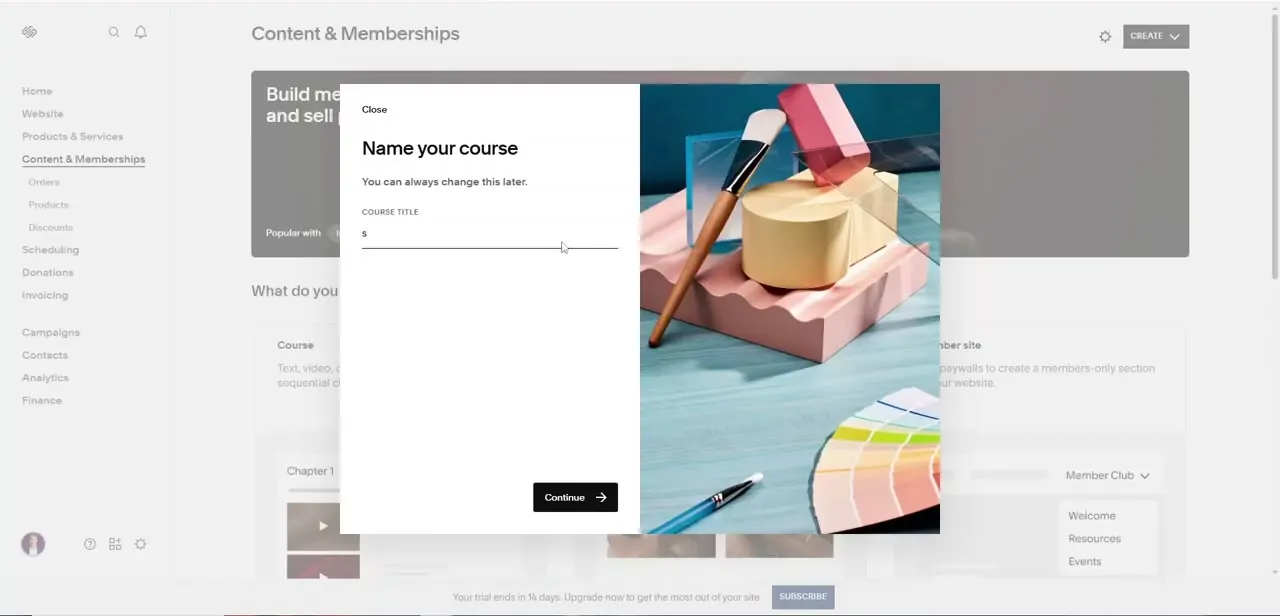
Inside a site, go to Content & Memberships, where Squarespace lays out its content types side by side — Course among them, described as supporting text, video, and sequential chapters. Starting one opens a simple "Name your course" dialog with a single field for the course title, and Squarespace makes a point of noting you can always change it later, so there's no pressure to get the name perfect before moving forward. Behind that dialog you can already see the chapter structure beginning to take shape, with Chapter 1 and its lessons listed underneath.
03Set pricing tiers and paywall placement
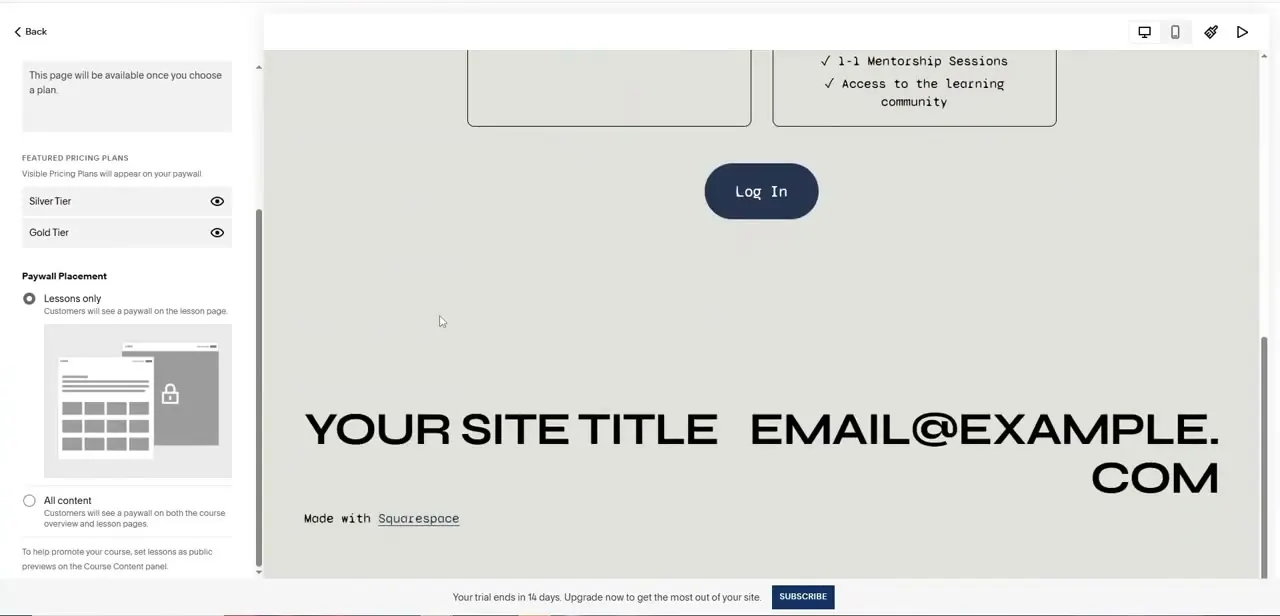
Once the course has content, the paywall settings determine what a non-paying visitor actually sees. You choose which pricing plans — Silver Tier and Gold Tier in this setup — are featured on the paywall, then decide the Paywall Placement: "Lessons only," where customers see a locked icon on individual lesson pages but can browse the course overview freely, or "All content," where the paywall appears on both the overview and every lesson page. A visitor who hits a locked page sees a simple Log In prompt, which is the moment that actually converts a browser into a paying student, so it's worth testing both placement options to see which drives more signups for your particular course.
04Style the course page
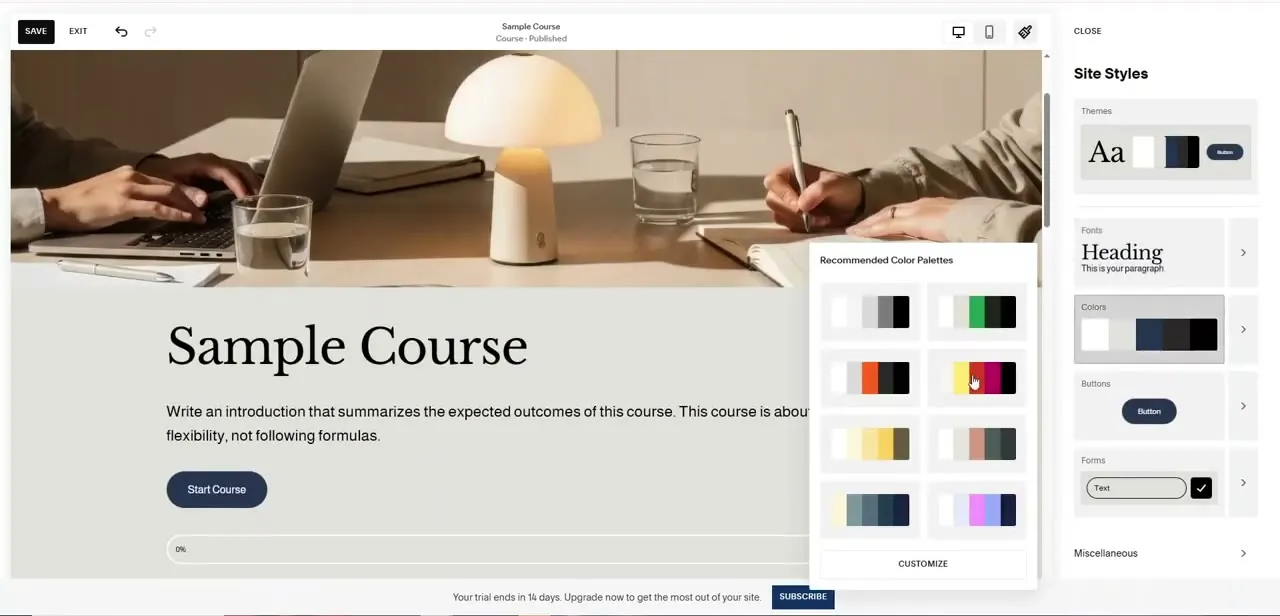
The course page itself is edited like any other Squarespace page — Save, Exit, and a device preview toggle sit at the top, with a Site Styles panel on the right covering Themes, Fonts, Colors, Buttons, and Forms. Squarespace surfaces Recommended Color Palettes right in this panel, letting you preview how the Sample Course title, its description, and the Start Course button look against several color combinations without leaving the page. The page also shows the course's real elements as you'll publish them: a title, an outcome-focused description, a Start Course call to action, and a progress indicator that will track how far a student has gotten.
05Structure lessons for a logical progression
Behind the polish, course quality comes down to how the chapters are ordered. Group lessons into chapters that build on each other rather than dumping every video into one long list, and use the chapter titles themselves to signal progress — a student scanning the outline should be able to tell roughly what they'll know by the end of each one. Mixing video lessons with shorter text or resource pages between them also keeps the pacing from feeling like a single unbroken video marathon.
06Publish and promote before you rely on it for revenue
A course sitting unpublished or unlinked from your main navigation won't sell itself — link it from your homepage or a dedicated Courses page, and treat the first week after launch as a testing period rather than a finished product. Watch where students drop off, adjust pricing tiers if the paywall placement isn't converting, and use your trial period to iron out structure and pricing questions before subscribing to keep the site live long-term.
Frequently asked questions
Do I need technical skills to build a course in Squarespace?
No — courses are created and managed from the Content & Memberships section using the same visual tools as the rest of your site, with no coding required to set up chapters, lessons, or pricing.
How does the paywall work for a Squarespace course?
You choose which pricing tiers are featured and set Paywall Placement to either "Lessons only" (lesson pages are locked, the overview stays visible) or "All content" (both the overview and lessons require login), and a locked page shows visitors a Log In prompt.
Can I offer multiple pricing tiers for one course?
Yes — the setup shown here featured a Silver Tier and a Gold Tier, both selectable as the plans that appear on the paywall, so you can offer different access levels at different price points.
Can I change my course name after creating it?
Yes, Squarespace notes directly in the course setup dialog that you can always change the course title later, so there's no need to finalize it before you start building content.
Who is this guide best suited for?
Educators, coaches, and entrepreneurs who want to sell structured video or text lessons directly from their existing Squarespace site rather than adopting a separate course platform.
About the author

Impran M N
I've been hooked on technology for as long as I can remember — especially the new tools and AI apps that seem to land every other week. Easy Tech Tuts is where I write up whatever I've just worked out: I do the task in the real product, record the screen, and turn it into the guide I wish I'd found first.