 Easy Tech Tuts
How to Connect Your FedEx Account to Shopify with MultiParcels Easily 2026
By Impran M N
Shopify's built-in shipping doesn't include FedEx as a native carrier option on every plan, which is where a multi-carrier app like MultiParcels comes in — it sits between your store and carriers like FedEx, so rates, labels, and tracking all flow through one dashboard. This guide covers finding MultiParcels in the Shopify App Store, connecting your store to it, and where the FedEx account itself gets added once the app is installed.
01Start from your Shopify admin
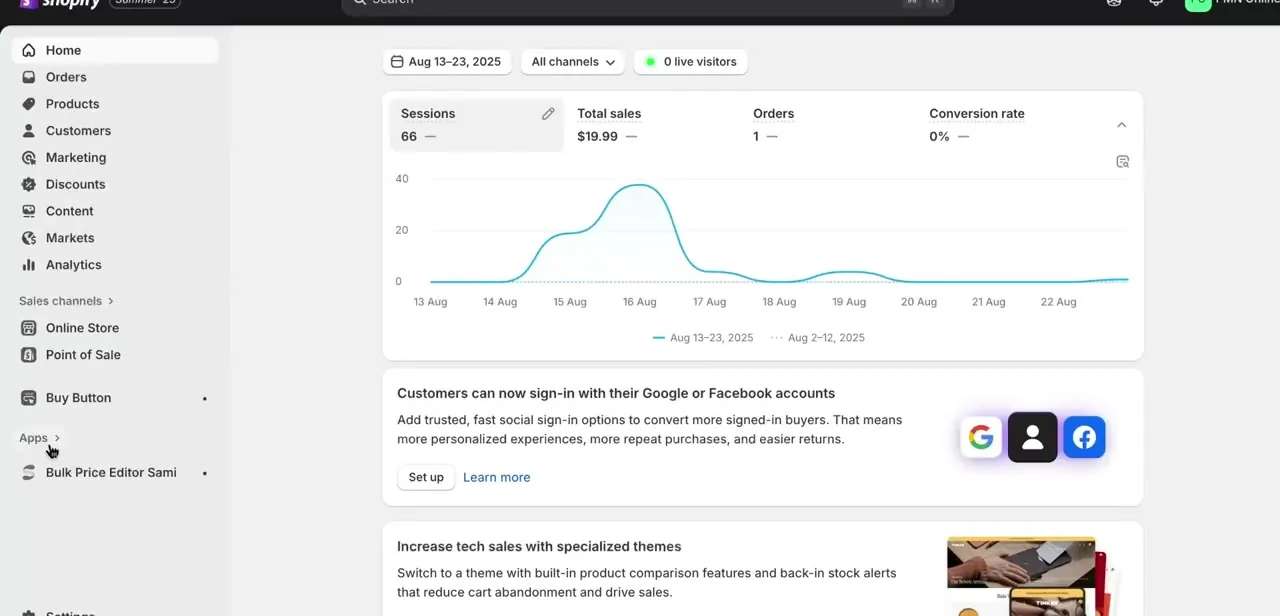
Log into your Shopify admin and land on the Home dashboard, which shows recent session and sales analytics alongside the familiar left-hand menu — Orders, Products, Customers, Marketing, Discounts, Content, Markets, and Analytics, with Apps further down. This is also where any apps you've already installed show up in the sidebar, so it's a useful place to confirm you don't already have a conflicting shipping app running before adding another.
02Search the Shopify App Store for MultiParcels
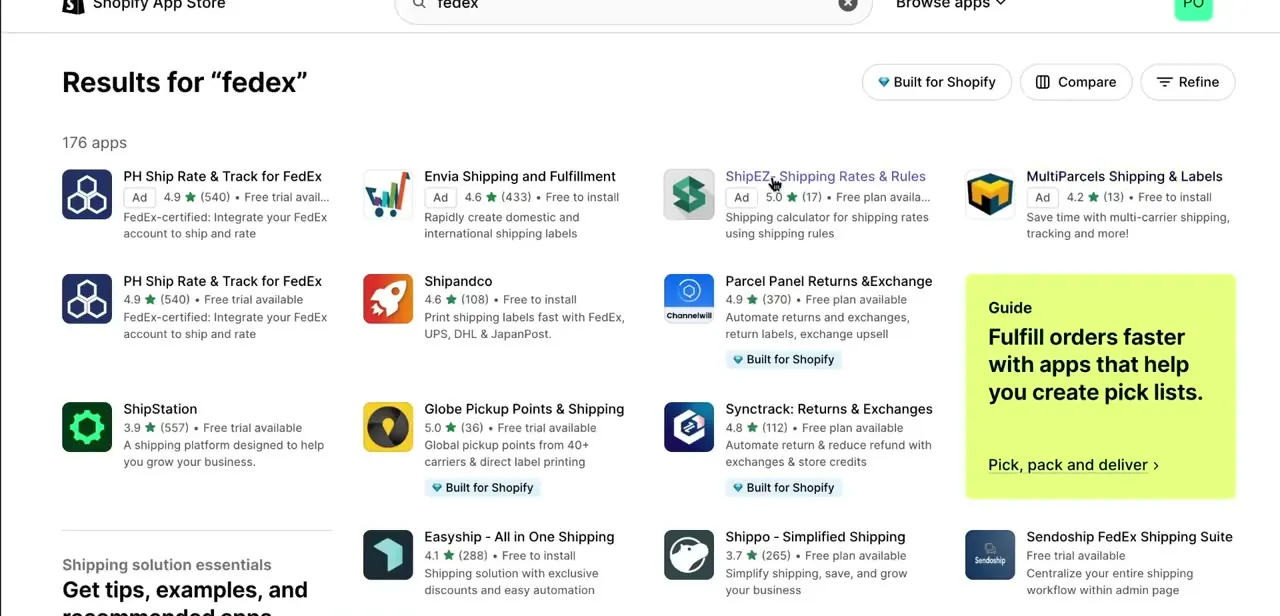
From Apps, click to browse or search the Shopify App Store and type "fedex." The results page returns well over a hundred matches, including FedEx-specific apps like PH Ship Rate & Track for FedEx, general shipping platforms like ShipStation and Shippo, and MultiParcels Shipping & Labels — described as letting you save time with multi-carrier shipping, tracking, and more. MultiParcels is worth choosing specifically when you want one dashboard that can eventually handle more than just FedEx, rather than a single-carrier tool.
03Install the app and connect your Shopify store
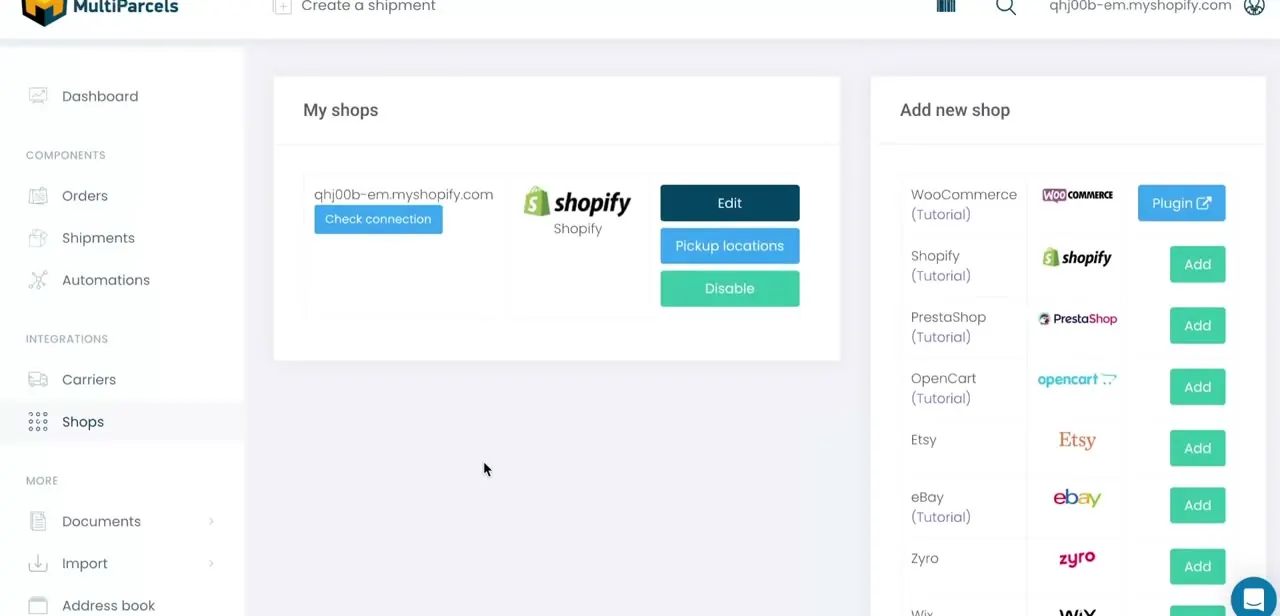
After installing MultiParcels, it opens its own dashboard outside the Shopify admin. Under Integrations in the left sidebar, the Shops section is where your store connection lives — a My shops panel lists each connected store by its myshopify.com address, with Edit, Pickup locations, Disable, and a Check connection button to confirm the link is live. An Add new shop panel sits alongside it, listing platforms MultiParcels can connect to beyond Shopify, including WooCommerce, PrestaShop, OpenCart, Etsy, eBay, and Zyro, each with its own tutorial link.
04Add your FedEx account under Carriers
Once your store is connected, the FedEx account itself gets added under Carriers — a separate menu item in the same Integrations section as Shops. This is where MultiParcels asks for your FedEx account details so it can pull live rates and generate labels using your negotiated pricing rather than generic public rates. Keep your Shops and Carriers connections separate in your head: Shops is your storefront, Carriers is who actually ships the package.
05Configure which FedEx services show at checkout
With FedEx connected as a carrier, go into your shipping settings inside MultiParcels to choose which specific FedEx services — standard ground, express, international, and so on — you want customers to see as options at checkout. Narrowing this list to what you actually use keeps checkout simple for customers instead of overwhelming them with every FedEx service tier that exists.
06Generate labels from incoming orders
Once an order comes in on Shopify, it flows through to MultiParcels' Orders and Shipments sections, where you can generate a FedEx shipping label directly rather than logging into a separate FedEx portal. Automations in MultiParcels can also apply rules to new orders, which is useful once your shipping volume grows past manually processing each one by hand.
07Confirm fulfillment updates flow back to Shopify
After a label is created and a package ships, check that the order status and tracking number sync back to the original order in Shopify — this is the whole point of routing FedEx through an app rather than handling it separately, since customers should see accurate tracking without you updating two systems manually.
Frequently asked questions
Do I need an existing FedEx account?
Yes. MultiParcels connects to a FedEx account you already have under its Carriers section — it doesn't create a new FedEx business account for you.
Is MultiParcels free to use?
It's free to install from the Shopify App Store, though shipping apps like this typically have paid tiers for higher volume — check the current plan details on the app's listing before relying on it at scale.
Can I use multiple carriers alongside FedEx in MultiParcels?
Yes. Carriers and Shops are separate sections in the MultiParcels dashboard, so you can connect FedEx plus other carriers, and even connect stores from other platforms like WooCommerce or Etsy alongside Shopify.
Will shipping labels print automatically for new orders?
Labels aren't generated automatically by default — you typically create them from the Orders or Shipments section in MultiParcels, though its Automations feature can apply rules to speed this up for high order volumes.
Where do I check if my Shopify store is properly connected to MultiParcels?
On the Shops page under Integrations in the MultiParcels dashboard, your store is listed with a Check connection button that confirms the link between your Shopify store and MultiParcels is active.
About the author

Impran M N
I've been hooked on technology for as long as I can remember — especially the new tools and AI apps that seem to land every other week. Easy Tech Tuts is where I write up whatever I've just worked out: I do the task in the real product, record the screen, and turn it into the guide I wish I'd found first.