 Easy Tech Tuts
How to Connect PayPal to Ebay 2026 for Buy & checkout, Add for Selling with Zapier Easily
By Impran M N
eBay moved most sellers onto its own Managed Payments system a while back, but PayPal hasn't disappeared from the platform — it's still available as a funding method buyers can add and use at checkout. This guide covers the real path to linking it: signing in to your eBay account, opening the payment methods panel, and adding PayPal alongside cards and Venmo. It also covers the separate question sellers ask, which is how to bridge PayPal into an eBay order flow using Zapier for automation, even though that side runs through a different account entirely.
01Sign in to your eBay account
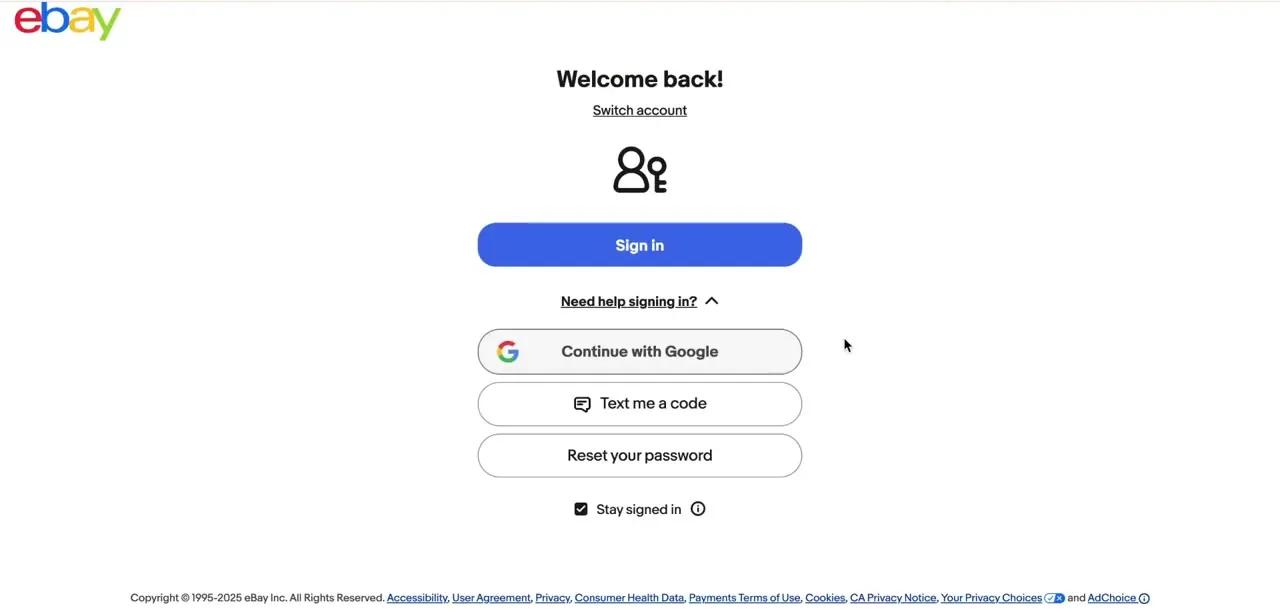
Everything here happens inside your eBay account settings, so start by signing in — eBay's sign-in screen offers a straight password login plus alternatives like continuing with Google, texting a code, or resetting your password if you've forgotten it. If you're setting this up for the first time on a new account, you'll go through account creation instead, choosing between a Personal and Business account type before payment methods become relevant.
02Open Add cards and accounts
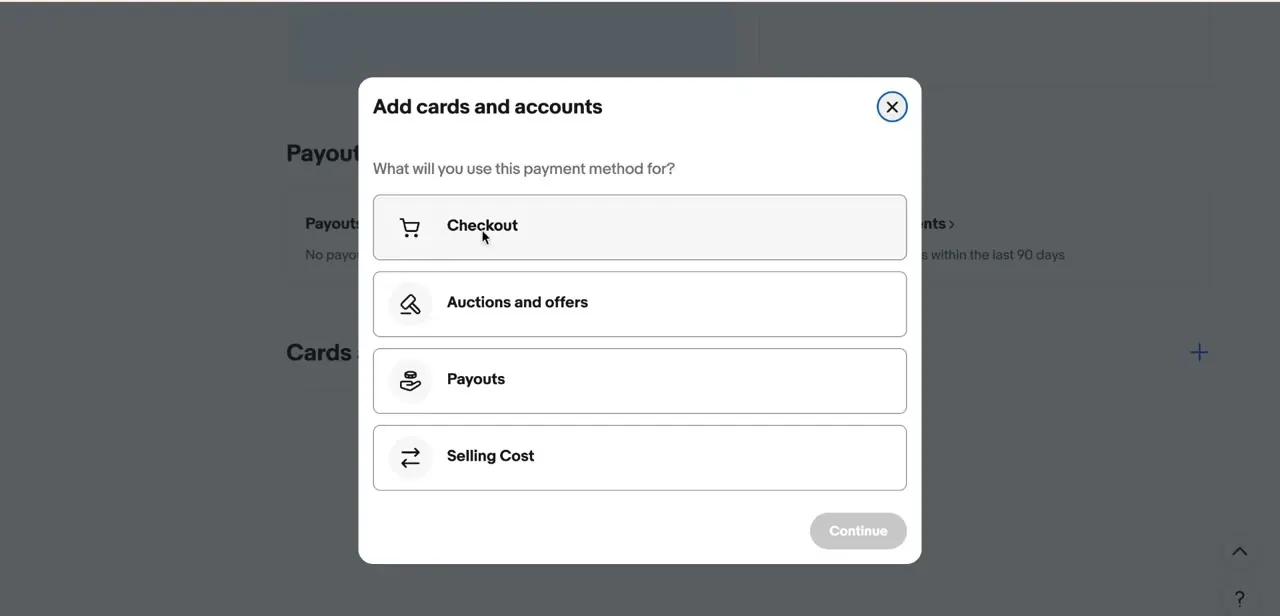
From your account's payment settings, find the Cards and accounts section and click the plus icon to add a new one. A modal opens asking what you'll use this payment method for, with four options: Checkout, Auctions and offers, Payouts, and Selling Cost. For a buyer who just wants PayPal available when purchasing items, Checkout is the option that matters — the other three relate to seller-side payouts and fees, which is a separate setup entirely.
03Choose PayPal as the payment method
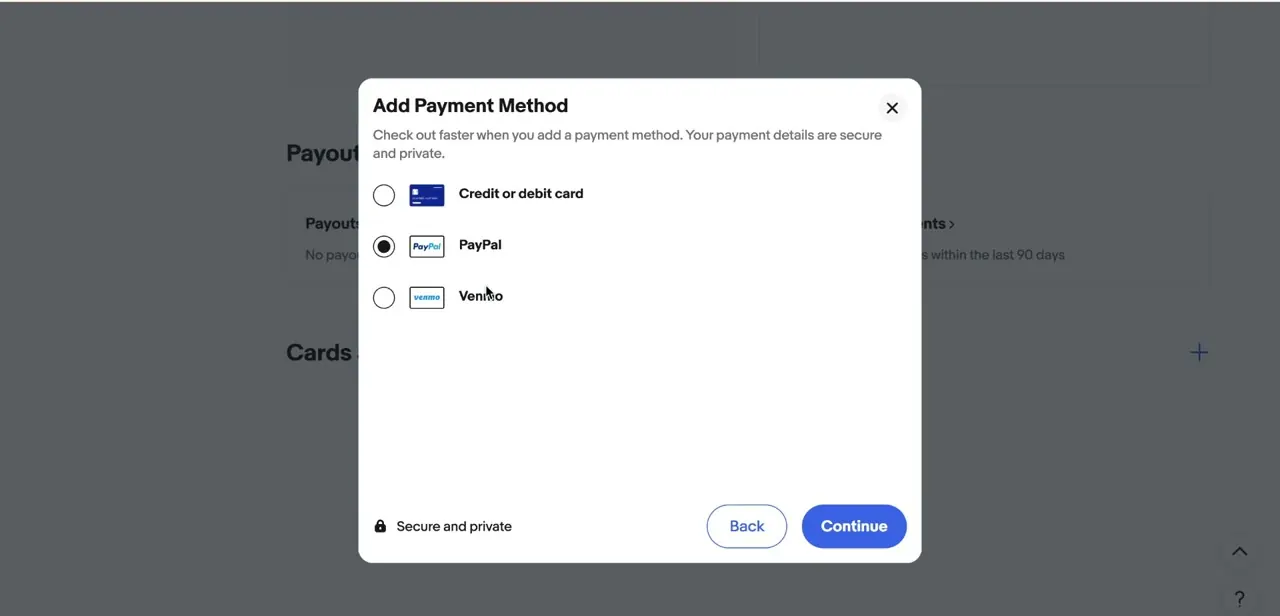
After selecting Checkout, a second modal lists the payment types eBay accepts here: Credit or debit card, PayPal, and Venmo. Selecting PayPal and clicking Continue hands off to PayPal's own secure flow to confirm the account, which is why eBay notes right on this screen that payment details stay secure and private rather than being typed directly into eBay's own forms.
04Confirm PayPal shows up as a linked account
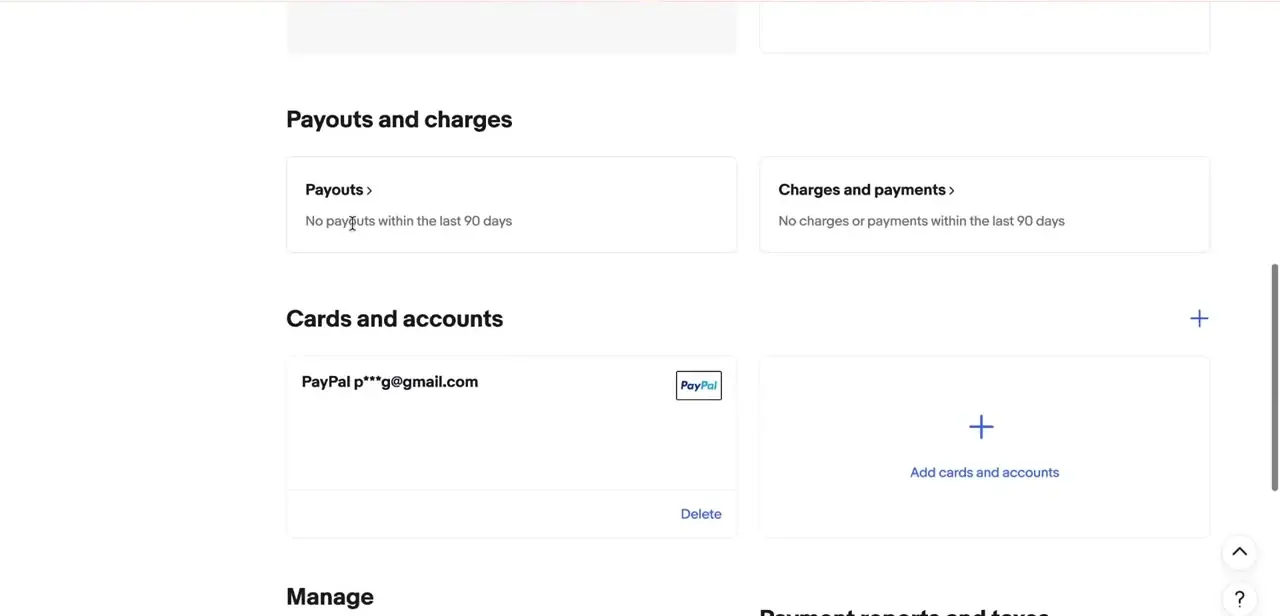
Once the PayPal flow completes, it appears back in eBay under Cards and accounts with the linked email address partially masked for privacy, plus a Delete link if you ever need to remove it. This same screen also shows Payouts and charges above it, which is worth checking periodically even as a buyer, since it's where any activity tied to your eBay account settles.
05Use PayPal at checkout when it's offered
With PayPal linked, it becomes selectable at checkout on listings where the seller accepts it — not every listing will show it as an option, since eBay's Managed Payments has moved most sellers toward cards and other funding sources by default. When it is available, PayPal draws from your linked balance or connected cards the same way it would on any other site, without needing to log into PayPal separately during checkout.
06Bridge PayPal into your order flow with Zapier, if you sell
For sellers who still want PayPal in the picture — generating invoices, sending notifications, or keeping a backup record outside eBay — the practical route is Zapier rather than a built-in eBay-PayPal seller integration, since eBay's own payment processing for sellers runs through Managed Payments. A Zapier automation typically triggers off a new eBay order and performs an action in PayPal or another connected app, letting hybrid sellers and dropshippers keep a PayPal-based paper trail running alongside eBay's own payment system without manually copying order details between the two.
Frequently asked questions
Can I still use PayPal to buy on eBay?
Yes, PayPal can be linked as a funding method under Cards and accounts and used at checkout on listings where the seller accepts it.
Does eBay still support PayPal for sellers?
eBay now primarily uses Managed Payments for sellers, but Zapier can bridge PayPal with your eBay order flow for automation like invoices and notifications.
What can I automate with Zapier and PayPal?
Common automations include generating a PayPal invoice from a new eBay order, sending yourself a notification, or backing up order and payment data between the two platforms.
Is this method suitable for dropshippers?
Yes, hybrid sellers and dropshippers can use the PayPal-and-Zapier combination to simplify tracking sales and payments across platforms.
Do I need a Zapier account?
Yes — connecting PayPal to eBay's order flow for automation requires setting up workflows in a separate Zapier account, since it isn't a native eBay integration.
About the author

Impran M N
I've been hooked on technology for as long as I can remember — especially the new tools and AI apps that seem to land every other week. Easy Tech Tuts is where I write up whatever I've just worked out: I do the task in the real product, record the screen, and turn it into the guide I wish I'd found first.