 Easy Tech Tuts
How to Change DNS on Namecheap, Add Dns records like TXT, CName, MX Easily 2026
By Impran M N
Managing DNS records in Namecheap lets you connect email services, verify domain ownership, and point subdomains at third-party hosting, but the panel packs a lot of record types into one screen and it's easy to edit the wrong row. This guide walks through finding a domain's Advanced DNS panel, reading the existing host records so you don't overwrite something that's already working, and adding a new TXT, CNAME, or MX record correctly.
01Open your domain list
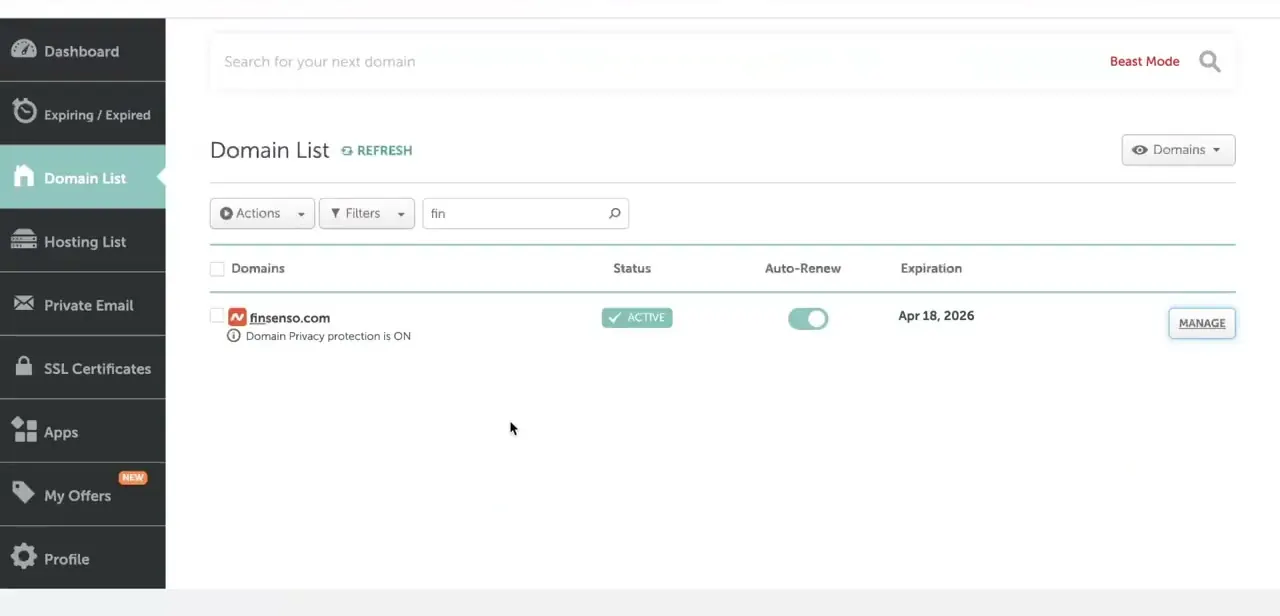
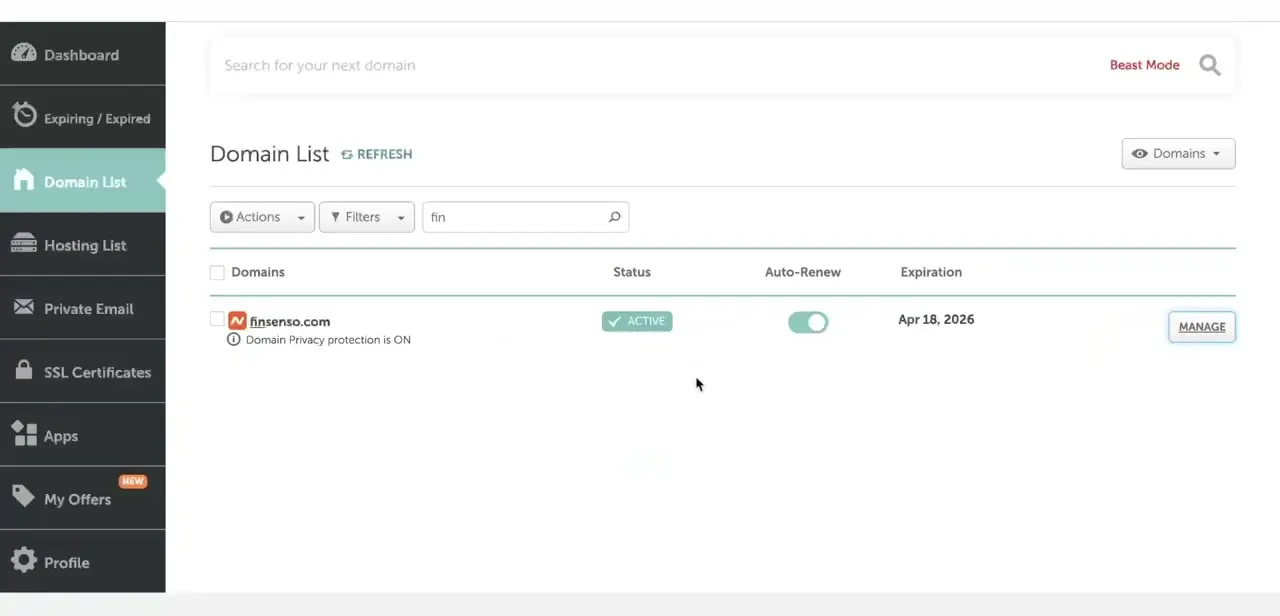
Log in to Namecheap and land on the Domain List screen in the dashboard, which shows every domain on your account along with its status, auto-renew setting, and expiration date. Find the domain you need to edit and confirm it shows as Active — a domain that's expired or in a locked state won't let DNS changes take effect properly. Click Manage next to the domain to move into its individual settings.
02Go to Advanced DNS
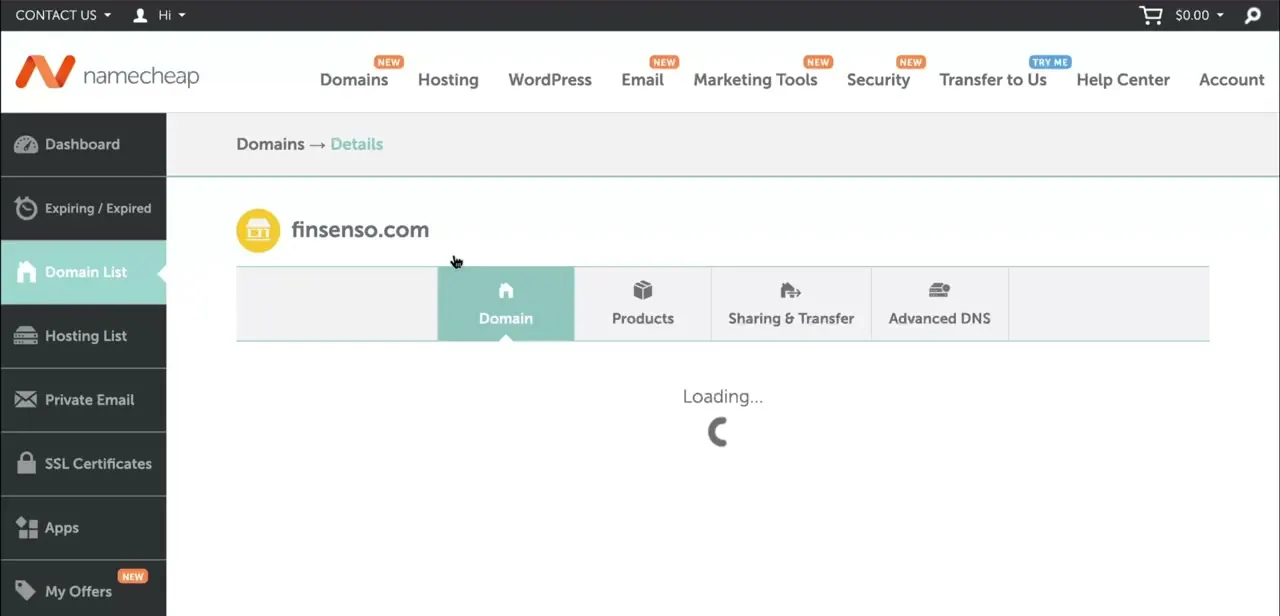
Inside the domain's detail page you'll see tabs for Domain, Products, Sharing & Transfer, and Advanced DNS — click Advanced DNS, since that's the only tab that exposes host records. The page briefly shows a loading state while it pulls the domain's current DNS configuration, which is normal and usually resolves within a second or two.
03Read the existing host records before changing anything
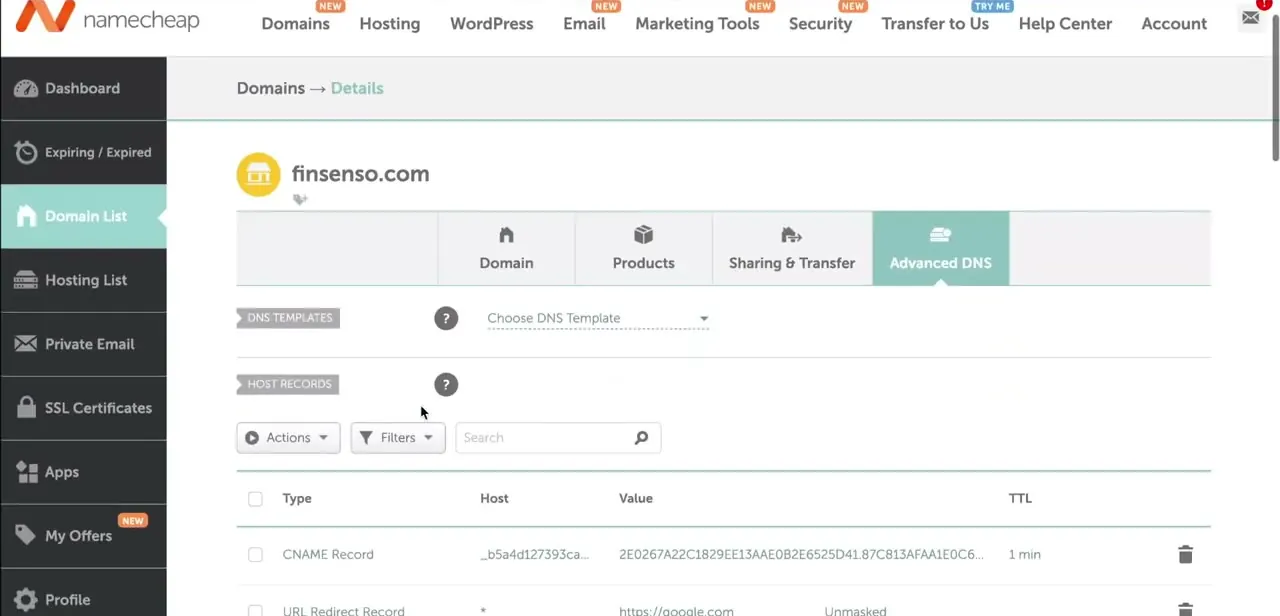
Once Advanced DNS loads, you'll see a Host Records table listing every record currently active on the domain, with columns for Type, Host, Value, and TTL. Take a moment to scan what's already there — in a typical setup you might find a CNAME record used for domain verification alongside URL Redirect records pointing the domain elsewhere — so you know what's safe to leave alone versus what you're actually here to add or edit.
04Add a new TXT, CNAME, or MX record
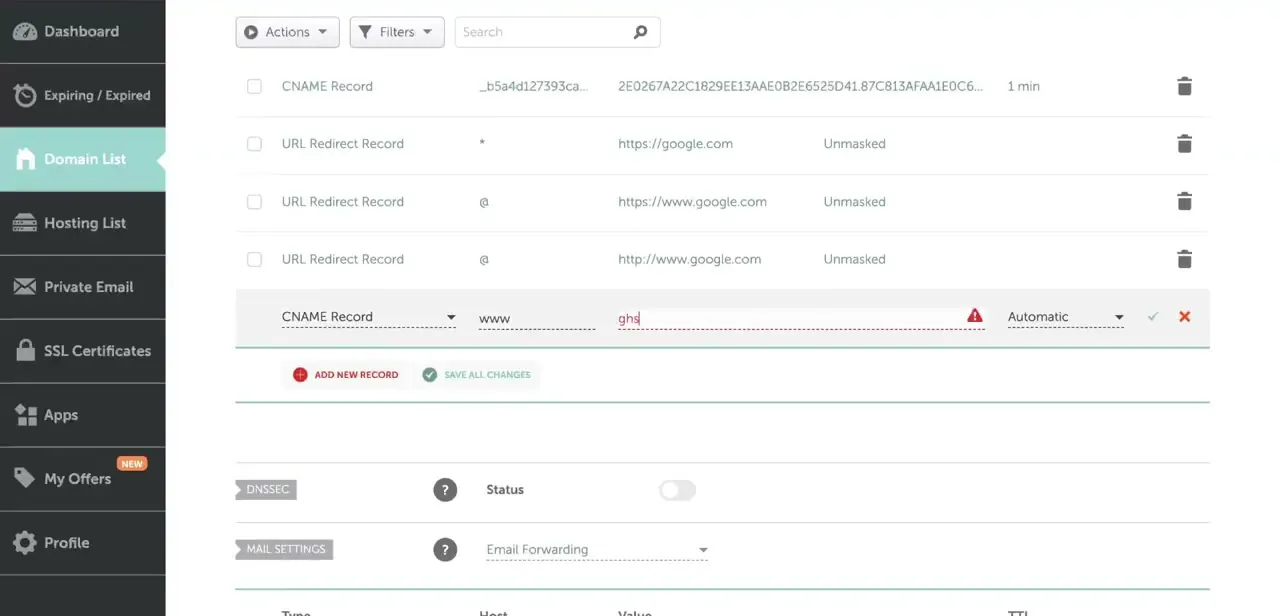
Click Add New Record at the bottom of the table, then use the Type dropdown to choose TXT Record, CNAME Record, or MX Record depending on what the service you're connecting requires. Fill in the Host field with the subdomain or prefix specified — often `@` for the root domain or a specific value like `www` — and paste the Value exactly as provided, since a single mismatched character will cause verification or mail delivery to fail. Leave TTL on Automatic unless a service specifically asks for a shorter value.
05Save and double-check the record
Click the green checkmark next to the row, or Save All Changes if you added more than one record, and Namecheap will validate the entry immediately — a red warning icon next to a field means something in that row needs fixing before it saves. Once saved, reopen Advanced DNS and confirm the new record appears exactly as intended in the table, since a typo here is much easier to catch now than after a service has already failed to verify.
06Allow time for DNS propagation
DNS changes on Namecheap don't take effect instantly everywhere — propagation can take anywhere from a few minutes to about 48 hours depending on the record's TTL and how various networks cache DNS data. If a service like Google Workspace or Microsoft 365 says it can't find your new record right after saving, wait before troubleshooting further; re-checking too early is the most common reason people assume a correctly entered record is broken.
Frequently asked questions
What is a TXT record typically used for?
TXT records are most often used to verify domain ownership for services like Google Workspace, Microsoft 365, or other third-party platforms that need proof you control the domain.
Why would I need to add an MX record?
MX records tell the internet where to deliver email for your domain, so they're essential if you're setting up custom email hosting through a provider other than your registrar.
How can I speed up DNS propagation?
You can't force it directly, but lowering the TTL value on a record ahead of a planned change can help updates take effect faster across the internet afterward.
What happens if I enter a DNS record incorrectly?
An incorrect record can prevent domain verification or email delivery from working, so it's worth comparing your entry character-for-character against what the service provided before saving.
Do I need to touch existing records to add a new one?
No — adding a new TXT, CNAME, or MX record is done through Add New Record, and your existing host records stay untouched unless you specifically edit or delete them.
About the author

Impran M N
I've been hooked on technology for as long as I can remember — especially the new tools and AI apps that seem to land every other week. Easy Tech Tuts is where I write up whatever I've just worked out: I do the task in the real product, record the screen, and turn it into the guide I wish I'd found first.