 Easy Tech Tuts
How to use Copper CRM in Google Workspace, Gmail, Gogole Sheet, Calendar with Brief Guide 2026
By Impran M N
Copper is a CRM built specifically around Google Workspace, which is why it asks you to sign in with Google rather than create yet another password. That design decision shapes everything about it: your contacts, your email history, and your calendar are already the raw material, so the setup work is mostly about deciding how your pipeline should be shaped rather than importing data.
This guide takes you from the sign-up page through your first pipeline and your first opportunity, and then covers the parts of Copper that actually save time day to day — tracked emails, tasks, and reporting. If you've bounced off heavier CRMs before, the useful thing to know up front is that a workable Copper setup takes about twenty minutes.
01Start the trial with your Google account
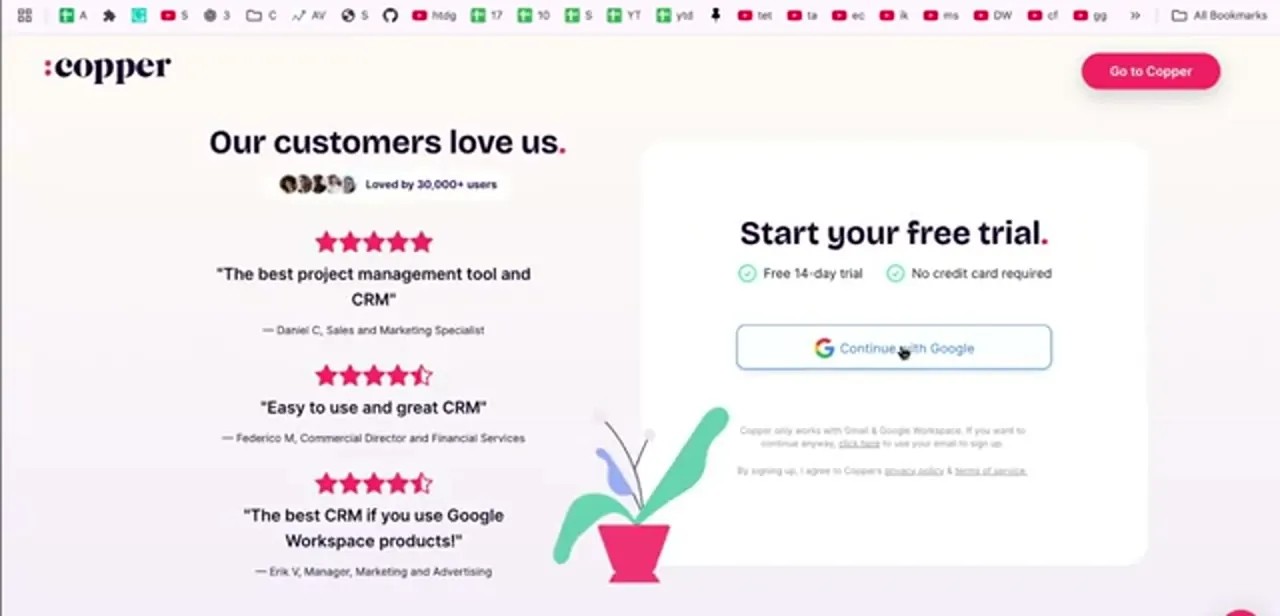
Copper's sign-up offers a 14-day free trial with no card required, and a single "Continue with Google" button rather than a registration form. This isn't just a convenience shortcut — Copper is designed around Gmail and Google Workspace, and signing in this way is what lets it read your mail activity and calendar later.
Use the Google account you actually send business email from, not a personal one, because the account you pick here determines whose inbox Copper can see. There is a fallback link for signing up with a non-Google address, but you lose most of the integration that makes Copper worth choosing in the first place.
02Get your bearings on the Feed
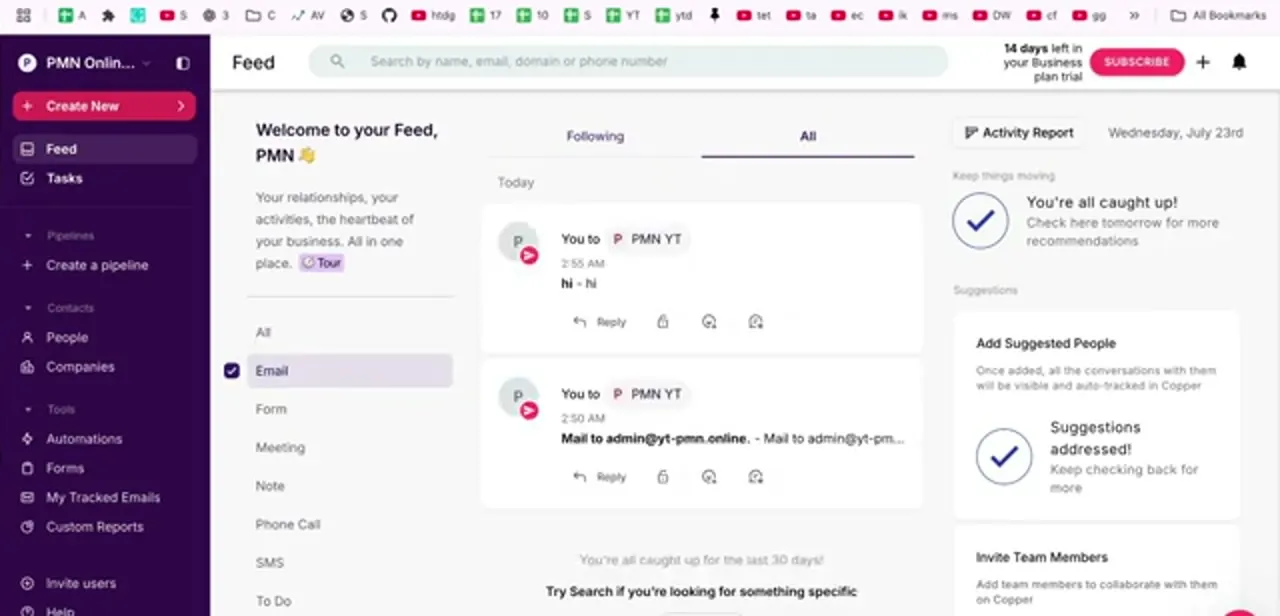
You land on the Feed, which is Copper's activity stream rather than a dashboard of charts. It shows recent interactions grouped by type — email, form, meeting, note, phone call, SMS, to-do — with filters down the left so you can narrow to just one kind.
The right-hand column carries an activity report plus suggestions, including prompts to add people Copper has spotted in your mail so their conversations get tracked automatically. The left sidebar is the real map of the product: Pipelines, Contacts split into People and Companies, and a Tools group holding Automations, Forms, My Tracked Emails, and Custom Reports.
03Create your first pipeline from a template
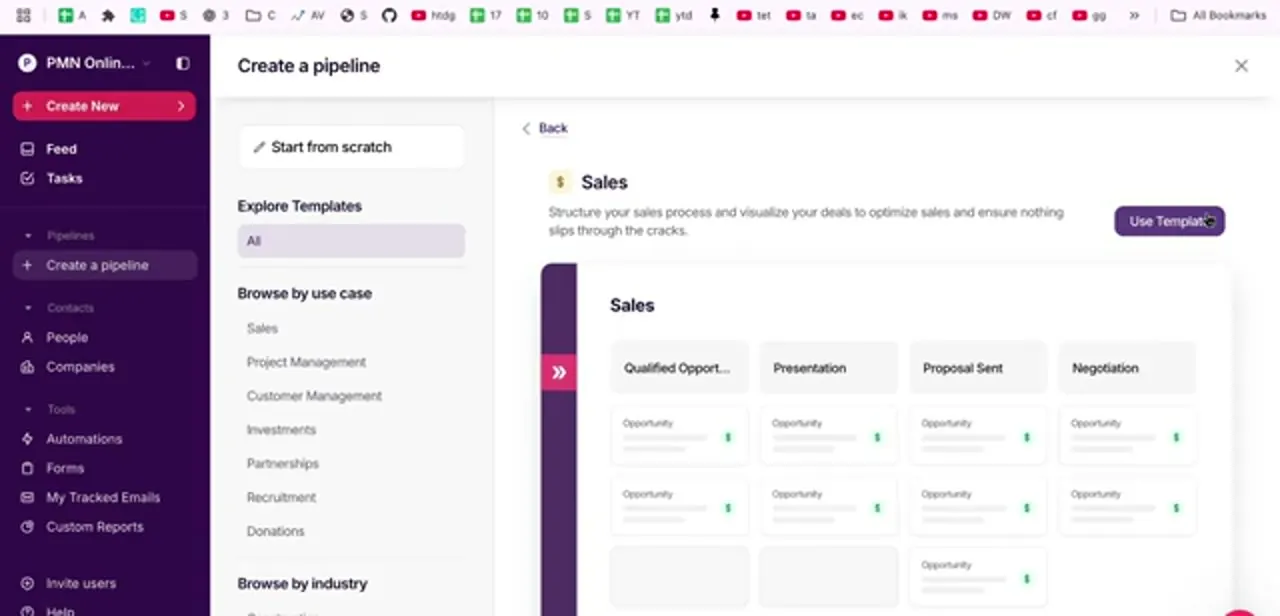
Nothing else in Copper is useful until a pipeline exists, since a pipeline is what turns loose contacts into a process. Click "Create a pipeline" and you get a choice between starting from scratch and using a template, with templates browsable by use case — Sales, Project Management, Customer Management, Investments, Partnerships, Recruitment, Donations — and by industry.
Take the Sales template on your first pass even if it isn't a perfect fit; it arrives with sensible stages like Qualified Opportunity, Presentation, Proposal Sent and Negotiation, and renaming stages later is trivial compared to inventing them from a blank page. The preview on the right shows exactly what you'll get before you commit.
04Add opportunities and fill in the fields that matter
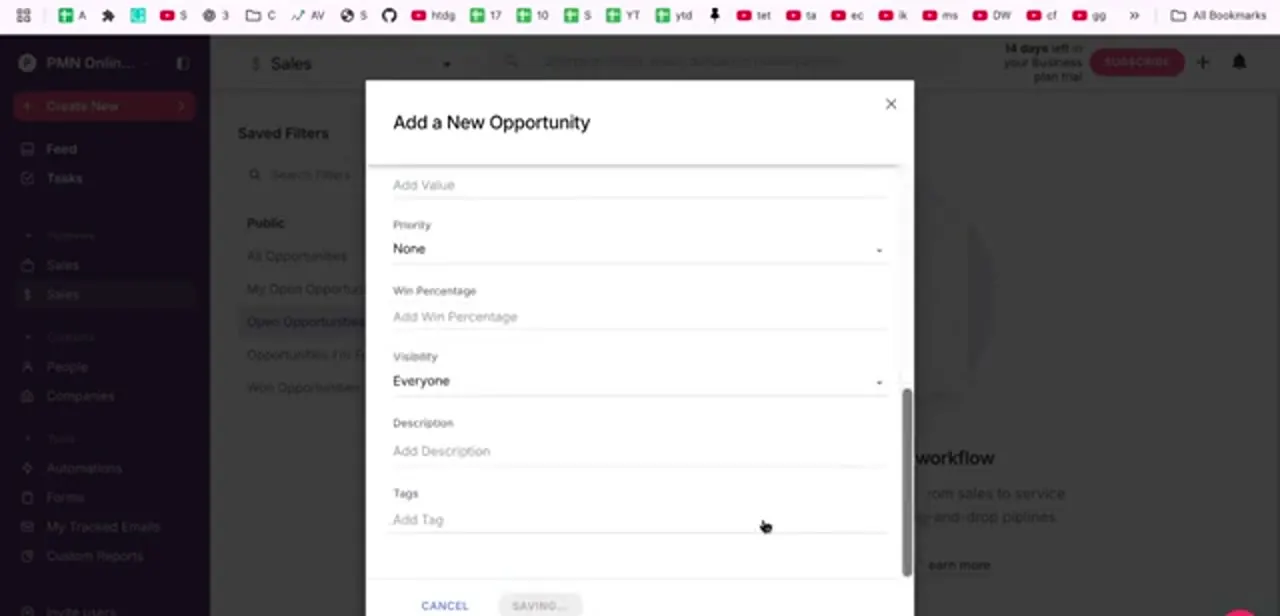
With a pipeline in place, "Add a New Opportunity" is how a deal enters it. The form asks for a value, a priority, a win percentage, a visibility setting, a description, and tags.
Most people fill in the name and value and skip the rest, which is a mistake worth avoiding: win percentage is what makes a weighted forecast possible, and tags are what make your later reports sliceable by source or region. Visibility defaults to Everyone, which is usually right for a small team but worth changing on sensitive deals. Copper saves as you go, so there's no separate save step to forget.
05Work from Gmail instead of switching tabs
The strongest argument for Copper over a general-purpose CRM is that you don't have to visit it. Install Copper's Google Workspace add-on and a sidebar appears inside Gmail, showing the CRM record for whoever you're emailing — their past interactions, the deals they're attached to, and controls to log activity or add a note without leaving the message.
Because you signed in with Google, Copper can match the sender to an existing person automatically, and the Feed's suggestions will nudge you to add people who keep appearing in your mail but aren't in the CRM yet. This is what stops CRM data entry from being a chore you postpone.
06Keep follow-ups in Tasks and Google Calendar
Tasks sits directly under Feed in the sidebar and is where follow-ups live. Create a task from a person record or an opportunity and it stays attached to that record, so the next person to open the deal can see what was promised and when.
Copper syncs with Google Calendar, which matters less for the reminder itself and more for context: meetings on your calendar with a known contact can be tied back to their record, so the interaction history stays complete without anyone logging it manually. Set due dates on every follow-up rather than relying on memory — an untracked promise is how deals stall.
07Report on it with Custom Reports and Sheets
Once you have a few weeks of real activity, Custom Reports in the Tools section is where the pipeline becomes a number you can act on. My Tracked Emails shows which of your sent messages have been opened, which is genuinely useful for deciding who to chase.
For anything Copper's built-in reporting doesn't cover, export the data and take it into Google Sheets, where you can build the pivot or chart you want and share it with people who don't have a Copper seat. Because it's all inside the same Google account, that export-and-share loop costs you nothing in setup.
Frequently asked questions
Do I need a separate Copper login from my Google account?
No. Copper's sign-up is a Continue with Google button, and that Google account becomes your Copper login. There's a fallback for non-Google email, but you give up the Gmail and Calendar integration that makes Copper worth using.
Which Google account should I sign up with?
The one you send business email from. The account you choose determines which inbox and calendar Copper can see, and changing it later means starting the connection over.
Should I build a pipeline from scratch or use a template?
Use a template on your first pipeline. Copper ships templates by use case — sales, project management, recruitment, donations and more — and renaming a stage later is far easier than designing a process from an empty board.
Can I see Copper inside Gmail?
Yes. Copper's Google Workspace add-on puts a sidebar in Gmail showing the contact's CRM record, related deals, and controls to log activity, so you can update the CRM without leaving the message.
How long is the free trial?
Fourteen days, with no credit card required at sign-up. The in-app header counts down the days remaining on the trial, so you'll know exactly where you stand before any billing decision.
About the author

Impran M N
I've been hooked on technology for as long as I can remember — especially the new tools and AI apps that seem to land every other week. Easy Tech Tuts is where I write up whatever I've just worked out: I do the task in the real product, record the screen, and turn it into the guide I wish I'd found first.