 Easy Tech Tuts
How to Change Admin on Google Workspace, Change Roles Easily 2026
By Impran M N
Admin rights in Google Workspace control who can touch billing, security, and every user's account — which is exactly why handing them off needs to be deliberate rather than rushed. Whether you're promoting a teammate, restructuring who owns what, or transferring full control before you step away, the process runs entirely through the Admin console's role tools. This guide follows the real path: from the console home, into the Admin roles list, and through assigning or transferring a role without accidentally locking anyone out, including yourself.
01Open the Admin console
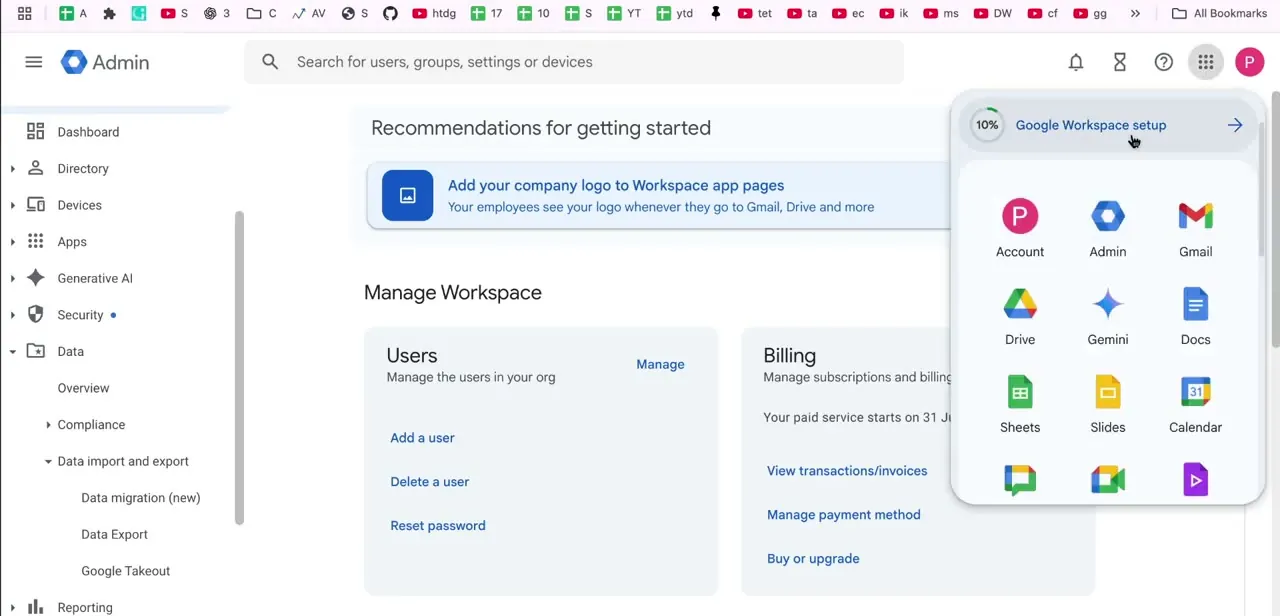
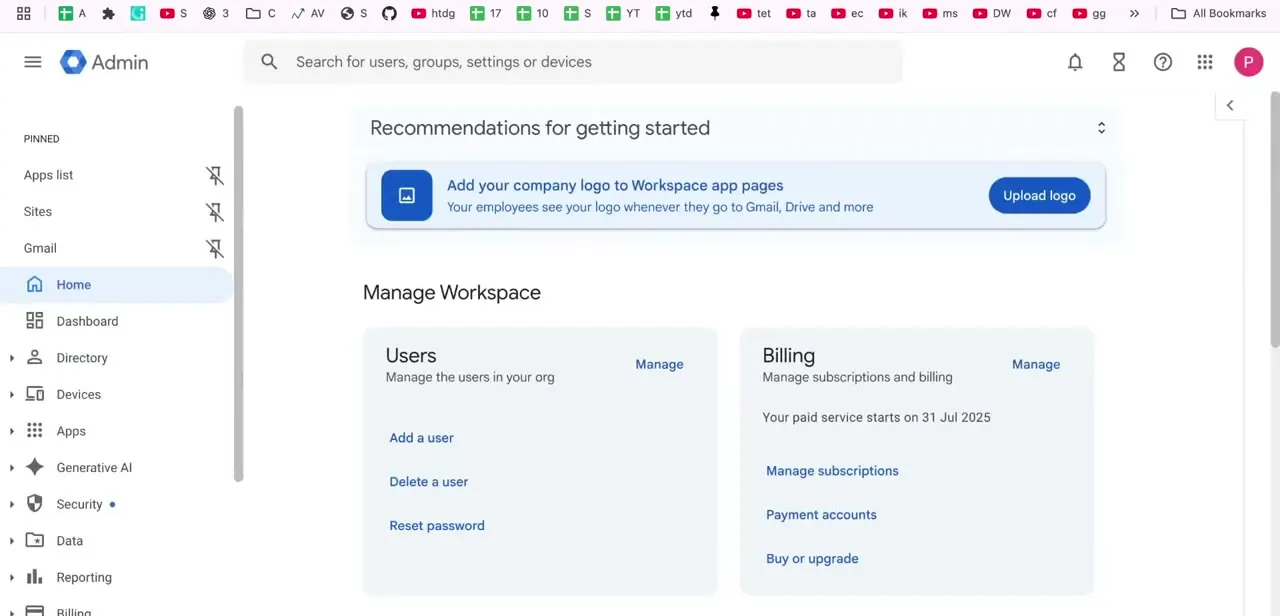
Sign in with an account that already has admin access and land on the Admin console home. The dashboard surfaces a Manage Workspace section with quick cards for Users and Billing, plus setup recommendations along the top — useful context, but not where role changes happen. The actual role tools live deeper in the left-hand navigation, under Account.
02Navigate to Admin roles under Account
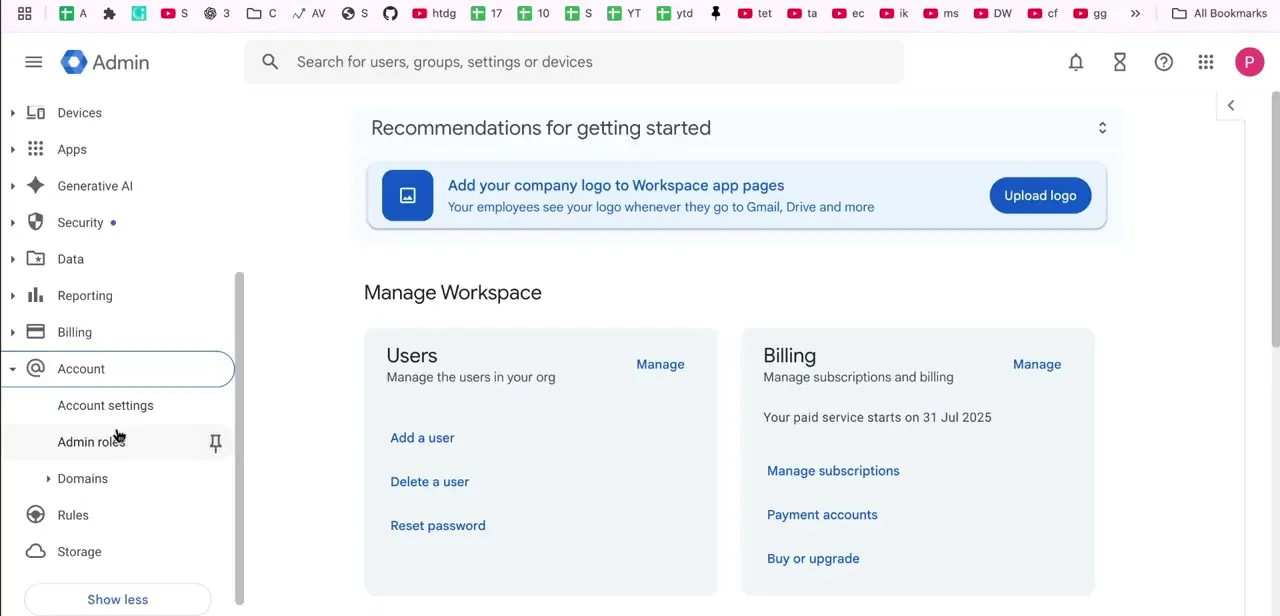
Scroll the left sidebar down to Account and expand it — this reveals Account settings, Admin roles, Domains, Rules, and Storage. Admin roles is the one you want; it's a level below where most people expect it, tucked under Account rather than sitting as a top-level nav item, which is the main reason people go looking under Security or Users first and don't find it right away.
03Review the built-in role list
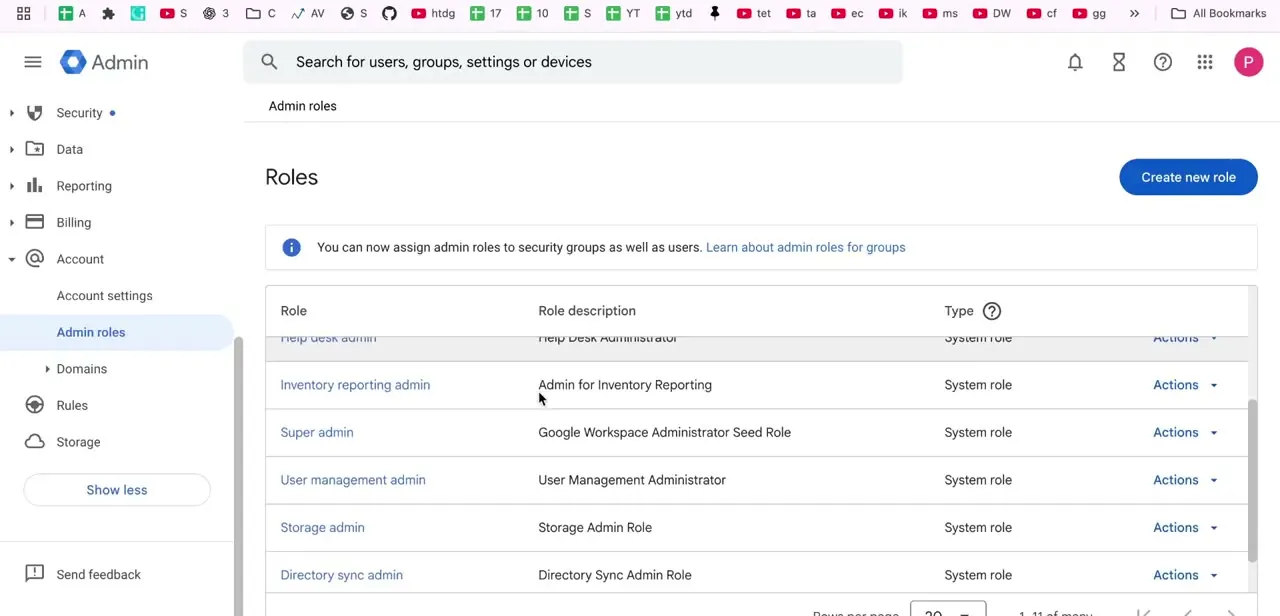
The Admin roles page lists every system role as a table: role name, a short description, and its type. You'll see options like Super admin, described as the Google Workspace Administrator seed role with unrestricted access, alongside narrower roles like User management admin, Storage admin, and Help desk admin.
Each row has an Actions menu on the right for assigning the role to users or groups. Scan this list before assigning anything — picking a narrower role like Groups admin or Services admin instead of Super admin is often the safer choice if the person only needs access to one part of the organization.
04Assign the role to a user
Open the Actions menu on the role you want to grant and choose to assign it to a user or, in newer Workspace accounts, a security group. Search for the person by name or email, confirm the selection, and save. The change usually applies within a few minutes, though it can occasionally take longer to propagate across every Google service the role touches.
05Transfer super admin rights if you're stepping down
If the goal is handing over full control rather than just adding a second admin, assign Super admin to the new person first and have them confirm they can access the console before you remove your own rights. Doing it in that order avoids the worst-case scenario: revoking your own access before anyone else has full control, which can leave an organization with no working Super admin and force a recovery process through Google.
06Verify the role change applied correctly
Ask the newly promoted user to log in and check that the admin tools they need actually show up without permission errors — Users, Billing, Security, whatever their new role is supposed to cover. A quick verification catches the rare case where a role didn't fully propagate, and it's much easier to fix immediately than to diagnose a week later when someone can't complete an urgent task.
07Consider a custom role for anything in between
If none of the built-in roles fit — say, someone needs to manage users but not billing — the Create new role button on the same Admin roles page lets you build a custom permission set instead of over-granting a system role just because it's the closest match. This keeps access tightly scoped to what each person actually needs, which matters more the larger your organization gets.
Frequently asked questions
What's the difference between Super Admin and other admin roles?
Super Admin has full, unrestricted control over every setting and user in the organization, while built-in roles like Groups Admin or User Management Admin are limited to specific areas shown in the same Admin roles list.
Can there be more than one Super Admin in Google Workspace?
Yes, an organization can have multiple Super Admins, which is often recommended as a backup in case one admin loses access.
What happens if I remove my own admin rights by mistake?
If no other Super Admin remains, you may need to go through Google's account recovery process to regain administrative control, so always confirm a replacement admin's access before removing your own.
Do custom admin roles exist in Google Workspace?
Yes. Beyond the built-in system roles listed on the Admin roles page, the Create new role button lets admins build custom roles with specific permission sets tailored to what a person actually needs.
Where exactly do I find Admin roles in the console?
In the Admin console's left sidebar, expand Account — Admin roles sits there alongside Account settings, Domains, and Rules, one level below where it might be expected.
About the author

Impran M N
I've been hooked on technology for as long as I can remember — especially the new tools and AI apps that seem to land every other week. Easy Tech Tuts is where I write up whatever I've just worked out: I do the task in the real product, record the screen, and turn it into the guide I wish I'd found first.