 Easy Tech Tuts
How to Cancel Google Workspace Domain Alias & Deactivate it easily 2026
By Impran M N
A domain alias added by mistake, or left over from a sign-up flow you no longer need, clutters the Domains page and can confuse anyone else managing your Workspace account. This guide walks through exactly where to find domain aliases in the Admin Console, how to tell them apart from your primary and secondary domains, and how to deactivate one cleanly without disrupting mail on your real domains.
01Sign in with an admin account
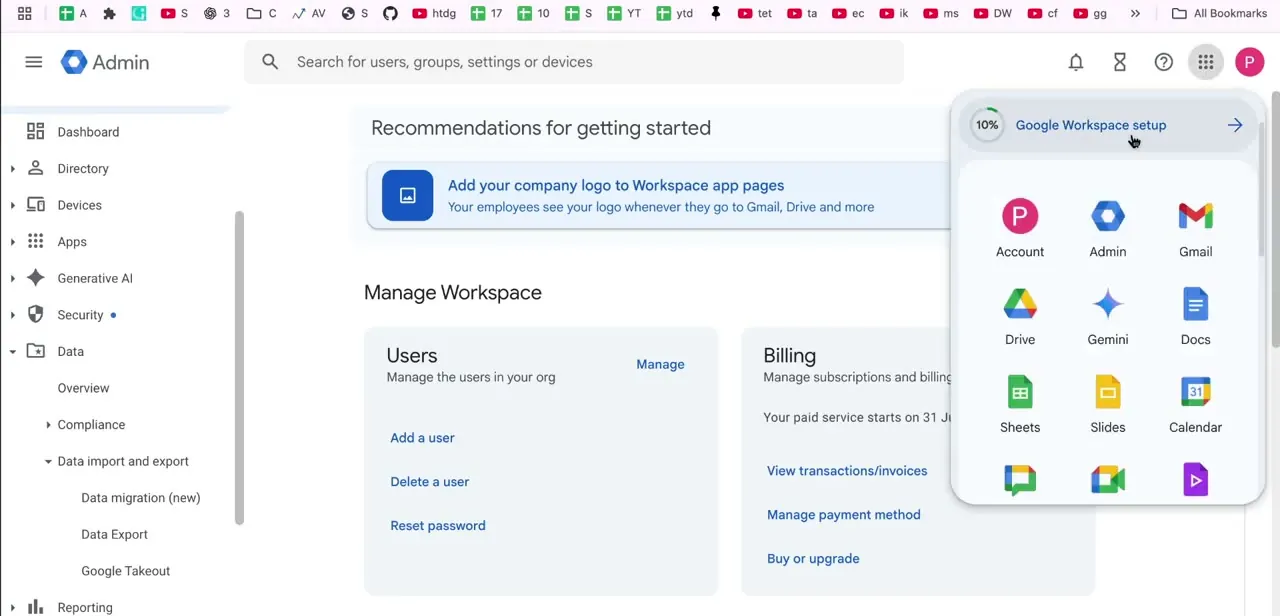
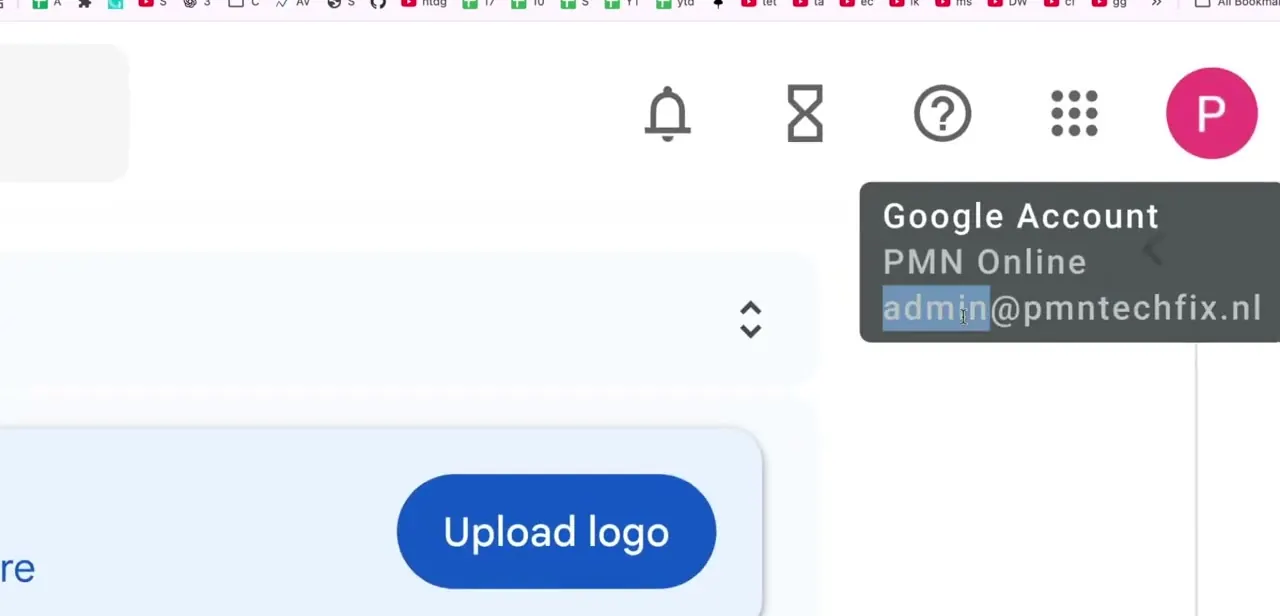
Domain management is an admin-only action, so start by confirming you're signed into the correct Google Account — click your profile circle in the top right of any Google page and check the account name and address shown, for example an address like admin@yourdomain.com under your organization's name. If you manage more than one Workspace organization, this check matters more than it seems, since making changes on the wrong account's domains is an easy mistake to make.
02Re-verify your identity if Google asks
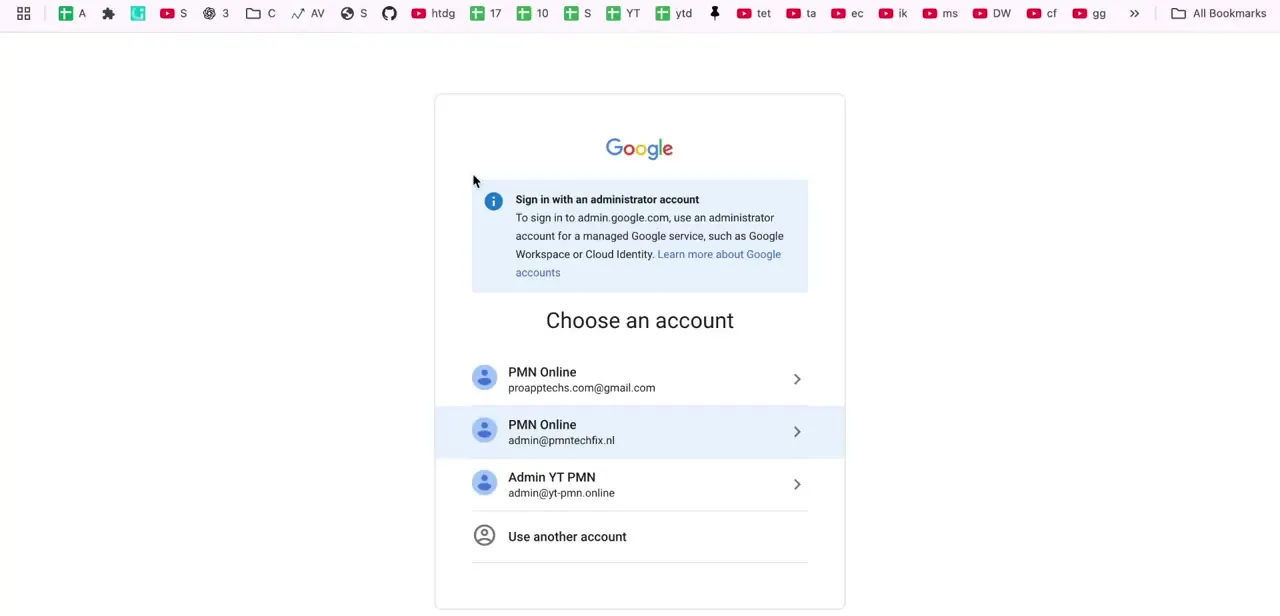
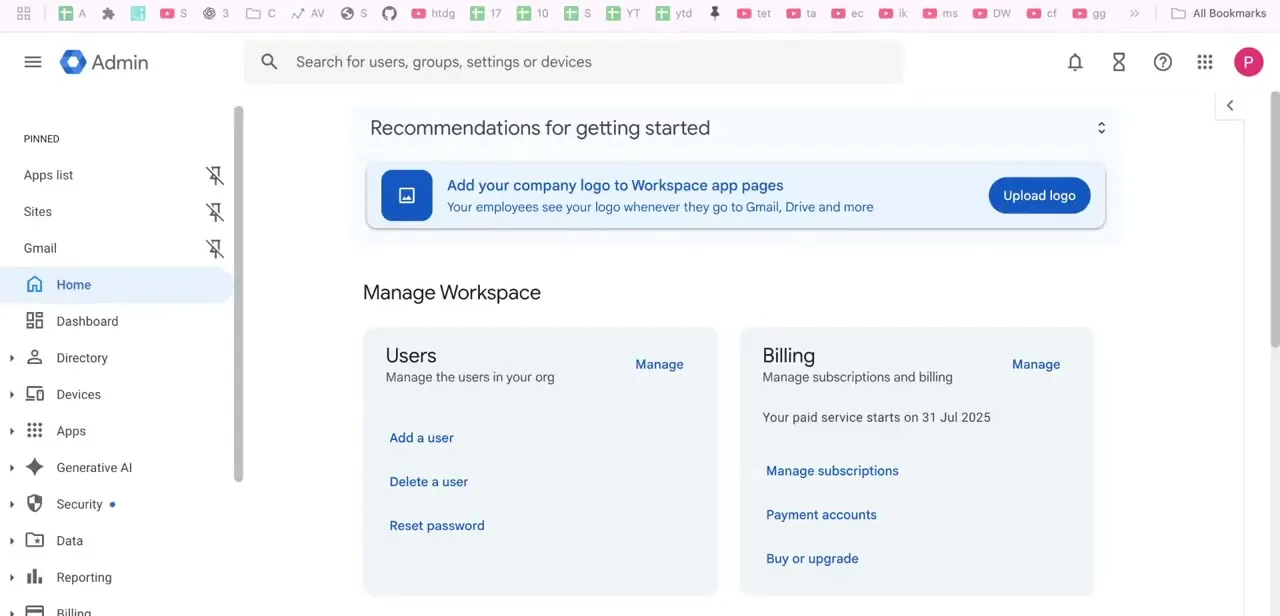
Navigating to admin.google.com sometimes triggers an extra identity check, especially after a period of inactivity — Google will ask you to re-enter your password to confirm it's really you before letting you into sensitive settings like domain management. This is expected behavior for an admin-level action and not a sign anything is wrong; enter your password and continue.
03Open Domains and go to Manage domains
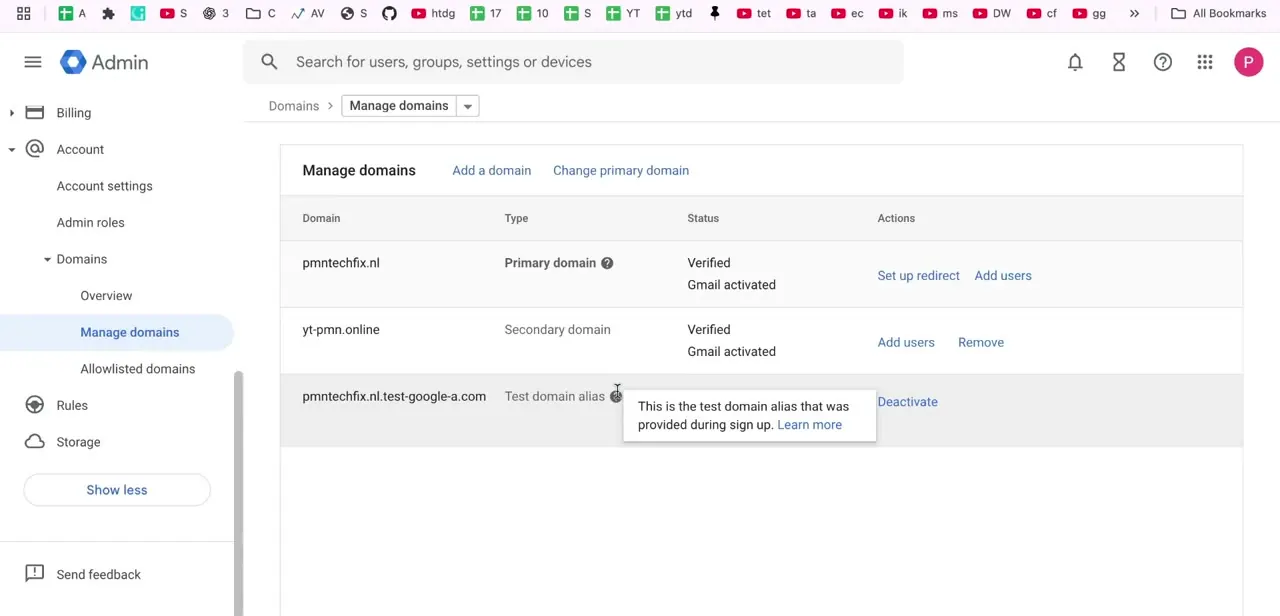
Inside the Admin Console, expand Account in the left menu, then Domains, and select Manage domains. This page lists every domain associated with your Workspace organization in one table, with columns for Domain, Type, Status, and Actions — it's the single place to see your primary domain, any secondary domains, and any domain aliases side by side.
04Identify the alias among your domains
The Manage domains table separates domains by Type: a Primary domain (marked Verified and Gmail activated), Secondary domains that function as fully separate domains under the same account, and domain aliases such as a test domain alias that was set up automatically during sign-up. A tooltip next to an alias entry typically explains what it is — for example, clarifying that it's a temporary alias created during account setup rather than one you added deliberately. Only the alias row has a Deactivate action; primary and secondary domains show different actions like Set up redirect, Add users, or Remove, so it's worth reading the Type and Status columns carefully before clicking anything.
05Deactivate the alias
Click Deactivate next to the alias you want to remove. Because this is a lighter-weight relationship than a full secondary domain, deactivating it doesn't touch your primary domain's mail, users, or verified status — it simply stops that alias from routing to your account. If the option is greyed out, it usually means the alias is still referenced somewhere else in your setup, such as an active user alias or a DNS record still pointing at it, and you'll need to clear that dependency first.
06Confirm mail behavior after deactivation
Once an alias is deactivated, any mail sent to addresses on that alias domain will stop reaching your Workspace account, since it's no longer routed there. Test this deliberately if the alias was ever shared externally — send a message to an address on the old alias domain from a separate account and confirm it bounces or goes undelivered rather than quietly arriving, so you know for certain nobody can still reach you through it.
07Clean up any leftover DNS records
Deactivating the alias inside Workspace doesn't automatically remove DNS records at your domain registrar. Go back to wherever that domain's DNS is managed and delete or update any MX, TXT, or CNAME records that were pointing traffic or verification at Google for that alias, so nothing is left half-configured. This step is easy to skip since the Admin Console itself won't flag it, but leaving stale DNS records behind is the most common cause of confusion the next time someone looks at that domain's setup.
Frequently asked questions
What happens to emails sent to the alias after it's removed?
Once deactivated, the alias domain no longer routes mail to your Workspace account, so any emails sent there afterward won't be delivered — test this with a message from an outside account if the alias was ever shared publicly.
Why is the Deactivate option greyed out for my domain alias?
This usually means the alias still has an active dependency, such as a user alias built on it or a DNS record still pointing at it. Clear those references first, then try deactivating again.
Do I need to update DNS records after removing an alias?
Yes. Deactivating an alias in the Admin Console's Manage domains page doesn't remove DNS records at your registrar — you need to delete or update those separately to fully disconnect the domain.
Can I remove a domain alias without affecting my primary domain?
Yes. On the Manage domains page, a domain alias has its own Deactivate action separate from your primary and secondary domains, so removing it doesn't touch your primary domain's mail or verification status.
What's the difference between a secondary domain and a domain alias?
A secondary domain is a fully separate, verified domain in its own right, with actions like Set up redirect or Add users. A domain alias is a lighter relationship — often created automatically during sign-up — that simply routes to your existing account and can be deactivated on its own.
About the author

Impran M N
I've been hooked on technology for as long as I can remember — especially the new tools and AI apps that seem to land every other week. Easy Tech Tuts is where I write up whatever I've just worked out: I do the task in the real product, record the screen, and turn it into the guide I wish I'd found first.