 Easy Tech Tuts
How to Archive User Google Workspace Easily 2026
By Impran M N
When someone leaves the company, deleting their Google Workspace account feels final in a way that makes a lot of admins nervous — what if legal needs an old email thread six months from now? Archiving is the middle ground Google actually built for this: the account can no longer sign in, but its Gmail, Drive, and Calendar data stays intact and searchable, and it costs less than a live license. This guide follows the process straight from the Admin console, including the exact prompt Google shows you and the number it puts on the savings.
01Get to the Admin console
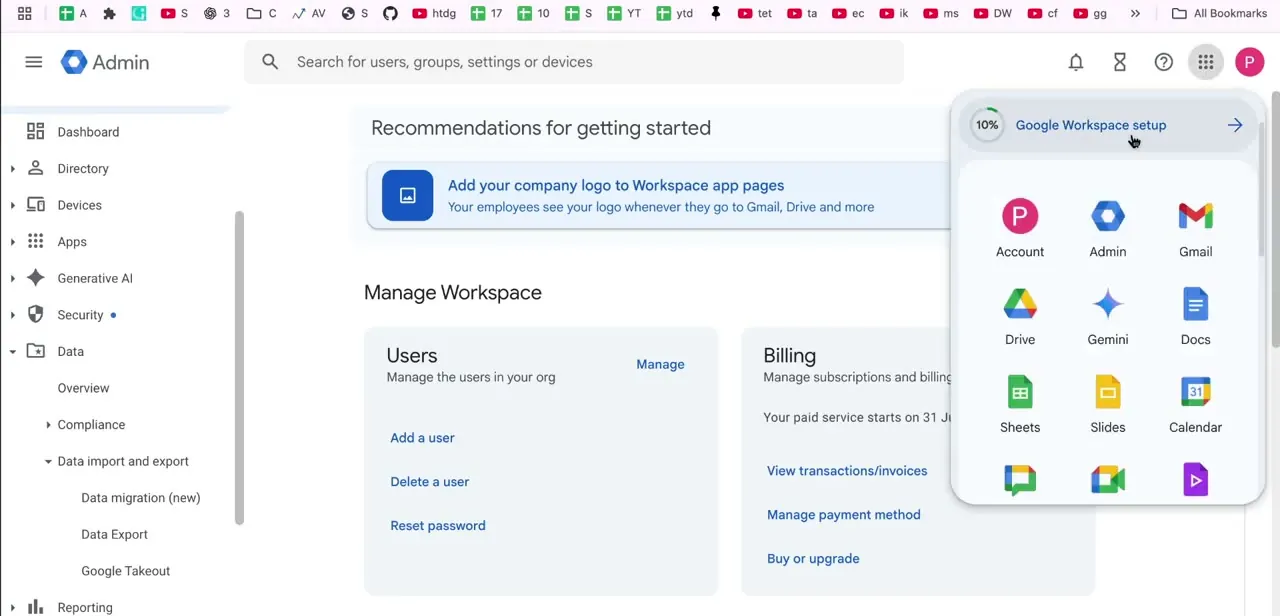
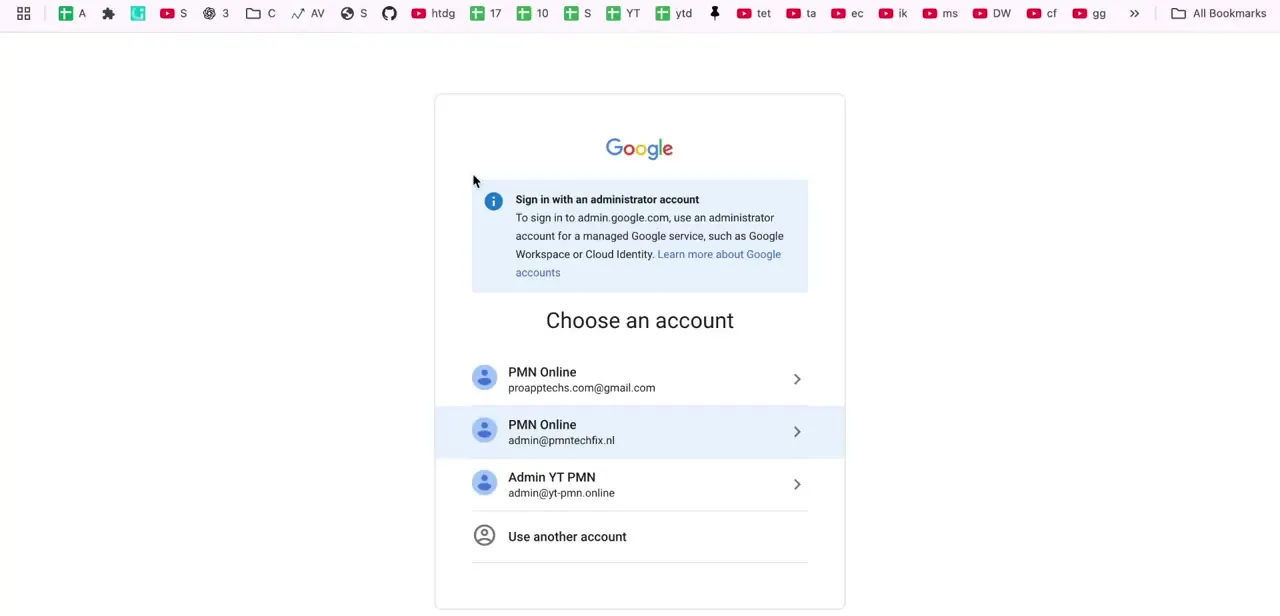
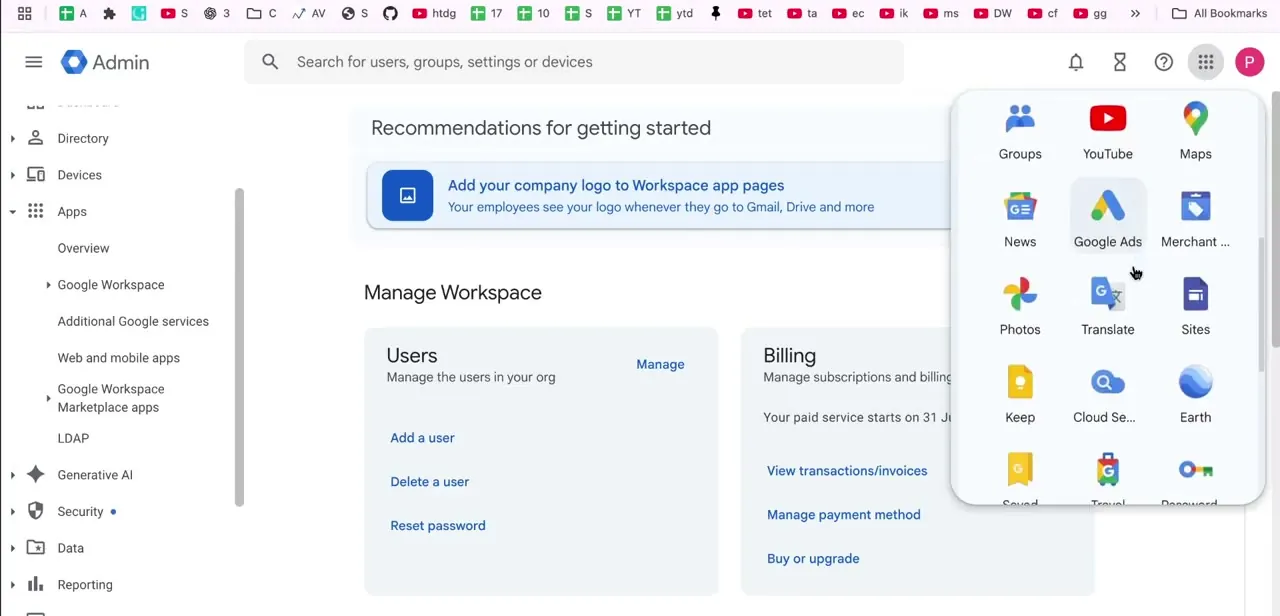
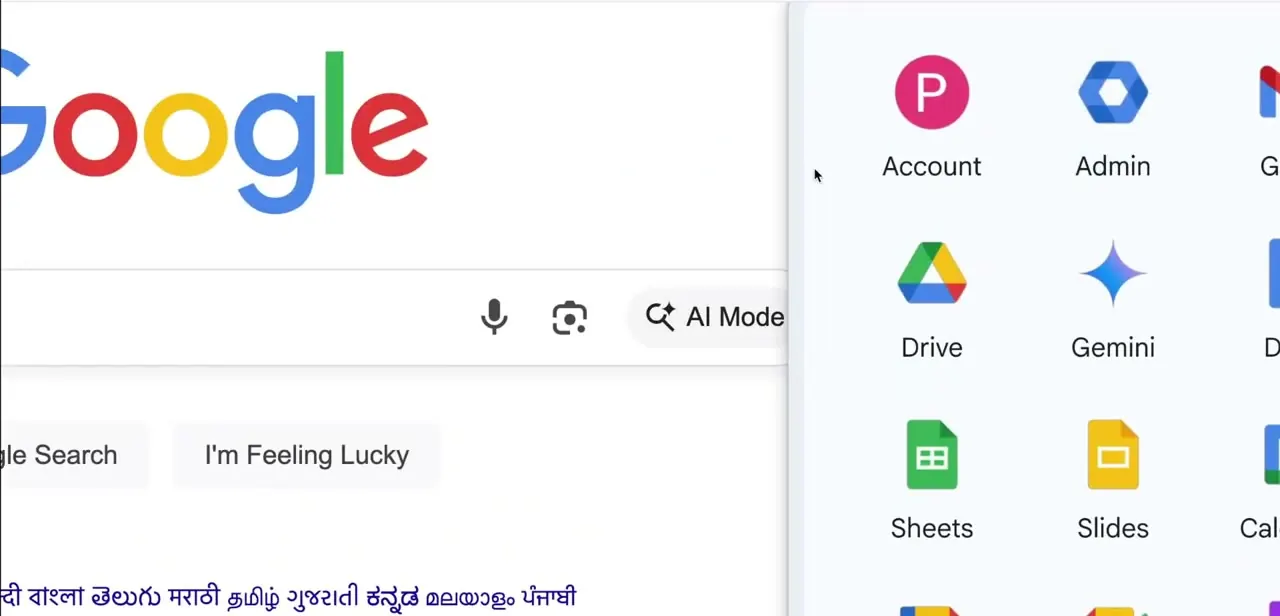
As a Workspace admin, the fastest route is the app grid in the top right of any Google page — click it and Admin sits right next to Account, Drive, and Gemini in the grid of app icons. This works from Google Search, Gmail, or anywhere else you're signed in, so there's no need to bookmark a separate URL if you don't already have one memorized. Clicking Admin drops you into the console's Directory section, where Users is the first thing in the left-hand menu.
02Select the user and open more options
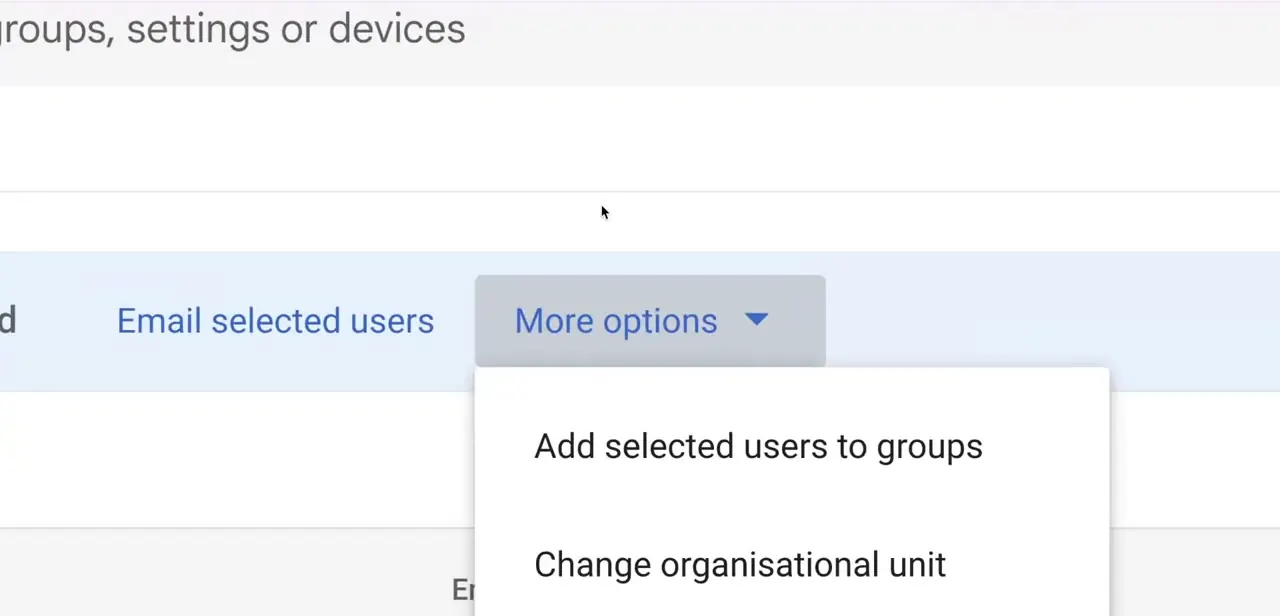
In Directory → Users, check the box next to the account you want to archive rather than clicking into their profile page. Selecting a user surfaces a toolbar with actions like emailing the selected users and a More options dropdown, which is where bulk actions live — adding users to groups, changing their organisational unit, and the delete/archive action are grouped here rather than scattered across separate pages. This bulk-action pattern is the same whether you're handling one departing employee or a batch of them.
03Choose archive instead of delete
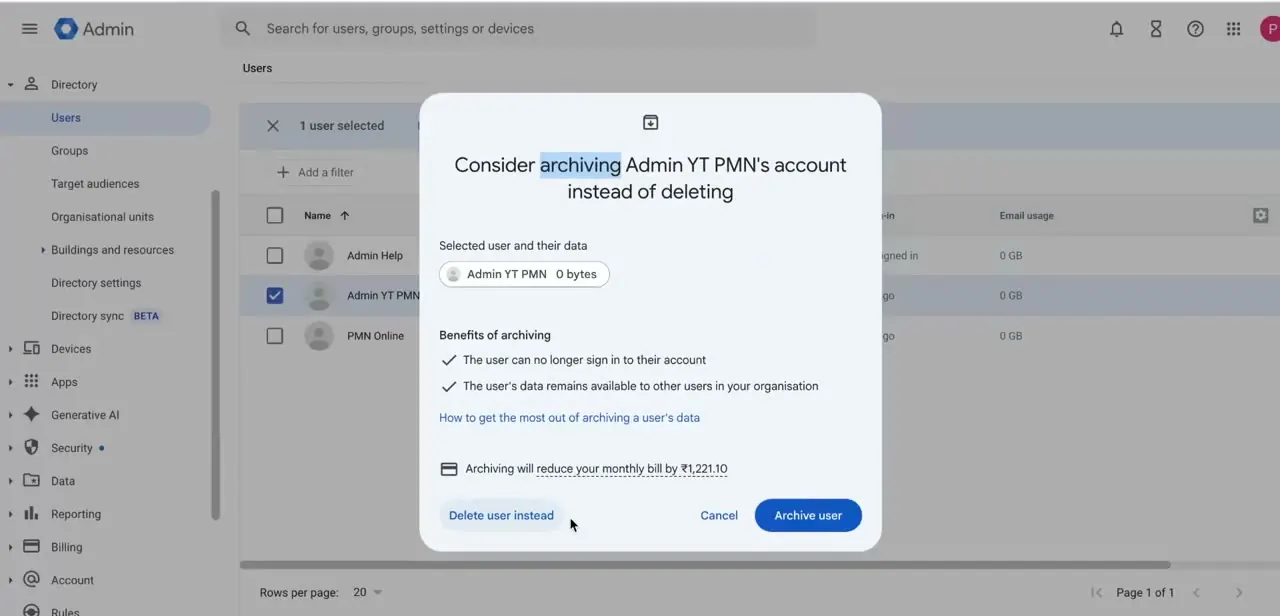
When you trigger the delete action on a user, Google Workspace doesn't just delete — it interrupts with a dialog titled "Consider archiving [name]'s account instead of deleting," laying out the tradeoff directly. The Benefits of archiving section spells out the two things that matter: the user can no longer sign in, and their data stays available to other users in your organization. Right below that, the dialog states a concrete number — in this example, archiving would reduce the monthly bill by ₹1,221.10 — so you're not guessing at the cost difference before deciding.
04Click Archive user to confirm
The dialog gives you three buttons: Delete user instead, Cancel, and Archive user. Clicking Archive user converts the account immediately — no confirmation email, no delay — and the person loses sign-in access right away while their mailbox and files stay put. Double-check you've selected the right account before confirming, since converting the wrong user means redoing the whole process to restore them to active status.
05Know what admins can still do with archived data
Once archived, the account's Gmail and Drive content remains searchable and accessible to admins through the same tools you'd use for an active user's data — Vault, if your edition includes it, or the standard admin search. This is the whole point of archiving over deletion: compliance and legal holds don't disappear just because someone left the company, and you can still pull an old email thread or file months later without having kept a full-price license running the whole time.
06Reverse it later if the person returns
Archiving isn't a one-way door — if someone comes back to the company or you simply decide you need the account active again, the same user page in the Admin console lets you convert an archived user back to active status. That restores full sign-in access and returns the account to a standard license, with all the data that was preserved during the archived period still there.
Frequently asked questions
What's the difference between archiving and suspending a user?
Suspending blocks access but still bills at the full license rate, while archiving is designed specifically to reduce costs while preserving data long-term.
Can I still search an archived user's emails?
Yes, admins can typically still access and search an archived user's email and file data even though the user themselves can't log in.
Does archiving delete the user's Drive files?
No, archiving preserves the user's Drive files along with their Gmail data rather than removing anything.
How much does archiving a user cost compared to deleting them?
Google shows the exact monthly savings right in the archive prompt before you confirm — archiving is cheaper than a live license but isn't free like deletion, since the reduced archived-user fee still applies.
Where do I find the option to archive a user?
In the Admin console, go to Directory → Users, select the account, and choose the delete action from More options — Google will prompt you with the option to archive instead.
About the author

Impran M N
I've been hooked on technology for as long as I can remember — especially the new tools and AI apps that seem to land every other week. Easy Tech Tuts is where I write up whatever I've just worked out: I do the task in the real product, record the screen, and turn it into the guide I wish I'd found first.