 Easy Tech Tuts
How to Archive Google Workspace Email instead of Deleting User Gmail & Save Bill 2026 Easily
By Impran M N
When an employee leaves, the instinct is often to delete their account right away and stop paying for the seat. The problem is that deleting a user can also delete their mailbox and Drive files, which is a real risk if you ever need those emails for legal, financial, or reference purposes.
Google Workspace has a middle path built for exactly this situation: suspend the account, manage its data properly, and move it to a lower-cost archived state instead of erasing it. This guide walks through the Admin console screens where that actually happens, starting from the same Directory the video works from.
01Open the Admin console and find Manage Workspace
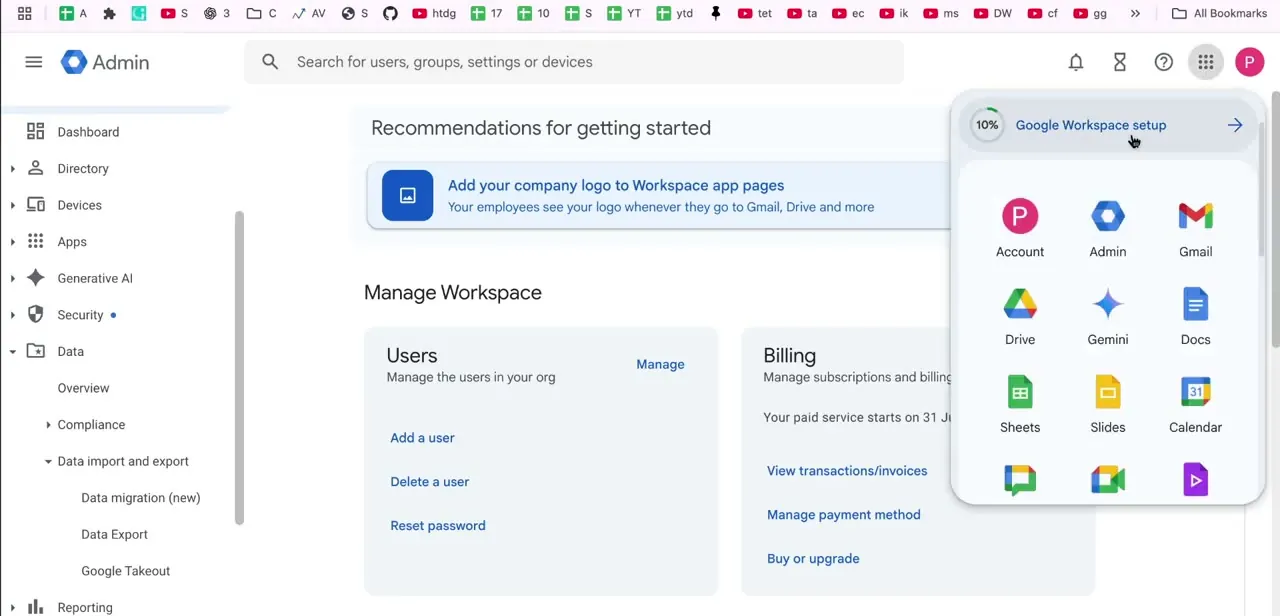
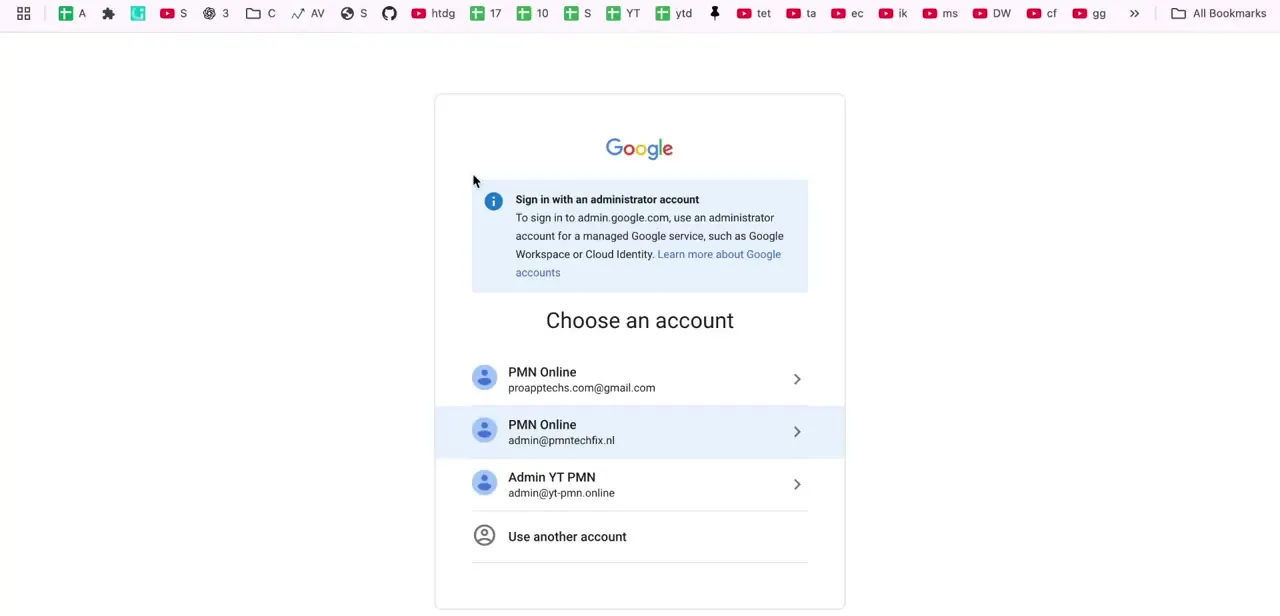
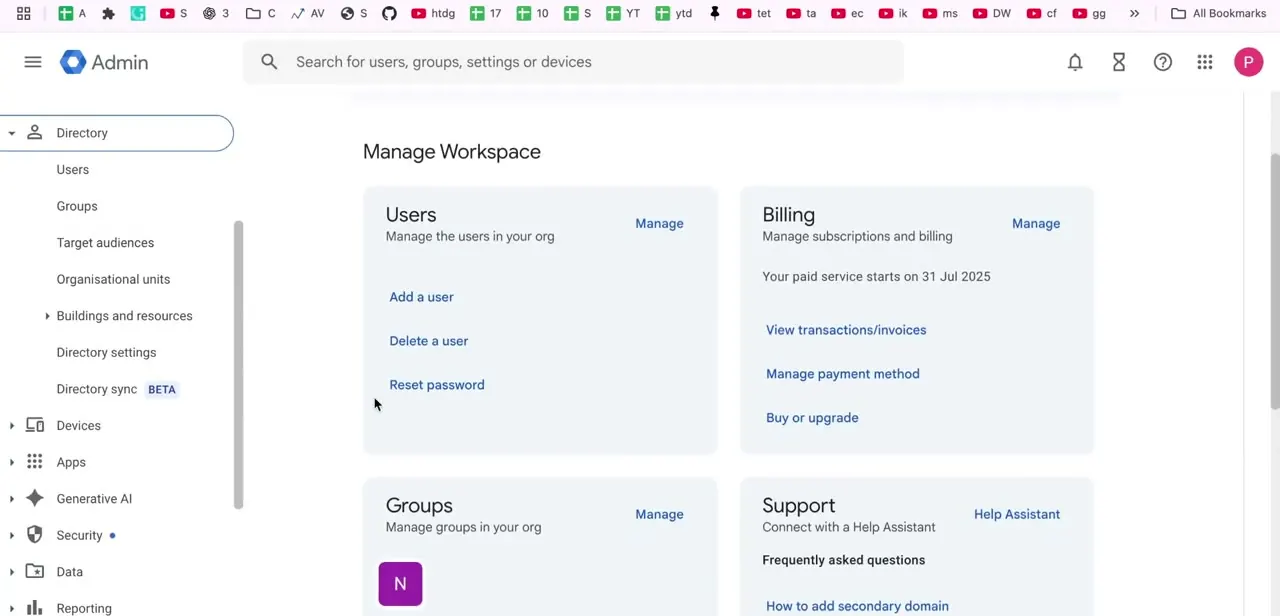
Sign in to admin.google.com with an administrator account — Google requires an admin-level login here, not a regular user login, since these settings affect the whole organization. The Admin console home shows a Manage Workspace panel with Users and Billing side by side, which is a useful reminder that user management and your subscription cost are directly connected: every active seat is billed, and an archived or suspended user is where you go to change that.
02Go to Directory and open Users
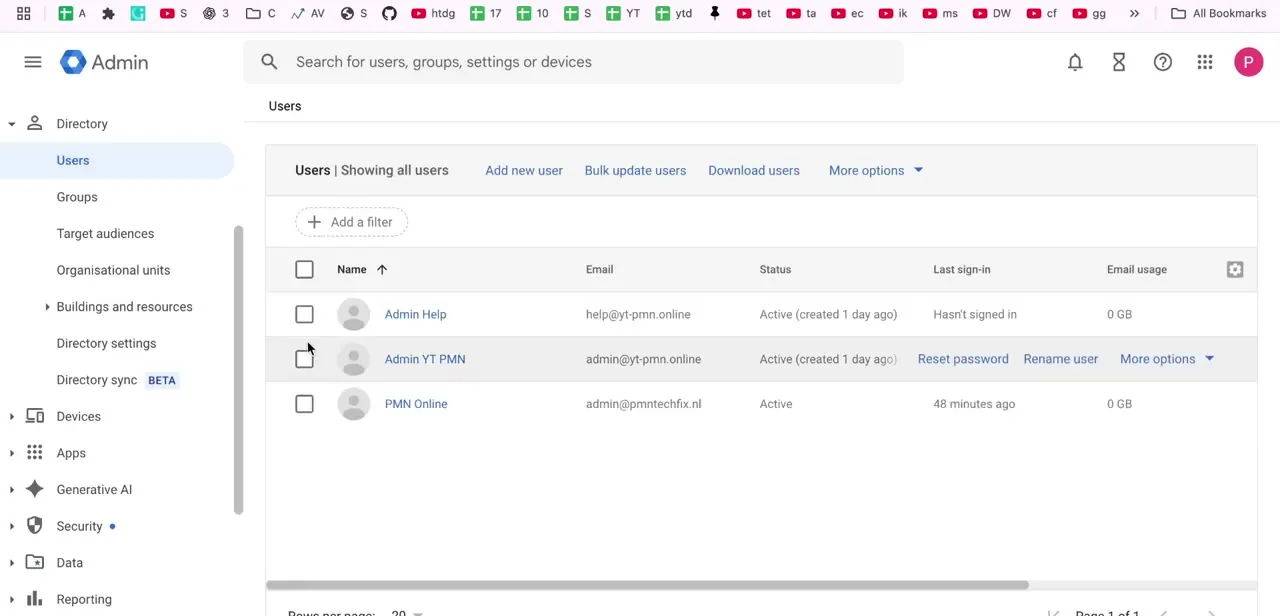
From the left-hand menu, expand Directory and click Users to see the full list of accounts in your organization, along with each person's email, status, last sign-in, and email usage. This is the same list you'd use to add a new hire, and it's also where the departing employee's account lives. Before doing anything else, locate their row and confirm the email address matches the account you actually intend to change — a wrong click here affects a real mailbox.
03Select the user and open More options
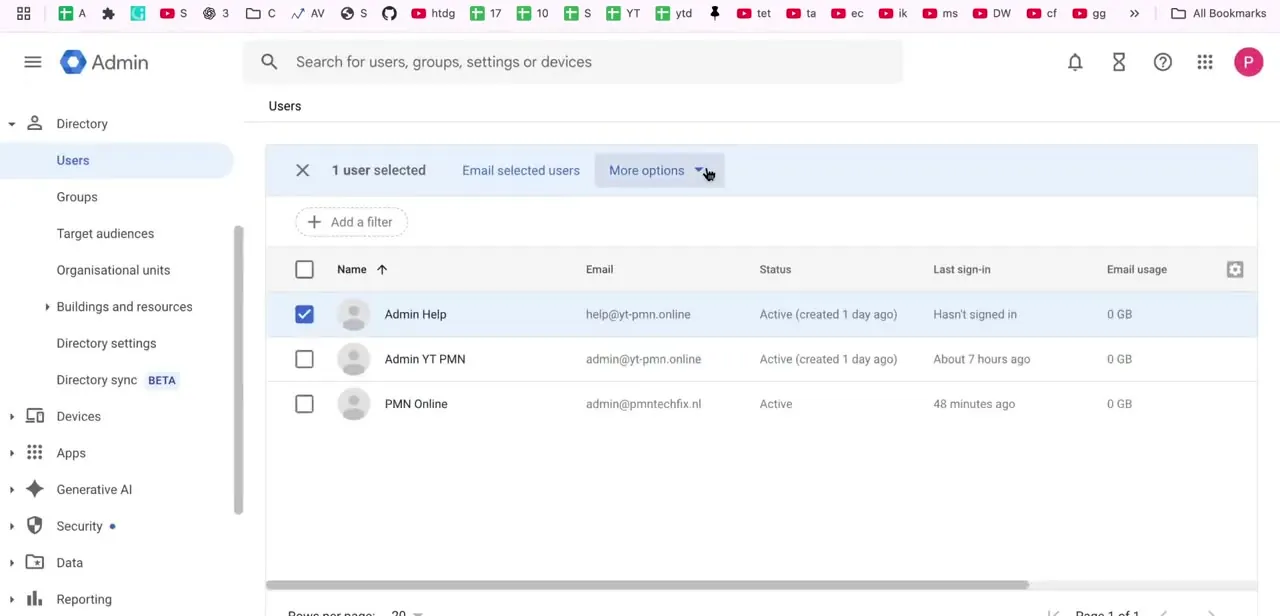
Check the box next to the departing user's name — the toolbar changes to show "1 user selected" along with options like Email selected users and More options. Click More options to reach the actions relevant to offboarding, including suspending the account. Suspending, rather than deleting, is the critical first move: it immediately blocks the person from signing in while leaving their mailbox and files completely intact for you to manage.
04Apply a retention policy before you change the license
Once the account is suspended and safe from accidental deletion, decide how long you're required to keep the data — this depends on your industry and location, so check with whoever handles compliance if you're not sure. If your plan includes Google Vault, set a retention rule there so the mailbox is preserved and searchable independent of what happens to the license afterward. Retention should be locked in before you touch billing settings, not after.
05Move the account to an archived user license
Google Workspace offers an archived-user license type specifically for this situation — it costs significantly less than a full active license while keeping the mailbox accessible to admins for search and export. Assign this license from the same Billing or Licenses area you'd use to change any other user's plan. The account stays fully suspended from an end-user login standpoint; only admins can reach the data going forward.
06Transfer ownership of shared Drive files
Before you consider the offboarding finished, check what Drive files the departing user owned and reassign ownership of anything the team still needs to an active teammate. An archived account can still hold files, but transferring ownership of shared documents avoids a scenario where a live project file becomes orphaned under an account nobody but an admin can touch. This last step is easy to forget in the moment but is usually the one that causes problems weeks later.
Frequently asked questions
How long does archived data stay accessible in Google Workspace?
Archived data generally remains accessible for as long as the account stays in archived status, subject to your organization's retention policy and any Vault holds you've applied.
Is archiving cheaper than keeping a full user license active?
Yes, an archived-user license typically costs less than a standard active license while still preserving the mailbox and Drive data for admin access.
Do I need Google Vault to archive a user's email?
Google Vault makes retention and legal hold easier and more searchable, but you can suspend a user and preserve their data through an archived license without it, depending on your plan.
What happens to Drive files owned by an archived user?
The files remain associated with that account, but it's best to transfer ownership of important shared files to an active user before archiving so collaborators keep smooth access.
Should I suspend the account before or after setting up retention?
Suspend first — it blocks sign-in immediately and protects the data — then apply your retention policy, and only after that change the license to the lower-cost archived type.
About the author

Impran M N
I've been hooked on technology for as long as I can remember — especially the new tools and AI apps that seem to land every other week. Easy Tech Tuts is where I write up whatever I've just worked out: I do the task in the real product, record the screen, and turn it into the guide I wish I'd found first.