 Easy Tech Tuts
How to Add Logo to Godaddy Website Easily 2026
By Impran M N
Adding a logo is one of the first branding steps for a new GoDaddy site, and GoDaddy makes the entry point for it easier to find than you'd expect — it's a dedicated link sitting right under your site's name on the dashboard, not buried inside a design menu. This guide covers getting to that shortcut, uploading a logo that won't come out blurry, and where to go afterward if you want to fine-tune how it sits in your header.
01Get to your site from My Account
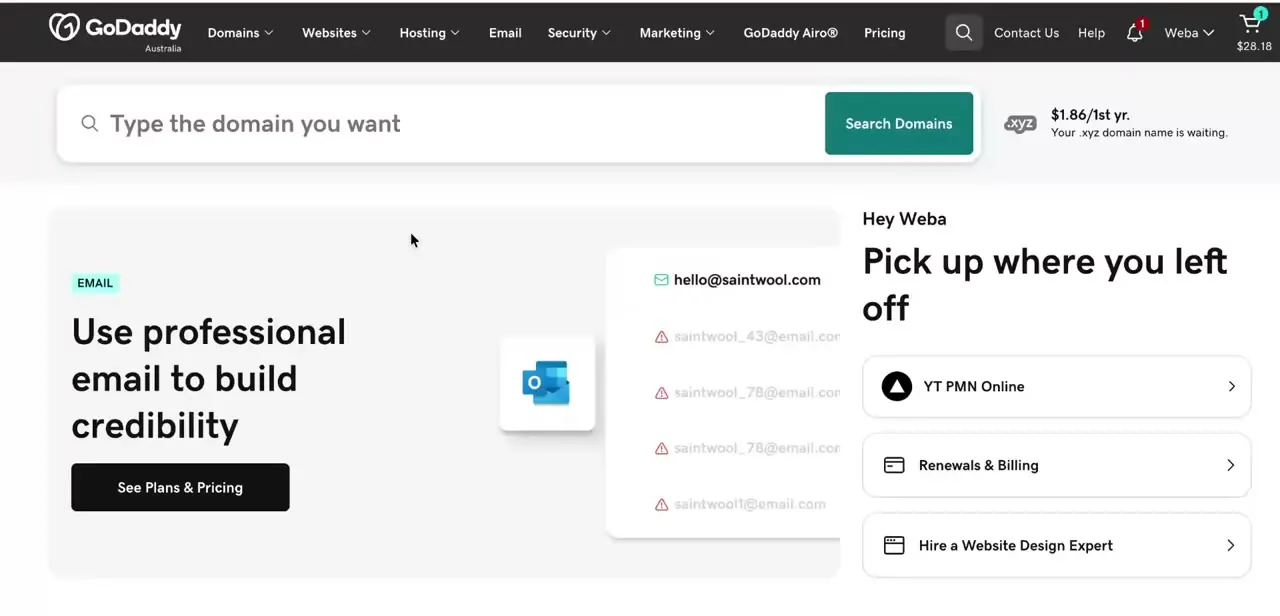
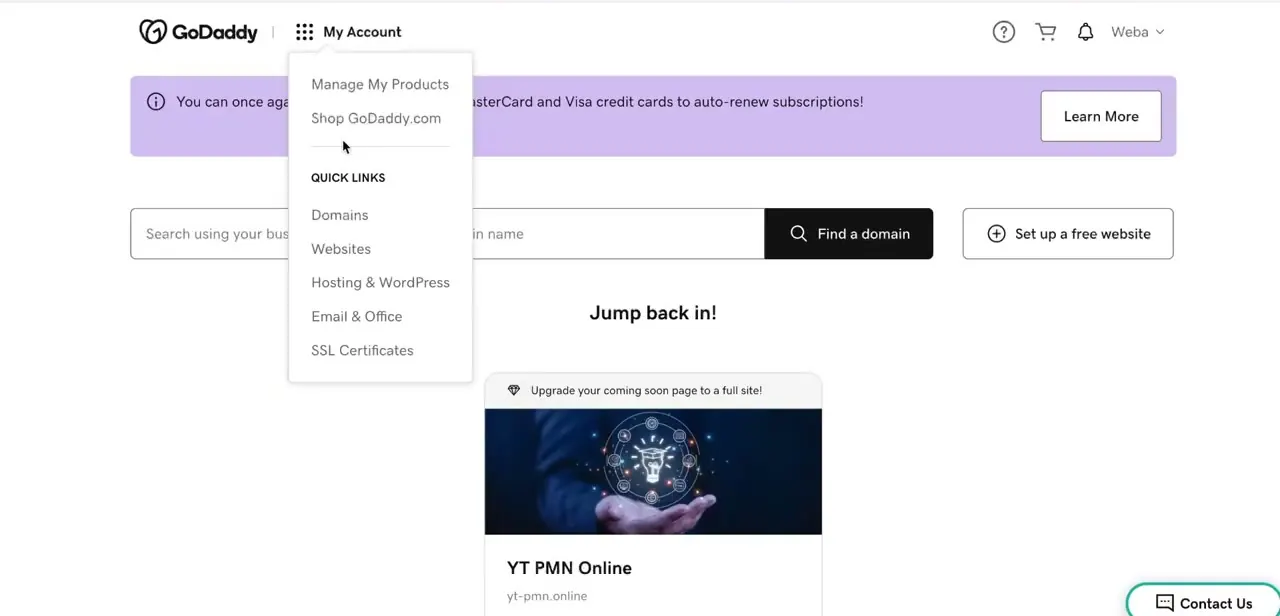
Log into GoDaddy and open the My Account menu from the top navigation bar. A dropdown appears with Manage My Products and Shop GoDaddy.com at the top, followed by a Quick Links section listing Domains, Websites, Hosting & WordPress, Email & Office, and SSL Certificates. Click Websites, or scroll down on the account home page to the "Jump back in!" section where your existing sites are listed by name — either route gets you to the specific site you want to add a logo to.
02Use the Add Logo shortcut on your site dashboard
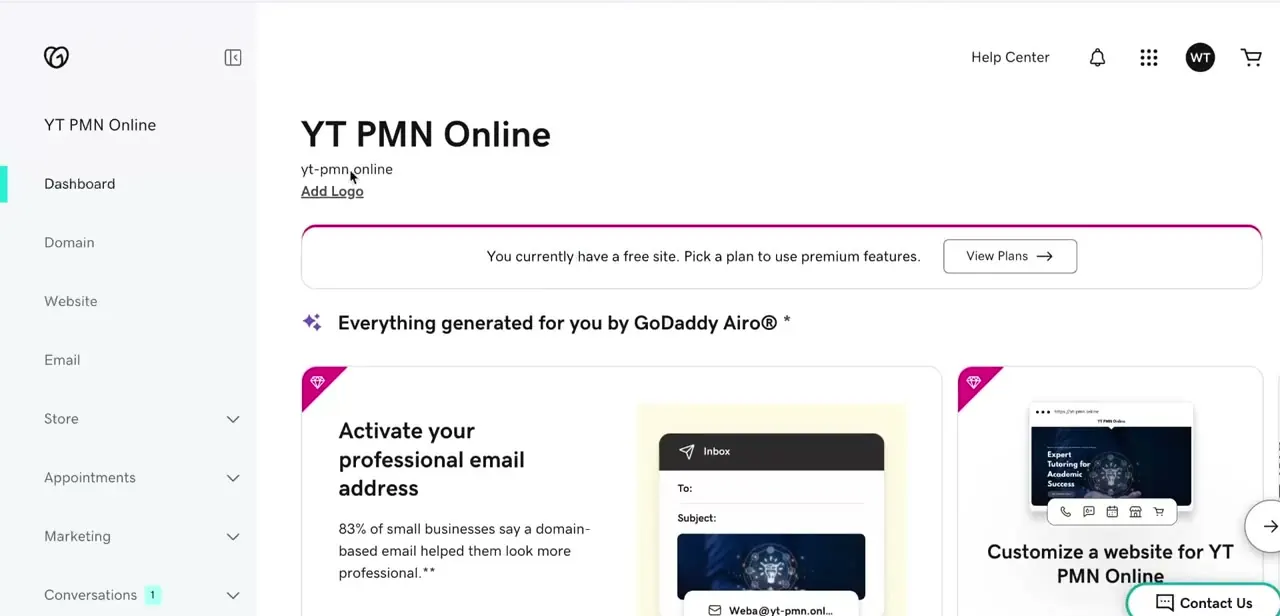
Once you open a specific site, you land on its dashboard with the site name displayed prominently at the top, its domain underneath, and — right below that — a small "Add Logo" link. This is the fastest path to uploading a logo: GoDaddy surfaces it here specifically because it's one of the first things a new site needs, before you'd even think to look inside a full website editor. Click it to open the upload prompt directly from this screen.
03Upload a file that won't turn out blurry
When the upload prompt opens, choose a PNG with a transparent background if your logo needs to sit over colored or photo headers, or an SVG if you have one — SVGs scale to any size without losing sharpness, which matters because your logo will render at different sizes on desktop headers, mobile headers, and browser tabs. Avoid uploading a small image pulled from a social media profile or a screenshot; anything under roughly 300 pixels wide will look visibly soft once GoDaddy displays it at header size.
04Fine-tune placement in the Website editor
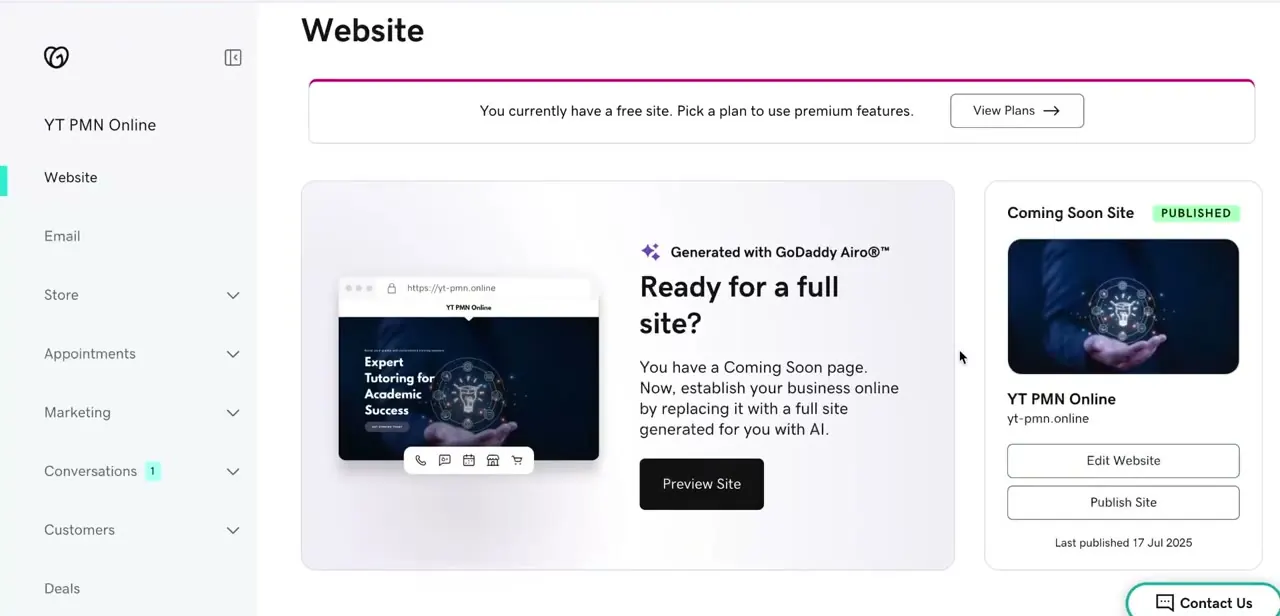
For more control over size and alignment than the quick Add Logo prompt gives you, go to the Website section in the left-hand dashboard menu. This is also where you'll find the Edit Website button leading into GoDaddy's full site editor, alongside a Publish Site button and a note showing when the site was last published. Use Edit Website to open the header block directly and adjust how large the logo displays and where it sits relative to your navigation menu.
05Preview on both desktop and mobile
Before publishing, use the preview option to check how the logo looks in both the desktop header and the collapsed mobile header, since GoDaddy's builder resizes the header layout for smaller screens and a logo that looks right at full width can crowd a mobile menu icon if it wasn't designed with some breathing room around it.
06Publish and confirm the change went live
Once you're happy with the preview, hit Publish Site from the Website section. The dashboard tracks your last published date right next to the button, so you can confirm the update actually went out rather than just saving to a draft. Give the page a hard refresh afterward, since browser caching can occasionally show you the old header for a moment even after a successful publish.
Frequently asked questions
What file format works best for a logo on GoDaddy?
SVG offers the sharpest display across different screen sizes since it scales without losing quality. A PNG with a transparent background is the next best option if you don't have an SVG version.
Why does my logo look blurry after uploading?
This is usually caused by uploading a low-resolution image — anything under about 300 pixels wide will look soft at header size. Re-uploading a higher-resolution file or switching to SVG fixes it.
Where do I find the option to add a logo?
Open your site's dashboard from GoDaddy's My Account menu — there's an Add Logo link directly beneath the site name and domain. For more control over sizing, use Edit Website in the Website section instead.
Can I reposition my logo after it's uploaded?
Yes. Go to Website in the dashboard, click Edit Website, and open the header block to adjust the logo's size and alignment.
Will my logo automatically resize for mobile visitors?
GoDaddy's builder generally adapts the header for mobile, but it's worth previewing before you publish to confirm the logo doesn't crowd the mobile menu at smaller widths.
About the author

Impran M N
I've been hooked on technology for as long as I can remember — especially the new tools and AI apps that seem to land every other week. Easy Tech Tuts is where I write up whatever I've just worked out: I do the task in the real product, record the screen, and turn it into the guide I wish I'd found first.