 Easy Tech Tuts
(100% Working) How to Add ALIAS Record in GoDaddy, Cloudflare, Namecheap Easily 2026
By Impran M N
An ALIAS record — sometimes called ANAME — exists to solve one specific problem: the DNS spec won't let you put a CNAME on a bare root domain, but almost every modern host wants to hand you a hostname rather than an IP address. So you're told to point example.com at something like ingress-bonde.easywp.com, and your registrar's record list has no obvious way to do it.
This guide walks through the record itself, then the actual add-record screens in GoDaddy, Cloudflare and Namecheap, since all three call it something different and only some of them offer it at all. It finishes with the A-record fallback that works on any registrar, and how to tell whether the change has actually taken effect rather than guessing at propagation.
01Know what an ALIAS record actually does
An ALIAS record behaves like a CNAME — it points a name at another name rather than at an IP address — but it is legal on the root of a domain, where a plain CNAME is not. The reason the restriction exists is that a CNAME must be the only record on its name, and your root already carries NS and usually MX records, so a root CNAME would break mail and delegation.
Registrars that offer ALIAS work around this by resolving the target hostname on their own nameservers and answering your visitors with the resulting IP addresses, refreshing them as the target changes. That last part is the real benefit: when your host moves your site to a different IP, an ALIAS follows it automatically while a hardcoded A record silently keeps sending traffic to an address you no longer own. Use ALIAS when a service gives you a hostname for the root domain, and a normal CNAME when the same service gives you a hostname for a subdomain like www or shop.
02Copy the exact target hostname from your host
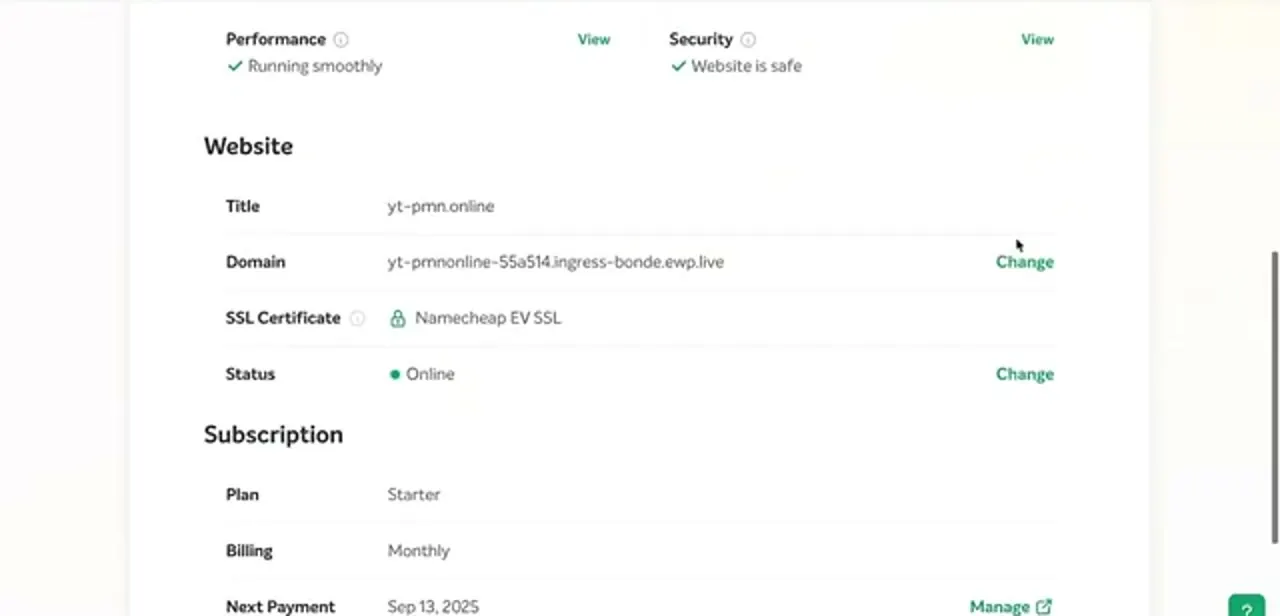
Before touching DNS, get the destination string from the service you're connecting, and copy it rather than typing it — one wrong character produces a domain that resolves to nothing and an hour of confused troubleshooting. Most hosts show it on the site or domain panel for your plan, alongside the temporary system URL your site currently answers on.
In the panel shown here, the site is live on a long ingress hostname under ewp.live, with the SSL certificate and status listed right beside it, and the Change link next to Domain is where you tell the host that a custom root domain is on its way. Note the ingress name in that URL — that is the family of hostnames the ALIAS record needs to target. Also check whether the host wants you to add the domain on its side first, because many providers won't issue an SSL certificate for a domain they haven't been told about, and you'll end up with a working DNS record and a browser warning.
03Add the record in GoDaddy's DNS manager
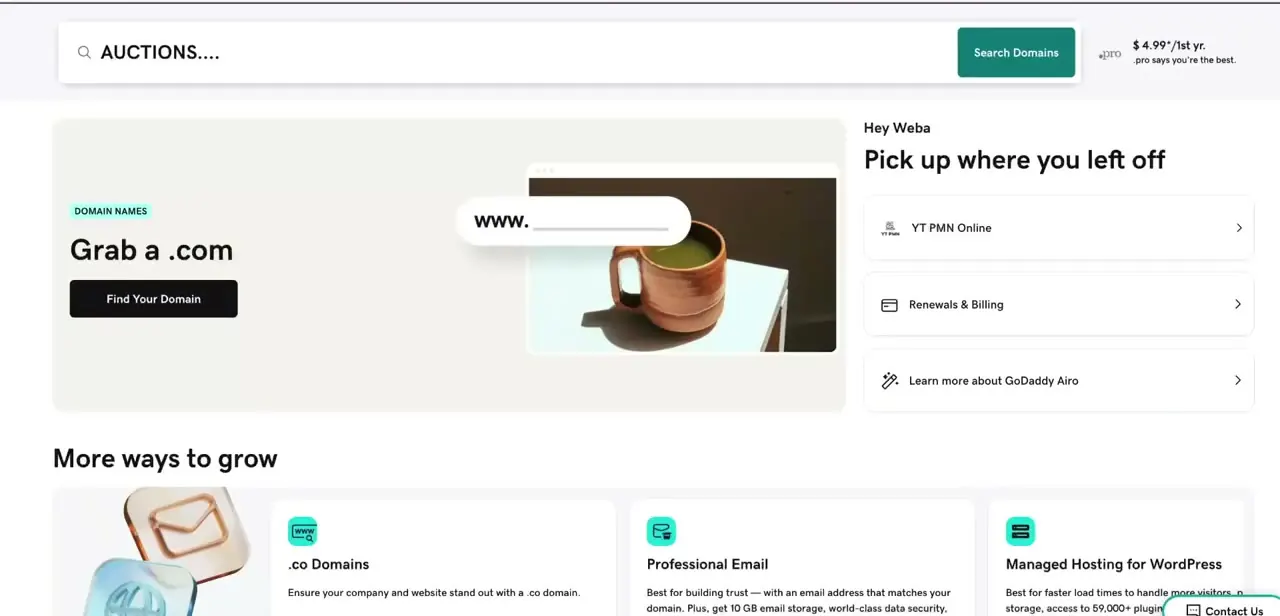
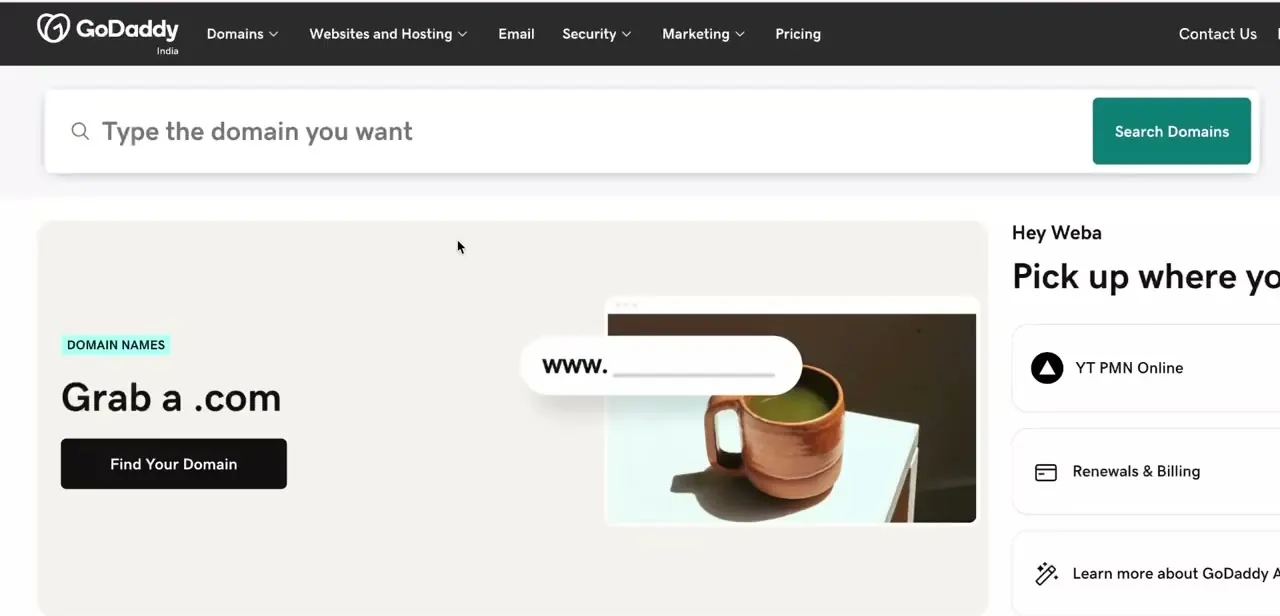
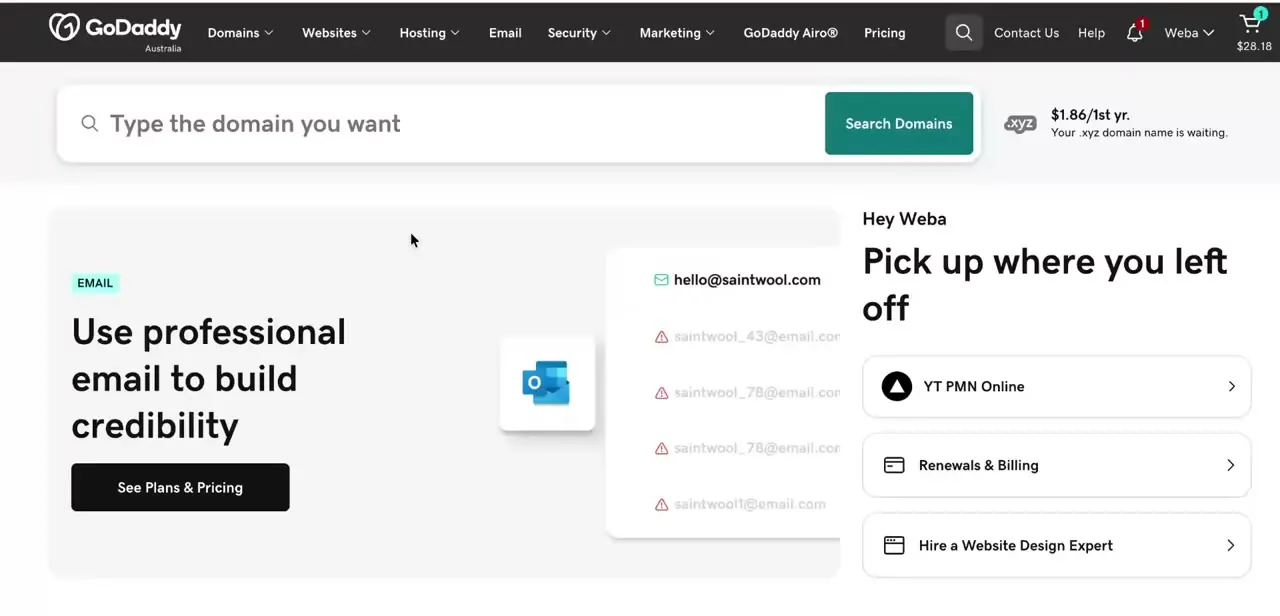
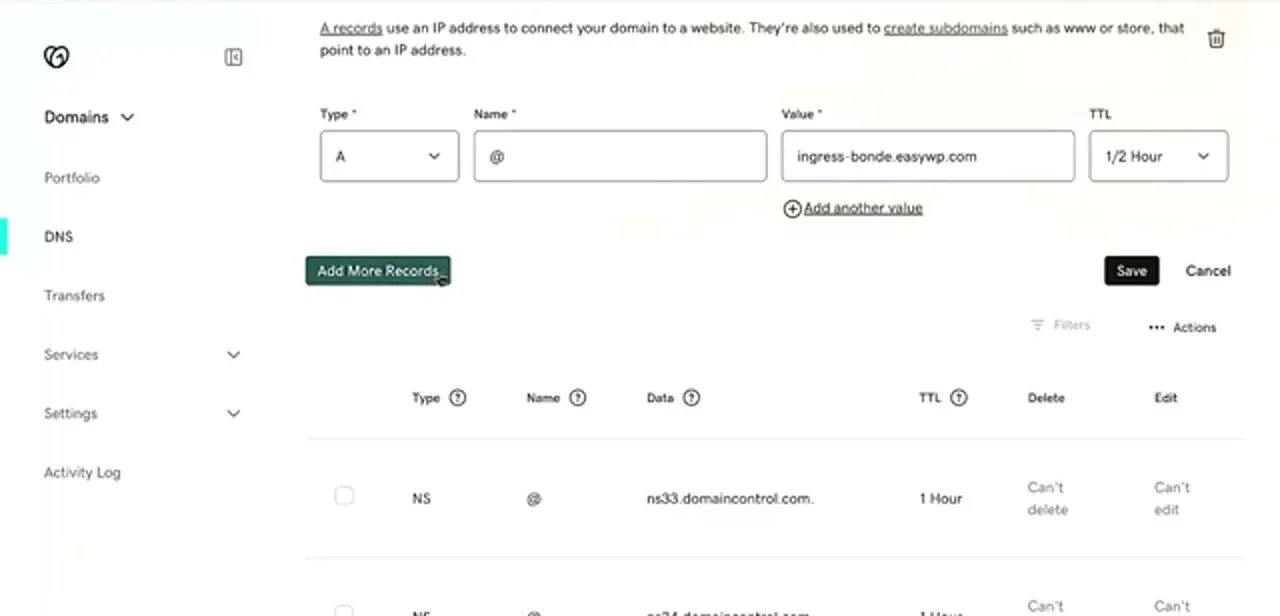
In GoDaddy, open your account, go to Domains, pick the domain and choose DNS. The add-record form gives you four fields — Type, Name, Value and TTL — and Name is where the root goes: enter @, which is DNS shorthand for the domain itself, not the word www and not the full domain name.
Drop your target hostname into Value and leave TTL at the default half hour while you're testing, since a short TTL means a mistake expires quickly instead of sitting in caches all day. GoDaddy's own record list sits directly underneath the form, so after you save you can immediately confirm the new row is there and that the existing NS entries are untouched. One important caveat: GoDaddy's type dropdown does not include ALIAS or ANAME, so on a GoDaddy-hosted zone the root either takes a CNAME on www plus a forward, or A records pointed at the IPs behind your target — the fallback method covered further down.
04Do the same thing in Cloudflare with CNAME flattening
Cloudflare has no record type called ALIAS, and it doesn't need one. Add an ordinary CNAME with the name set to your root domain and the content set to the target hostname, and Cloudflare's CNAME flattening resolves that target for you and returns A records to visitors — functionally identical to an ALIAS, just under a different name.
Flattening is applied to the root automatically, so there's nothing extra to switch on for a bare-domain CNAME. The one setting worth a thought is the orange cloud: proxied means traffic runs through Cloudflare's network and your visitors see Cloudflare's IPs, while DNS-only passes them straight to your host. Proxied is usually what you want, but switch it to DNS-only if your host issues its own certificate or needs to see the real visitor IP during setup, then turn the proxy back on once the site loads.
05Use Namecheap's Advanced DNS ALIAS type
Namecheap is the registrar of the three that genuinely offers the record type. Open Domain List, hit Manage on the domain, then the Advanced DNS tab, and choose Add New Record — ALIAS Record appears in the type dropdown.
Set Host to @ and Target to the hostname your provider gave you, then save with the green tick, which is easy to miss because the row looks saved before you click it. This only works while the domain is on Namecheap's own BasicDNS or PremiumDNS nameservers; if you've pointed the domain at Cloudflare or your host's nameservers, the Advanced DNS tab is inert and the record has to be created wherever the nameservers actually point. Namecheap's documentation for its own hosting spells out the same choice — an ALIAS record if your DNS provider supports it, or A records if it doesn't.
06Fall back to A records when ALIAS isn't offered
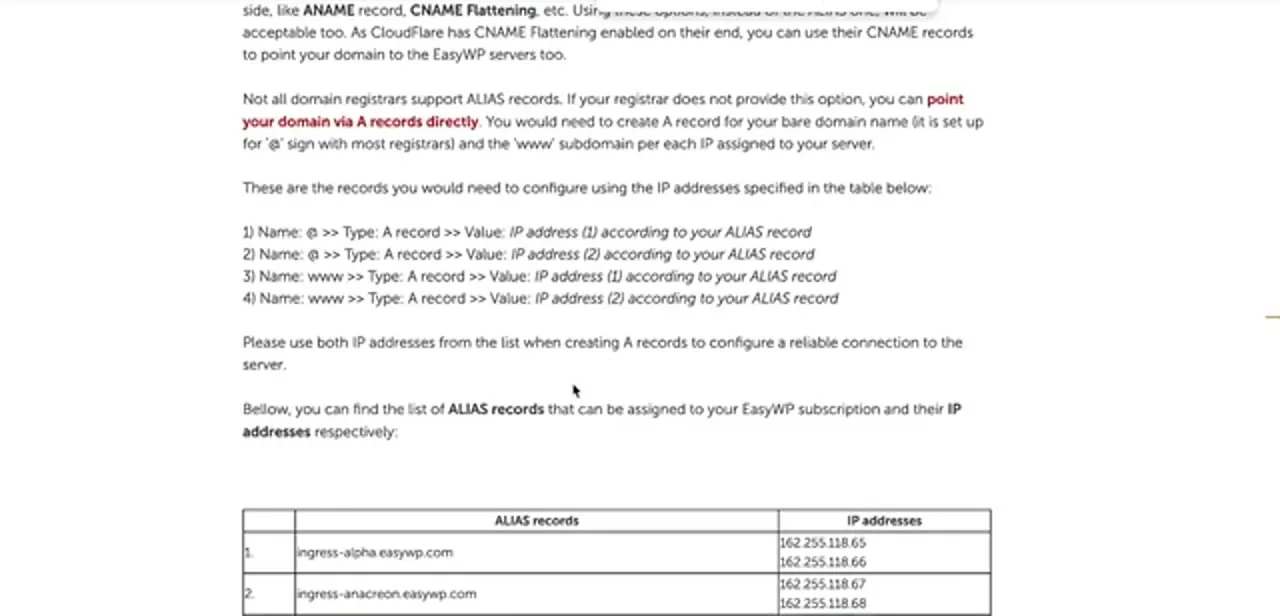
If your registrar has no ALIAS type and you're not using Cloudflare, you can reach the same destination with plain A records — you just take on the maintenance yourself. Ask your host for the IP addresses behind the target hostname; providers that expect this usually publish a table mapping each ingress hostname to its addresses, as in the reference page shown here, which pairs names like ingress-alpha.easywp.com with a pair of IPs.
Create an A record on @ for each address, then repeat the same set for the www host so both versions of your domain resolve. Using both IPs rather than one matters: it is what gives you a second path if the first server stops answering. The trade-off is that this is a snapshot, so if your host ever changes those addresses your site goes dark until you edit the records by hand — set a calendar reminder to re-check them, or move the zone to a provider that supports ALIAS and forget about it.
07Verify the record instead of waiting on propagation
Propagation is mostly a myth in the way people use the word — what actually happens is that resolvers hold the old answer until its TTL expires, which is why lowering TTL before a change is worth the extra minute. Rather than refreshing your browser, query the record directly: run dig example.com or nslookup example.com against a public resolver like 1.1.1.1 and check that the addresses coming back are the ones your host expects.
If you still see an old value, clear your local DNS cache and try a resolver you haven't queried yet, because your own machine caches aggressively. Two mistakes account for most failures at this stage — a leftover A record on @ competing with the new record, and the domain still using nameservers other than the panel you edited. Delete the stale record, confirm the nameservers, and the root will resolve within the TTL window.
Frequently asked questions
What's the difference between an ALIAS record and a CNAME?
Both point one name at another name, but a CNAME can't legally coexist with the NS and MX records that live on a root domain, so it's only valid on subdomains. An ALIAS is a registrar-side workaround that resolves the target for you and returns IP addresses, making it safe to use on the root.
Do GoDaddy, Cloudflare and Namecheap all support ALIAS records?
Not under the same name. Namecheap offers an actual ALIAS Record type in Advanced DNS, Cloudflare achieves the same result automatically via CNAME flattening on a root CNAME, and GoDaddy has no ALIAS type at all — on GoDaddy you use A records pointed at your host's IPs instead.
Why not just use an A record?
You can, and it works, but it pins your domain to specific IP addresses. If your host migrates your site to different servers, the A record keeps sending visitors to the old address until you notice and update it, whereas an ALIAS re-resolves the target on its own.
Can I have an ALIAS record and MX records on the same domain?
Yes — that's exactly the situation ALIAS was designed for. Because it isn't a true CNAME, it coexists with the MX, TXT and NS records on your root, so your email keeps working while the root domain points at your web host.
How long before the ALIAS record starts working?
New records usually resolve within minutes; changes to an existing record take up to the old record's TTL, commonly 30 minutes to an hour. Check with dig or nslookup against a public resolver rather than your browser, since browsers and operating systems cache DNS separately.
About the author

Impran M N
I've been hooked on technology for as long as I can remember — especially the new tools and AI apps that seem to land every other week. Easy Tech Tuts is where I write up whatever I've just worked out: I do the task in the real product, record the screen, and turn it into the guide I wish I'd found first.