 Easy Tech Tuts
How to use Streak CRM in Gmail & Google Workspace, Sheet, Calendar 2026 Easily
By Impran M N
Streak CRM brings pipeline tracking directly into your Gmail inbox, so you can manage sales, hiring, or support without switching between tabs or logging into a separate CRM. It sits in Gmail as a Chrome extension and adds its own sidebar, letting you turn any list of contacts into a spreadsheet-style board with stages, deal values, and linked emails. This guide walks through building your first pipeline from Streak's built-in templates, seeing how a populated pipeline actually looks once it has entries, and getting it ready to fill with real contacts.
01Install Streak and open the pipeline creator
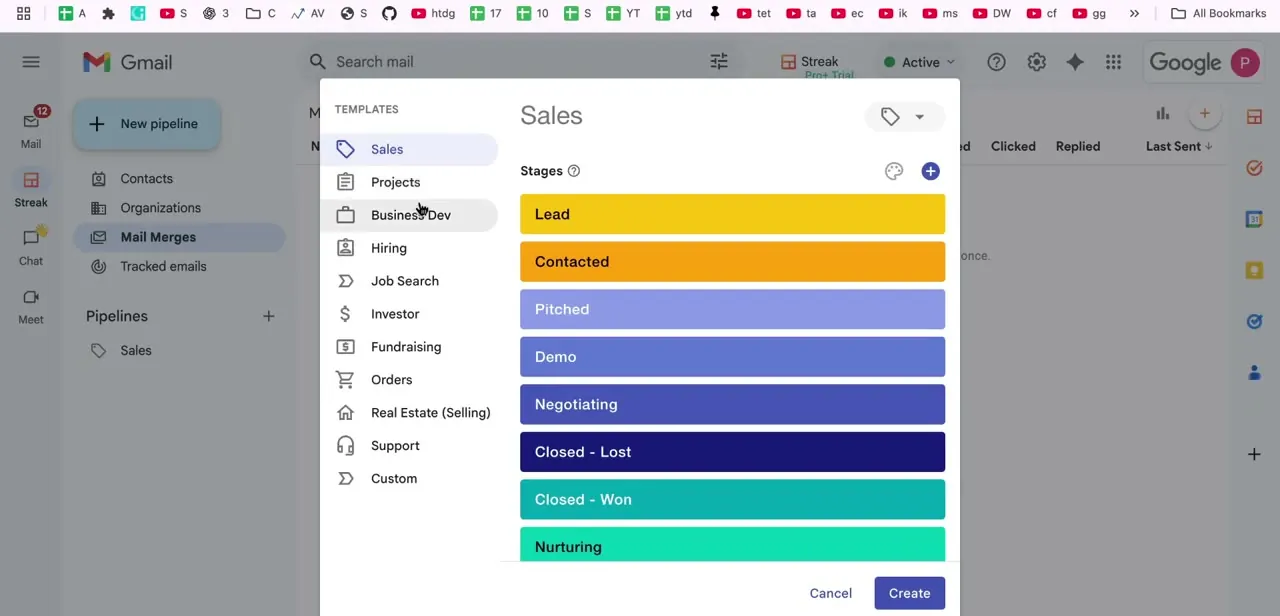
Add the Streak extension to Chrome and connect it to your Gmail account; once installed, a Streak sidebar with Mail, Contacts, Organizations, and Pipelines appears down the left edge of Gmail. Click New pipeline to start, and Streak opens a template picker rather than a blank form — templates cover Sales, Projects, Business Dev, Hiring, Job Search, Investor, Fundraising, Orders, Real Estate, Support, and a fully custom option, so you rarely need to build stage names from scratch.
02Pick a template that matches your workflow
Choosing Sales pre-fills a full deal pipeline from Lead through Closed - Won, color-coded by stage, which is ready to use immediately without configuration. If you're tracking something other than sales — hiring candidates, support tickets, or a client project — pick the matching template instead; each one comes with stage names suited to that workflow, and you can always rename or reorder stages afterward. Click Create once you've settled on a starting template.
03See how a working pipeline is laid out
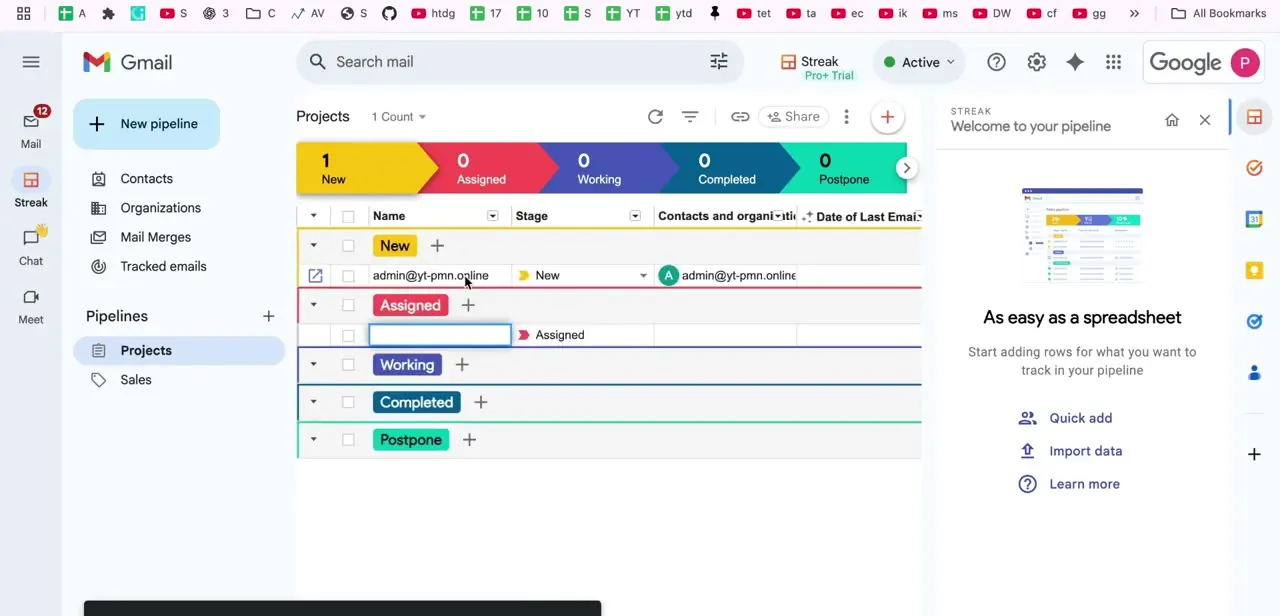
Once a pipeline has entries, Streak displays it as a spreadsheet-like table with colored stage headers running across the top, each showing a live count of how many records sit in that stage. Rows underneath list each entry with editable columns — Name, Stage, and contacts and organizations linked to it — and a right-hand panel offers quick actions like Quick add and Import data for populating the board fast. This is the core Streak experience: a CRM that looks and behaves like a spreadsheet but stays tied to your actual email threads.
04Populate an empty pipeline with contacts
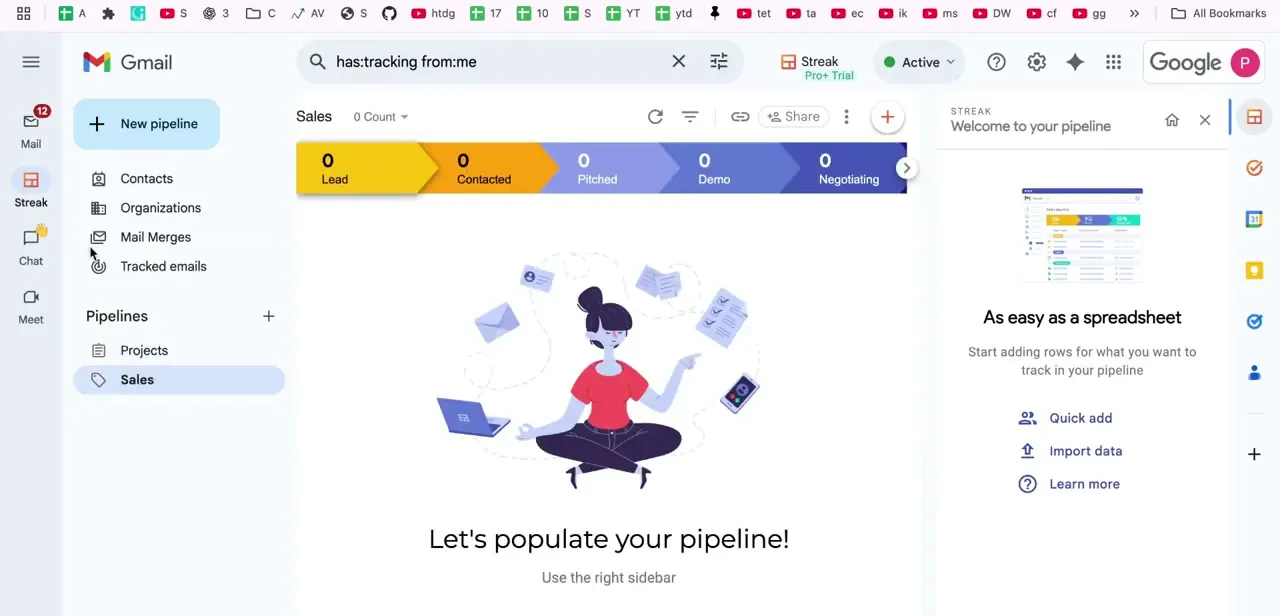
A freshly created pipeline starts empty, and Streak's onboarding panel prompts you toward Quick add, Import data, or Learn more rather than leaving you to guess. Quick add is the fastest way to get a handful of contacts in manually; Import data is worth using instead if you're migrating an existing spreadsheet of leads or clients, since it maps your columns directly onto Streak's stage and contact fields.
05Let Streak track emails automatically
Once contacts are in a pipeline, Streak automatically links matching email threads to the right entry based on the sender's address — so a reply from a lead shows up tied to their pipeline row without you doing anything manually. This is what actually saves the tab-switching the tool is built to avoid: the conversation history for a deal lives right next to that deal's stage and value, inside the inbox you're already checking.
06Connect Calendar and export to Sheets
Streak ties into Google Calendar so you can schedule follow-ups and reminders directly from a pipeline entry, keeping deadlines attached to the deal rather than floating in a separate calendar app disconnected from the context. When you need reporting beyond what Streak's own views offer, export a pipeline to Google Sheets for pivot tables or sharing with people who don't have Streak installed — useful for a monthly summary a manager wants without giving them inbox access.
Frequently asked questions
Is Streak CRM free to use with Gmail?
Streak offers a free tier with basic features, along with paid plans (shown as "Pro+ Trial" in the interface) that unlock more advanced pipeline and automation capabilities.
Can multiple team members collaborate on the same Streak pipeline?
Yes, Streak supports team collaboration, letting multiple users view and update shared pipelines from within their own inbox, with a Share option available on each pipeline.
Does Streak work on mobile as well as desktop Gmail?
Streak is primarily built as a browser extension for desktop Gmail, with more limited functionality available on mobile.
Do I have to build my pipeline stages from scratch?
No — Streak offers built-in templates for Sales, Projects, Hiring, Support, Fundraising, and more, each with sensible default stages you can rename or reorder afterward.
What is mail merge used for in Streak?
Mail merge lets you send personalized bulk emails to multiple pipeline contacts at once while still tracking opens, clicks, and replies individually per recipient.
About the author

Impran M N
I've been hooked on technology for as long as I can remember — especially the new tools and AI apps that seem to land every other week. Easy Tech Tuts is where I write up whatever I've just worked out: I do the task in the real product, record the screen, and turn it into the guide I wish I'd found first.