 Easy Tech Tuts
How to Make Facebook Reels in Canva Easily 2026
By Impran M N
Facebook Reels are competing directly with TikTok and Instagram for short-form attention, and Canva gives you a fast path to a polished one without opening a dedicated video editor. Rather than building a Reel from a blank timeline, the quickest route starts from Canva's own template library, which already has the vertical framing, motion, and pacing worked out. This guide follows that path from Canva's home screen through to a finished, exportable design, and points out the specific panels — Animate, timing, fonts — that make a template actually feel like yours instead of a generic stock clip.
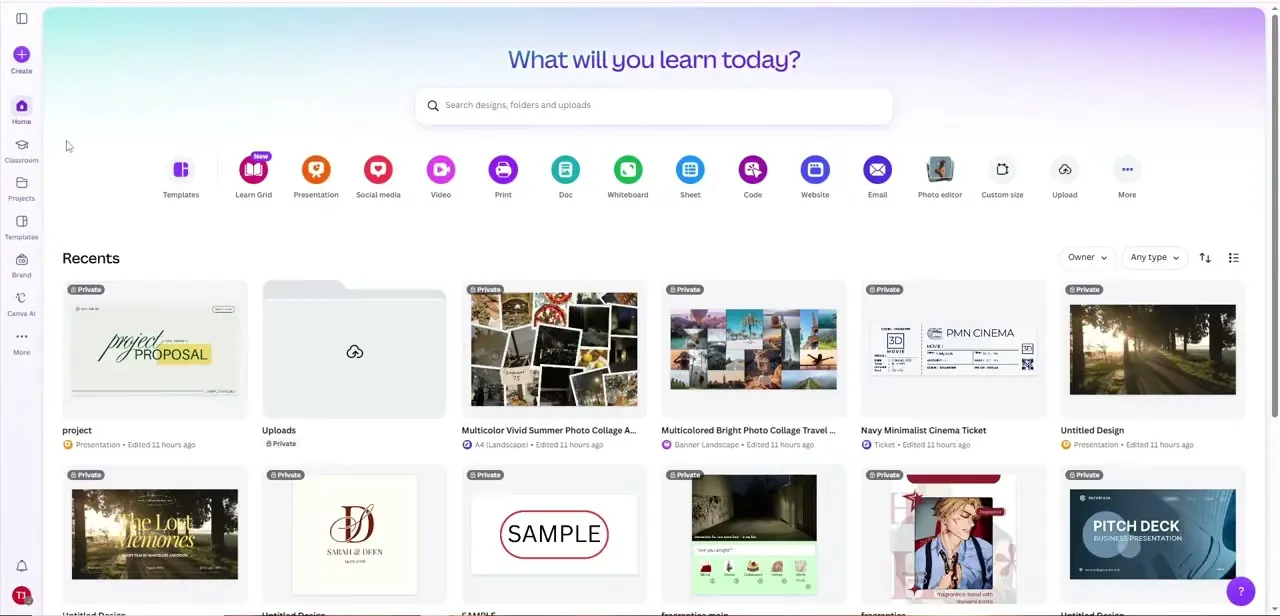
01Start from Canva's home screen
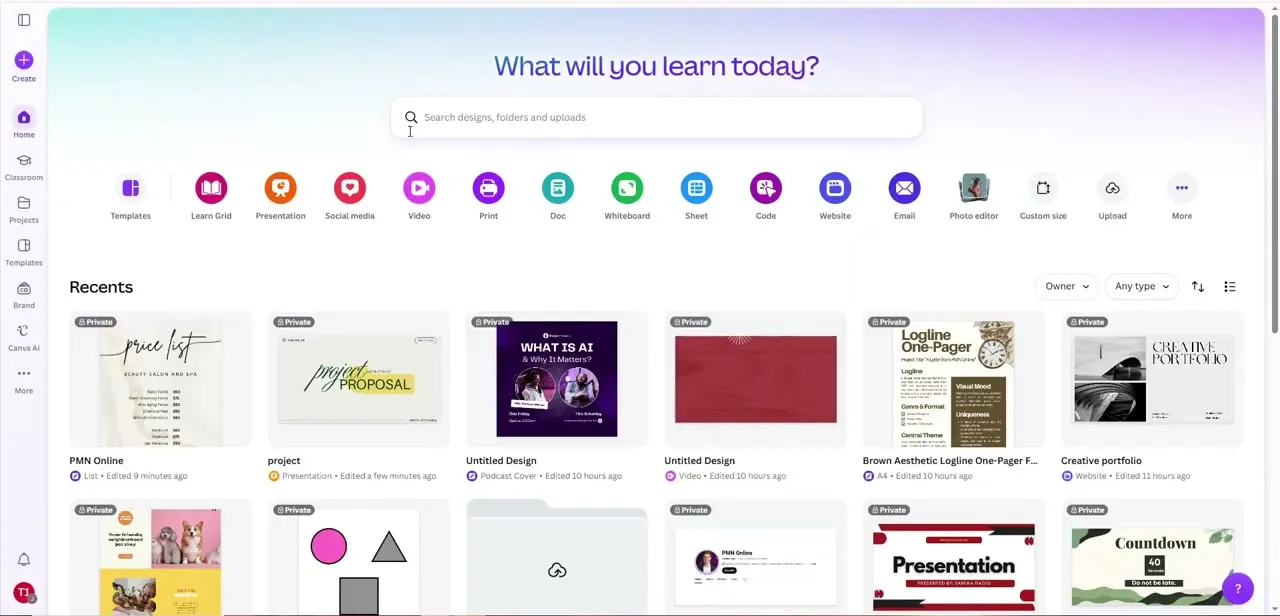
From your Canva dashboard, the "What will you learn today?" home screen gives you a row of format shortcuts — Templates, Video, Social media, and more — above your recent designs. For a Reel you can jump straight into Video, but searching is usually faster since Canva's template library is organized by keyword rather than by platform-specific menus. Recent projects also live on this screen, which is useful if you're returning to refine a Reel rather than starting a new one.
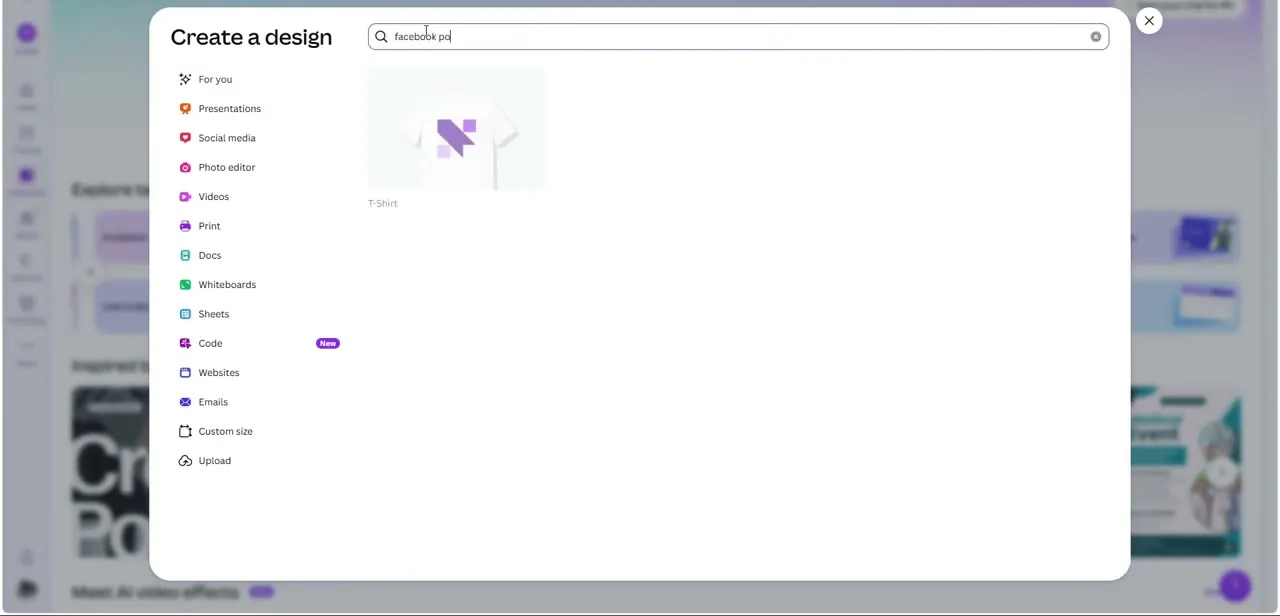
02Search "Facebook Reels" and pick a template
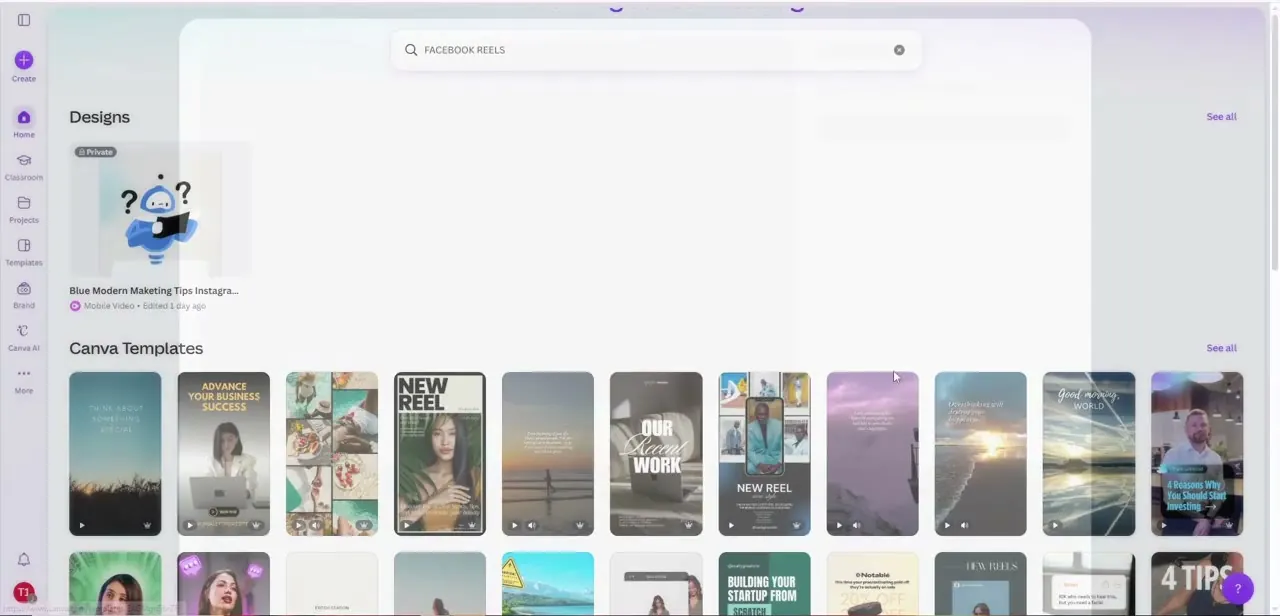
Typing "Facebook Reels" into the search bar pulls up a dedicated results screen split into your own recent Designs and a large grid of Canva Templates, all in the vertical 9:16 frame Reels use. Each thumbnail plays a short preview on hover, which matters here more than with static templates — you're judging pacing and transition style, not just a still layout. Pick one whose mood matches your brand; swapping colors and text later is easy, but rebuilding the animation timing from scratch is not.
03Swap in your own photos and video clips
Once a template opens, replace its placeholder images with your own product shots, clips, or brand photography by dragging new uploads onto the existing frames — Canva keeps the crop and motion settings of the slot, so your media inherits the template's timing automatically. This is the fastest way to make a generic template look custom, and it's much less error-prone than manually repositioning elements one at a time.
04Adjust fonts and text to match your brand
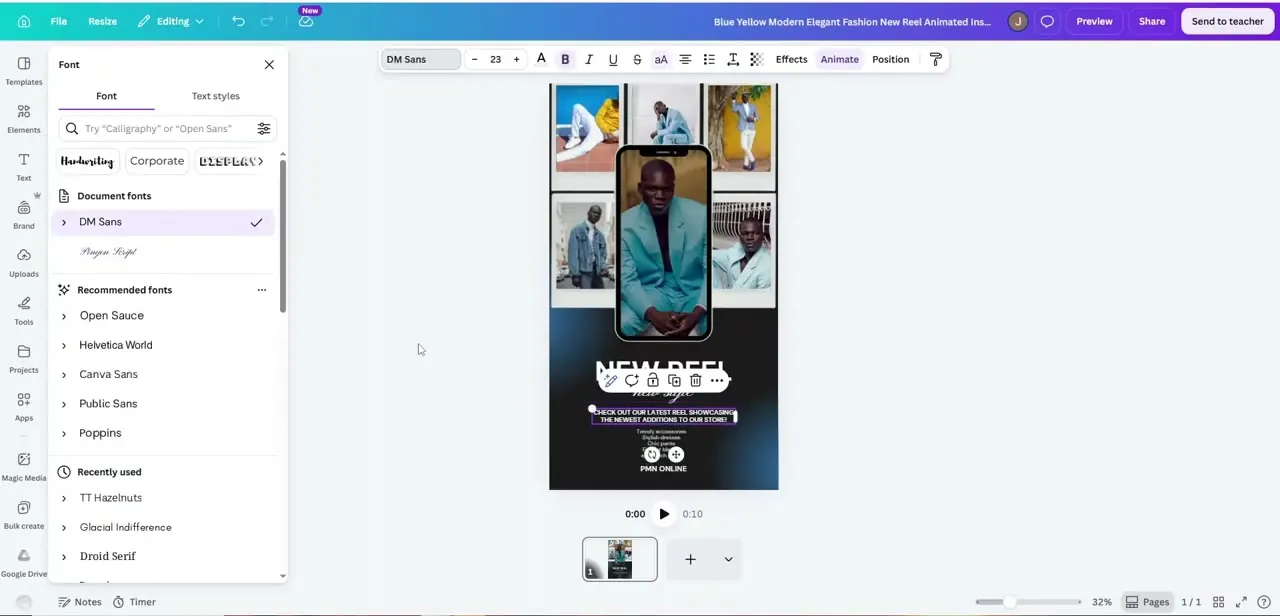
Open the Font panel from the left toolbar to change the typeface on any text layer, and use the Text styles tab alongside it to keep headings and captions consistent. The panel also surfaces your document's current fonts at the top, followed by recommended pairings and recently used fonts, so you're not scrolling the entire font library for something that already fits your brand kit. Rewrite the placeholder copy — a line like "Check out our latest reel showcasing the newest additions to our store!" — to match the specific product or announcement this Reel is actually about.
05Fine-tune the animation and timing
With Animate selected in the top toolbar, you can adjust how elements enter and exit the frame without touching the underlying design. The scrubber and duration readout at the bottom of the canvas — a 10-second clip in a typical template — let you preview the full sequence and trim it if a section drags. Reels reward quick pacing, so it's worth watching the preview once straight through and cutting anything that lingers a beat too long.
06Layer in music or a voiceover
Add an audio track from Canva's music library or upload your own voiceover to sit under the visuals, then adjust its volume so it supports the pacing rather than fighting it. Canva syncs audio to the timeline the same way it does animation, so once a track is placed you can trim its start and end points to match your Reel's length exactly.
07Preview, export, and upload
Run the full preview one more time to catch anything that looks off, then export as MP4. Facebook Reels expect vertical video, so exporting straight from a Reels-sized Canva template avoids any cropping surprises on upload — check the finished file on your phone before publishing, since that's the screen most viewers will actually watch it on.
Frequently asked questions
Do I need video editing experience to make a Facebook Reel in Canva?
No. Starting from a Canva Reels template gives you working animation and timing already in place — you're mainly swapping in your own photos, clips, and text rather than building motion from scratch.
Can I use Canva templates for Facebook Reels specifically?
Yes. Searching "Facebook Reels" in Canva surfaces a grid of vertical, 9:16 templates built for this format, distinct from square or landscape video templates.
How long should a Facebook Reel be?
Keep it short and tightly paced — many templates default to around 10 seconds, and trimming any section where the animation lingers usually improves watch-through.
Can I add audio directly in Canva when making a Reel?
Yes. You can add music from Canva's library or upload your own voiceover, then trim it against the same timeline used for the video's animation.
Will a Reel made from a template look generic?
Not if you replace the placeholder photos and rewrite the text to be specific to what you're promoting — the template supplies pacing and structure, but the content is what makes it feel like your own.
About the author

Impran M N
I've been hooked on technology for as long as I can remember — especially the new tools and AI apps that seem to land every other week. Easy Tech Tuts is where I write up whatever I've just worked out: I do the task in the real product, record the screen, and turn it into the guide I wish I'd found first.