 Easy Tech Tuts
How to Connect Facebook to GoDaddy Website Easily 2026
By Impran M N
Connecting Facebook to your GoDaddy website lets you display a feed, link your page, or add Messenger chat, giving visitors more ways to engage with your business without leaving your site. The connection lives inside GoDaddy's Marketing tools rather than the site editor itself, which is the part people usually miss the first time. This guide walks through finding that section, connecting your Facebook page, and getting past the permissions prompt Facebook shows before the two accounts start talking to each other.
01Sign in and open your GoDaddy account
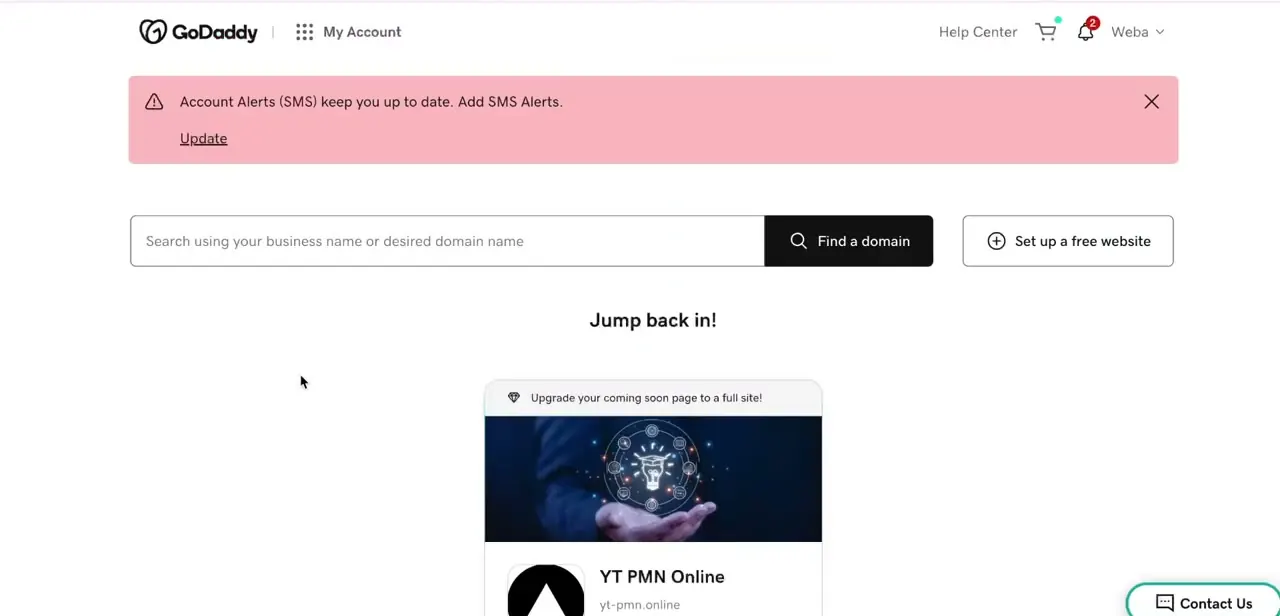
Log in to GoDaddy and land on My Account, where you'll see a "Jump back in!" section listing your existing sites — in this case a card for the site with its logo and domain name shown underneath. Click through on the site you want to connect Facebook to. This dashboard is also where you'd manage renewals, billing, and any other products on the account, so it's worth knowing your way around it even outside this task.
02Open Marketing and find the Social section
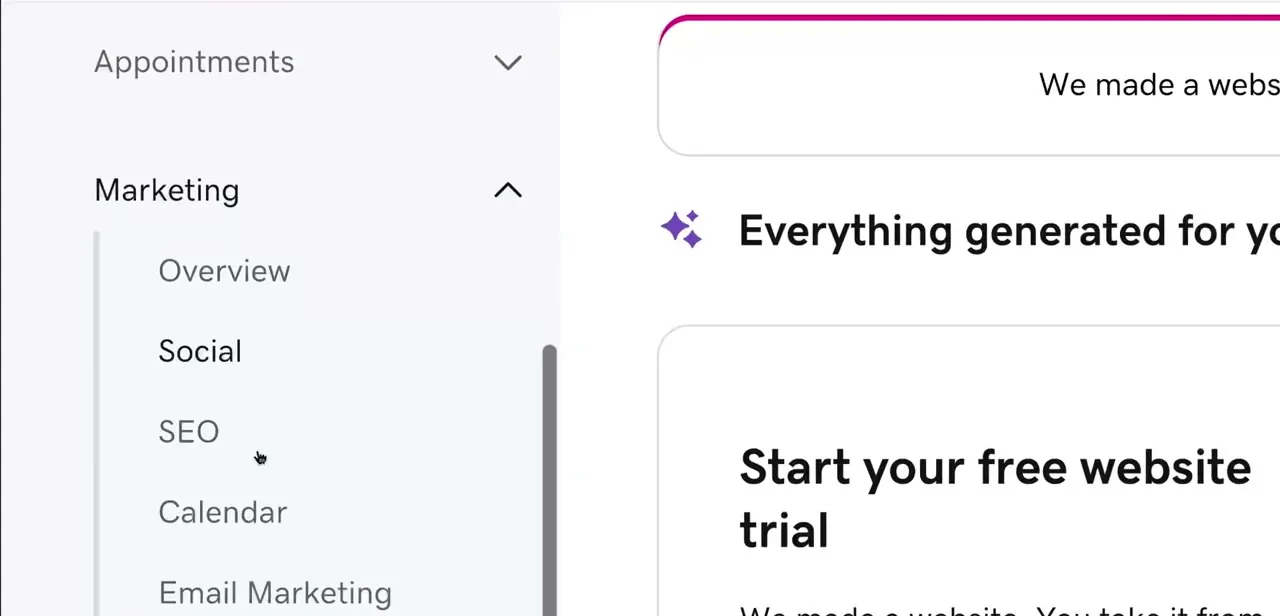
Once you're inside the site's management area, look at the left-hand navigation for a Marketing section — expanding it reveals sub-items including Overview, Social, SEO, Calendar, and Email Marketing. Social is the one that matters here; it's the hub for connecting every social platform GoDaddy supports, not just Facebook, so you'll see the same panel again later if you connect Instagram or Google.
03Click Connect next to Facebook
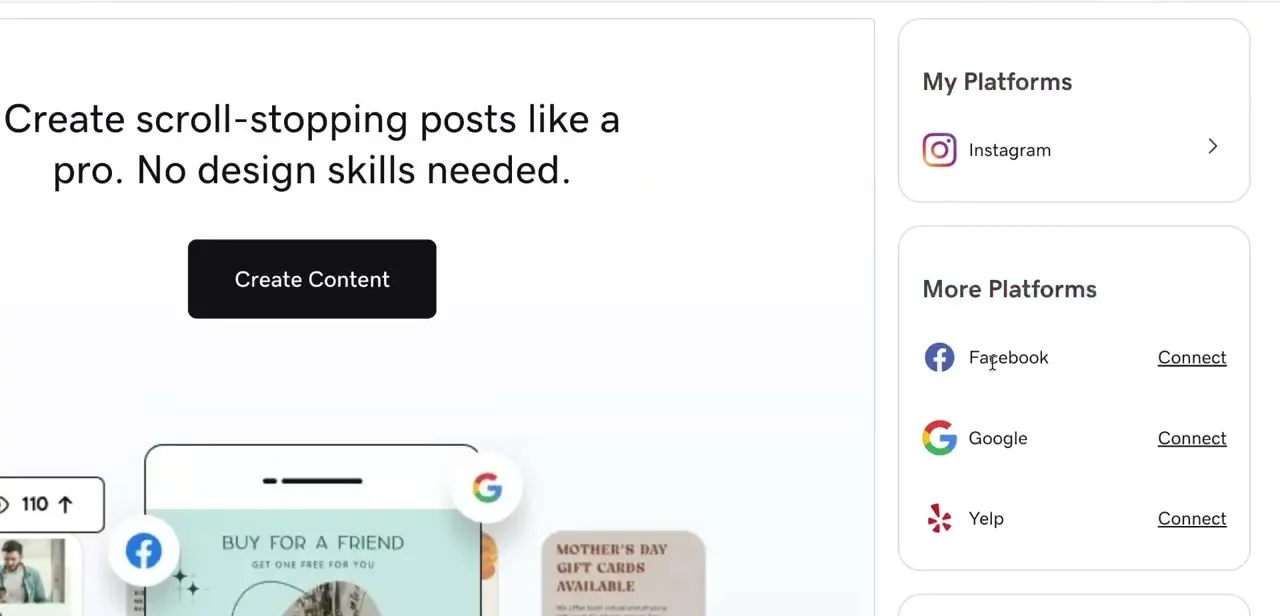
The Social page splits your accounts into "My Platforms," for anything already linked, and "More Platforms" for everything you haven't connected yet. Facebook shows up under More Platforms with a Connect link next to it, alongside Google and Yelp. Click Connect, and GoDaddy hands off to Facebook's own login and page-selection flow in a popup or new tab.
04Authorize GoDaddy's access to your Page
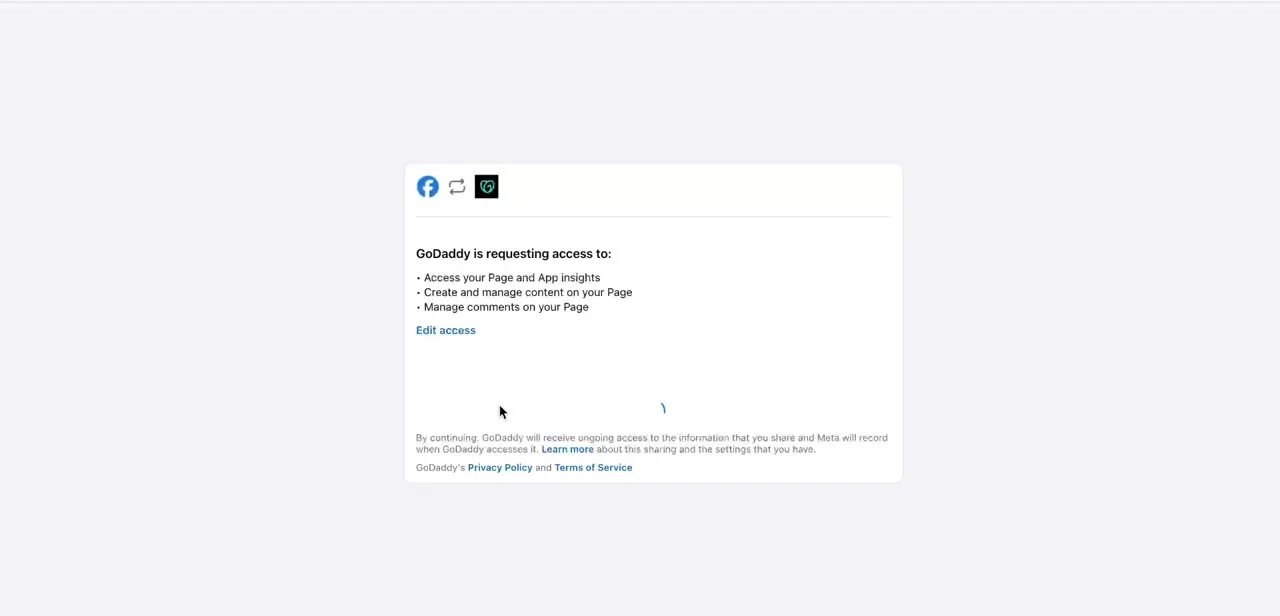
Facebook presents a permissions screen listing exactly what GoDaddy is asking for — typically access to your Page and app insights, the ability to create and manage content on your Page, and permission to manage comments. Review the list, use "Edit access" if you want to limit any of it, and continue to grant access. This is the step that actually links the two accounts; GoDaddy can't pull in your Facebook content or post to your Page until you approve it here.
05Choose what to display or enable
Back in GoDaddy, the connected Facebook account now appears under My Platforms, and you can decide what to do with it — pull a feed of recent posts into a section of your site, link directly to your Page from the header or footer, or turn on Messenger so visitors can chat with your business without leaving your site. Each of these is a separate toggle or content block, so you don't have to enable all of them just because the account is connected.
06Check the result on desktop and mobile
Preview your site on both a desktop browser and a phone before calling it done. Feeds and chat widgets can render differently at smaller widths, and a Messenger bubble that sits nicely in a corner on desktop sometimes overlaps other content on mobile. Publish the change, then load the live site on your own phone to confirm everything loads and the Messenger button actually opens a chat window when tapped.
Frequently asked questions
Can I connect a personal Facebook profile instead of a page?
This integration is designed for business pages rather than personal profiles, so a Facebook page is the expected connection point.
Does connecting Facebook slow down my website?
A properly configured feed shouldn't noticeably affect load times, though it's worth testing your site's performance after adding it.
Can I add Messenger chat without a full Facebook feed?
Yes, Messenger chat can typically be added independently of displaying a full Facebook feed on your site.
Where in GoDaddy do I actually connect Facebook?
Under Marketing in the left sidebar, then Social — Facebook appears under "More Platforms" with a Connect link next to it.
What permissions does GoDaddy ask for on Facebook?
Typically access to your Page and app insights, permission to create and manage content on the Page, and permission to manage comments. You can review and edit this before approving.
About the author

Impran M N
I've been hooked on technology for as long as I can remember — especially the new tools and AI apps that seem to land every other week. Easy Tech Tuts is where I write up whatever I've just worked out: I do the task in the real product, record the screen, and turn it into the guide I wish I'd found first.