 Easy Tech Tuts
How to Add Google Maps in Elementor, Integrate Google Maps API Easily 2026
By Impran M N
Elementor's Google Maps widget is one of the simplest widgets in the whole builder — drop it on the page, type an address, and a working map appears, no API key required for most sites. That last part surprises people who go looking for API setup instructions before they've even tried the widget. This guide covers adding the widget, configuring the location and size, styling it to match your page, and the specific, narrower situation where you actually do need to bring in an API key because the map isn't displaying.
01Add a container and drop in the Google Maps widget
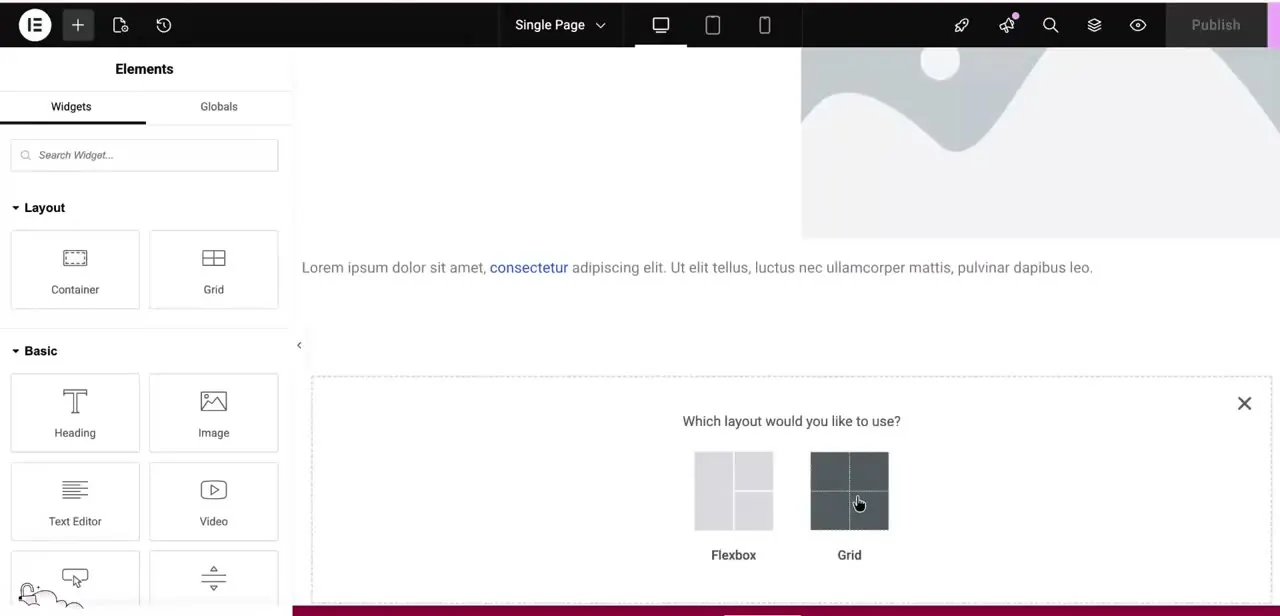
In the Elementor editor, add a new section or container to hold the map, choosing between a Flexbox or Grid layout depending on how you want it to sit alongside other content on the page. From the Widgets panel, search for Google Maps and drag it into the container. Elementor's free widget set includes Google Maps by default, so there's nothing to install beyond Elementor itself.
02Set the location, zoom level, and height
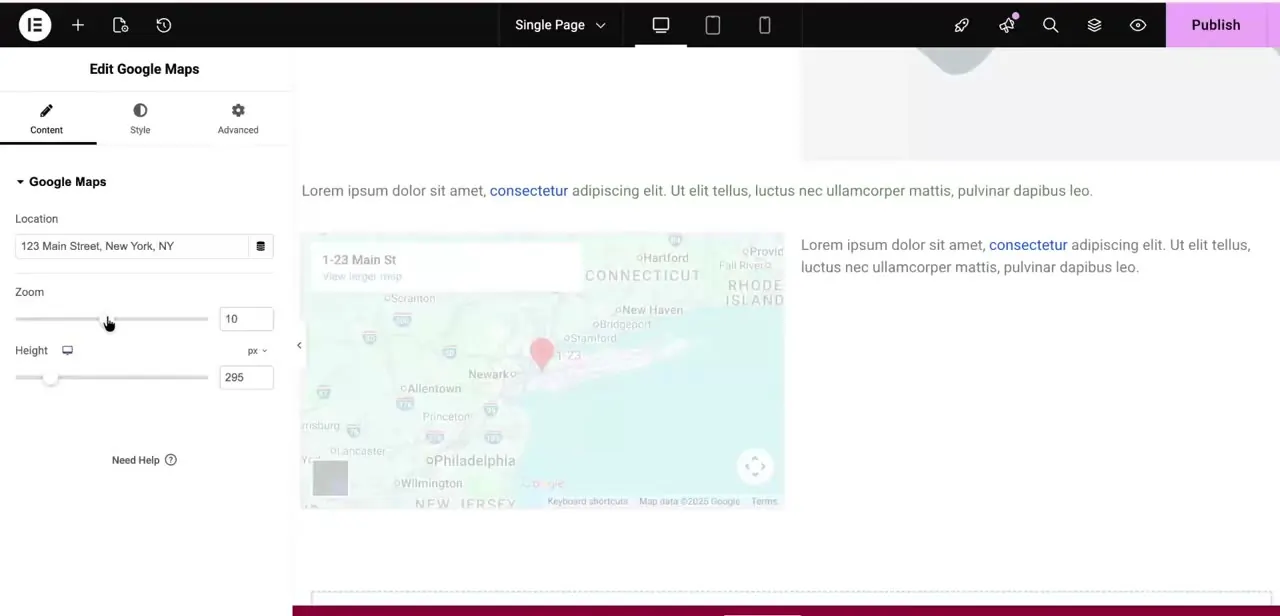
With the widget selected, the Content tab shows a Location field — type an address like "123 Main Street, New York, NY" and Elementor centers the map there automatically using its address search, no coordinates needed. Below that, the Zoom slider controls how close the initial view is, and Height sets the map's pixel height on the page; a zoom around 10-14 and a height of 250-400px covers most contact-page use cases. The map preview updates live in the editor as you adjust either value, so you can dial in exactly how much surrounding area shows before publishing.
03Style the map to fit your page
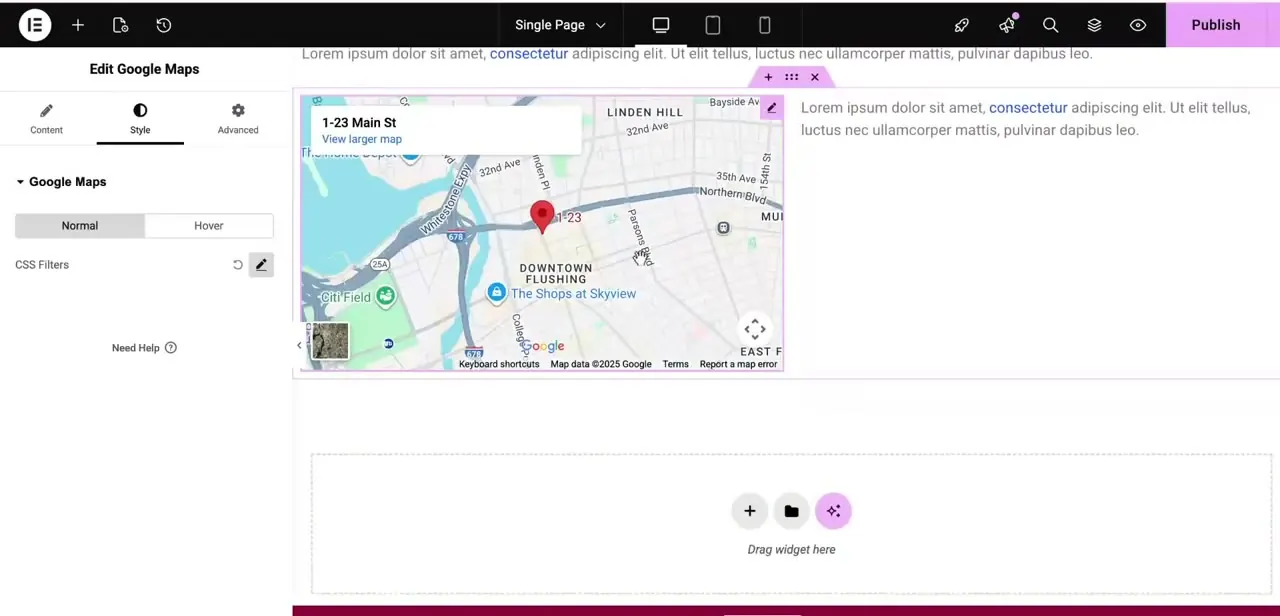
The Style tab gives you Normal and Hover states along with a CSS Filters control, which lets you adjust things like saturation, brightness, and contrast on the map itself rather than just the container around it — useful if your site uses a muted or monochrome look and a full-color Google map clashes with it. This is a lighter styling toolkit than most Elementor widgets get, since Google's own map tiles limit how much you can restyle beyond filters, but it's enough to tone a map down so it doesn't visually fight with the rest of the page.
04Know when you actually need an API key
For the large majority of sites, the widget works exactly as shown above with no API key at all — Elementor's default Google Maps embed handles it. An API key only becomes necessary in a smaller set of cases: heavy traffic that exceeds Google's free embed limits, or a map that simply refuses to render for reasons tied to your specific Google account or region. Don't go hunting for a Google Cloud Platform account before you've actually tried the plain widget — it's an unnecessary detour for most setups.
05Where to add a key if your map won't display
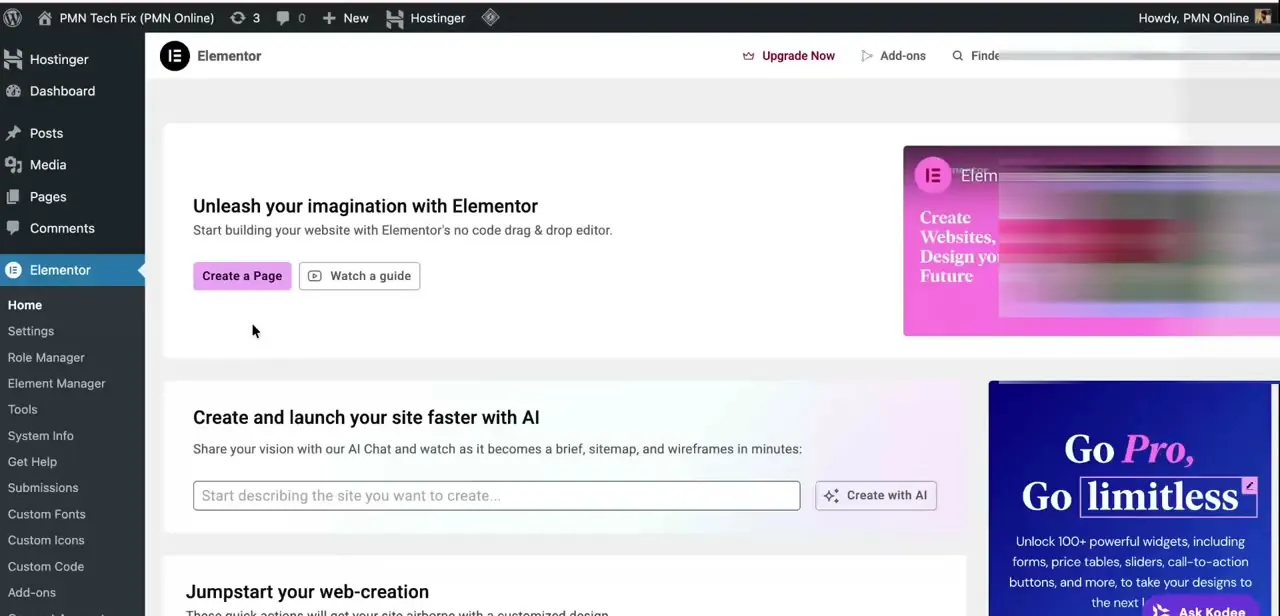
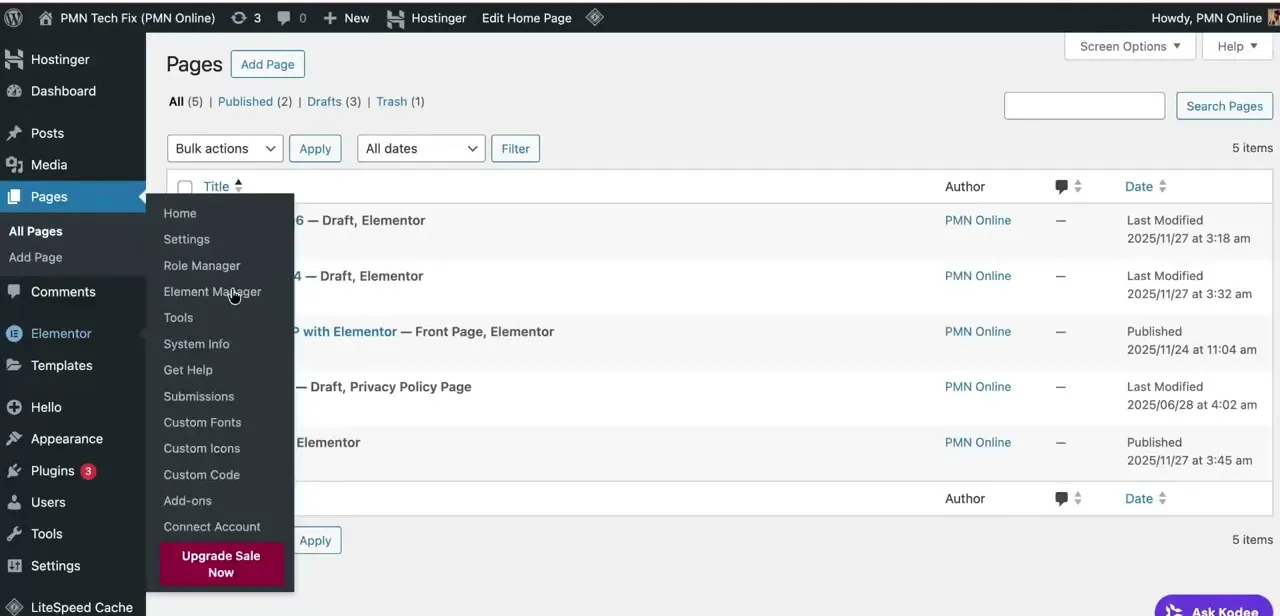
If the map genuinely comes up blank after trying the steps above, the fix lives in Elementor's own settings rather than anywhere on the page itself: go to Elementor → Settings in your WordPress admin, open the Integrations tab, and find the Google Maps section there. That's where a generated API key gets pasted in. Getting the key itself means signing up for a Google Cloud Platform account and enabling the relevant Maps API for your project — a separate, one-time setup on Google's side that's worth doing only once you've confirmed the plain embed genuinely isn't working for you.
06Double-check the basics before assuming it's an API problem
Before concluding you need a key, rule out the simpler causes: an incorrectly typed address that Elementor's search couldn't resolve, a Height value left at zero, or a caching plugin serving a stale version of the page from before the widget was added. Reload the published page in a private browser window to bypass cache, and try a well-known address like a city name to confirm the widget itself is functioning before troubleshooting further.
Frequently asked questions
Why does Elementor ask for a Google Maps API key?
In most cases it doesn't — Elementor's Google Maps widget works with a plain address and no key. A key is only needed in the rarer case where the default embed fails to display, which is more often tied to traffic or account-specific limits than a missing requirement.
Is the Google Maps API free to use?
Google provides a free monthly usage credit for its Maps APIs, but a key still requires a Google Cloud Platform account with billing set up before it will function, even if you never exceed the free tier.
Where do I paste a Google Maps API key in Elementor?
In your WordPress admin, go to Elementor → Settings → Integrations, and find the Google Maps section there — that's the only place the key needs to be added.
Why is my map showing a gray box or blank space instead of loading?
First check the basics: a correctly resolved address, a non-zero Height value, and cleared cache on the live page. If those check out and the map still won't load, it's likely one of the rarer cases that needs an API key added under Elementor's Integrations settings.
Can I restyle how the map itself looks in Elementor?
To a limited degree — the widget's Style tab includes CSS Filters for adjusting things like saturation and brightness on the map tiles themselves, though full custom map styling goes beyond what the free widget offers.
About the author

Impran M N
I've been hooked on technology for as long as I can remember — especially the new tools and AI apps that seem to land every other week. Easy Tech Tuts is where I write up whatever I've just worked out: I do the task in the real product, record the screen, and turn it into the guide I wish I'd found first.