 Easy Tech Tuts
How to Link Bank Account on Ebay , Add Bank or Card info faster Payout & Checkout 2026 Easily
By Impran M N
eBay treats payment methods differently depending on which side of a transaction you're on: sellers need a bank account linked so payouts actually land somewhere, while buyers just need a card on file to skip re-entering details at checkout. Both live in the same Payments section of My eBay, but they're separate flows that ask different questions, and it's easy to end up in the wrong one if you don't know what to click first. This guide walks through both paths from the Payments page — adding a bank account for receiving money, and adding a card for spending it — so your account is ready for smooth transactions either way.
01Sign in and open My eBay Payments
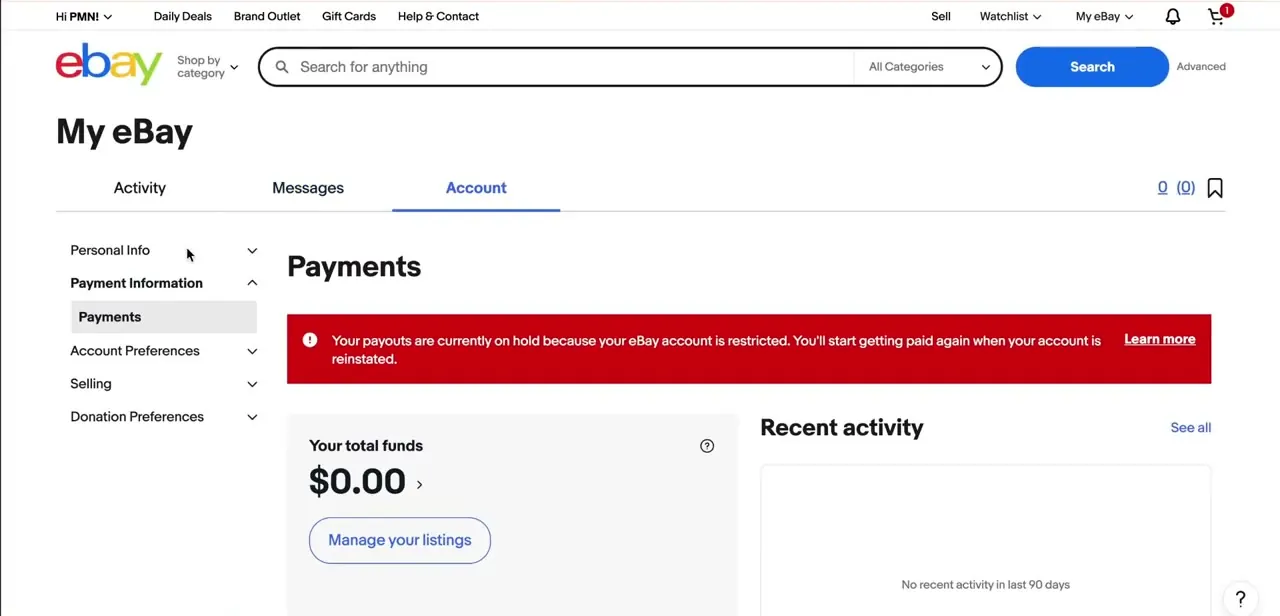
Log into your eBay account, then go to My eBay in the top navigation and select Account, followed by Payments under the Payment Information section. This page is the control center for everything money-related on eBay: your current balance, recent payout activity, and any charges or holds on your account. If you're setting this up as a new seller, check here first for account restriction banners — eBay will pause payouts until identity or account verification is complete, and no bank account you add will resolve that on its own.
02Start the Add Payment Method flow
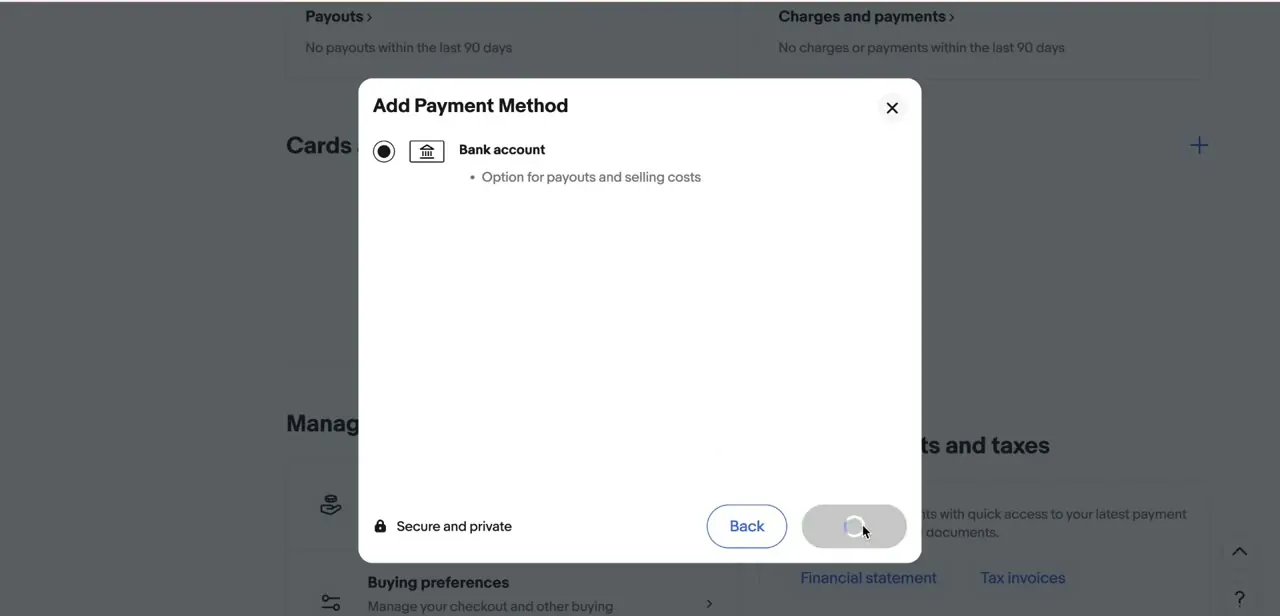
From the Payments page, look for the option to add a card or bank account — usually near the Cards and accounts section further down the page. Clicking it opens the Add Payment Method dialog, where eBay first asks you to choose between a bank account and a card. Select Bank account if your goal is receiving seller payouts; that's the only method eBay uses to actually pay out your selling proceeds, cards are for spending, not receiving.
03Choose what a card will be used for
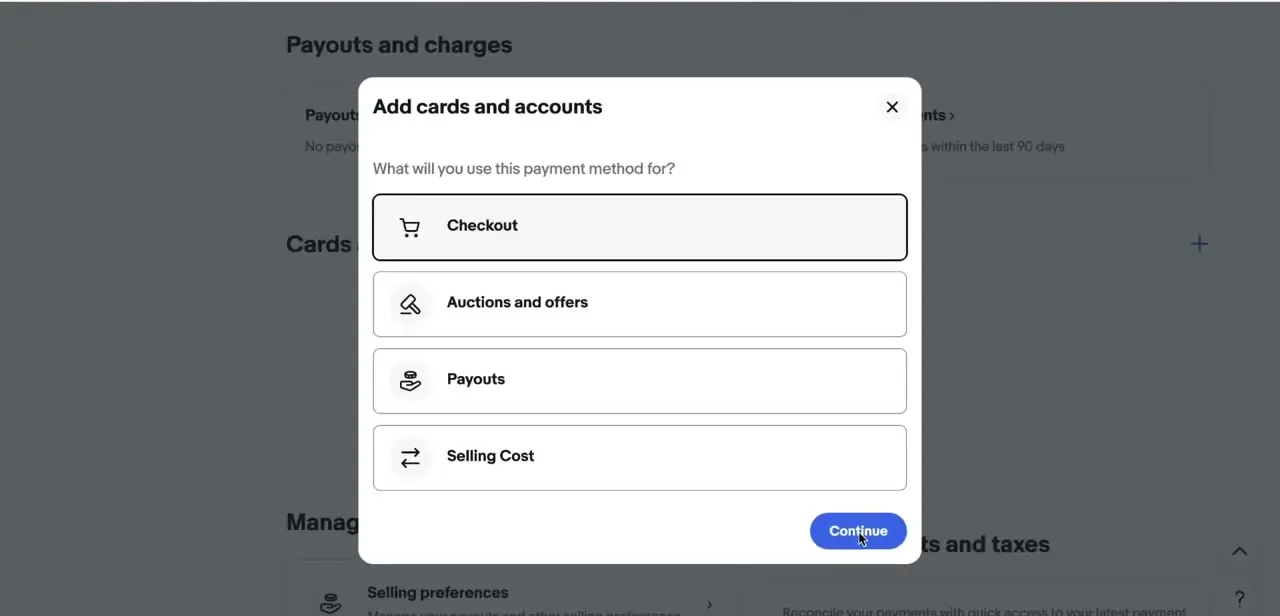
If you're adding a card instead — as a buyer wanting faster checkout — eBay asks what you'll use it for before showing the form: Checkout, Auctions and offers, Payouts, or Selling Cost. Pick Checkout if your only goal is quicker purchases; the other options are relevant mostly to sellers covering fees or bidding on auctions with a backup payment method. This selection determines where the card shows up later, so it's worth picking the option that actually matches why you're adding it rather than defaulting to the first one.
04Enter your card or bank details
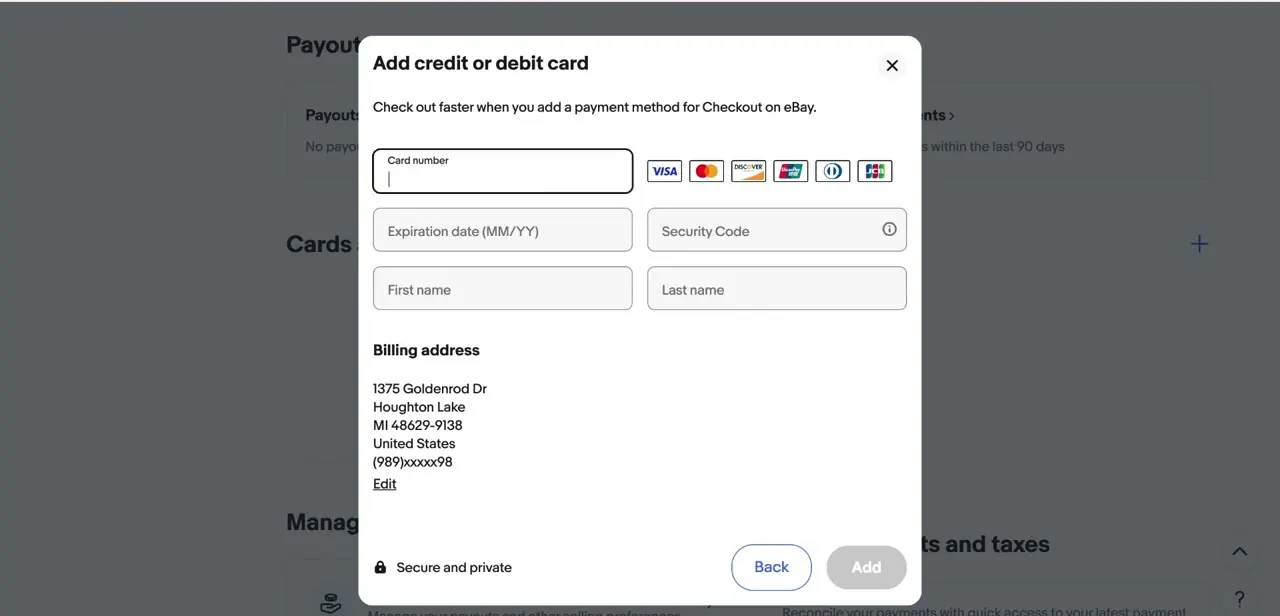
The form itself is short: card number, expiration date, security code, and the name on the card, plus a billing address that eBay usually pre-fills from your account profile — check it and click Edit if it's out of date. eBay accepts all major networks, shown as icons next to the card number field, and marks the process as secure and private at the bottom of the dialog. For a bank account instead of a card, you'll be asked for routing and account numbers rather than card details, and eBay verifies the account before it's usable for payouts, which can take a day or two.
05Confirm and set your preferred method
After saving, the new bank account or card appears in the Cards and accounts list on the Payments page. If you added more than one method over time, open the list and set the one you want used by default — for sellers this determines where payouts land, and for buyers it determines what's pre-selected at checkout. Remove any expired cards or old bank accounts from this same list to avoid a failed payout or a declined charge going unnoticed.
06Watch for verification and payout delays
A newly added bank account usually needs a short verification period before eBay will send a payout to it — during this window your funds may show as pending rather than available. If a payout fails, the most common cause is a mismatched account or routing number rather than anything wrong with your eBay account, so double-check both against your bank statement before contacting support. Keeping at least one verified, unexpired payment method on file at all times avoids gaps in getting paid or being able to check out.
Frequently asked questions
Do I need a bank account on eBay if I only buy, not sell?
No — buyers only need a card on file for checkout. A bank account is required specifically for receiving seller payouts, so it's optional unless you plan to sell.
How long does it take to verify a new bank account on eBay?
Verification typically takes a day or two. Until it's confirmed, payouts to that account may be held or delayed, so add it a few days before you expect your first payout.
Can I have more than one card or bank account linked to eBay?
Yes, you can add multiple cards and accounts and switch which one is set as your default for checkout or payouts at any time from the Cards and accounts section.
Why did my eBay payout fail after I added a bank account?
The most common cause is a mismatched routing or account number. Double-check both digit by digit against your bank statement, and confirm the account has finished eBay's verification process.
Is it safe to add my card or bank details directly on eBay?
eBay processes payment details through its secure payments system rather than storing raw card numbers on its own servers, and the entry forms are marked secure and private, consistent with standard PCI-compliant handling used across major marketplaces.
About the author

Impran M N
I've been hooked on technology for as long as I can remember — especially the new tools and AI apps that seem to land every other week. Easy Tech Tuts is where I write up whatever I've just worked out: I do the task in the real product, record the screen, and turn it into the guide I wish I'd found first.