 Easy Tech Tuts
How to Pan and Zoom Images in Canva Videos Easily 2026
By Impran M N
A still photo dropped into a video timeline reads as flat next to clips that actually move, and that gap is usually what makes a slideshow-style video feel amateur. Canva's answer isn't a manual keyframe editor — it's a set of one-click page animations you apply to an image, and the pan-style option is exactly what turns a static photo into something that drifts across the frame instead of sitting frozen. This guide covers picking the right source image, selecting it on the canvas, and applying that movement through Canva's Animate panel, along with the related options sitting next to it that add a subtler zoom-like breathing motion instead.
01Add a background image to animate
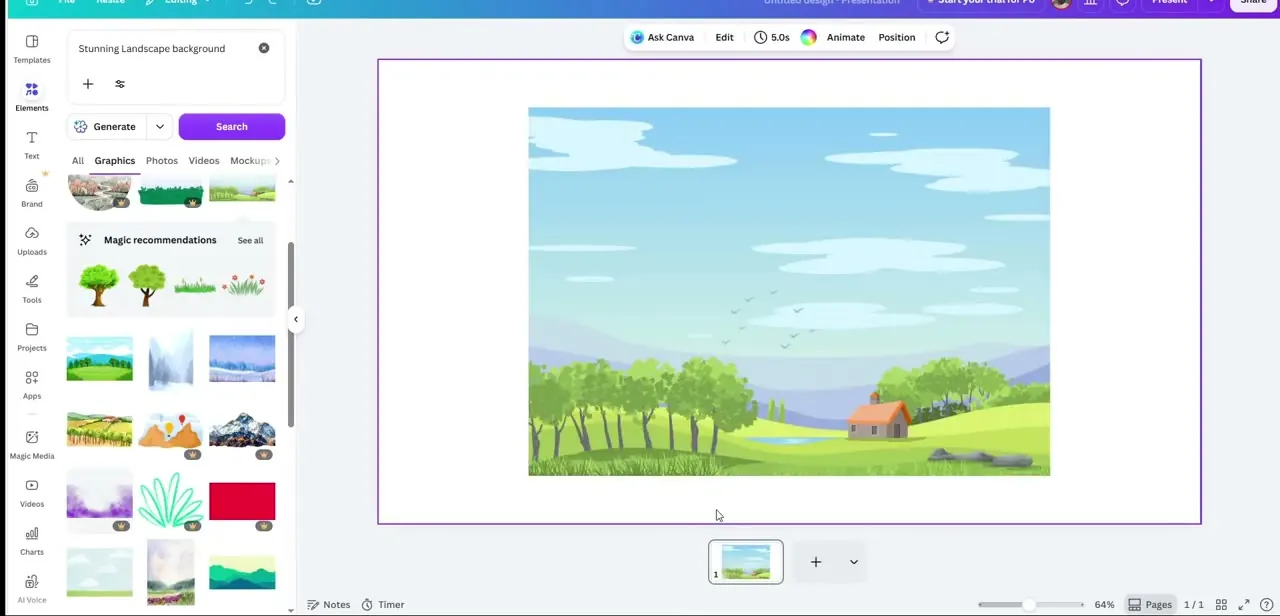
Open the Elements panel and either search stock photography or use a generated background — the panel shows curated suggestions like "Magic recommendations" alongside search results the moment you start typing. For pan and zoom work, wide landscape-style images give the effect more room to breathe than a tightly cropped photo, since the whole point of the animation is subtle movement across the frame, and a cropped image runs out of room to pan almost immediately.
02Select the image on the canvas
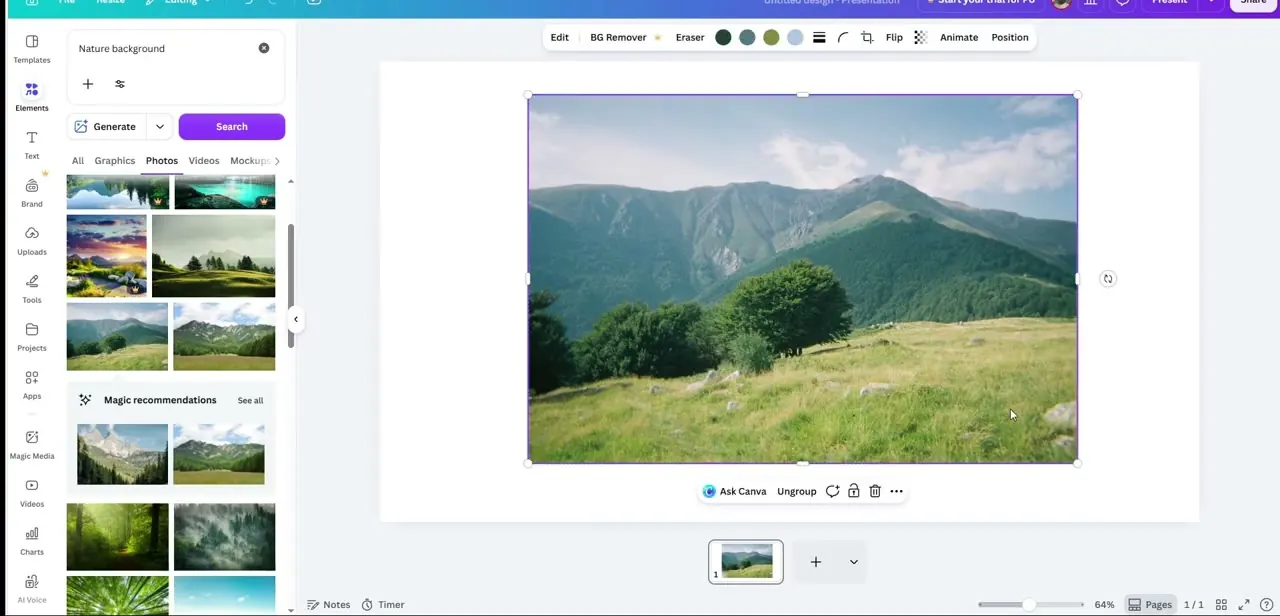
Click the image so its selection handles appear and the contextual toolbar switches to image-specific tools — Edit, BG Remover, Eraser, and Animate among them. Animation in Canva applies per-element, not to the whole page by default, so this selection step matters: if you have text or a logo layered over the photo, make sure you've clicked the actual image layer, not the group, unless you specifically want everything animating together.
03Open Animate and choose Pan
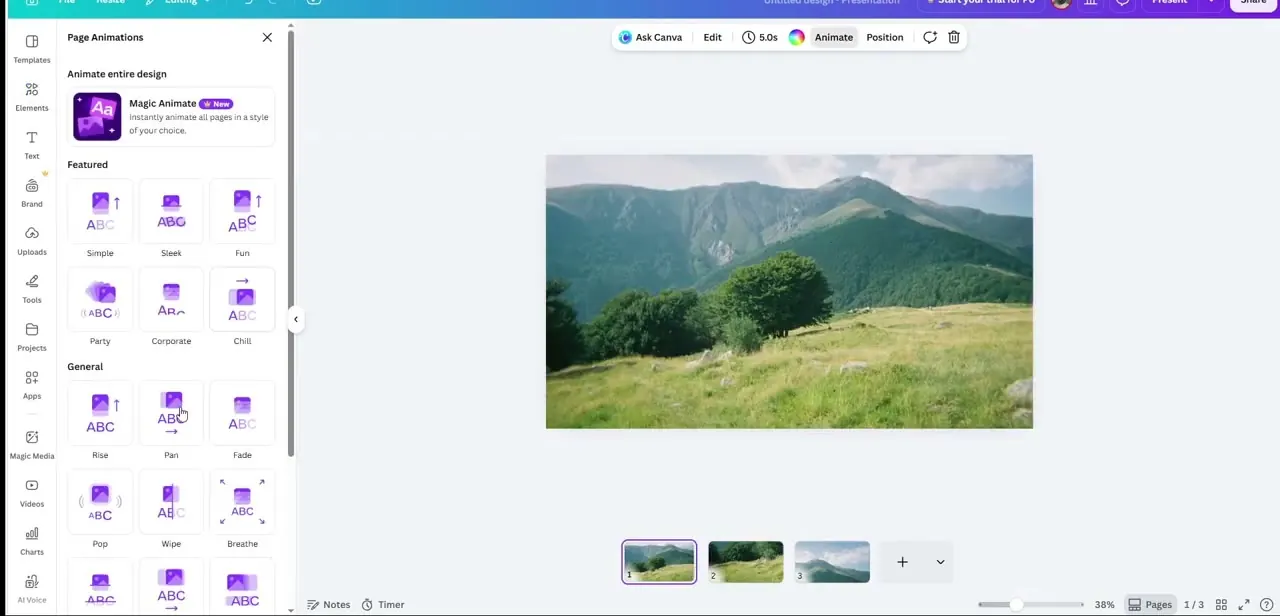
Click Animate and a panel opens on the left with animation styles grouped into Featured (Simple, Sleek, Fun, Party, Corporate, Chill) and General (Rise, Pan, Fade, Pop, Wipe, Breathe, and more below). Pan is the one that delivers the classic slow-drift effect — it moves the image steadily across the frame for the duration it's on screen, which is the effect most people mean when they say a photo has "pan and zoom" applied, even though Canva files it under motion rather than a combined named effect. Breathe, sitting right next to it, does something closer to a gentle zoom pulse instead of a directional pan, so it's worth trying both on the same image to see which suits the content.
04Preview and adjust the timing
Once applied, scrub the page in the preview to see how the pan plays out over the page's duration — Canva ties the animation to however long that page sits in the timeline, so a page set to a couple of seconds will pan faster and more noticeably than one held for ten. If the movement feels too aggressive or too subtle, adjusting the page duration is usually the fastest fix, since it's the pan speed's real control even though it isn't a slider inside the Animate panel itself.
05Apply it consistently across a multi-page video
If your video has several image pages back to back, reapplying the same animation style to each one keeps the movement consistent instead of jarring the viewer with a pan on one slide and a hard cut on the next. Canva doesn't currently offer a single button to copy an animation to every page at once, so this means reselecting each image and reapplying Pan (or whichever style you settled on) individually — tedious for a long video, but worth the consistency for anything meant to feel professionally produced rather than assembled.
06Use it deliberately, not on every image
Pan and zoom-style movement works best when it's guiding attention toward something specific — a product detail, a key phrase in overlaid text — rather than applied reflexively to every photo in the video. A page that's mostly text with a small supporting image often reads better with no animation at all, or a subtle Fade, so the pan on your actual hero shots stands out instead of blending into a video where everything moves all the time.
Frequently asked questions
What does the pan and zoom effect actually do?
In Canva, it's a page animation applied to an image — Pan moves the image across the frame for as long as the page is on screen, while Breathe adds a subtler zoom-like pulse instead of directional movement.
How do I control how fast the pan moves?
Canva ties the animation's speed to the page's duration in the timeline — a shorter page duration makes the pan play out faster, and a longer one slows it down, since there's no separate speed slider in the Animate panel.
Do I need design experience to use this feature?
No — selecting an image and clicking Animate is the whole process. The harder part is choosing which images benefit from movement rather than applying it to everything by default.
Can I apply the same animation to multiple images at once?
Not in a single action — Canva applies animations per element, so on a multi-page video you'll need to select each image and reapply the style individually to keep the movement consistent throughout.
Is pan and zoom good for product or educational videos?
Yes, both are common use cases — marketers use it to draw the eye across a product photo, and educators use it to add visual interest to otherwise static slide-style content, as long as it's used selectively rather than on every image.
About the author

Impran M N
I've been hooked on technology for as long as I can remember — especially the new tools and AI apps that seem to land every other week. Easy Tech Tuts is where I write up whatever I've just worked out: I do the task in the real product, record the screen, and turn it into the guide I wish I'd found first.