 Easy Tech Tuts
How to install localwp, How to Setup Localwp on Mac, Windows, Ubuntu, Linux, Create New WP Site 2026
By Impran M N
LocalWP has become the default way developers spin up WordPress sites without paying for hosting or registering a domain first — everything runs on your own machine until you're ready to go live. This guide covers getting LocalWP from its official site, confirming your computer meets the minimum requirements, and what happens automatically once a new site is created, whether you're on Mac, Windows, or Linux.
01Download LocalWP from the official site
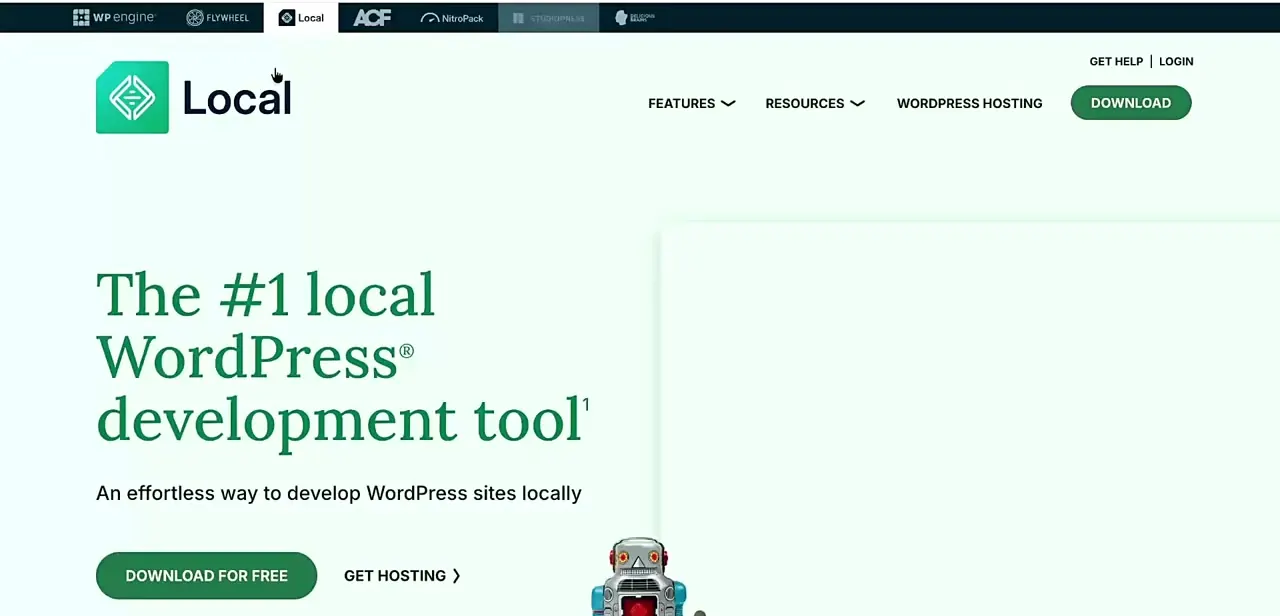
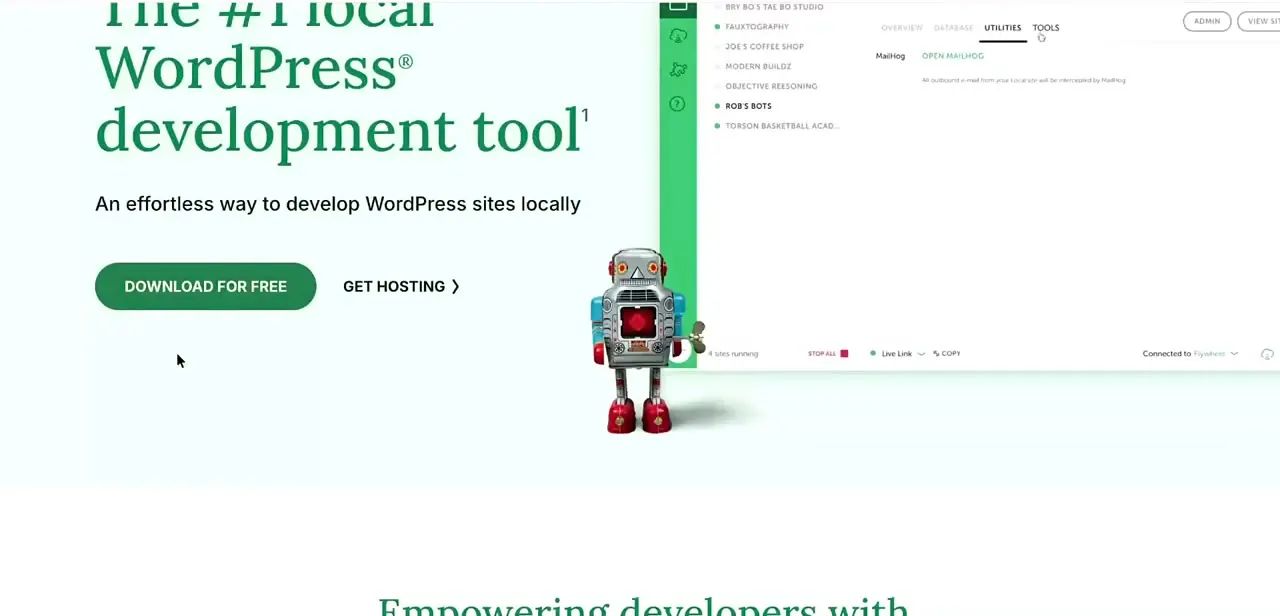
LocalWP's homepage bills it plainly as "The #1 local WordPress development tool" and "An effortless way to develop WordPress sites locally," with a single Download for Free button front and center. The site detects your operating system and offers the right installer automatically, whether that's a Mac .dmg, a Windows .exe, or a Linux .deb/.rpm package — there's no separate download page to hunt through for each platform. If you'd rather host instead of develop locally, there's also a Get Hosting link next to the download button, but that's a different product from the local tool this guide covers.
02Check the minimum system requirements first
Before installing, it's worth confirming your machine clears LocalWP's baseline requirements: at least 4GB of RAM and 1.5GB of free disk space, running macOS Monterey (12) or higher, Windows 10 64-bit or Windows 11, or a modern Linux distribution such as Ubuntu, Debian, or Fedora. These aren't demanding numbers by modern standards, but on an older laptop or a machine already tight on storage, checking first saves you from a failed install partway through. WordPress sites themselves are lightweight, so the requirement is really about running LocalWP's local server stack, not the site content.
03Run the installer for your platform
Installation follows the standard pattern for whichever OS you're on — open the downloaded file and walk through the setup prompts, which mostly ask where to install the app and whether to launch it once finished. Windows and Mac installs are typically the fastest since they're single-package installers; Ubuntu and other Linux distributions may involve installing a .deb or .rpm package through your system's package manager, which behaves the same way but looks a little different from a graphical installer wizard. Across all four platforms, LocalWP handles the underlying local server environment for you, so there's no separate step to install PHP, MySQL, or a web server by hand.
04Create your first WordPress site
Once LocalWP is open, creating a site is the reason the tool exists: name your site, and LocalWP provisions a complete WordPress install behind the scenes, ready to open in your browser or log into as an admin within a minute or two. This is the step that replaces what used to require a hosting account, a domain, and a manual WordPress installation just to start testing a theme or plugin.
05See what LocalWP sets up automatically
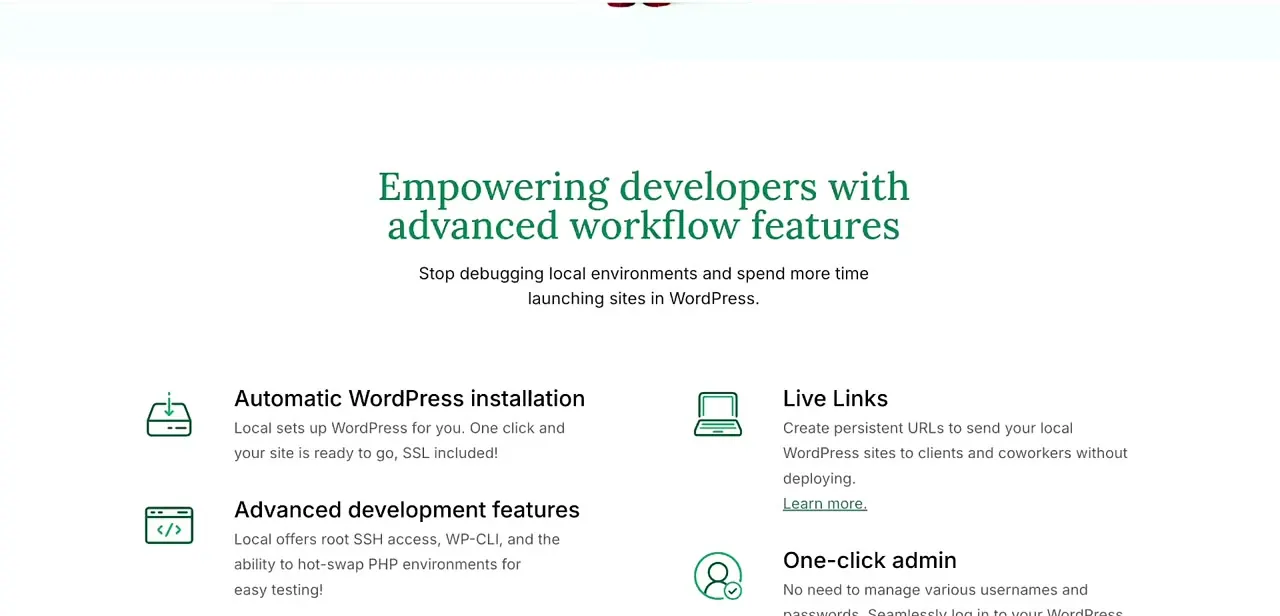
LocalWP's own feature list explains why the setup feels so fast: "Local sets up WordPress for you. One click and your site is ready to go, SSL included" — meaning you get a working HTTPS local site without configuring a certificate yourself.
One-click admin logs you straight into the WordPress dashboard without juggling usernames and passwords for each site, and Live Links can generate a persistent, shareable URL for a site still running only on your machine, useful for showing a client or coworker a work-in-progress without deploying it anywhere. For anyone who needs to go further, Local also exposes root SSH access, WP-CLI, and the ability to hot-swap PHP environments for testing compatibility.
06Install themes and plugins like you would on a live site
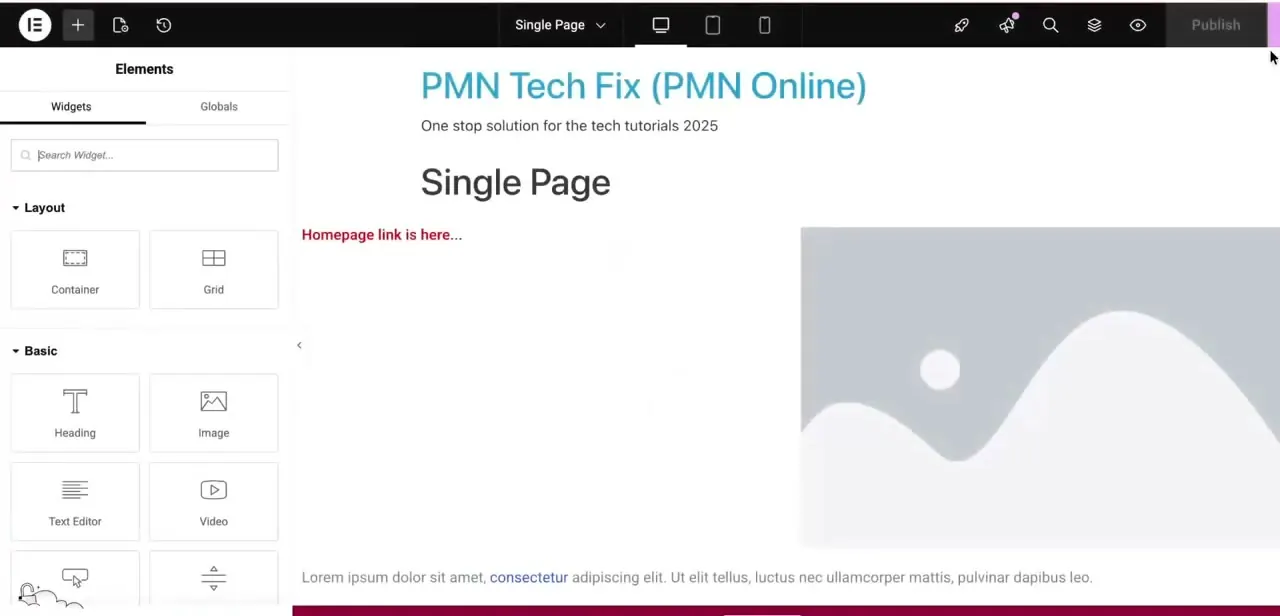
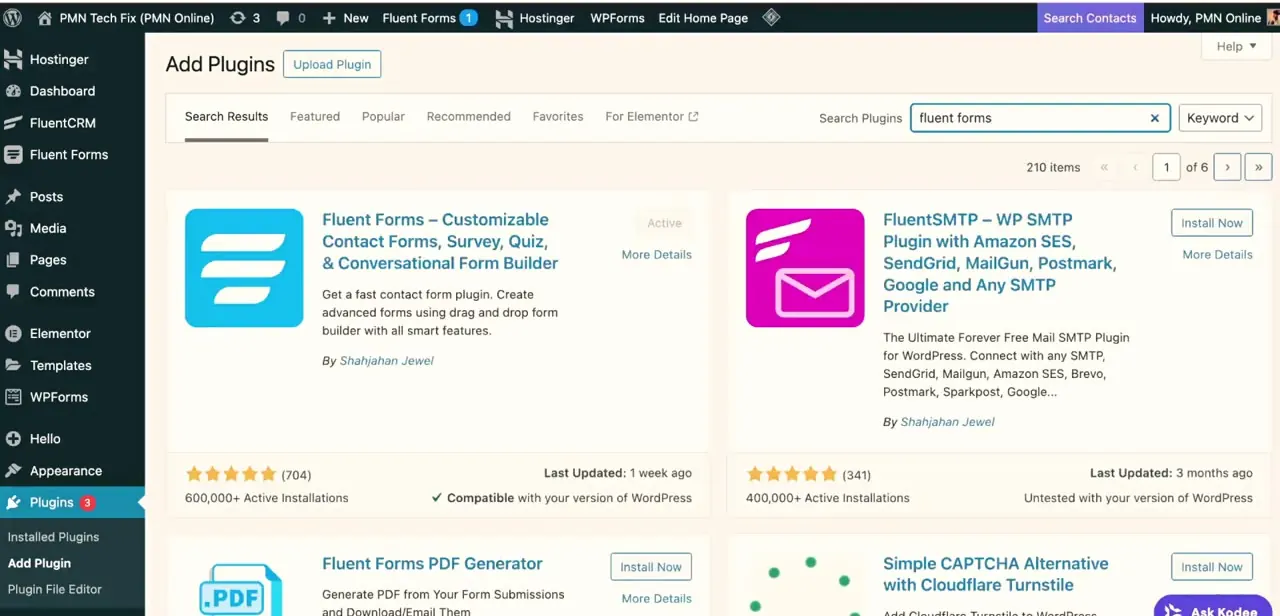
Once your local site is running, the WordPress admin behaves exactly like a hosted install — you can search and install themes and plugins from the repository, upload a zip file, or activate a page builder like Elementor to test it before ever putting it on a production server. This is the main reason developers keep sites in LocalWP long after the initial build: it's a safe place to try a plugin update or theme change without any risk to a live site.
07Use the built-in SSL, database, and troubleshooting tools
LocalWP bundles the utilities you'd otherwise have to set up separately: SSL is already enabled per site, and a database tool gives direct access for anyone who needs to inspect or edit WordPress tables without a separate app. If a site won't open or LocalWP itself won't launch, the usual fixes are restarting the app, checking that no other program is occupying the same local port, and confirming your system still meets the requirements from earlier in this guide — most "not loading" issues trace back to one of those three causes rather than anything wrong with the WordPress install itself.
Frequently asked questions
Is LocalWP free to use?
Yes. LocalWP's own homepage offers it as a free download with a Get Hosting link alongside it for anyone who also needs live hosting, which is a separate paid product.
Does LocalWP work the same on Mac and Windows?
The core workflow — download, install, create a site — is the same across Mac, Windows, and Linux, though the installer format differs: a .dmg on Mac, an .exe on Windows, and a .deb or .rpm package on most Linux distributions.
What are the minimum system requirements for LocalWP?
At least 4GB of RAM and 1.5GB of free disk space, with macOS Monterey (12) or higher, Windows 10 64-bit or Windows 11, or a modern Linux distribution such as Ubuntu, Debian, or Fedora.
Can I install Elementor or other plugins in LocalWP?
Yes. Once your local WordPress site is running, its admin dashboard works exactly like a live site's, so you can install any theme or plugin from the repository or upload one directly.
What is Live Links in LocalWP used for?
Live Links creates a persistent, shareable URL for a site that's only running on your local machine, letting you show a client or coworker your work without deploying it to a real host.
About the author

Impran M N
I've been hooked on technology for as long as I can remember — especially the new tools and AI apps that seem to land every other week. Easy Tech Tuts is where I write up whatever I've just worked out: I do the task in the real product, record the screen, and turn it into the guide I wish I'd found first.