 Easy Tech Tuts
How to Upload Your Course on Udemy | Instructor Setup Guide | Easily 2026
By Impran M N
Getting a course uploaded correctly on Udemy starts with a short setup wizard, not a file-upload button — Udemy walks you through a working title and a few planning questions before you ever touch your video files. Skipping past these screens too fast is a common reason instructors end up with a messy draft they have to clean up later.
This guide covers what those setup screens actually ask, how to build out your instructor profile so students trust who they're learning from, and how to organize your materials once you're ready to upload. It's aimed at both new and experienced instructors publishing on the platform.
01Prepare your course content first
Have your lesson outline, recorded videos, and any supporting files ready before you start Udemy's upload process. Instructors who begin the wizard without a clear plan tend to leave courses sitting in draft status for weeks, since the setup screens ask questions that are much easier to answer when you already know your course's structure.
02Open your Courses dashboard and start creation
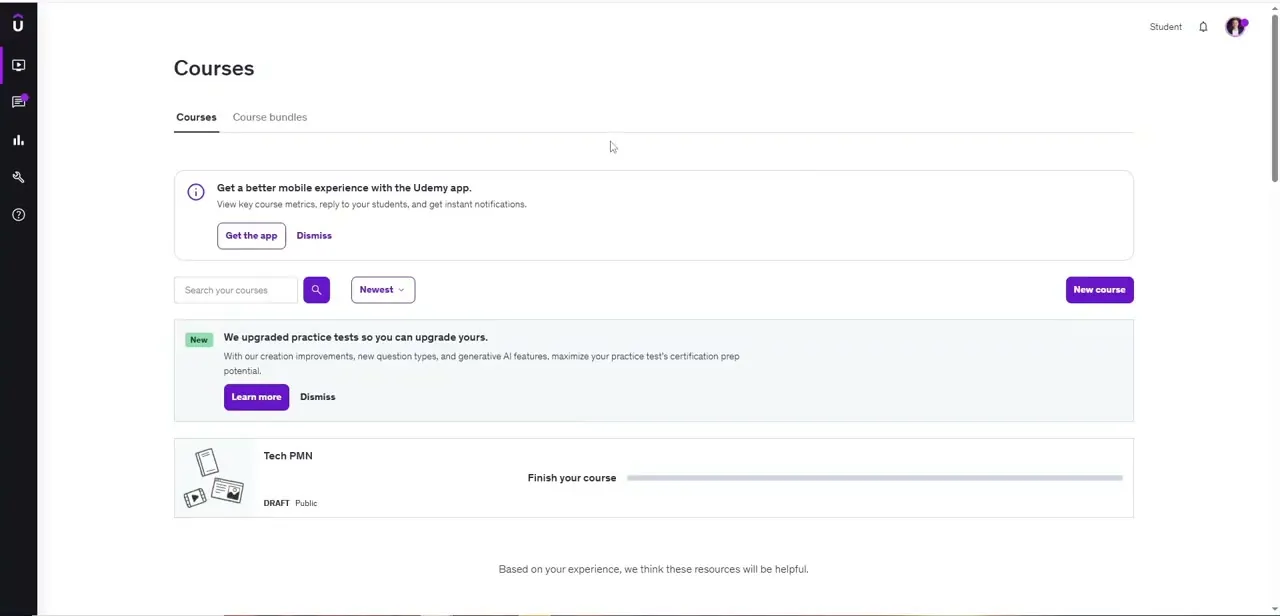
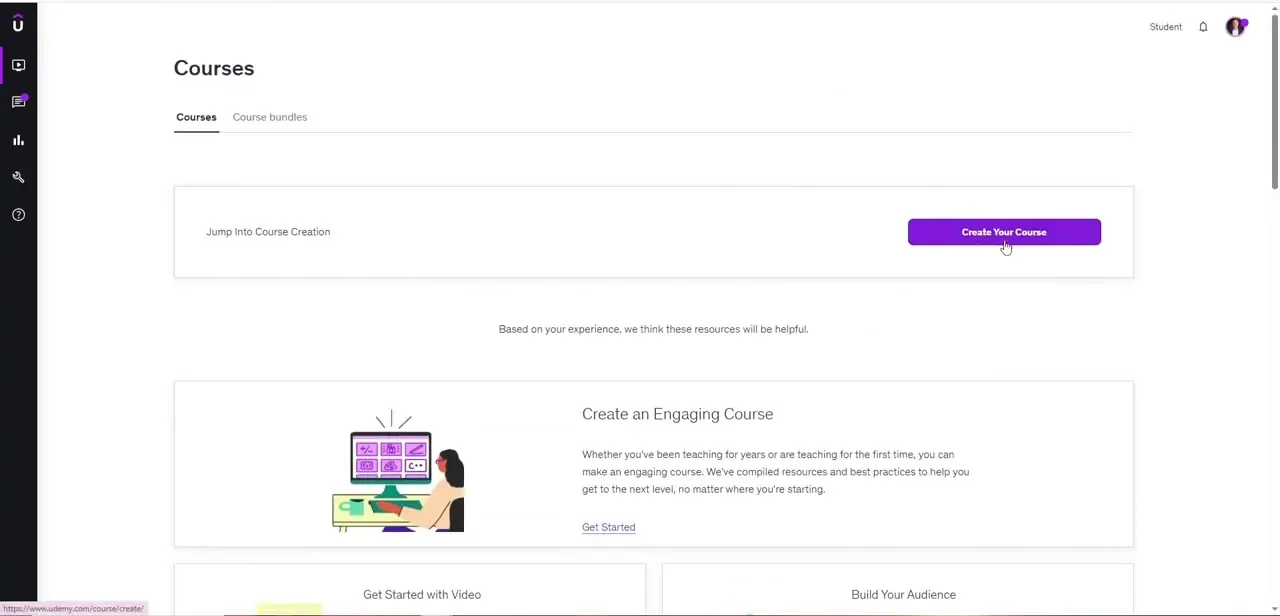
From your instructor view, the Courses page includes a "Jump Into Course Creation" panel with a prominent Create Your Course button, plus a set of linked resources underneath — guides for creating an engaging course, getting started with video, and building an audience. These resources are worth skimming even briefly before you click through, since they're written specifically for the stage you're about to enter.
03Give your course a working title
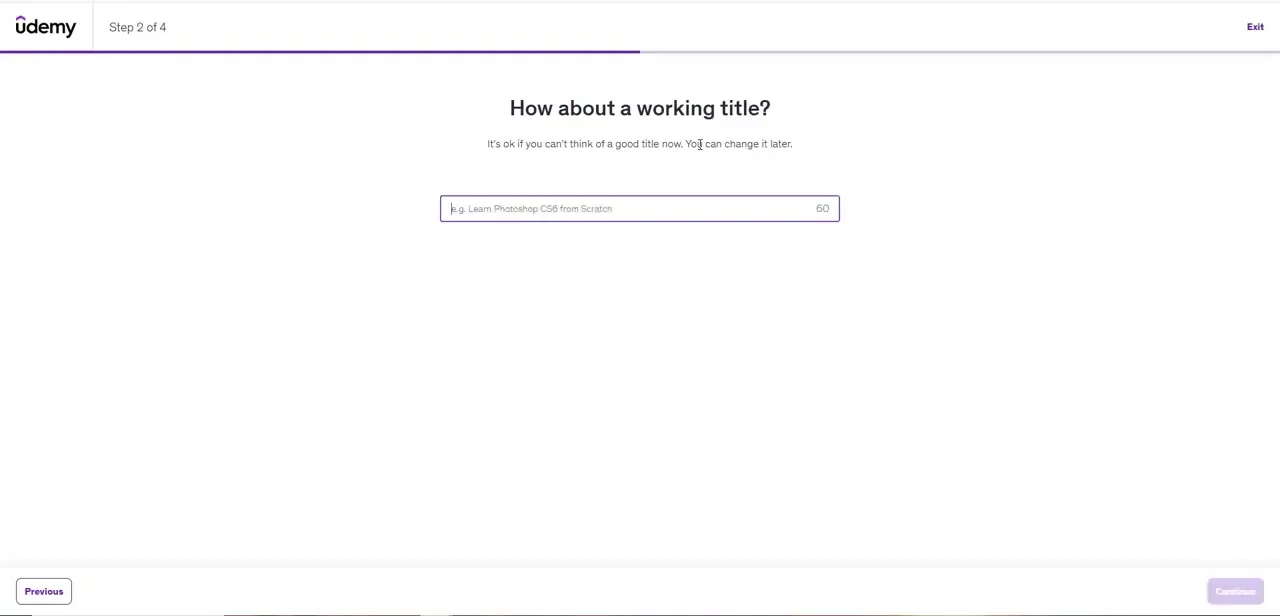
Step 2 of the setup wizard asks for a working title, with placeholder text like "Learn Photoshop CS6 from Scratch" to show the kind of specific, outcome-focused phrasing that works well. Udemy reassures you directly that this title isn't final and can be changed later, so use this field to describe what the course teaches rather than agonizing over marketing language you'll likely revise once the course is complete.
04Tell Udemy your weekly time commitment
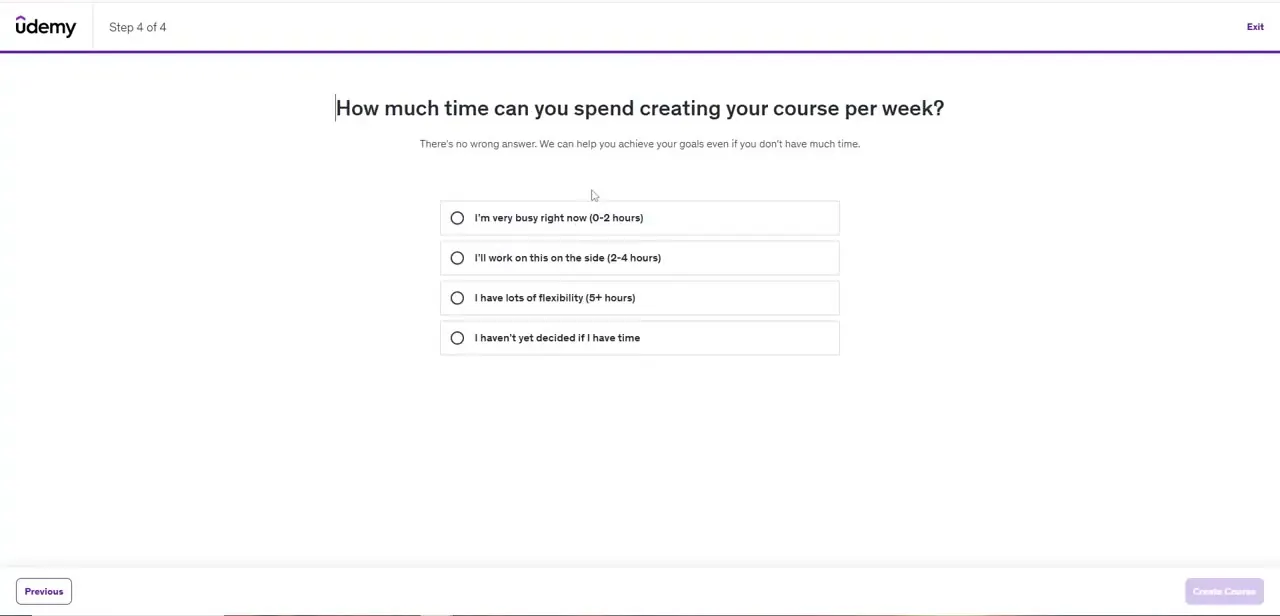
The final step asks how many hours per week you can realistically put toward building the course, with four options from "very busy right now" up to "lots of flexibility." Udemy states plainly that there's no wrong answer here and that it can help you reach your goals regardless of your available time — the honest answer shapes the pacing guidance you'll see afterward, so there's no benefit to overstating how much time you actually have.
05Set up your instructor profile
Before students will trust an unfamiliar course, they check who's teaching it. Fill in your instructor profile with a clear bio, a professional photo, and any credentials relevant to your subject — this profile appears on every course you publish, so it's worth getting right once rather than patching it together after your first course is already live.
06Upload your course materials in order
With the shell created and your profile in place, upload your videos and supporting files section by section, keeping them in the same sequence you planned during outlining. Uploading out of order is one of the more common causes of a confusing course structure, since Udemy's builder generally reflects the order you add content in until you manually rearrange it.
07Follow best practices for course visibility
Once everything is uploaded, review the factors that affect discoverability — a complete instructor profile, clear course description, and organized curriculum all feed into how Udemy surfaces your course in search and recommendations. A course that's technically finished but thin on these details will struggle to reach students even if the content itself is strong.
Frequently asked questions
What do I need before uploading a course to Udemy?
Have your course content prepared and organized, along with a completed instructor profile, before starting the upload wizard so you're not stalling mid-setup.
Can I change my course title after the setup wizard?
Yes. Udemy tells you directly on the working-title step that it's fine not to have a final title yet, since you can change it later.
Does my instructor profile affect course sales?
Yes, a well-set-up profile with a clear bio and credentials helps build trust with potential students, which can influence enrollment and engagement.
Can beginners successfully upload and sell courses on Udemy?
Yes, the setup wizard and instructor resources are designed to work for both beginners and experienced instructors.
How can I make my uploaded course more visible on Udemy?
A complete instructor profile, an organized curriculum, and a clear course description all affect discoverability, alongside the usual best practices for course setup.
About the author

Impran M N
I've been hooked on technology for as long as I can remember — especially the new tools and AI apps that seem to land every other week. Easy Tech Tuts is where I write up whatever I've just worked out: I do the task in the real product, record the screen, and turn it into the guide I wish I'd found first.