 Easy Tech Tuts
How to Add Calendar to Notion, Embed on Page, Dashboard, Database Easily 2026
By Impran M N
Notion doesn't have a separate "insert calendar" button — a calendar in Notion is really a database wearing a Calendar layout, which is exactly what makes it flexible enough to sit on its own page, live inside a dashboard, or track the same tasks you already manage in a table. This guide walks through creating that database from a blank page, switching its view to Calendar, and setting it up so dates actually show something useful, using the real setup screens rather than a generic overview.
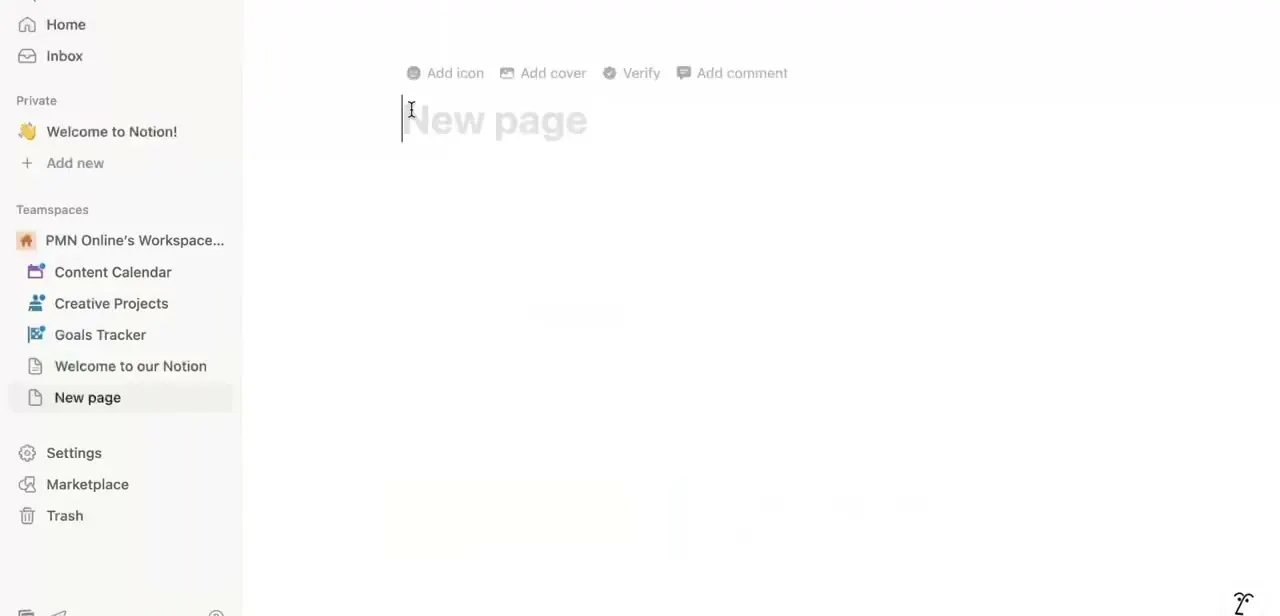
01Start from a new page in your workspace
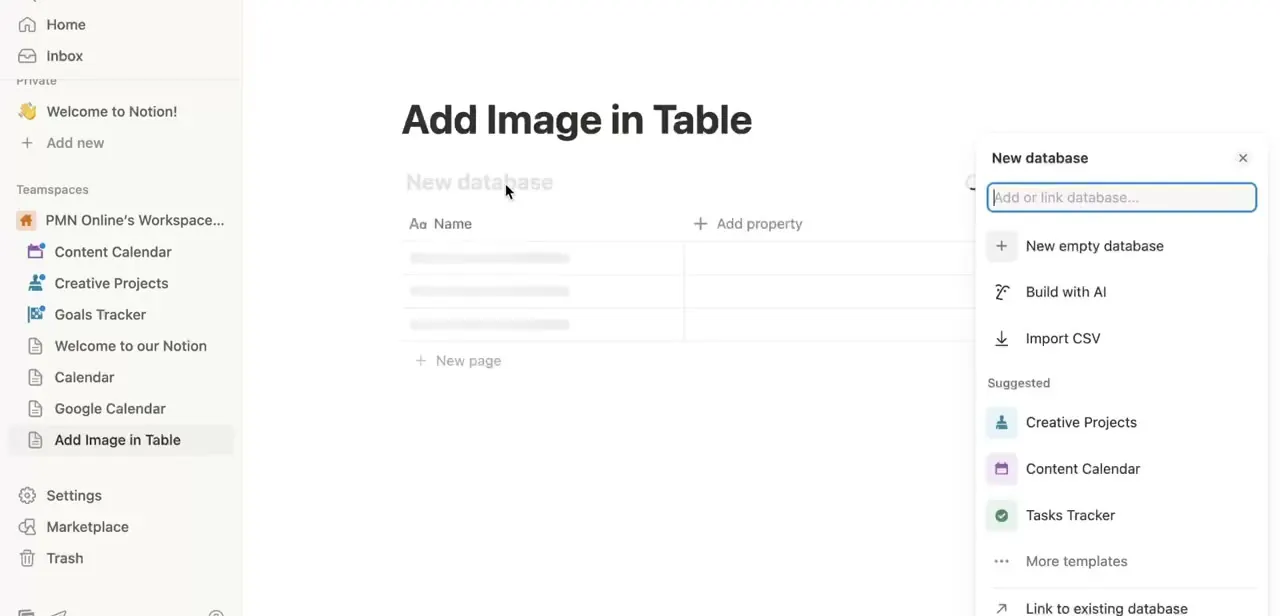
Open your Notion sidebar and add a new page under whichever teamspace or section makes sense for the calendar — alongside a Content Calendar, Creative Projects, or Goals Tracker page, for instance, if you already have those set up. An empty page just shows a blinking cursor next to the placeholder title, which is your starting point; everything from here happens by typing a title and then inserting a database block underneath it.
02Create a new database on the page
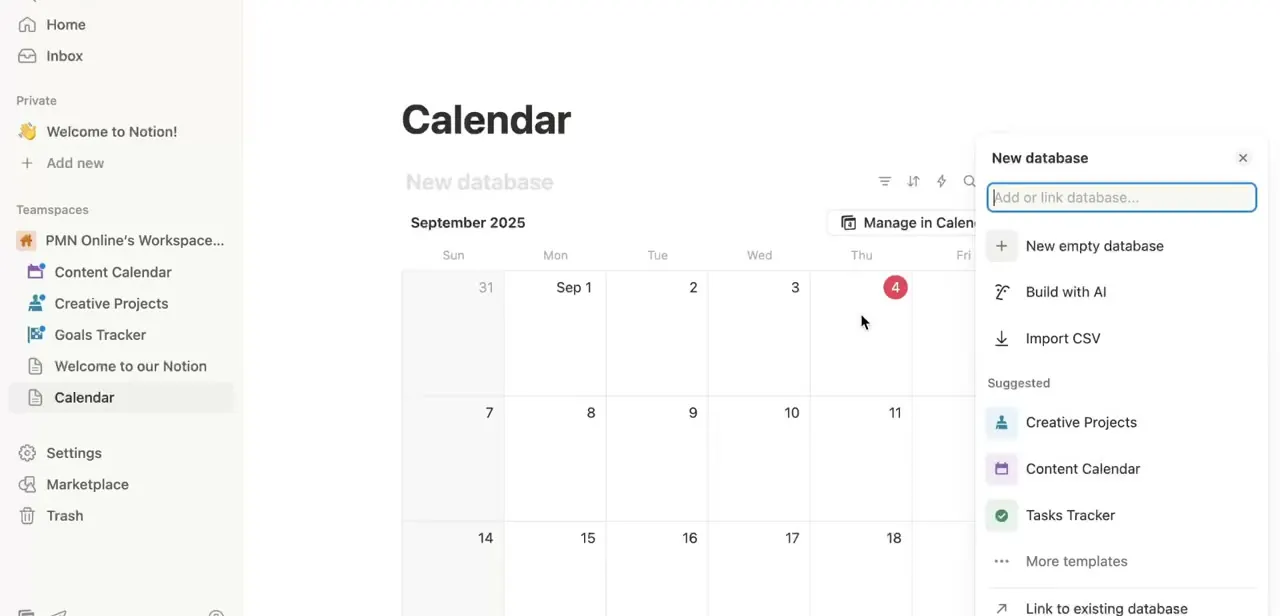
Title the page (Calendar works fine) and add a database block. Notion opens a New database panel with a few starting options: a New empty database, Build with AI, Import CSV, or linking to an existing database you already have, plus a shortlist of suggested databases like Creative Projects or Tasks Tracker if you want to reuse one instead of starting fresh. For a calendar meant to hold its own events, New empty database is the simplest path; for a calendar meant to visualize an existing project's due dates, Link to existing database is the better choice.
03Switch the database's layout to Calendar
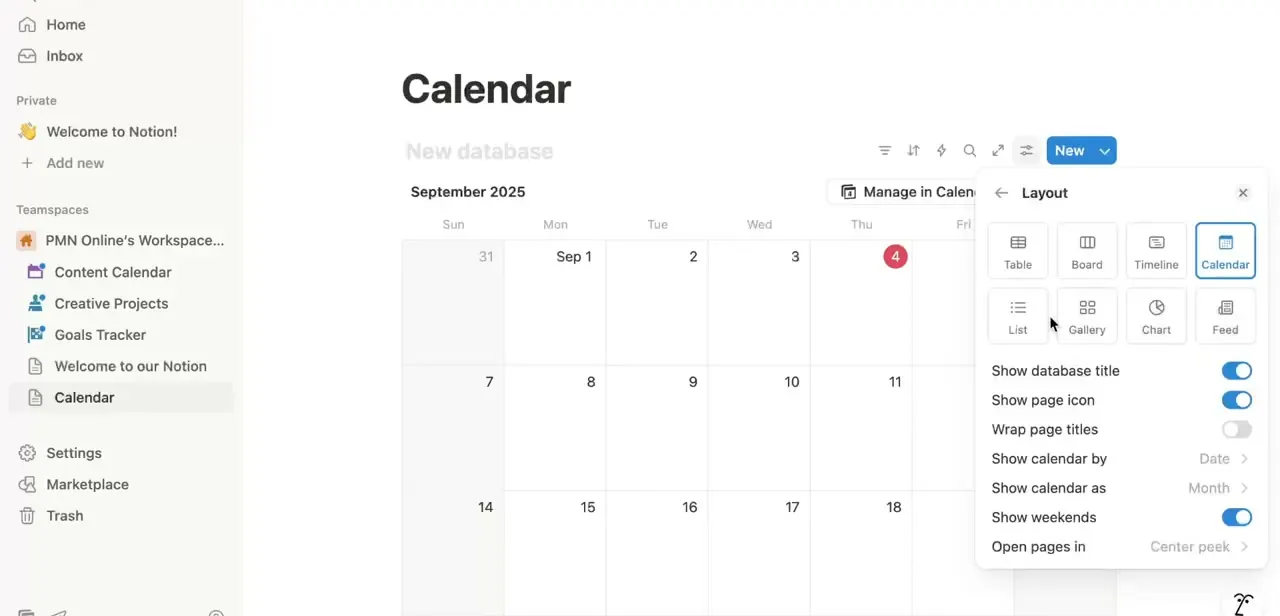
A brand-new database defaults to a table or list layout, so the next step is opening the layout menu and choosing Calendar from the grid of options alongside Table, Board, Timeline, List, Gallery, Chart, and Feed. Selecting Calendar immediately changes how the same underlying data displays — instead of rows, you get a month grid with items placed on the date from their date property.
04Set which date field the calendar reads from
Below the layout grid, two settings control how the calendar actually behaves: "Show calendar by" lets you pick which date property drives placement, useful if your database has more than one date field like a start date and a due date. "Show calendar as" switches between Month and Week views. If items aren't showing up where you expect, this is almost always the setting to check first — the calendar is only as accurate as the date property it's reading from.
05Embed the calendar into a dashboard
To surface the calendar somewhere other than its own page, open a dashboard page, type /, and search for the calendar's page name to insert it as an embedded database link, or copy the database block itself and paste it in. Either approach keeps the calendar synced to the same underlying data, so an event added from the dashboard view shows up identically when you open the calendar's dedicated page.
06Link the calendar to a project database instead of a standalone one
If you'd rather see deadlines from a database you already use — a Content Calendar or Goals Tracker, for example — add a new Calendar view directly on that existing database instead of creating a separate one. This keeps a single source of truth: tasks stay in one place, and the calendar becomes just another lens on the same records rather than a duplicate list you have to keep updating by hand.
Frequently asked questions
Is the Notion calendar feature free?
Yes — Calendar is one of the built-in database layouts available on Notion's free plan, alongside Table, Board, Timeline, List, Gallery, Chart, and Feed.
Can I turn an existing database into a calendar view?
Yes. Open the database, add a new view, and choose Calendar as the layout — any items with a date property will place themselves on the calendar automatically.
Does the calendar update automatically when I add new tasks?
Yes, because Calendar is just a view of the underlying database. Add or edit an item from any view — Table, Board, or Calendar — and every other view of that same database reflects the change instantly.
Can I have multiple calendars on one Notion dashboard?
Yes — you can embed calendar views from different databases on the same dashboard page, so a content calendar and a personal goals calendar can sit side by side.
What's the difference between the Calendar layout and the separate Notion Calendar app?
The Calendar layout described here is a database view inside your Notion workspace. Notion Calendar is a standalone scheduling app that syncs with Google Calendar accounts; it's a related but different product from embedding a calendar view on a page.
About the author

Impran M N
I've been hooked on technology for as long as I can remember — especially the new tools and AI apps that seem to land every other week. Easy Tech Tuts is where I write up whatever I've just worked out: I do the task in the real product, record the screen, and turn it into the guide I wish I'd found first.