 Easy Tech Tuts
How to do MLA Format on Google Docs Easily 2026
By Impran M N
Formatting an essay or research paper to MLA standards involves several small but easy-to-miss details, from exact margins to a running head that has to appear on every single page. Get one of them wrong and it reads as sloppy even if the writing itself is strong. This guide walks through setting up each element correctly inside Google Docs from a blank page, plus a shortcut worth knowing about if you'd rather start from a pre-built layout instead of formatting everything by hand.
01Start from a blank document
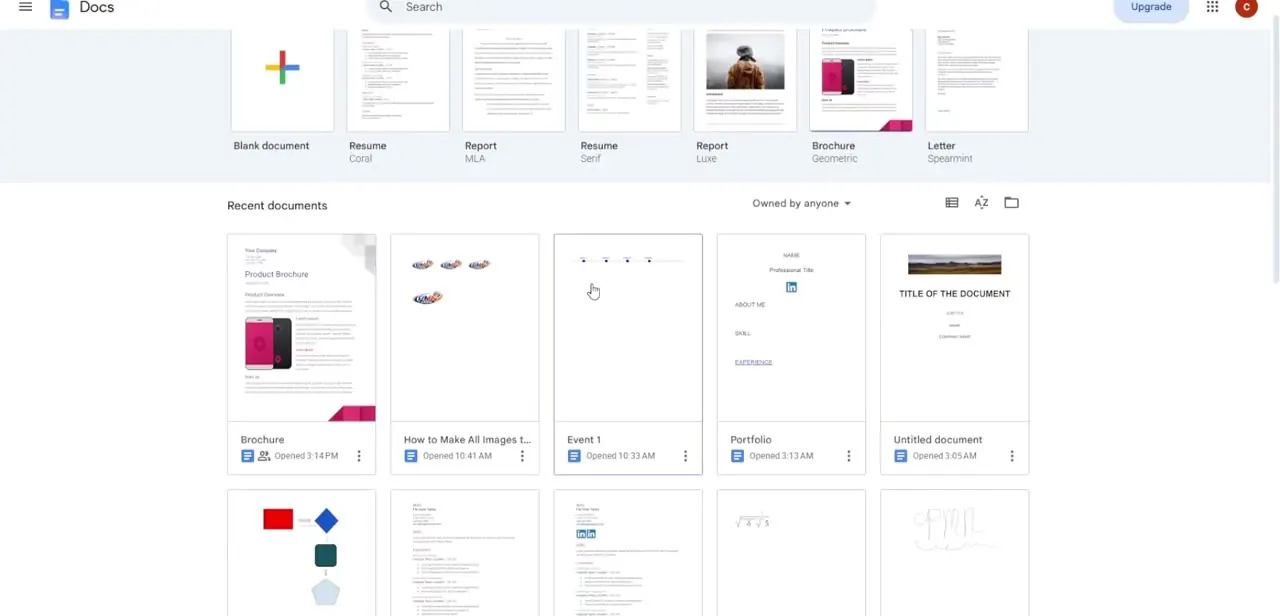
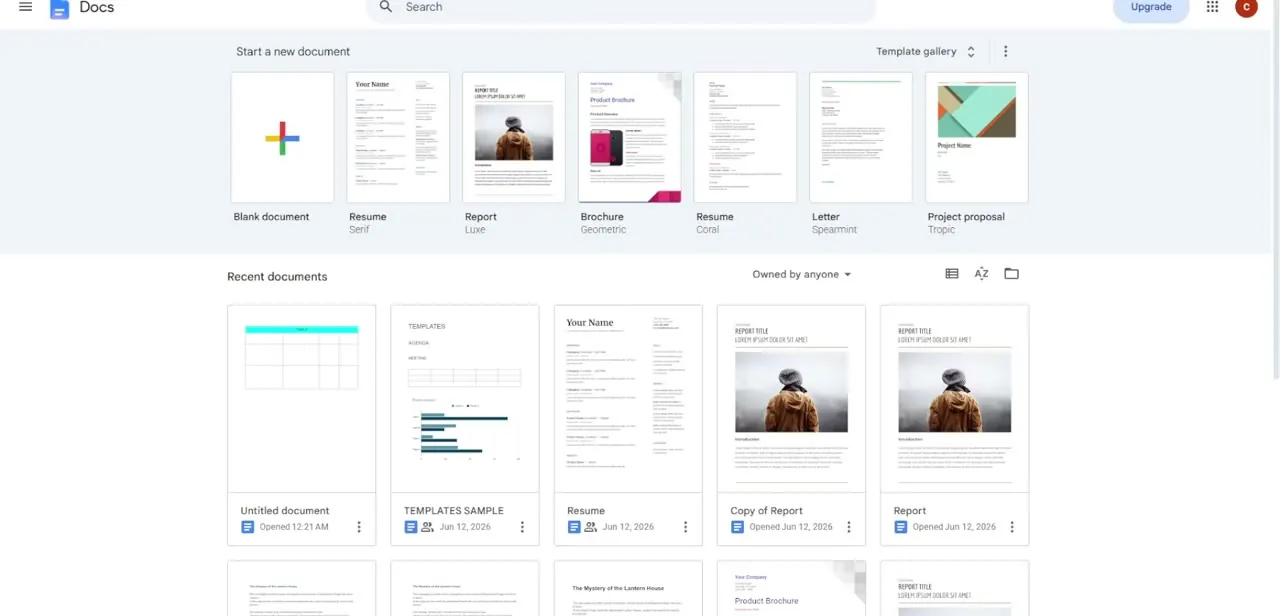
Open Google Docs and click Blank document from the row of starter options on the home screen. You'll also see a Report, Resume, and Letter template sitting in that same row — none of them are MLA-specific, so for a manual setup, blank is the right starting point rather than trying to strip formatting out of one of those.
02Set your margins and font first
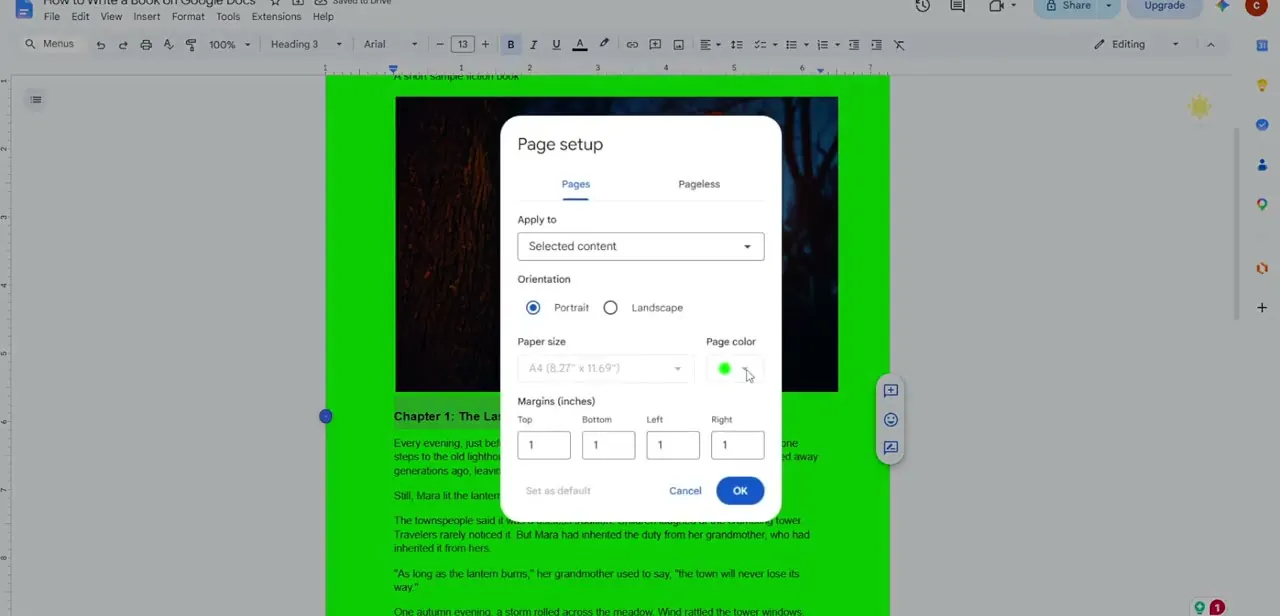
Click File, then Page setup, and confirm all four margins are set to exactly 1 inch — Google Docs defaults to this already in most cases, but it's worth checking since MLA is strict about it. Then select all your text and switch the font to Times New Roman at 12pt, the standard MLA calls for. Doing this before you type your identification block keeps everything consistent from the first line rather than requiring a cleanup pass later.
03Apply double spacing throughout
With your text selected, click Format, hover over Line & paragraph spacing, and choose Double. MLA also asks for no extra space between paragraphs, so check the same submenu for an Add space after paragraph option and make sure it's off — Google Docs sometimes adds a small gap by default that throws off strict double spacing.
04Type the identification block and title
In the upper-left corner of your first page, type your four-line identification block: your name, your instructor's name, the course, and the date, each on its own line and left-aligned. Below that, center your paper's title on its own line — plain text, no bold, underline, or quotation marks unless the title itself references another work.
05Build the running head
Double-click into the header area at the top of the page, click Insert, hover over Page numbers, and choose the top-right position. Then type your last name directly before the page number, with a space between them, so every page reads something like "Smith 2" in the top-right corner. This running head has to appear on every page including the first, which is a common place people accidentally uncheck a Different first page option and lose it.
06Format your Works Cited page
Start a new page for your source list, center the label Works Cited at the top, and list your sources alphabetically by author's last name, still double-spaced. Then highlight the whole list and drag the left indent marker on the ruler to 0.5 inches while snapping the first-line marker back to the original margin — that creates the hanging indent MLA requires, where every line after the first in a citation is indented.
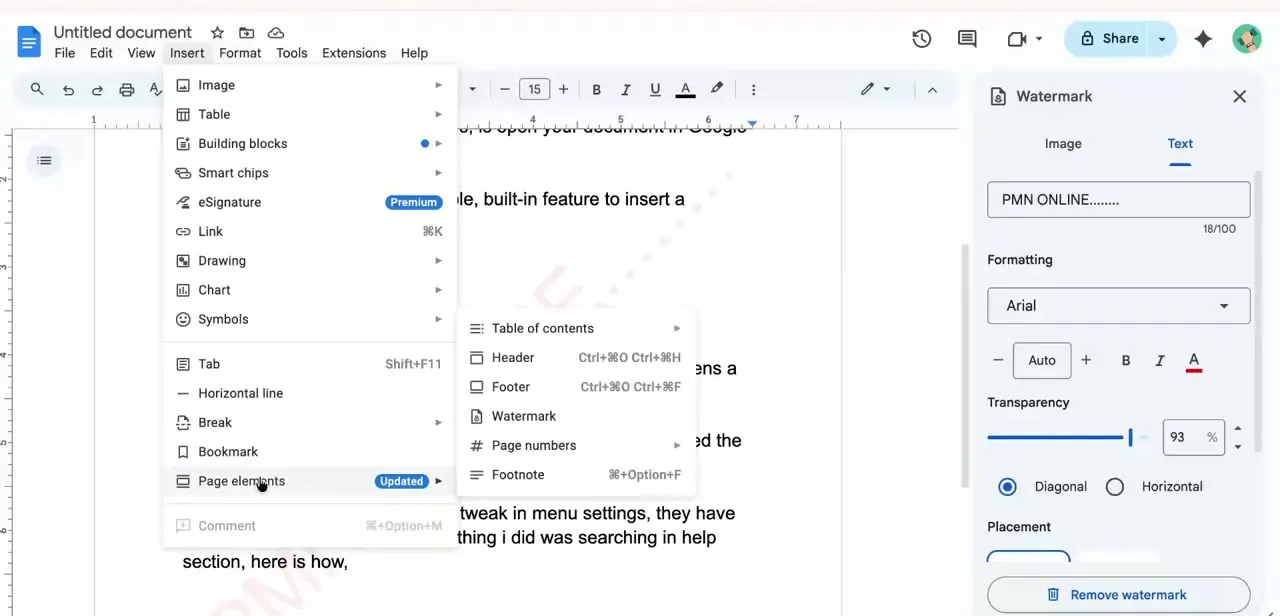
07Or start from Google's built-in MLA template
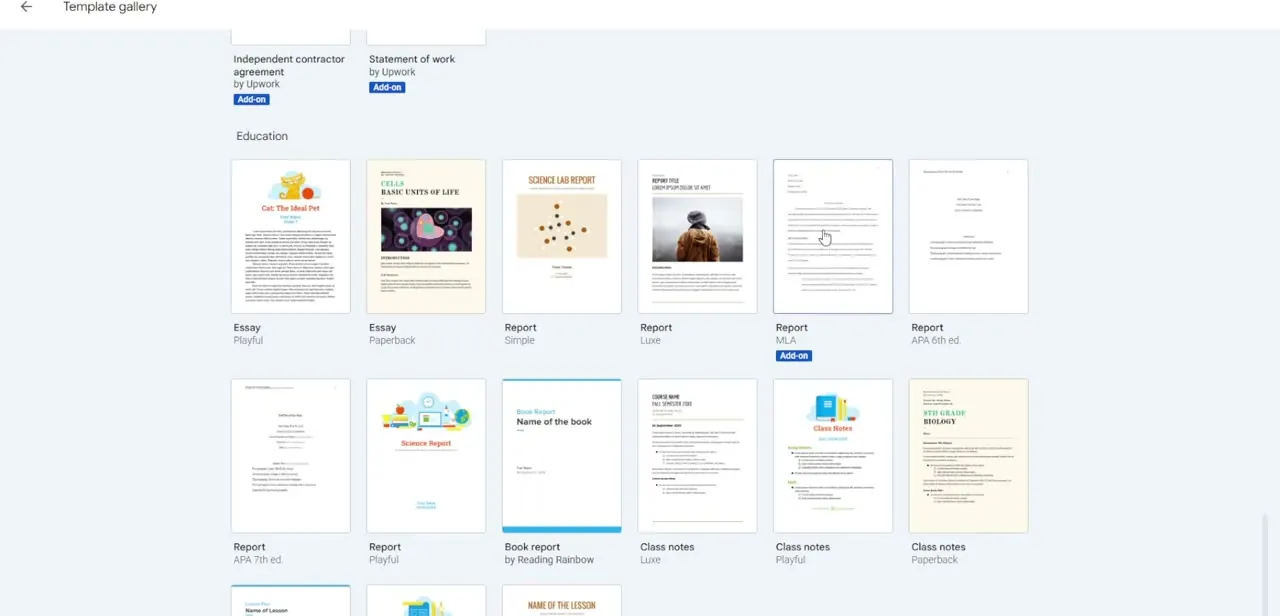
If you'd rather skip manual setup entirely, open the Template gallery from the Docs home screen and scroll to the Education section, where Google lists a Report template labeled MLA alongside APA options. It pre-applies much of the spacing and margin structure for you, though it's worth double-checking against your instructor's specific requirements before you rely on it, since template details can drift from current MLA guidelines over time.
Frequently asked questions
What font and size does MLA require?
MLA format calls for a standard, readable font like Times New Roman at 12pt throughout the document.
Do I need page numbers on every page?
Yes, MLA requires a running head with your last name and page number on every page, including the first — make sure Different first page isn't checked in the header settings.
How do I create a hanging indent for citations?
Highlight your Works Cited list and drag the ruler's left indent marker to 0.5 inches while keeping the first-line marker at the original margin.
Should my title be bold or underlined?
MLA style calls for a plain, centered title without bold, underline, or italics, unless the title itself references another work's title.
Is Google's built-in MLA template accurate?
It's a reasonable starting point found in the Education section of the Template gallery, but check it against your instructor's current requirements since template details can drift out of date.
About the author

Impran M N
I've been hooked on technology for as long as I can remember — especially the new tools and AI apps that seem to land every other week. Easy Tech Tuts is where I write up whatever I've just worked out: I do the task in the real product, record the screen, and turn it into the guide I wish I'd found first.