 Easy Tech Tuts
How to Generate Presentation Slides With Gemini AI in Google Slides | Easily 2026
By Impran M N
Google has built Gemini directly into Slides, which means the AI assistance for building a deck lives in a side panel next to the slide you're actually editing, rather than in a separate app you have to copy content out of. That's a meaningful difference from generating slides elsewhere and importing them: you stay in the real editor the whole time, so what Gemini produces is immediately something you can click into and adjust, rather than a static export you'd need to rebuild in your actual presentation software.
For anyone who's ever burned an evening staring at a blank title slide before a big meeting, this closes most of that gap — Gemini handles the first pass of structure and wording, and you spend your time on the parts that actually need a human eye. This guide walks through opening that panel, generating a starting point, and shaping it into something presentation-ready.
01Open Google Slides and find your starting point
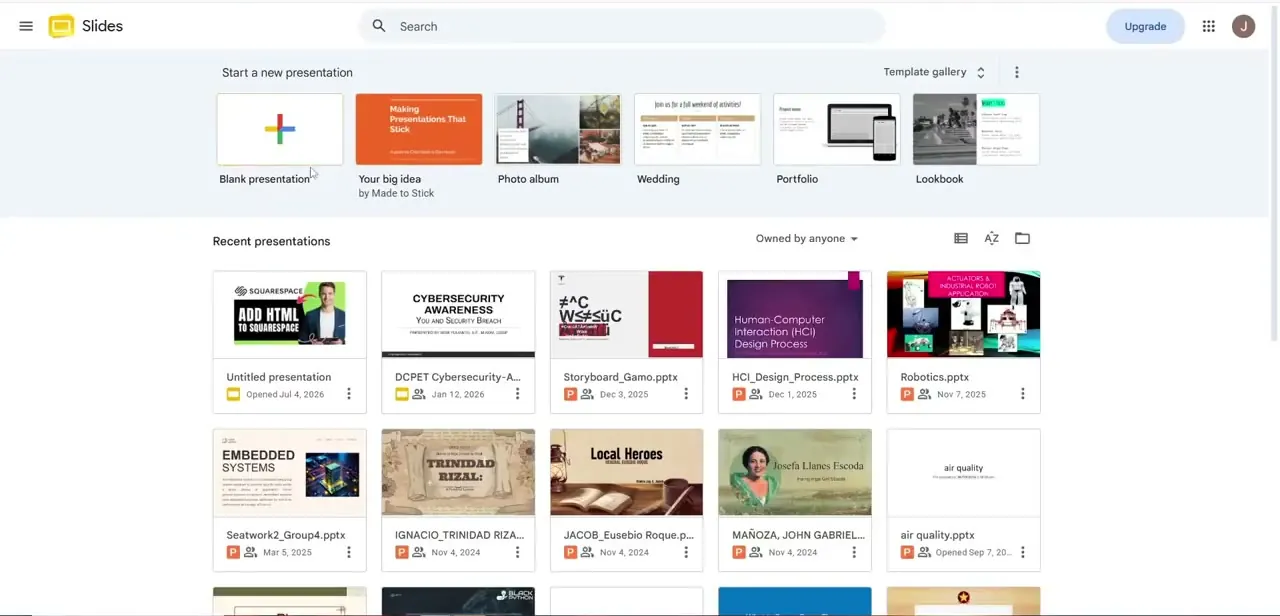
Go to slides.google.com, where you'll land on the home screen showing template options across the top and your recent presentations below. If you're building something from an existing structure, check whether one of your recent files is close enough to adapt — but for most new Gemini-assisted decks, starting from Blank presentation gives the cleanest result since there's no existing formatting for the AI-generated content to fight against. The recent presentations list is also a useful reference point even when you're starting fresh, since seeing your typical deck length and style can help you judge whether what Gemini generates later is roughly the right scope for how you actually present.
02Open a blank presentation
Click Blank presentation to open a new file with a single title slide. This is your working canvas — Gemini builds within this file rather than creating a separate document you'd have to merge in afterward, so any slides it generates land directly where you'll be editing them. Give the file a real name right away rather than leaving it as "Untitled presentation," since it's easy to lose track of which draft is which once you're a few Gemini-generated versions deep into experimenting with different prompts.
03Open the Gemini panel from the toolbar
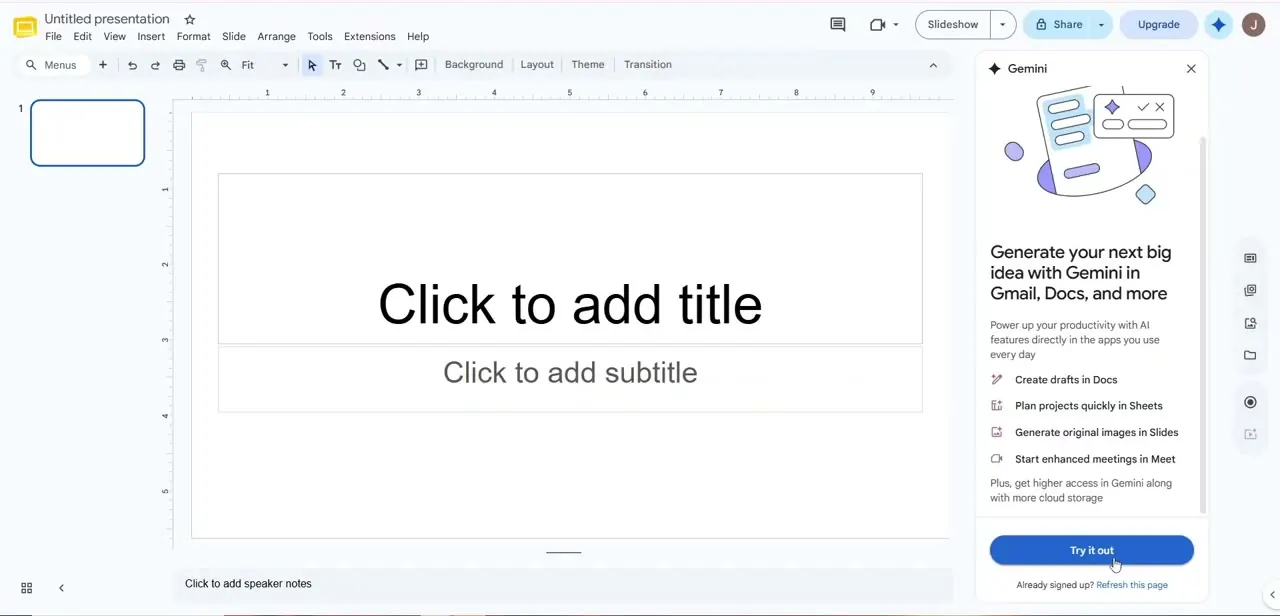
In the top-right corner of the Slides editor, click the Gemini icon (the sparkle-style diamond) to open the assistant panel. On a new file it introduces itself with a short pitch and a prompt box, along with a list of what it can help with across Slides, Docs, and other Workspace apps — image generation, drafting, and planning among them. Notice it also mentions capabilities in Gmail and Meet in that same panel, which is a reminder that this is one consistent assistant across your whole Workspace account rather than something scoped narrowly to Slides alone.
04Prompt Gemini with your topic and structure
In the panel's prompt box, describe what the presentation is for and, if you already know it, roughly how many slides or sections you want — a pitch deck for a specific audience, a lecture recap, a project status update. Being specific about the audience and purpose up front produces slides that need less rewriting afterward than a vague one-line prompt does. Mention the tone you're after too — formal and data-driven reads very differently from casual and conversational, and Gemini will follow that cue if you give it, rather than defaulting to a generic middle-ground voice that fits nothing particularly well.
05Review the generated slides slide by slide
Once Gemini finishes, go through the deck one slide at a time rather than skimming the thumbnail panel. Check that the content on each slide is accurate for your topic, that nothing reads as generic filler, and that the amount of text fits the slide without needing to shrink the font to make it fit. Pay particular attention to the middle slides of a longer deck, since the opening and closing tend to get the most attention during generation and the middle is where filler content is most likely to slip through unnoticed.
06Customize wording, layout, and visuals
Edit text directly on the slide the same way you would in any manually built presentation — click into a text box and rewrite. For layout or design changes, use Slides' own Theme and Layout options rather than regenerating the whole deck, since a full regeneration can undo edits you've already made. Swap in your own images or brand assets where the AI-generated visuals are close but not quite right.
07Apply a few best practices before you present
Read through the whole deck out loud once before it goes in front of an audience — AI-generated phrasing can sound fine on a quiet read but awkward when spoken. Keep an eye out for repeated phrasing across slides, which happens more with AI-generated content than hand-written decks, and vary it manually where you notice it.
Finally, double-check any numbers, dates, or specific claims Gemini included, since generated content should always be fact-checked against your actual source material before it's presented as fact, especially anything involving figures you didn't personally supply in the original prompt. Save a version right after generation and before you start heavily editing, too — that gives you a clean baseline to compare against if a later manual edit introduces an error you don't immediately notice.
Frequently asked questions
How do I access Gemini inside Google Slides?
Open any presentation and click the Gemini icon in the top-right corner of the editor toolbar. This opens a side panel with a prompt box, without leaving the Slides editor.
Can I edit the slides Gemini generates?
Yes. Generated slides are regular editable slides — click into any text box to rewrite it, and use Slides' Theme and Layout tools for design changes rather than regenerating the whole deck.
Do I need design experience to use this?
No. Gemini handles the initial layout and structure; you're mainly reviewing content for accuracy and adjusting wording or swapping images afterward.
Will regenerating a slide undo my manual edits?
It can, since regeneration replaces the slide's content. Make manual layout adjustments through Slides' own tools once you're happy with the content, rather than regenerating after you've already started editing.
Should I fact-check what Gemini generates for a presentation?
Yes, always. Verify any numbers, dates, or specific claims against your actual source material before presenting the deck, the same way you would with any AI-generated content.
About the author

Impran M N
I've been hooked on technology for as long as I can remember — especially the new tools and AI apps that seem to land every other week. Easy Tech Tuts is where I write up whatever I've just worked out: I do the task in the real product, record the screen, and turn it into the guide I wish I'd found first.