 Easy Tech Tuts
How to Change Language on Coursera | Settings Guide | Easily 2026
By Impran M N
Switching Coursera's interface to your preferred language can make a real difference in how well you follow along with course content, especially for complex subjects where following a second language adds friction on top of the material itself. There are actually two places this shows up: a quick globe icon on any course page for translation shortcuts, and a full Account settings page where your permanent interface language lives, and the two behave differently enough that it's worth understanding both before you assume one setting covers everything.
This guide covers both, walking through exactly where each control sits, what changes when you use it, and why a translated interface doesn't automatically mean translated course content. It's aimed at students and professionals who want a more comfortable, accessible learning experience without hunting through menus to find it, whether that means fully switching your account to a new default language or just translating a single confusing page on the fly.
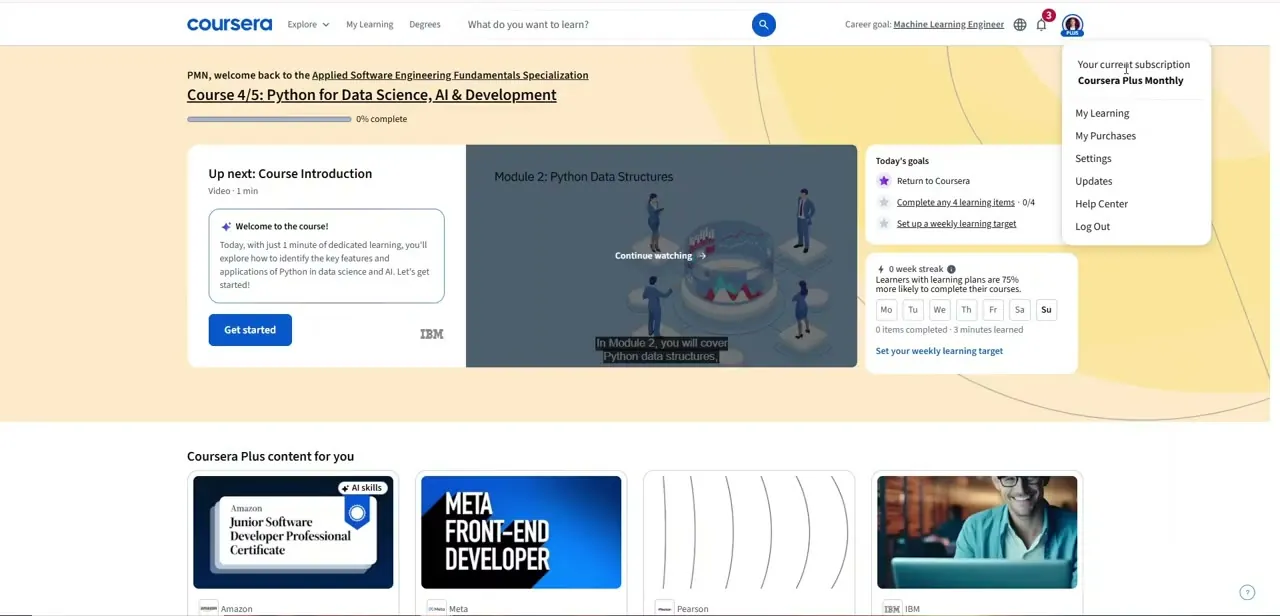
01Open your account menu
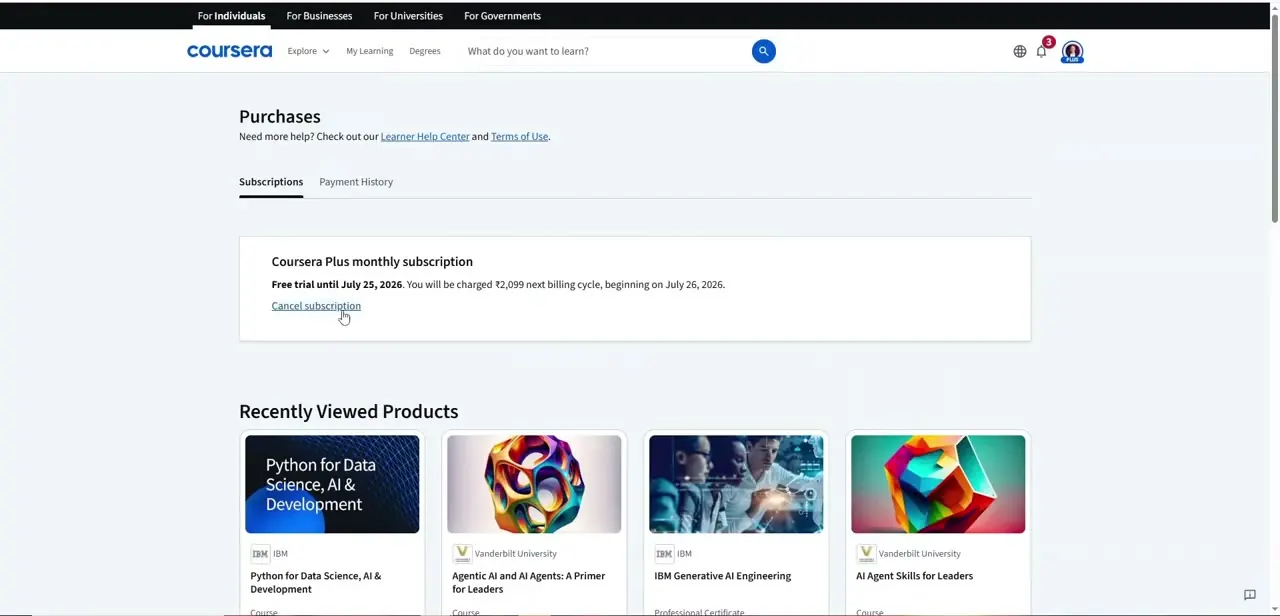
Click your profile photo in the top-right corner of any Coursera page to open the account dropdown. It shows your current subscription status at the top — Coursera Plus Monthly, in a typical case — followed by links to My Learning, My Purchases, Settings, Updates, Help Center, and Log Out. Settings is the one you want for a permanent language change, though the menu is worth knowing regardless since it's also where subscription and purchase history live, and it's the fastest route back to your account from anywhere on the site.
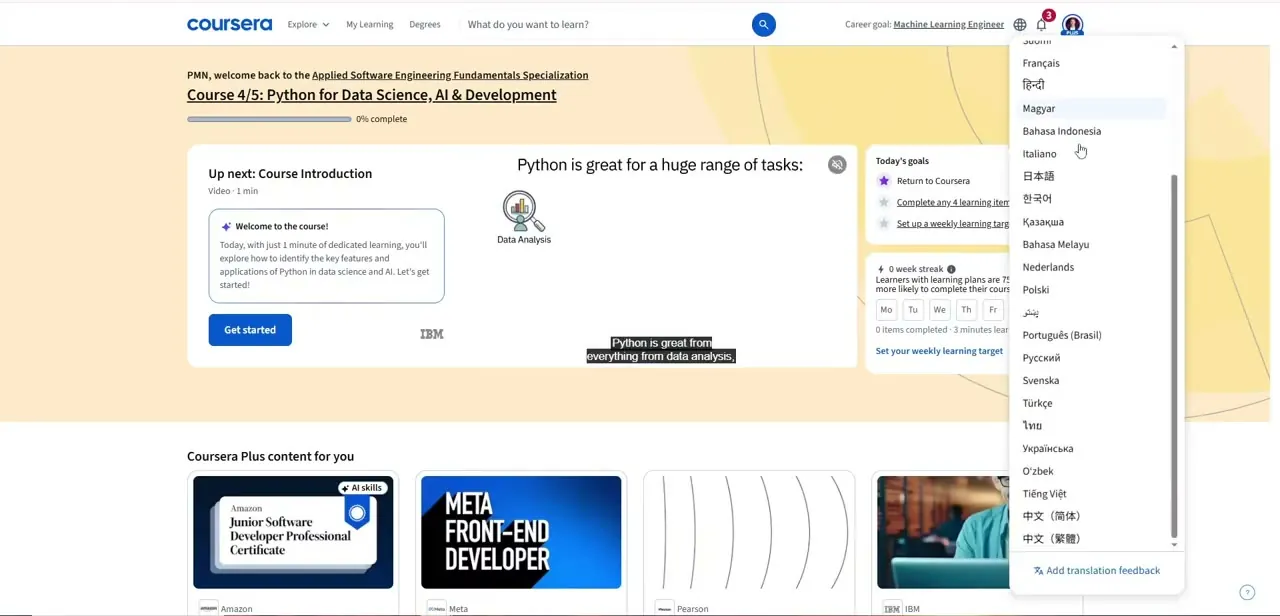
02Try the quick globe icon for on-page translation
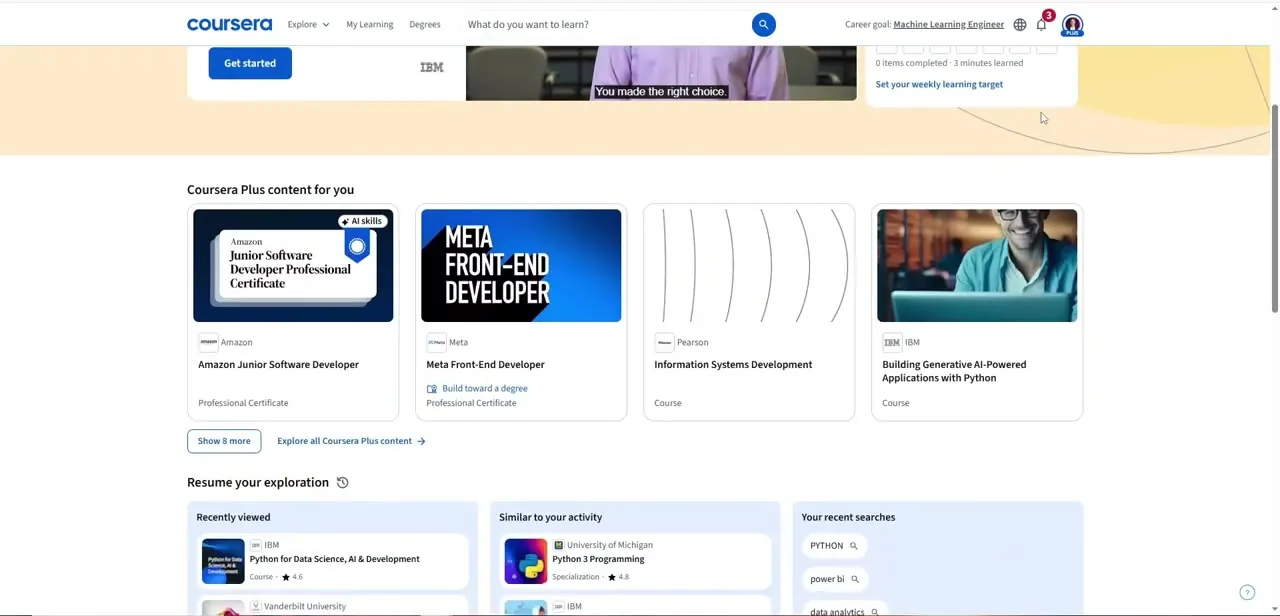
While you're inside a course, notice the small globe icon next to the notification bell in the top navigation. Clicking it opens a long list of languages — Français, Hindi, Magyar, Bahasa Indonesia, Japanese, Korean, and dozens more — that translates visible course page text on the fly, without touching your account-wide setting. This is useful for a quick read-through in another language without committing to it as your default everywhere on the site, and it's a reasonable option if you're mostly comfortable in English but want an occasional translated pass over a dense lecture description or assignment prompt.
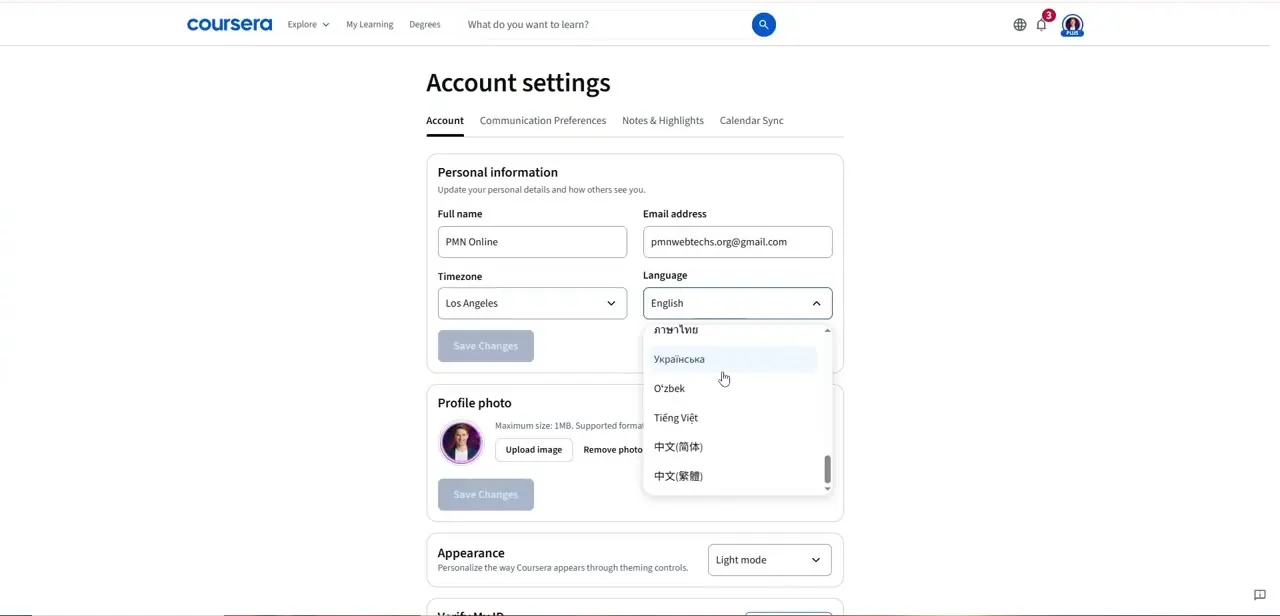
03Change your language preference in Account settings
From the account dropdown, click Settings to land on the Account settings page, which includes your Personal information — full name, email, timezone — alongside a Language dropdown currently set to English. Clicking that dropdown reveals the same extensive language list, and selecting a new one and hitting Save Changes updates the interface language across your account going forward, not just on the page you happen to be viewing.
This is the setting to change if you want every page, every menu, and every button to load in your preferred language by default rather than translating page by page. Notice too that this same Account settings screen groups language together with timezone and profile photo, so it's a convenient stop to update any of those other personal details at the same time while you're already there.
04Understand the benefits of language customization
Using the platform in your preferred language can meaningfully improve comprehension, particularly for technical or specialized subjects where following along in a second language adds unnecessary friction on top of already-difficult material. It also makes navigation itself — menus, buttons, settings labels — faster to parse, which matters more than it sounds like once you're moving quickly between courses and account pages during a study session rather than reading each screen carefully. For learners studying alongside a full-time job or school schedule, that saved friction adds up over a multi-week course, since less mental effort spent decoding the interface leaves more attention for the actual material.
05Check course availability in your selected language
Changing your interface language doesn't automatically translate every course's actual video and reading content — that depends on what the instructor or university has published. Before enrolling, check the course description for available subtitle or dubbing languages, since a course fully translated into your interface language might still only offer content in English with subtitles in others.
Some popular specializations offer subtitles in a dozen or more languages while others offer only English, so this is genuinely worth confirming rather than assuming based on your interface setting alone. If a course you want doesn't yet support your language, look for a similar course from a different university or provider — Coursera's catalog is large enough that popular subjects are rarely offered by only one provider.
06Revisit the setting anytime it stops fitting
Your language preference isn't locked in once chosen — if you switch to a language for a specific course and later want the interface back in English, or you want to try browsing entirely in another language for practice, the same Account settings page handles the change either direction just as easily as the first time. There's no limit on how often you can switch, so treat it as a preference you can adjust freely rather than a decision you need to get right immediately. Some learners use this deliberately — switching the interface to a language they're actively studying as a light form of immersion practice alongside their coursework, then switching back to English whenever it becomes a distraction rather than a help.
Frequently asked questions
Can I change Coursera's interface language after signing up?
Yes, language settings can be changed at any time from Account settings, reached through the profile dropdown in the top-right corner of any page.
What's the difference between the globe icon and the language setting in Account settings?
The globe icon on a course page offers quick, on-the-fly translation of that page's content, while the Language field in Account settings changes your interface language permanently across the site.
Does changing my language setting affect which courses I can take?
It's worth checking course availability in your selected language separately, since changing your interface language doesn't automatically translate a course's actual video or reading content.
Is Coursera available in languages other than English?
Yes, both the account-wide language setting and the course-page translation menu list dozens of languages, from French and Hindi to Japanese, Korean, and Vietnamese.
Will switching languages log me out of my account?
No, changing your language preference is a settings adjustment and doesn't affect your account access, subscription status, or course progress.
About the author

Impran M N
I've been hooked on technology for as long as I can remember — especially the new tools and AI apps that seem to land every other week. Easy Tech Tuts is where I write up whatever I've just worked out: I do the task in the real product, record the screen, and turn it into the guide I wish I'd found first.