 Easy Tech Tuts
How To Fix ChatGPT Login Error Access Denied Easily 2026
By Impran M N
The "Access denied" screen on chat.openai.com is one of the most common ChatGPT login problems, and it isn't actually coming from OpenAI's login system — it's a Cloudflare security block sitting in front of the site. That distinction matters because it points straight at the fix: something about your connection or browser is tripping the block, not your account being suspended. This guide walks through the real causes in order of likelihood — stale cookies, an active VPN or proxy, and genuine outages — so you can clear the error in a couple of minutes on desktop or mobile instead of guessing.
01Read what the error page is actually telling you
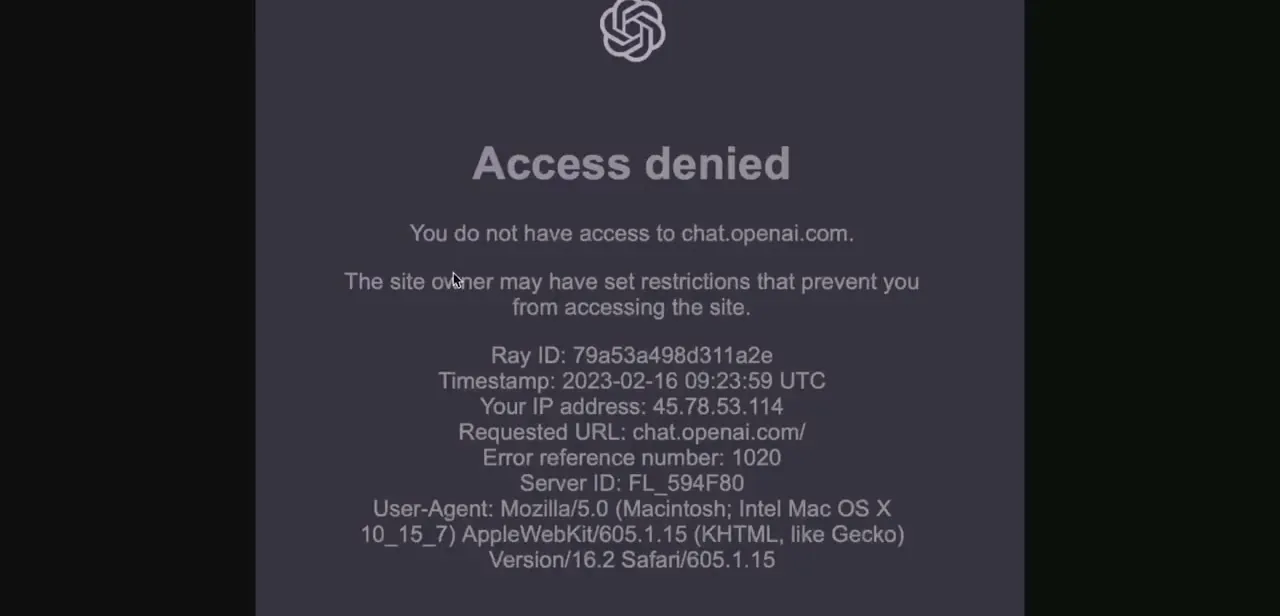
When ChatGPT blocks a request, it doesn't show a generic "can't log in" message — it shows a full Cloudflare access-denied page with a Ray ID, a timestamp, your detected IP address, and an error reference number, most commonly 1020. That number specifically means Cloudflare's firewall rules rejected the request before it ever reached OpenAI's servers, which is why re-entering your password does nothing. The page is technical-looking but genuinely useful: the listed IP address tells you whether a VPN or proxy is masking your real location, which is the single most common trigger for this block.
02Clear your browser's cache and cookies for the site
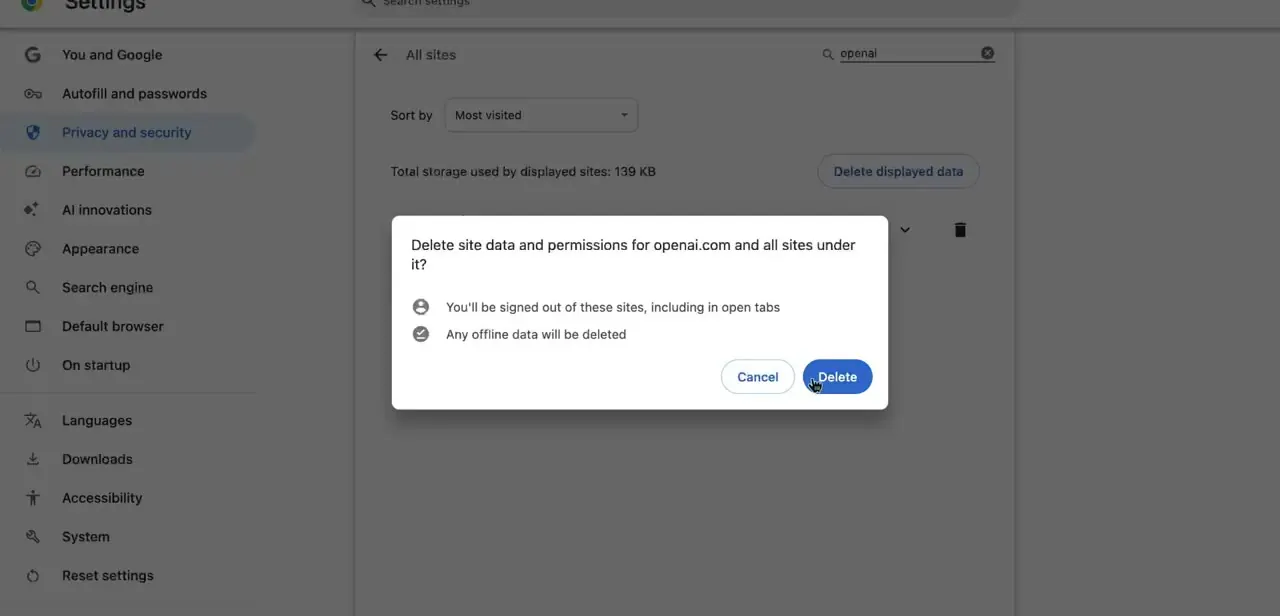
Corrupted or outdated session cookies for openai.com are a frequent cause of this error, especially if you've logged in and out multiple times or switched accounts recently. In Chrome, go to Settings, then Privacy and security, then Site settings, and search or scroll to find openai.com under All sites.
Delete the site data — this signs you out of any open OpenAI tabs and clears its stored cookies and offline data, which is exactly what you want when the session itself is the problem. Close the browser fully afterward, not just the tab, then reopen it and try logging in fresh; the equivalent option exists under Privacy in Safari and Edge.
03Turn off VPNs and proxy extensions
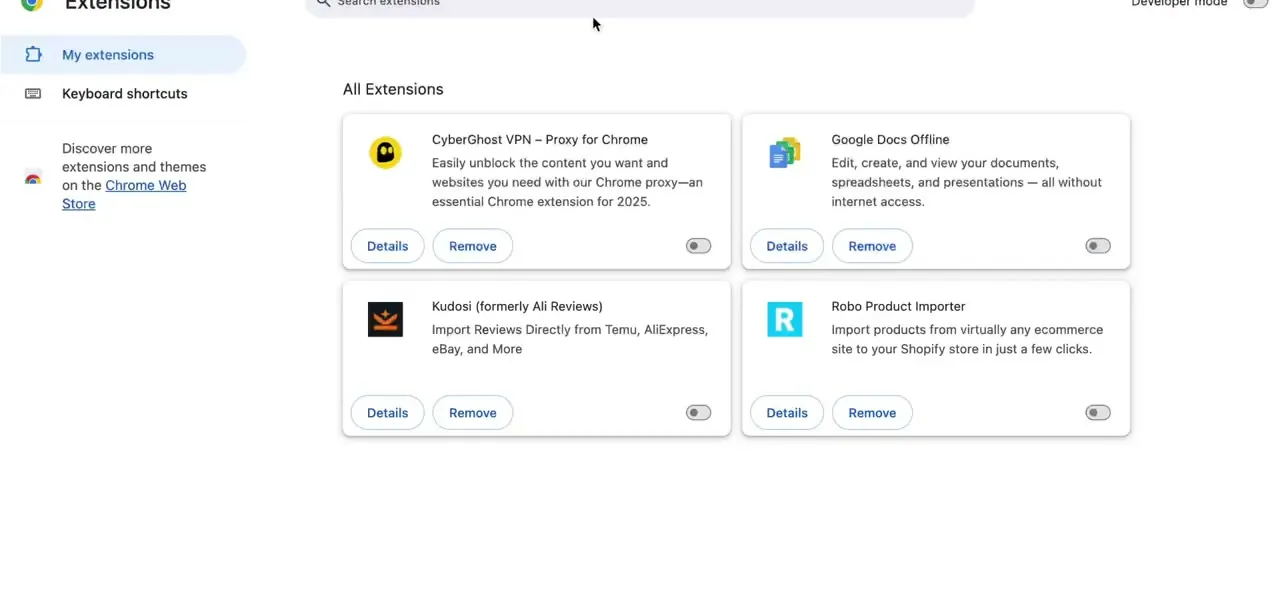
Cloudflare's firewall is aggressive about IP addresses that look like VPN exit nodes, data-center proxies, or shared hosting ranges, and ChatGPT's rules block a lot of them outright. If you have a VPN extension installed, like CyberGhost or a similar proxy tool sitting in your browser's extensions list, disable it before retrying — the toggle next to the extension is enough, you don't need to uninstall it.
The same applies to a system-level VPN app running outside the browser and to any "unblocker" or ad-blocker that reroutes traffic. Once it's off, refresh the page rather than reusing the old tab, since the blocked request may still be cached.
04Try incognito mode and confirm your browser is current
Opening ChatGPT in a private or incognito window strips out extensions, cached cookies, and saved session data all at once, so it's a fast way to check whether the problem is environmental rather than account-related. If login works fine in incognito, the fix is almost certainly the cache-and-cookie cleanup or the extension you just disabled in the earlier steps. While you're troubleshooting, make sure Chrome, Safari, or Edge is updated to its latest version — an outdated browser can fail Cloudflare's newer security checks and get flagged the same way a suspicious IP does.
05Check OpenAI's status page for a wider outage
If clearing cookies and disabling your VPN doesn't resolve it, visit OpenAI's public status page to see whether chat.openai.com or the login service is experiencing a broader incident. During real outages the access-denied or error-1020 message can appear for everyone in a region simultaneously, and no amount of local troubleshooting fixes a server-side problem. The status page also shows recent incident history, so you can confirm whether this is a one-off on your end or something OpenAI is already aware of and actively resolving.
06Apply the same steps on the mobile app
The ChatGPT app on iOS and Android hits the same backend and Cloudflare protection as the website, so the identical error can show up there. Force-close the app, then check whether a VPN profile is active in your phone's settings, since mobile VPN apps are just as likely to trigger the block as a browser extension. If the app still won't log in, sign out completely, clear the app's cache from your phone's app settings (or uninstall and reinstall it), and log back in on a plain mobile data or Wi-Fi connection with no VPN running.
Frequently asked questions
What does error 1020 mean on ChatGPT?
It's a Cloudflare firewall code shown on the "Access denied" page, meaning Cloudflare's security rules blocked your request before it reached OpenAI's servers — usually triggered by a VPN, proxy, or flagged IP address rather than an account issue.
Does a VPN cause the ChatGPT access denied error?
Very often, yes. Cloudflare frequently blocks IP ranges associated with VPNs, proxies, and data-center hosting, so disabling any VPN app or browser extension before logging in resolves the issue for most people.
Will clearing my cookies log me out of other sites too?
No — if you delete site data for just openai.com specifically (rather than clearing all browsing data), only your ChatGPT session and cookies for that domain are affected.
How do I know if the problem is on OpenAI's end?
Check OpenAI's public status page. If it reports an active incident with the login or chat service, the access-denied error is likely happening for many users at once and will clear on its own once it's resolved.
I'm getting this error on the mobile app, not the browser — does the same fix apply?
Yes. The app connects through the same Cloudflare-protected backend, so disabling any mobile VPN, clearing the app's cache, and signing back in works the same way it does on desktop.
About the author

Impran M N
I've been hooked on technology for as long as I can remember — especially the new tools and AI apps that seem to land every other week. Easy Tech Tuts is where I write up whatever I've just worked out: I do the task in the real product, record the screen, and turn it into the guide I wish I'd found first.