 Easy Tech Tuts
How to Export ChatGPT Chats Without Copy and Paste | Faster Method | Easily 2026
By Impran M N
Copying a long ChatGPT thread one message at a time is slow, and it's easy to lose formatting or miss part of the conversation along the way. ChatGPT actually has a built-in export tool that bundles your whole chat history into a downloadable file in a couple of clicks, and most people never find it because it's buried inside account settings rather than sitting next to the chat window itself.
This matters more than it sounds like it should: marketers keep a record of prompts that worked, support teams archive customer-facing conversations for compliance, and anyone doing research wants a backup that doesn't depend on a browser tab staying open forever. It's also just faster — a request that takes three clicks replaces what could otherwise be twenty minutes of scrolling and copying for a long project thread. This guide shows exactly where that export option lives in the settings menu, what the file looks like once it lands in your inbox, and what to actually do with it once you have it, so you can stop dragging your cursor through walls of text.
01Open ChatGPT and start from a clean session
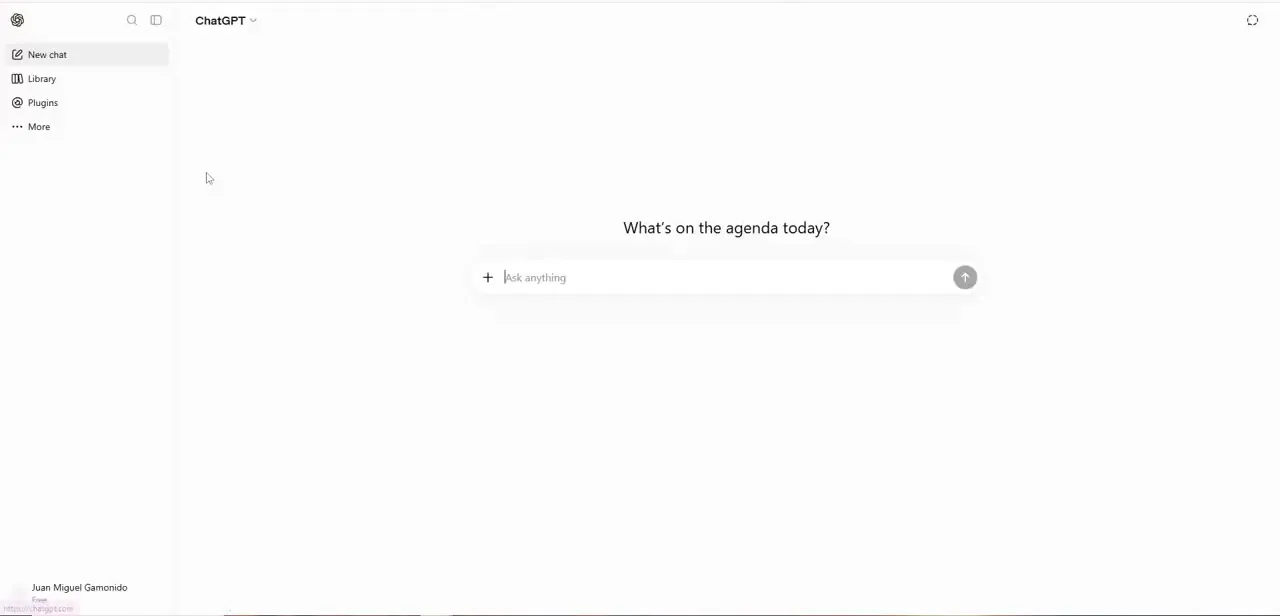
Log in at chat.openai.com so you land on the main screen with the "What's on the agenda today?" prompt box front and center. You don't need to open the specific conversation you want to export — the export tool pulls your entire chat history at once, not one thread at a time, so there's no need to hunt down every relevant chat first.
If you're on a team or Enterprise workspace, confirm you're logged into the right account first, since exports are tied to the account you're signed in as, not to a single device or browser profile. Switching accounts partway through won't merge histories together, so pick the right one before you go digging through settings.
02Open Settings from your profile menu
Click your name or avatar in the bottom corner of the sidebar to open the account menu, then choose Settings. This opens a panel with several categories running down the left side — General, Notifications, Personalization, Security and login, Data controls, and more.
The export tool isn't grouped with anything obviously related to saving or downloading, which is exactly why people default to copy and paste instead of ever finding it; it's filed under data privacy rather than under a menu you'd browse looking for a save option. Knowing it lives under Data controls specifically saves you from clicking through every other tab first.
03Go to Data controls
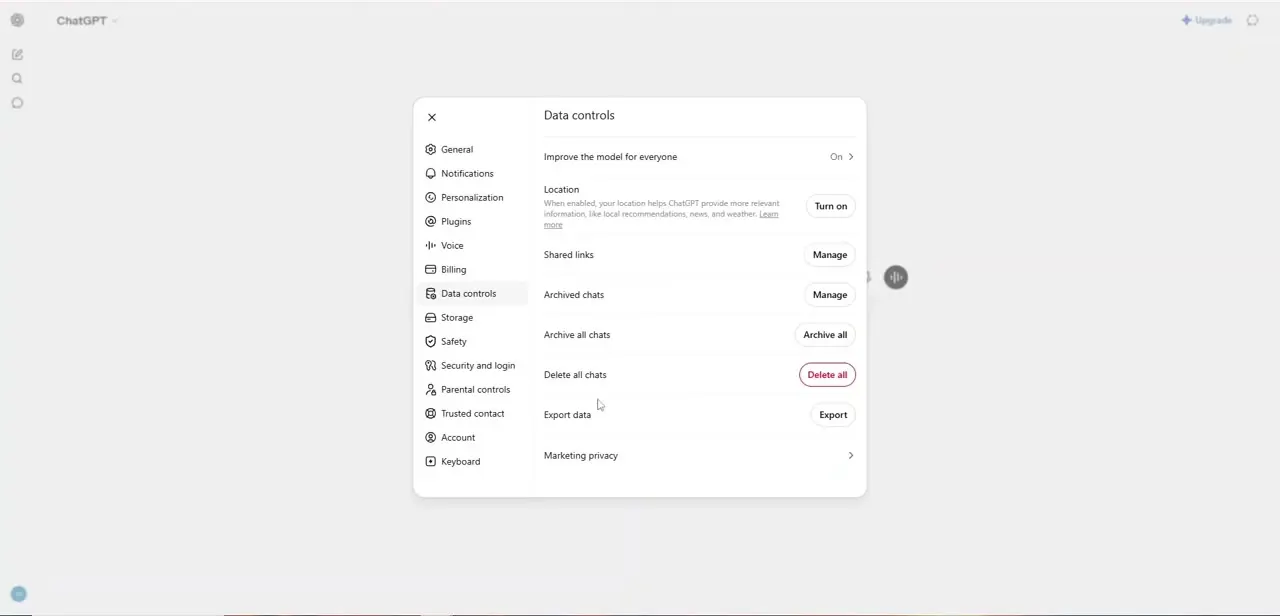
In the Settings panel, click Data controls in the left-hand list. This section handles everything related to your stored data: whether your chats train the model, your archived and shared links, and — at the bottom — a row labeled "Export data" with a button simply marked Export. The same screen also holds Delete all chats and Archive all chats, so it's worth a second look before you click anything, since the export button sits directly above a permanent delete action.
04Request the export and confirm
Click Export, and ChatGPT will show a short confirmation dialog explaining that a download link will be emailed to the address on your account. Confirm the request.
There's no progress bar or in-app notification after this — the export is generated in the background, so closing the tab at this point is completely fine and won't cancel anything. If you have a very large chat history built up over years of daily use, the generation step can take a little longer than a fresh account with only a handful of conversations, so don't assume something's broken if the email doesn't land within the first minute.
05Retrieve the file from your inbox
Within a few minutes, an email arrives from OpenAI with a download link. Click through and save the file, which typically arrives as a ZIP archive containing your conversations in a structured format alongside any files or images you'd shared in chats.
Download it promptly — export links are time-limited and will stop working after a set window, usually within 24 hours, which means this isn't something to request on a Friday and plan to pick up the following week. If the email doesn't show up at all, check spam first before requesting a second export, since it's easy for an automated message like this to get filtered.
06Make sense of what's inside
Unzip the archive and you'll find a conversations file that lists every chat with its messages, timestamps, and model used, plus separate folders for any uploaded or generated files. It's not formatted for casual reading — it's structured data, meant to be searched, filtered, or imported into another tool rather than read top to bottom like a document. If you just need one specific conversation in a readable form, search the file for a distinctive phrase from that chat rather than scrolling through everything.
07Put the export to work
Once you have the file, the real value comes from what you do with it. Marketers pull winning prompts and outputs into a shared doc for the team instead of retyping a good prompt from memory weeks later.
Support and consulting teams archive client conversations for compliance instead of relying on chat history staying available forever inside a single account. And because the export is structured data, it's straightforward to feed into an automation tool or script that files conversations into your project management system automatically, which is a lot more reliable than anyone remembering to copy and paste at the end of every session. Set a recurring reminder to export every month or quarter if you're using ChatGPT heavily for client or team work — treating it like any other backup rather than a one-time cleanup task keeps you from ever facing a total loss if something happens to the account.
Frequently asked questions
Why use the export tool instead of copy and paste?
The export tool captures your entire chat history — messages, timestamps, and attached files — in one request, while copy and paste only grabs what's currently visible on screen and has to be repeated for every conversation.
Where exactly is the export option in ChatGPT?
Click your profile in the sidebar, open Settings, then go to Data controls. The "Export data" button is near the bottom of that page, just above Delete all chats.
How long does it take to get my exported chats?
The export is emailed as a download link, usually within a few minutes of requesting it. The link expires after a set window, so download the file soon after it arrives rather than leaving it for later.
Can I export just one conversation instead of everything?
No — the built-in export pulls your whole account history at once. If you only need a single conversation, it's faster to search the exported file for that chat than to request a separate export.
Is the exported file usable for automation or reporting?
Yes. It comes as structured data rather than plain text, which makes it easier to import into a project management tool, a script, or a reporting workflow than anything you'd get from manually copied text.
About the author

Impran M N
I've been hooked on technology for as long as I can remember — especially the new tools and AI apps that seem to land every other week. Easy Tech Tuts is where I write up whatever I've just worked out: I do the task in the real product, record the screen, and turn it into the guide I wish I'd found first.