 Easy Tech Tuts
How to Delete Images From ChatGPT Library | Clean Up Your Account | Easily 2026
By Impran M N
Every image you generate or upload in ChatGPT gets saved to your Library by default, and that list grows fast if you're testing prompts or iterating on visuals across multiple variations before landing on one you actually like. Left unchecked, the useful images end up buried under dozens of throwaway drafts, most of them saved under a generic auto-numbered name that gives you no clue what's actually in them.
That's a real problem if you use ChatGPT regularly for design work, marketing assets, or any task where you're generating several attempts per idea — the Library stops being a quick reference and turns into a scroll-and-guess exercise. This guide walks through opening the Library, telling images apart from your other saved files, and actually removing the ones you don't need, plus what that deletion does and doesn't affect elsewhere in your account.
01Open your ChatGPT Library
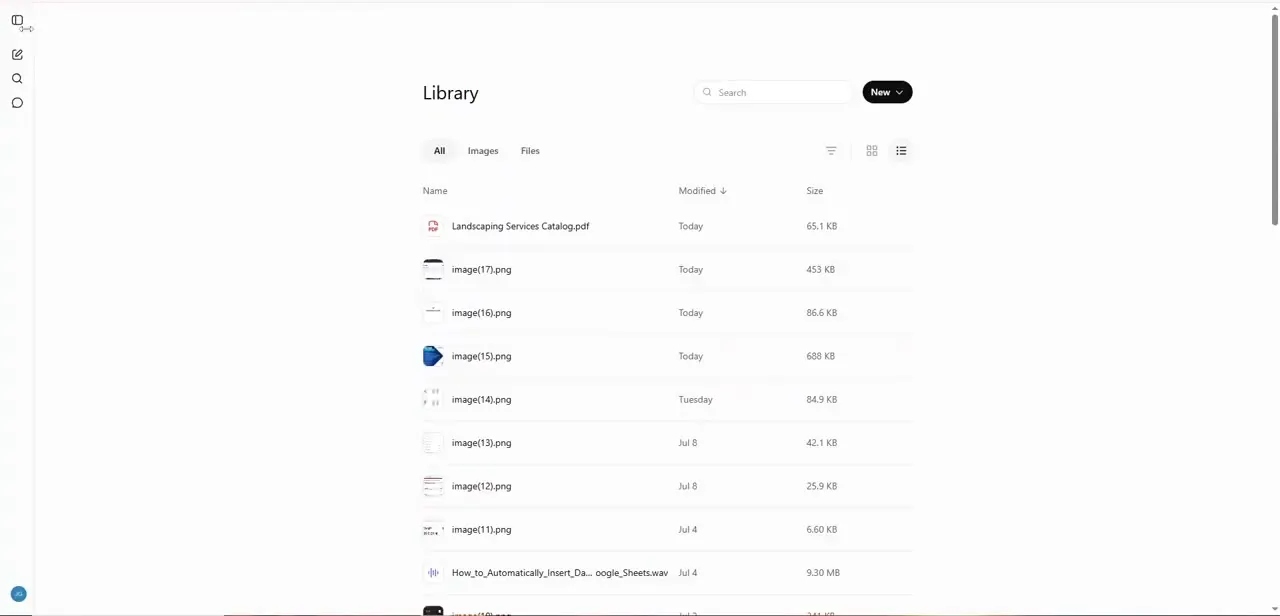
Click the Library icon in the left sidebar of ChatGPT to open a dedicated view of everything you've saved — not just images, but PDFs, audio files, and other uploads too. The default view shows everything mixed together, sorted by when it was last modified, with the file name and size listed alongside each entry, along with a search bar and a New button at the top for starting a fresh generation without leaving this screen. It's a genuinely useful screen for spotting clutter, since you can see at a glance how many auto-named files like image(17).png have piled up over the past few weeks, sitting right next to unrelated documents and audio clips you'd saved for entirely different projects.
02Switch to the Images tab to filter out everything else
Above the file list, the Library offers three tabs: All, Images, and Files. Clicking Images narrows the view down to just your generated and uploaded pictures, which cuts out PDFs, audio clips, and other saved documents that would otherwise slow down your search. This is the fastest way to review what's actually in your image collection without scrolling past unrelated files, and it's especially useful if you also use ChatGPT to draft documents or transcribe audio, since those file types can otherwise dominate the mixed All view.
03Review before you remove anything
Scroll through the filtered list and look at file size and date together — very small files are often quick test generations, while larger, more recent ones are more likely to be work you actually want. Since most images share generic auto-generated names, hover or click into an item if you're not sure what it is before deleting it, rather than guessing from the filename alone. If you use the search bar at the top of the Library, you can also try searching by the date range or rough topic if you remember roughly when you generated something, which narrows a long list down considerably before you start deleting anything.
04Delete an image and confirm the action
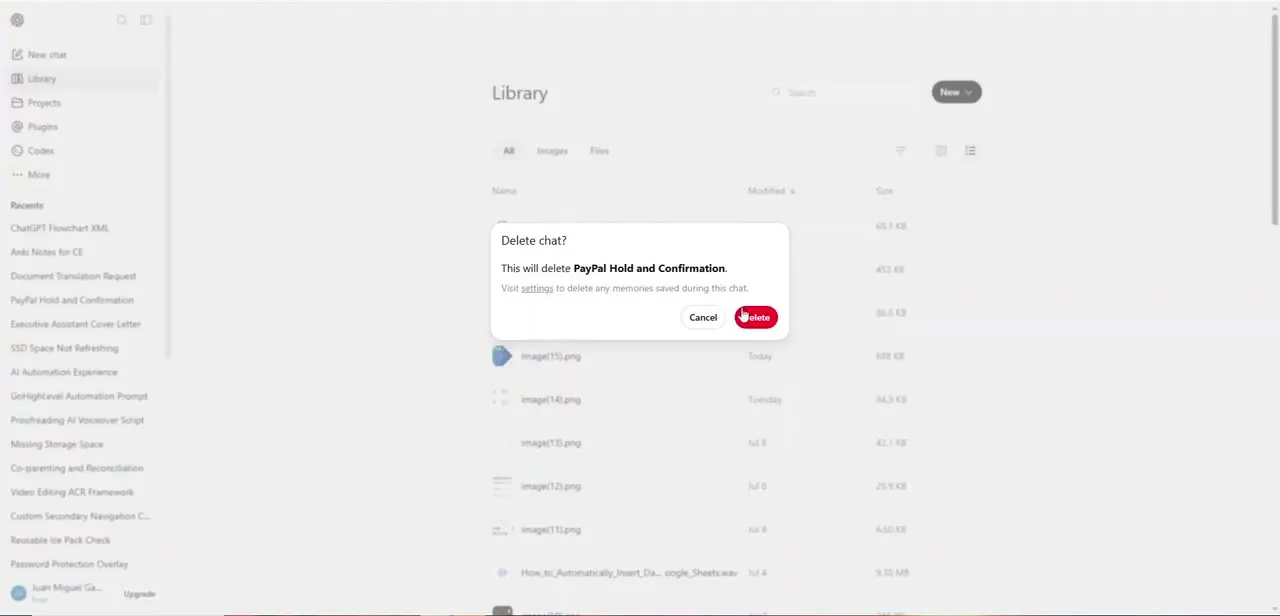
Select the image, choose delete, and ChatGPT shows a confirmation prompt before anything is actually removed — the same pattern it uses whenever you delete something from your account, whether that's an image or a saved conversation. The dialog names exactly what you're about to remove and requires a second click to confirm, which is a deliberate speed bump against accidental deletions.
Take that prompt seriously: once confirmed, the removal isn't something you can undo from within ChatGPT. It's worth reading the item name in that dialog carefully before confirming, especially if you're clicking through several deletions quickly in a row, since it's easy to lose track of exactly which file you last selected once you're a few items deep into a cleanup pass.
05Understand what deletion does and doesn't affect
Removing an image from your Library clears it from that saved collection, but it doesn't reach back into old conversations and strip the image out of the message where it was originally generated or discussed. If you need the picture referenced later in a specific chat, save a copy somewhere outside ChatGPT before you delete it from the Library, since the two are tracked separately and there's no way to restore a deleted Library entry from within a conversation afterward. This distinction matters most for anyone using generated images in ongoing client work — deleting a draft from the Library to tidy up doesn't undo the record of the conversation where you and the client discussed it.
06Repeat for the rest of your backlog
There's no bulk-select option here, so plan to work through your unwanted images one at a time rather than expecting a way to clear dozens at once. Working from newest to oldest is usually fastest, since recent test generations are the ones most people forget to clean up, and by the time you reach older images you'll already have a feel for which file sizes and dates are worth keeping. If your Library has years of accumulated files, don't try to clear the whole thing in one sitting — set aside ten minutes every few days and work backward through time instead, which keeps the task from feeling like a chore big enough to keep putting off.
07Make cleanup a habit, not a one-time project
A Library that's reviewed every so often stays genuinely useful — you can find the one image you actually need in seconds instead of scrolling past forty near-duplicates from projects you finished months ago. For anyone using ChatGPT for client or team work, a quick pass every week or two keeps the collection searchable and prevents the kind of clutter that makes people stop trusting the Library altogether and default back to saving everything locally instead. It's a small habit, but it pays off every single time you actually need to find something in a hurry.
Frequently asked questions
Can I delete multiple ChatGPT images at once?
No. The Library doesn't currently offer a bulk-select or multi-delete option, so each image has to be selected and removed individually.
Does deleting a Library image also remove it from the conversation where it was created?
No. Deleting from the Library clears that saved copy, but the image can still appear in the original chat where it was generated, since the two aren't linked for deletion purposes.
Is deleting an image from the Library reversible?
Treat it as permanent. ChatGPT shows a confirmation dialog before the deletion completes, but once you confirm, there's no built-in way to recover the file from within the app.
How do I filter out PDFs and other files so I only see images?
Open the Library and click the Images tab at the top of the file list. It narrows the view to just your generated and uploaded pictures, leaving files and audio out of the list.
Why should I bother cleaning up my ChatGPT Library?
A cluttered Library makes it slower to find the one image you actually need, especially since most generations share generic auto-numbered file names. Regular cleanup keeps the collection searchable and useful instead of just growing indefinitely.
About the author

Impran M N
I've been hooked on technology for as long as I can remember — especially the new tools and AI apps that seem to land every other week. Easy Tech Tuts is where I write up whatever I've just worked out: I do the task in the real product, record the screen, and turn it into the guide I wish I'd found first.