 Easy Tech Tuts
How to Integrate Asana With Slack, Connect Easily 2026
By Impran M N
Project tracking and team chat drift apart fast when they live in separate tabs — a task gets discussed in Slack, but the actual status update never makes it back to Asana, or vice versa. The official Asana app for Slack closes that gap by letting you create tasks straight from a message and giving your team a direct channel for Asana notifications inside the workspace they're already in. This guide covers installing the app, what the welcome flow actually sets up on first connection, and the two ways you'll turn chat into tracked work afterward.
01Install the Asana app from Slack's App Directory
From your Slack workspace, open Apps under the Tools menu and search for Asana. Select the official listing, click Add to Slack, and review the requested permissions before clicking Allow — this is what lets Asana post updates into your channels and lets Slack pass message content over to create tasks. You'll be redirected to sign in to Asana if you aren't already, using the account tied to the workspace you want connected.
02Know what project you're actually connecting
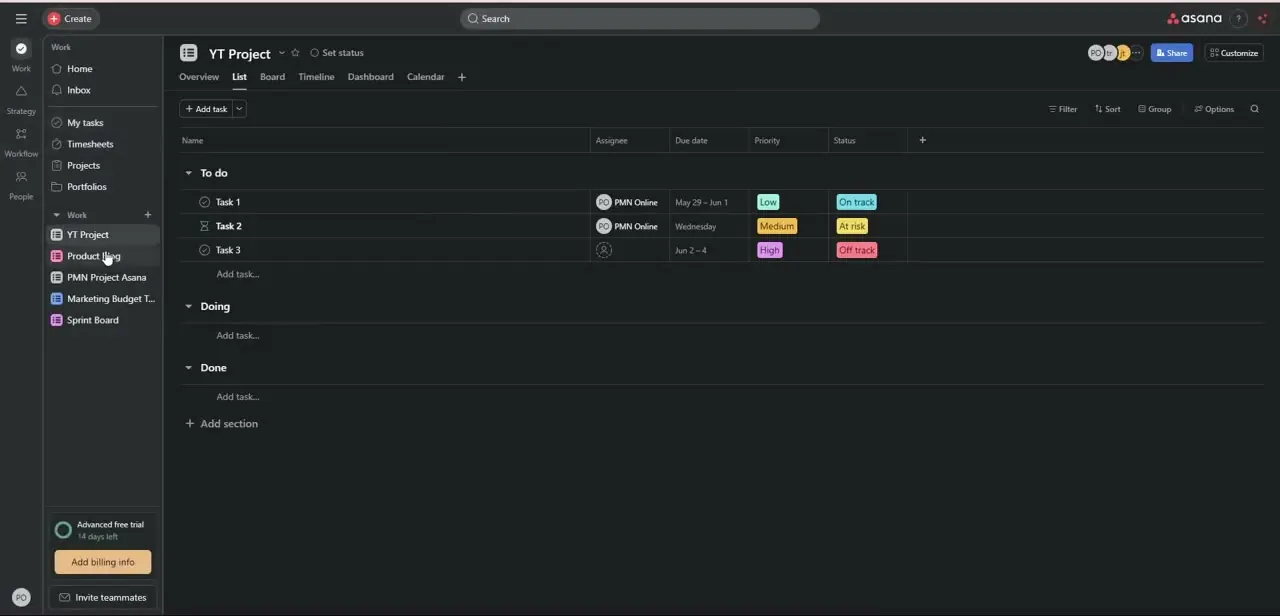
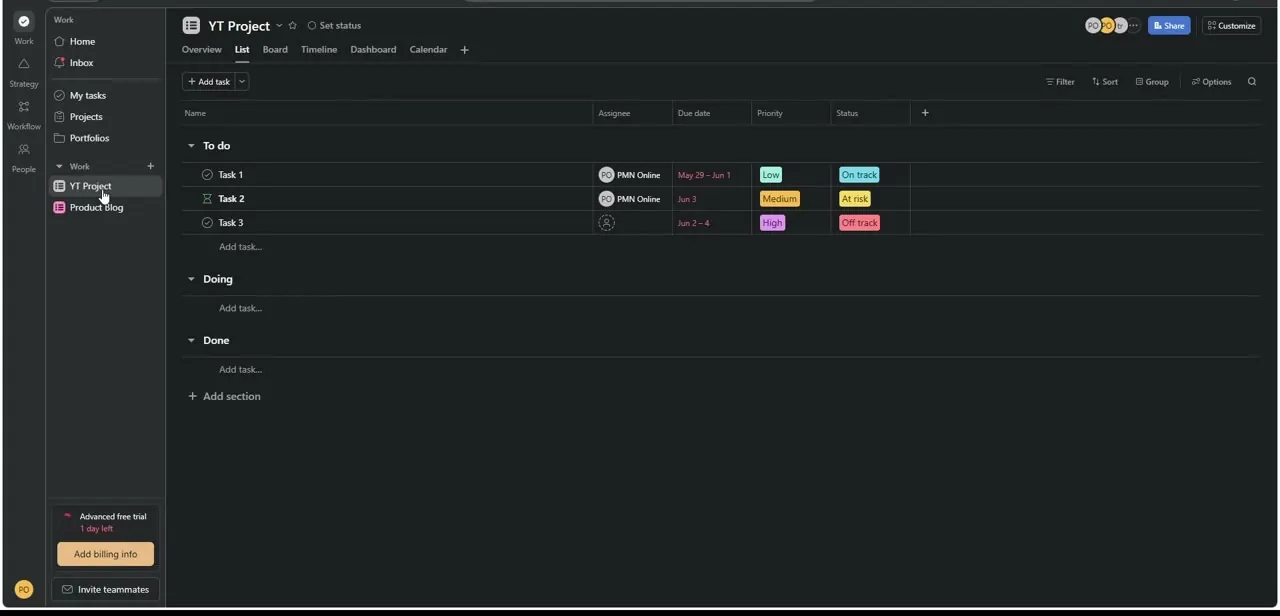
Before mapping anything, it helps to look at the Asana project itself — in this walkthrough, a project called "YT Project" with a standard To do, Doing, Done board and tasks carrying assignees, due dates, priority, and status columns. This is the layer that Slack updates will actually reflect: a task moving from At risk to On track in Asana is what shows up as a notification back in your channel, so it's worth confirming this is the right project before you link a channel to it.
03Add Slack from the Asana side too
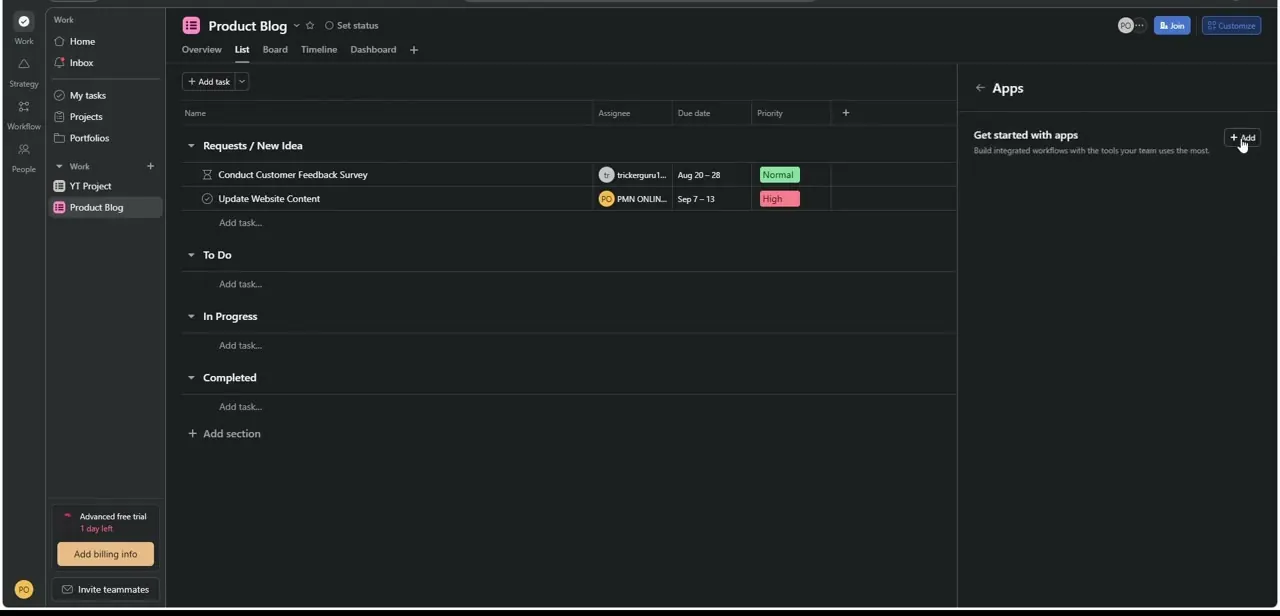
Integrations can also be started from inside Asana itself. Open a project, click the Apps icon in the side panel, and you'll see a "Get started with apps" prompt with an Add button — this is Asana's own directory for connecting outside tools, mirroring what you just did from the Slack side. Doing this per-project is useful if you only want certain projects, like a specific client board, feeding into Slack rather than everything in your Asana account at once.
04Confirm the connection with the welcome message
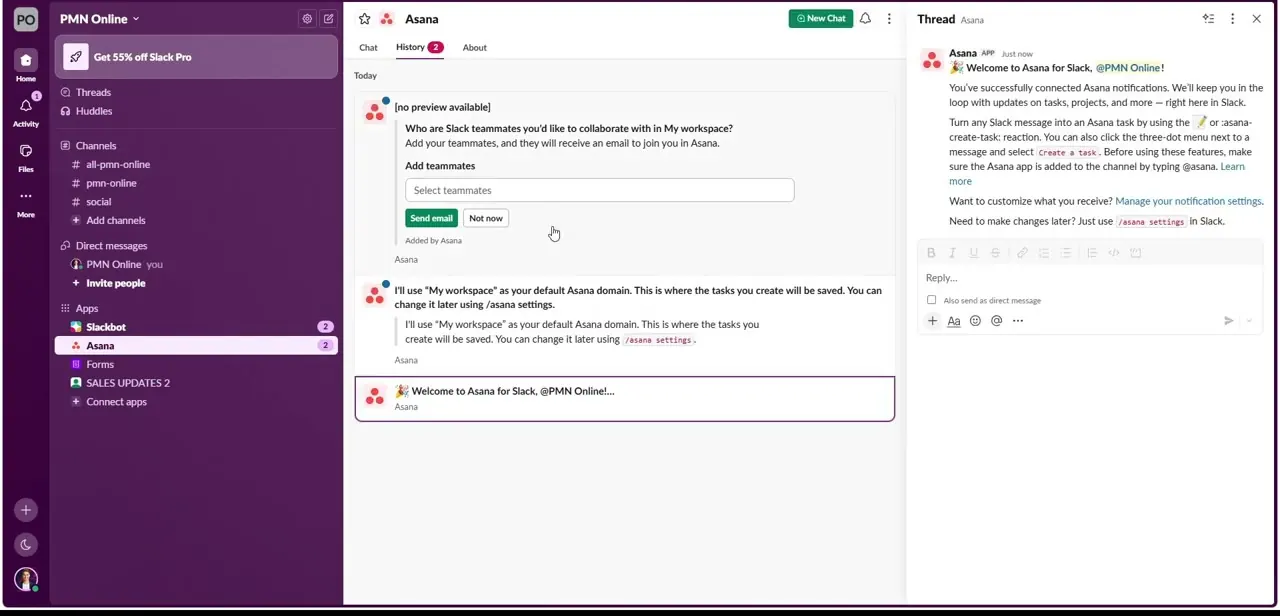
Once linked, Asana posts a welcome thread directly in Slack confirming the setup and explaining what teammates to loop in. It also states the defaults it's applying — for example, using "My workspace" as the default Asana domain for any task you create until you change it, which it tells you how to do with the /asana settings command. Read this message in full the first time; it's effectively the setup documentation the integration hands you, rather than something buried in a help center.
05Turn a Slack message into an Asana task
Once the app is added to a channel — done by typing @asana in that channel — you get two ways to convert a message into a task: react to it with the checkmark or :asana-create-task: emoji, or hover over the message, open the three-dot menu, and select Create a task. Either method carries the message text over as the task's starting content, so you can add an assignee, due date, and project before saving without leaving Slack.
06Adjust notifications and settings as you go
If the channel starts feeling noisy with every task update, the welcome message points you to a notification settings link where you can choose what Asana actually pushes into Slack versus what stays quiet. Anything about the connection itself — default workspace, linked project, permissions — is changed later with the same /asana settings command rather than reinstalling the app, so treat that command as your control panel for the integration going forward.
Frequently asked questions
Will task status updates show up automatically in Slack?
Yes, once a project is connected and the Asana app is added to a channel, status changes and new task alerts can stream in automatically, with notification detail configurable from the app's settings.
Can I create tasks assigned to specific teammates from Slack?
Yes, after turning a message into a task with the reaction or the three-dot menu's Create a task option, you can set an assignee, due date, and project before it's saved to Asana.
Do I need an Asana account to use this integration?
Yes, you need an active Asana account with access to the workspace and project you want connected — the app defaults to "My workspace" until you change it.
Can I change the settings later without reinstalling?
Yes, use the /asana settings command inside Slack at any time to adjust the default workspace, linked project, or other connection details.
Can I add Slack from inside Asana instead of Slack's App Directory?
Yes, opening a project's Apps panel in Asana and clicking Add starts the same kind of connection from that side, which is useful for linking specific projects one at a time.
About the author

Impran M N
I've been hooked on technology for as long as I can remember — especially the new tools and AI apps that seem to land every other week. Easy Tech Tuts is where I write up whatever I've just worked out: I do the task in the real product, record the screen, and turn it into the guide I wish I'd found first.