 Easy Tech Tuts
Zapier vs Make vs N8n, Best Zapier Alternative from Make com, N8N, IFTTT & Workato
By Impran M N
Choosing an automation platform isn't just about picking the most popular name, since Zapier, Make, N8n, IFTTT, and Workato are built around genuinely different ideas of what "easy" and "powerful" mean. Zapier optimizes for a clean linear setup, Make trades some of that simplicity for branching visual logic, and N8n hands you the most control at the cost of doing more yourself. This comparison looks at what each tool's own interface actually shows — a Zapier flow, a Make scenario with a router, and N8n's pricing tiers — so you can weigh them against your own workflow instead of a feature checklist.
01Zapier: linear, fast to build, easy to read
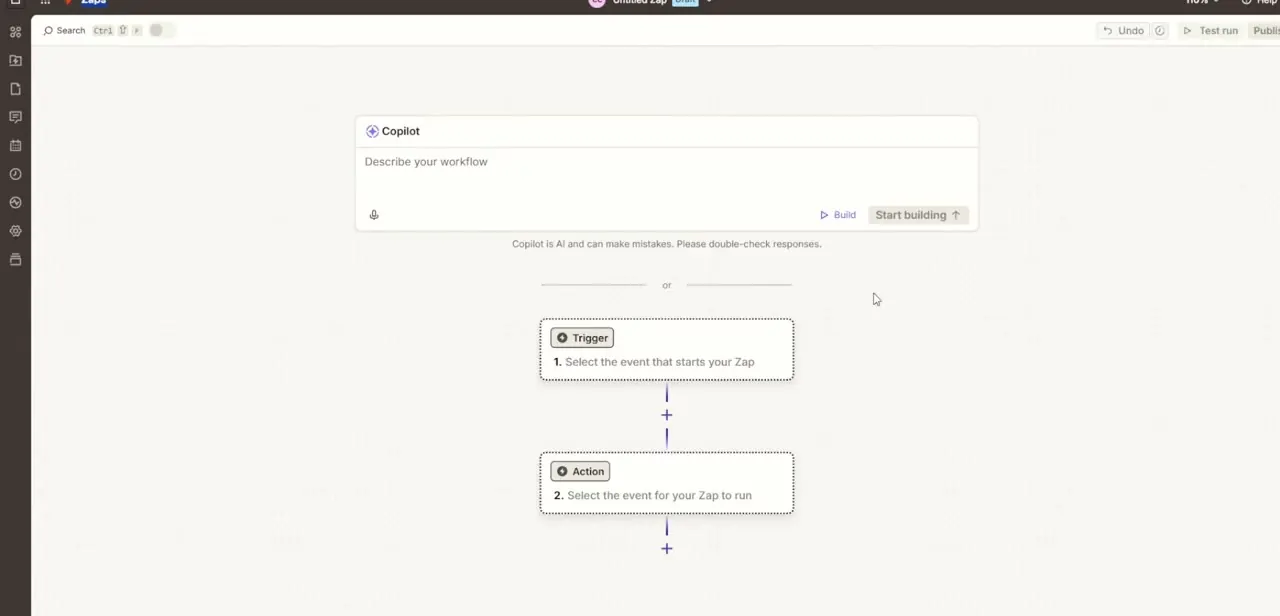
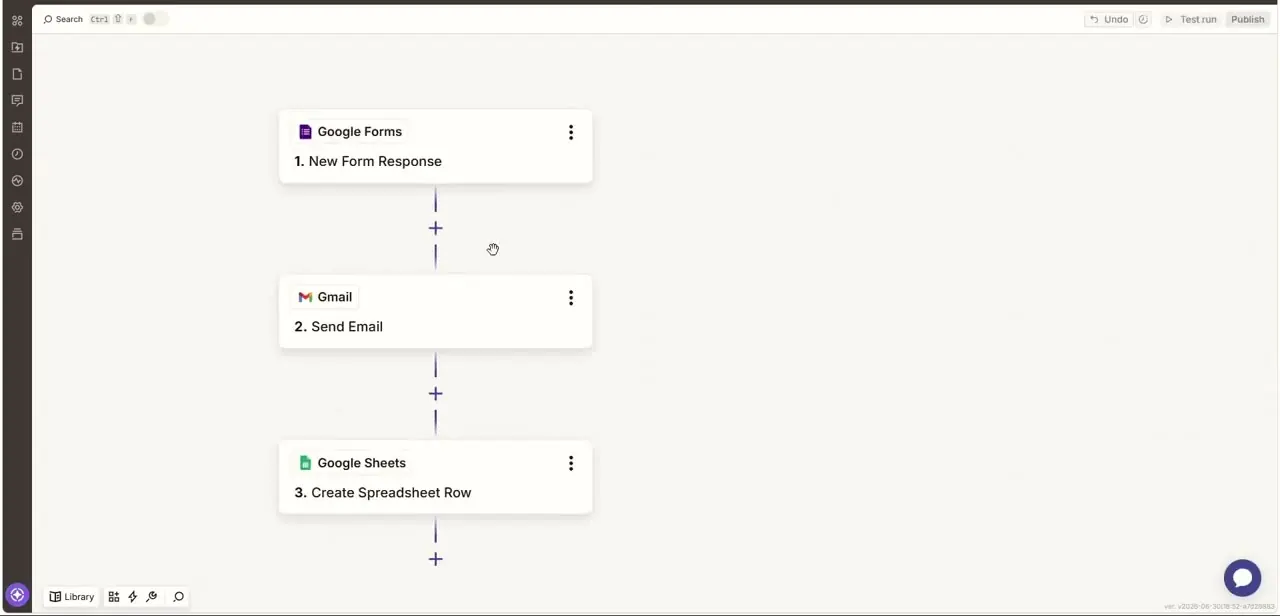
A typical Zapier flow reads top to bottom as a straight chain — trigger, then a plus icon, then the next action. A simple example: a Google Forms submission triggers a Gmail step to send an email, which then feeds a Google Sheets step to log the response as a new spreadsheet row. There's no canvas to arrange, no branches to route manually — each step just connects to the next one in a clean vertical line, which is exactly why Zapier is the fastest option to get a beginner from zero to a working automation.
02Make: a visual canvas built for branching logic
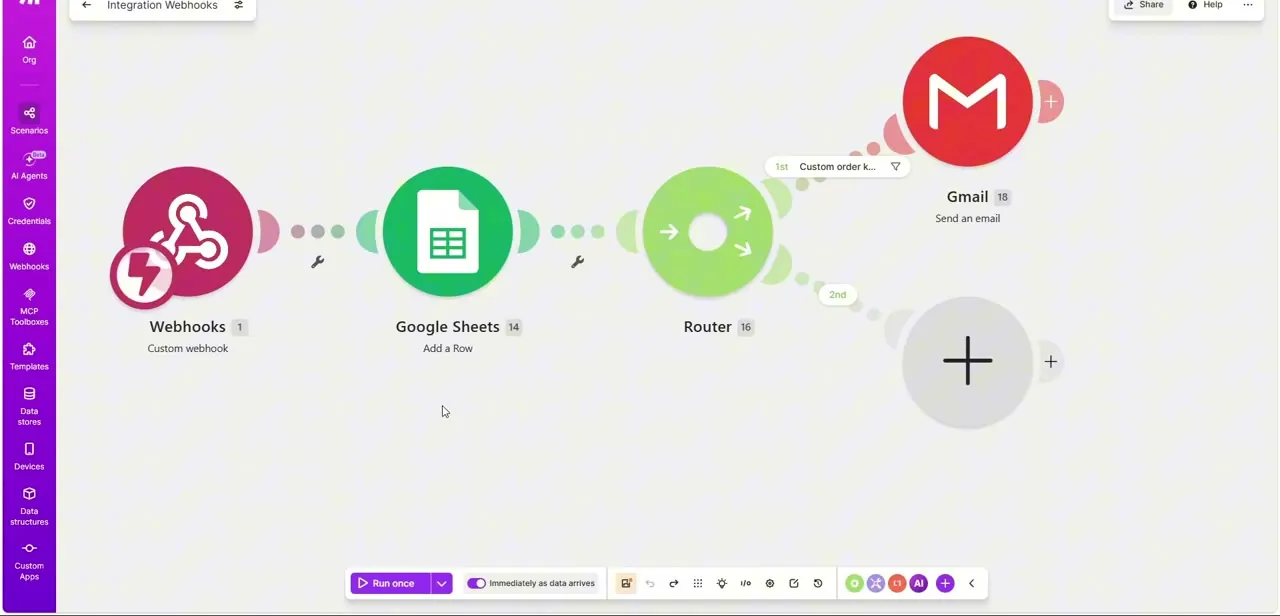
Make's scenario builder is a free-form canvas rather than a vertical list, and it shows immediately once a workflow needs to make a decision. One real scenario built from Webhooks, Google Sheets, and a Router module splits into multiple paths from a single incoming event — one branch conditioned on "Custom order k..." heading to Gmail, another route waiting to be filled in. That Router module is the core reason people move from Zapier to Make: it lets one trigger fan out into several conditional outcomes without duct-taping together multiple separate Zaps.
03Make also handles AI-agent style automations
Beyond simple branching, Make's canvas scales up to more involved chains — a scenario named "Social Media Comment Responder" strings together a YouTube trigger, a step that retrieves video information, a Make AI Agents module, and a Slack notification, all connected by dotted lines showing the data path. It's still a visual canvas, but the individual nodes can now represent AI reasoning steps rather than plain app actions, which is where Make starts to overlap with more code-first tools.
04N8n: open-source control at a real dollar cost
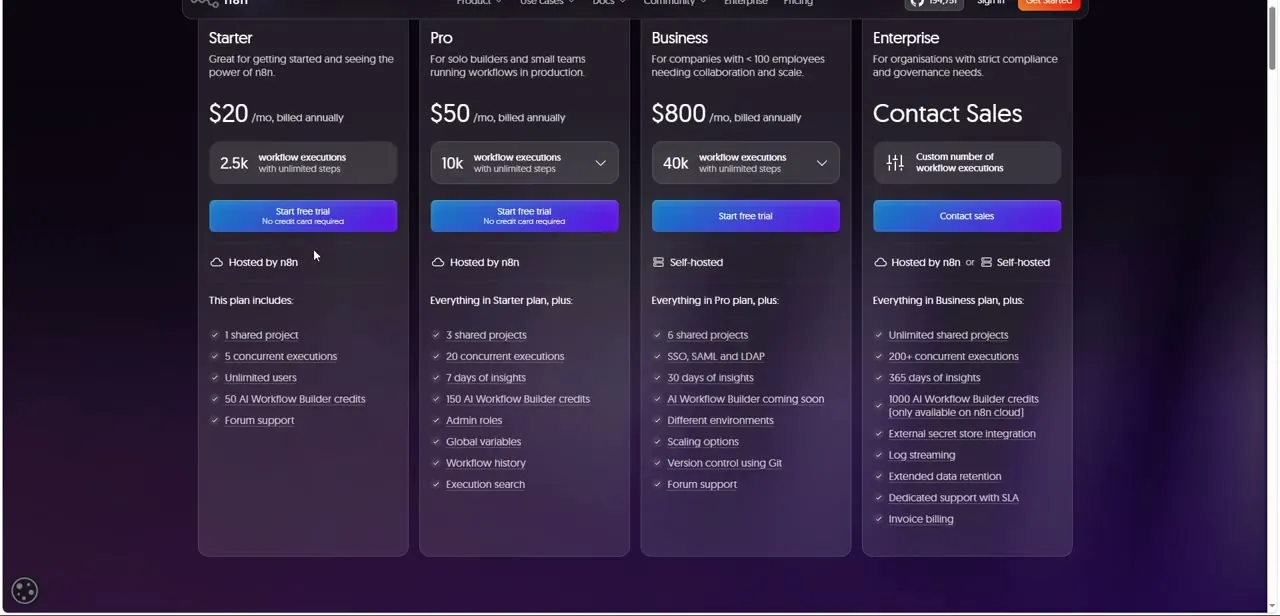
N8n's pitch is different from either of the above — it's open-source and self-hostable, meaning the same automation engine runs on infrastructure you control instead of a vendor's servers. Its published pricing tiers make that trade-off explicit: a Starter plan at $20/month billed annually covers 2,500 workflow executions with unlimited steps, Pro runs $50/month for 10,000 executions and features like SSO and workflow history, and Business jumps to $800/month for 40,000 executions with self-hosting and scaling options built in. Enterprise is quote-based for organizations with compliance and governance needs.
05Consider IFTTT for personal, low-stakes automations
IFTTT leans toward simple, consumer-facing triggers — a smart-home event, a social post, a calendar change — rather than the multi-step business workflows Zapier, Make, and N8n are built for. It's worth keeping in the running if your automation needs are genuinely personal and don't need branching logic, error handling, or team collaboration.
06Consider Workato for enterprise governance
Workato sits at the opposite end from IFTTT — it's built for larger organizations that need centralized governance, audit trails, and integration depth across many business-critical systems at once. If you're evaluating automation tools for a team that already has IT and security requirements to satisfy, Workato's enterprise focus is worth the higher price of entry that the smaller tools don't ask for.
07Match the tool to your workflow, not the hype
Start from what your workflow actually needs: a straight-line trigger-to-action chain points toward Zapier, a workflow with real branching or conditional routing points toward Make, and a need for self-hosting or heavier customization points toward N8n. Budget matters too — N8n's tiered pricing rewards technical teams willing to manage more themselves, while Zapier and Make trade some of that control for a faster setup and less infrastructure to maintain.
Frequently asked questions
Which is easiest for beginners: Zapier, Make, or N8n?
Zapier is generally the easiest to pick up — its flows read as a simple top-to-bottom chain with no canvas to arrange, while Make and N8n offer more power at the cost of a steeper learning curve.
Is N8n free to use?
N8n is open-source and can be self-hosted for free, though its published cloud plans start at $20/month for a Starter tier with 2,500 workflow executions if you'd rather not manage the hosting yourself.
Is Make better than Zapier for complex workflows?
Make's visual canvas and Router module handle branching, multi-path automations more naturally than Zapier's linear trigger-to-action structure, which is the main reason teams outgrow Zapier and move to Make.
When does it make sense to use Workato instead of Zapier?
Workato tends to make more sense for larger organizations that need stronger governance, audit trails, and integration depth than Zapier, Make, or N8n typically offer out of the box.
Can Make or N8n build AI-agent style automations?
Yes. Make has a dedicated AI Agents module that can sit inside a scenario alongside regular app steps, and N8n markets itself specifically around anchoring AI agents in deterministic, monitored logic.
About the author

Impran M N
I've been hooked on technology for as long as I can remember — especially the new tools and AI apps that seem to land every other week. Easy Tech Tuts is where I write up whatever I've just worked out: I do the task in the real product, record the screen, and turn it into the guide I wish I'd found first.