 Easy Tech Tuts
How To Link Data From Cells In Different Sheets In Smartsheet Easily 2026
By Impran M N
Copy-pasting data between sheets breaks the moment the source changes, leaving you with a summary that quietly goes stale. Smartsheet's cell linking feature keeps a live connection instead, pulling task names, dates, and completion percentages from a source sheet into a destination one so they update on their own. This guide covers preparing a destination sheet, opening the Link from Cell in Other Sheet wizard, and confirming the link actually took once you're back in your own grid.
01Understand what a live link actually does
A standard copy-paste captures a snapshot: the data lands in your sheet and then sits there, disconnected from wherever it came from. A cell link is different, it keeps a running connection to the source cell, so if that source value changes later, the linked cell updates too, without you touching it again. That distinction matters most for portfolio or summary sheets that are supposed to reflect the current state of several project sheets at once.
02Prepare your destination sheet
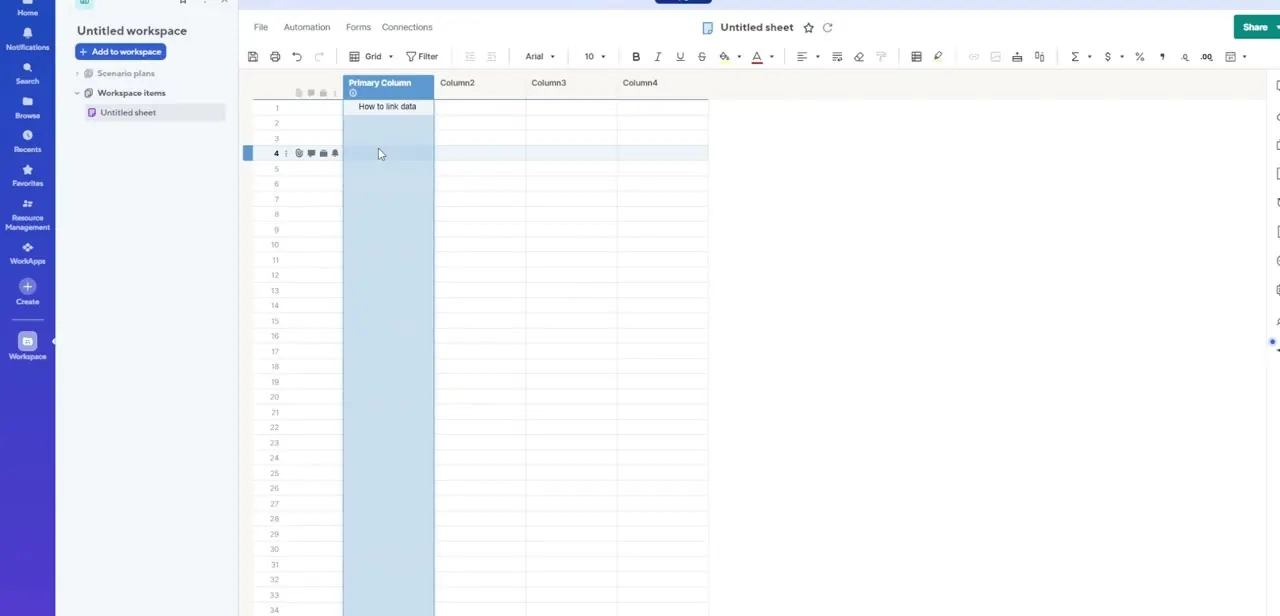
Set up the sheet that will receive the linked data, giving its Primary Column a clear label so it's obvious later what the pulled-in values represent. A short heading like the one shown here keeps the destination sheet self-explanatory even after you've forgotten the exact source it's pulling from.
03Open Link from Cell in Other Sheet
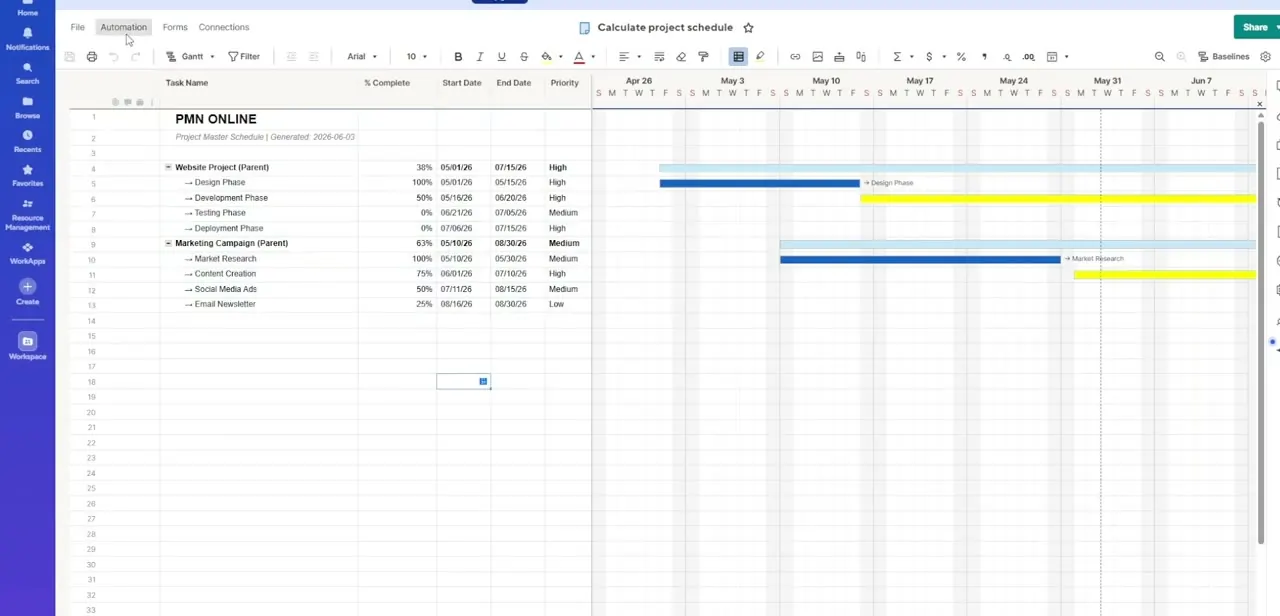
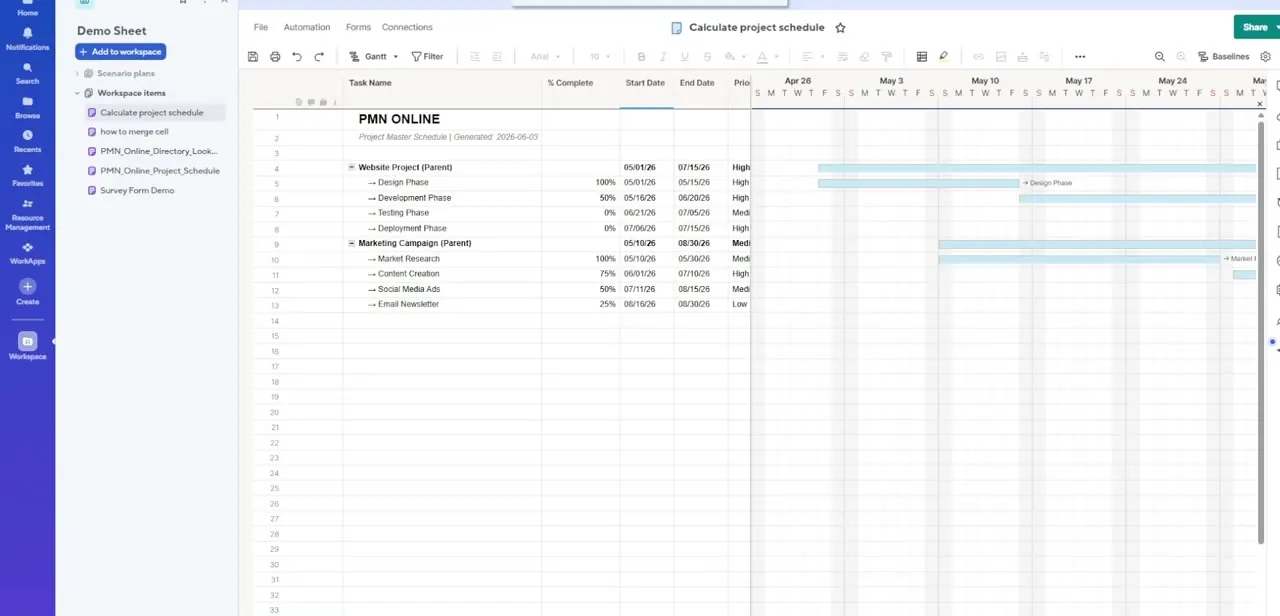
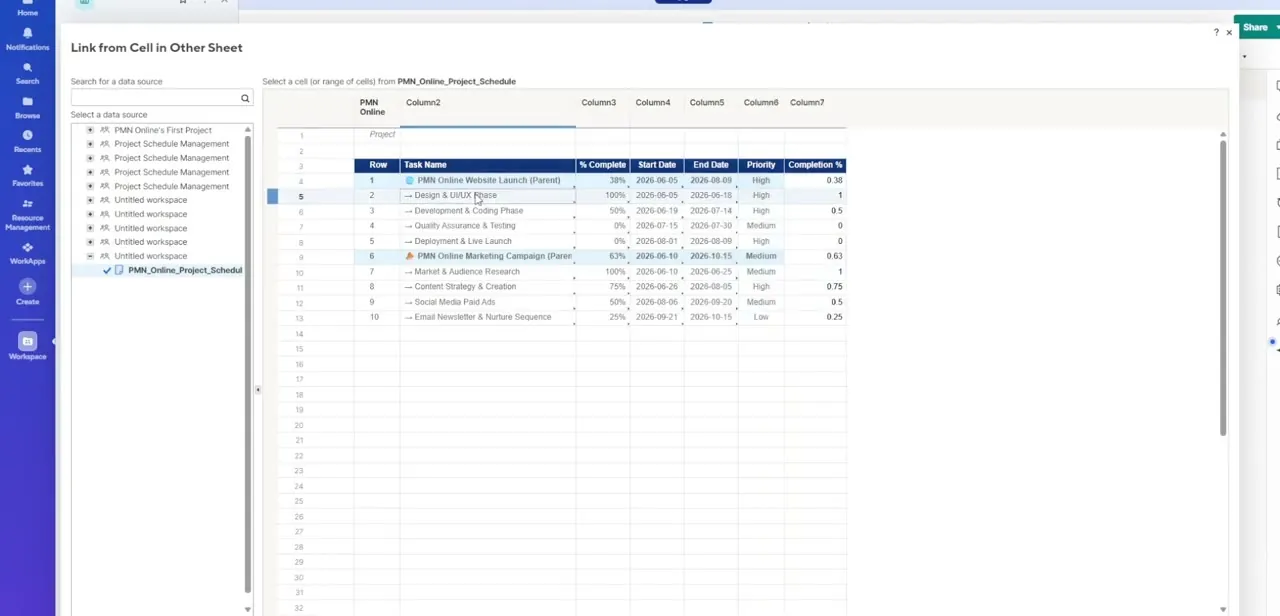
Select the cell where you want the incoming data to land, then use the Link from Cell in Other Sheet feature to launch the wizard. It opens with a workspace directory on the left, listing every sheet you have access to, and a live preview of the currently selected source sheet on the right. In the example here, the source is a project schedule with columns for Task Name, % Complete, Start Date, End Date, Priority, and a Completion % field, with row numbers along the left edge for precise selection.
04Select your source cells and confirm
Click the specific cell or drag across a range in the preview grid to choose exactly what feeds into your destination sheet. You can link a single value, like one task's completion percentage, or select a full column of task names to bulk-link an entire block at once, which is faster than repeating the wizard row by row when you're building out a summary sheet.
05Check the result in your destination sheet
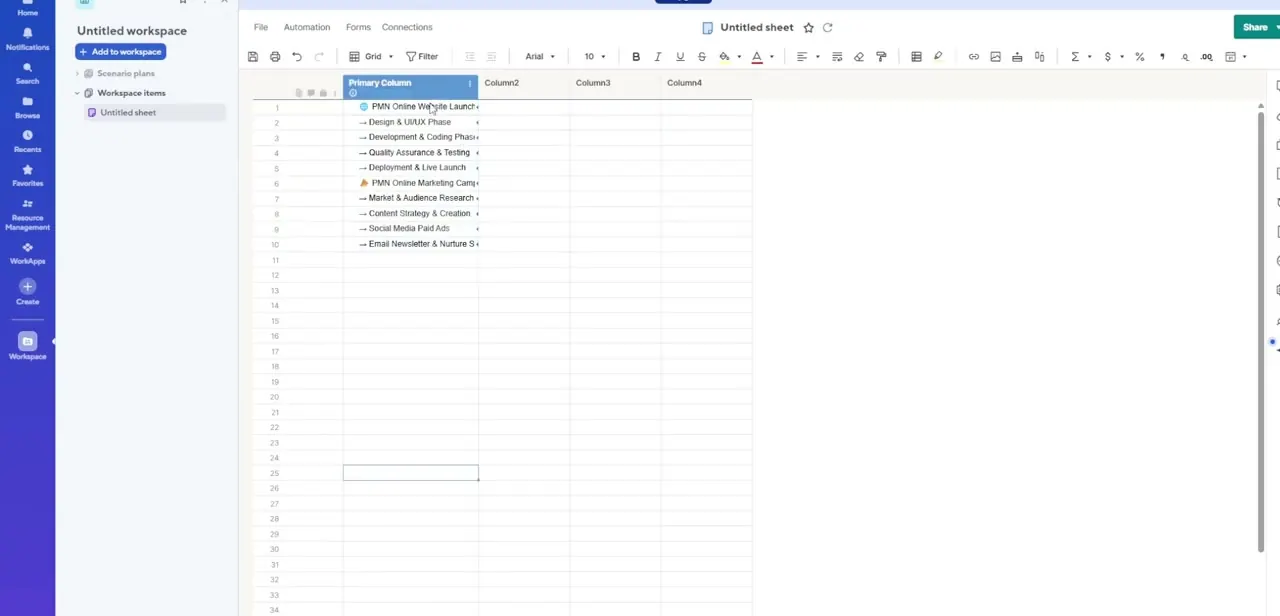
Back in your own sheet, the linked cells now display the pulled-in values, in this case a full list of task names from the source project schedule, each with a small link indicator next to it. That indicator is your visual confirmation the cell is live rather than static text, and it's what you'd look for later if you're auditing which fields on a sheet are actually connected versus manually typed.
06Read the link direction indicators
Smartsheet marks linked cells with directional arrow icons, distinguishing cells receiving an inbound feed from cells sending data out to another sheet. Getting comfortable reading these at a glance saves you from second-guessing whether a number on a dashboard sheet is the source of truth or just a mirror of one.
07Preserve links when you restructure
Cell links can break if you delete the source row, rename the source sheet in a way that orphans the reference, or otherwise restructure columns without checking what's connected to them first. Before doing any major cleanup on a sheet you know feeds other sheets, it's worth a quick check of what's linked to it so you don't quietly break a portfolio dashboard three clicks away.
Frequently asked questions
What's the difference between linking cells and copy-pasting?
A cell link stays live and updates automatically when the source changes, while copy-pasting only captures a static snapshot at the moment you pasted it.
Can I link a whole range of cells at once?
Yes, you can select or drag across multiple rows in the source preview to bulk-link a data block in one pass through the wizard.
How do I tell if a cell is linked?
Linked cells display a small directional arrow icon showing whether the cell is receiving data from another sheet or sending it out.
Will restructuring my columns break the link?
It can, especially if you delete the source row or rename the sheet, so it's best practice to check what's linked before making structural changes.
About the author

Impran M N
I've been hooked on technology for as long as I can remember — especially the new tools and AI apps that seem to land every other week. Easy Tech Tuts is where I write up whatever I've just worked out: I do the task in the real product, record the screen, and turn it into the guide I wish I'd found first.