 Easy Tech Tuts
How to Do a Subitem Rollup in Monday.com Easily 2026
By Impran M N
When a task has several subitems tracking their own status or progress, checking each one individually to gauge overall progress gets tedious fast. Monday.com's rollup feature solves this by summarizing subitem data directly onto the parent row, so a glance at the main board tells you what would otherwise take opening every subitem to piece together. This guide follows the actual click path on a sprint board — from a task with a subitem attached, through the column setting that turns on the rollup, to the summary showing up on the parent row.
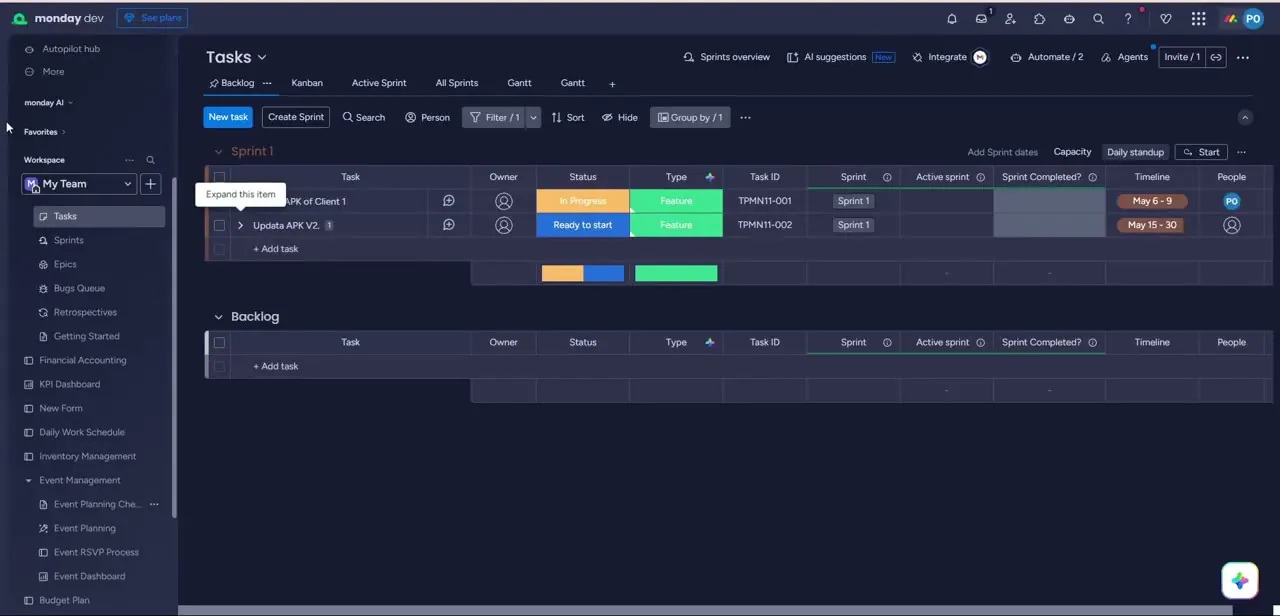
01Find a task that already has subitems
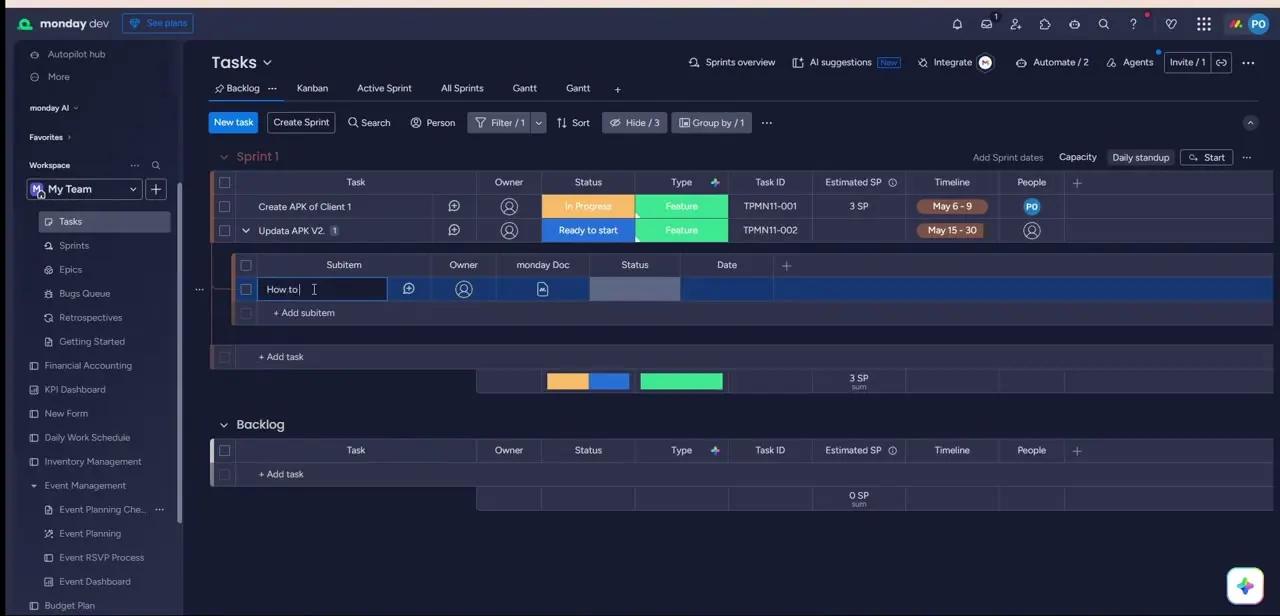
On a working board like a sprint backlog, tasks with subitems attached show a small count badge next to their name — a task called "Updata APK V2" with a "1" badge means one subitem is nested underneath it, collapsed by default. Hovering over the row surfaces an expand control so you can open it up and see what's inside. This is the starting point for a rollup: you need at least one subitem with a trackable column, like Status or Numbers, before there's anything to summarize.
02Expand the subitem table
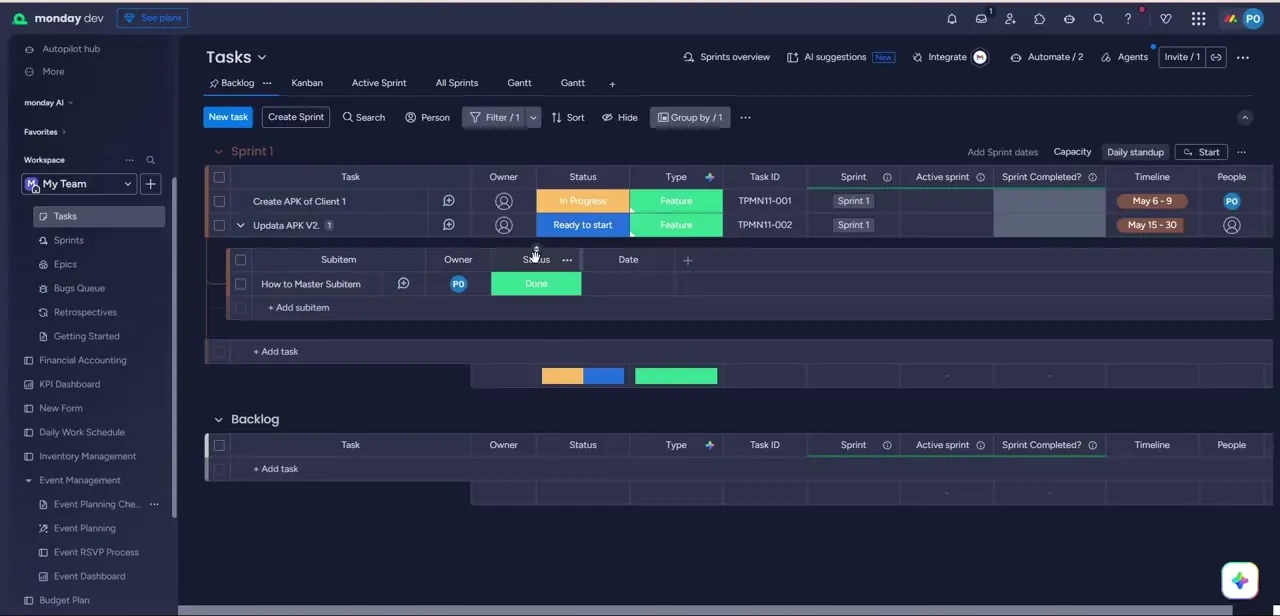
Clicking the expand arrow opens a mini table nested directly under the parent task, with its own header row: Subitem, Owner, Status, Date, and an option to add more columns. In this example, the subitem "How to Master Subitem" already has its Status column set to Done. This nested table behaves like a small board of its own — you can add more subitems, assign owners, and set statuses independently of the parent task above it.
03Open the column menu and turn on the rollup
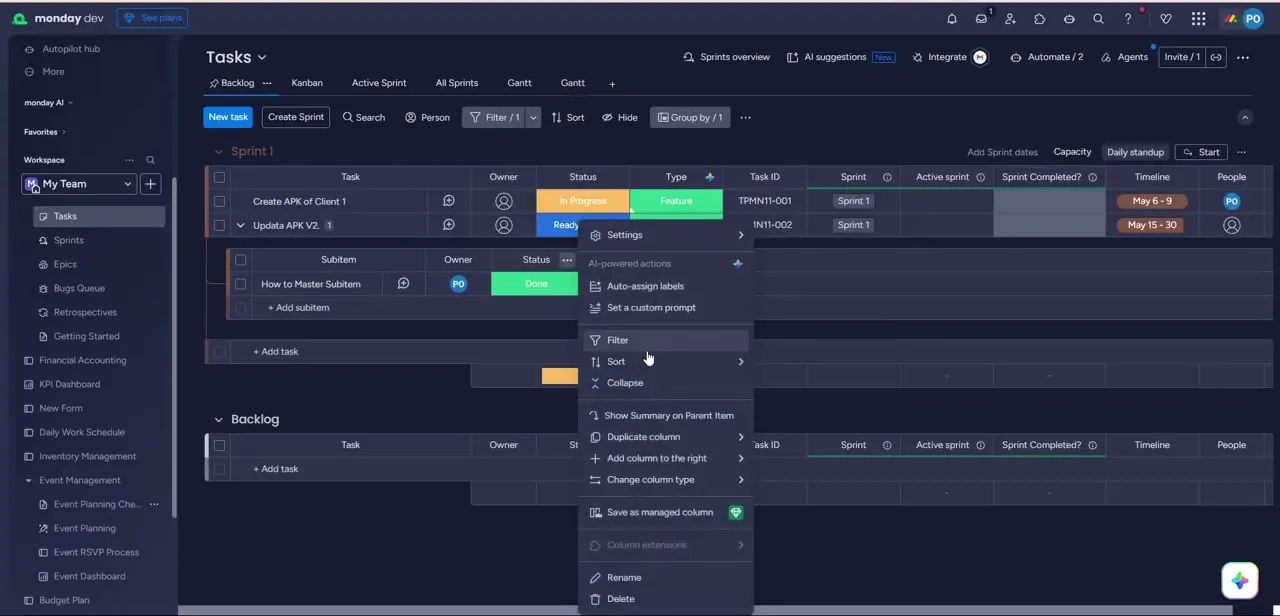
Click the three-dot menu on the subitem Status column header to open its settings. Beyond the expected Filter, Sort, and Collapse options, and a set of AI-powered actions, you'll find Show Summary on Parent Item partway down the list.
This single toggle is the entire rollup setup — no separate configuration screen, no formula to write. Clicking it tells Monday.com to compute a summary from every subitem under that column and surface it on the parent row.
04See the summary appear on the parent row
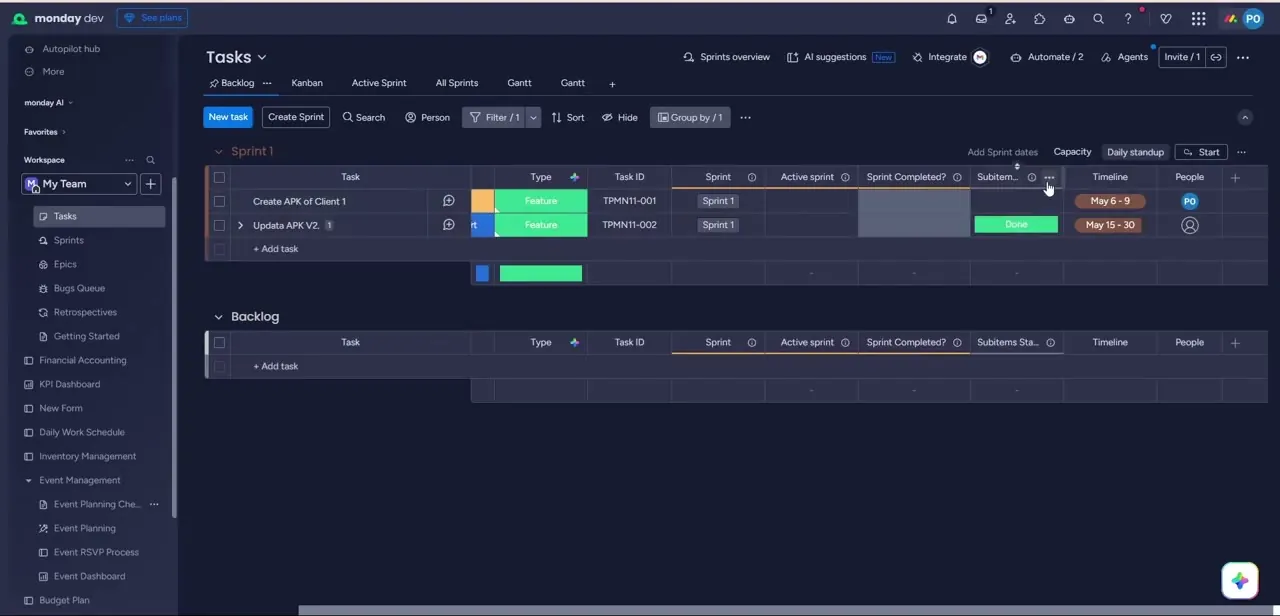
Once enabled, a new column — labeled something like "Subitems Sta..." when truncated — appears on the parent-level board view, sitting alongside the task's other columns like Type, Task ID, and Timeline. For a Status column, the summary shows the subitem's status value directly (Done, in this case), rendered with the same color as it has at the subitem level. Now you can scan the whole board and know which tasks have finished subitems without expanding a single one.
05Match the rollup type to the column
What the rollup actually calculates depends on the column type you're summarizing. A Status column rolls up as the underlying value or, with multiple subitems in different states, as a progress indicator.
A Numbers column set to track hours or budget rolls up as a sum, average, min, max, or count, configurable from the same column settings — a budget column would typically use sum, while an estimate column might use average. Pick the aggregation that answers the question you actually care about, since a sum and an average tell very different stories from the same subitem data.
06Put the rolled-up column to work
Once a rollup column exists at the parent level, it behaves like any other column for filtering and sorting — you can filter the board to only show tasks where the rolled-up status isn't Done yet, or sort by rolled-up budget to see which parent tasks are running heaviest. It's also available as a trigger or condition inside automation recipes, so you could notify a manager the moment every subitem under a task reaches Done. This is where the rollup earns its keep: it's not just a display convenience, it's live data you can build logic around.
Frequently asked questions
How do I get subitem data to show on the parent row?
Open the three-dot menu on the subitem column you want to summarize and click Show Summary on Parent Item. A matching column appears at the parent level showing the rolled-up value.
What kinds of rollup calculations are available?
It depends on the column type. Numbers columns can roll up as sum, average, min, max, or count; Status columns roll up as the value itself or a completion indicator across subitems.
Do I need a subitem before I can set up a rollup?
Yes. The rollup summarizes existing subitem data, so at least one subitem with the column you want to track needs to exist under the parent task first.
Can I filter or sort a board by rolled-up subitem data?
Yes. Once the summary column appears on the parent row, it behaves like any other column and can be used in filters, sorting, and automation recipes.
Does the rollup update automatically when a subitem changes?
Yes. The parent-level summary reflects the current state of its subitems, so updating a subitem's status or number updates the rollup on the parent row without any manual refresh.
About the author

Impran M N
I've been hooked on technology for as long as I can remember — especially the new tools and AI apps that seem to land every other week. Easy Tech Tuts is where I write up whatever I've just worked out: I do the task in the real product, record the screen, and turn it into the guide I wish I'd found first.