 Easy Tech Tuts
How to Change Microsoft Teams Display Name Easily 2026
By Impran M N
A wrong or outdated display name in Microsoft Teams is a small thing that causes an outsized amount of confusion in meetings and chat threads. How you fix it depends entirely on what kind of account you're signed in with — a personal Microsoft account edits in a completely different place than a managed work or school account, and mixing the two up is why so many people end up staring at a name field that won't let them type.
This guide walks through the real settings screens involved: the Microsoft account panel where personal names actually live, and the in-meeting rename option for a one-off change that doesn't touch your account at all. By the end you'll know exactly which path applies to you and where the edit button is hiding.
01Understand where Teams gets your name from
Teams doesn't store your display name itself — it pulls it from your underlying Microsoft account. That means the fix for a personal Microsoft account (the kind you sign up for at outlook.com or when you download Teams free) is different from a work or school account, which is managed by an organization's Microsoft 365 directory. If your name field looks greyed out or locked, that's usually the tell that you're on a managed account and the change needs to go through your IT administrator rather than a settings menu you can reach yourself.
02Open your Microsoft account settings
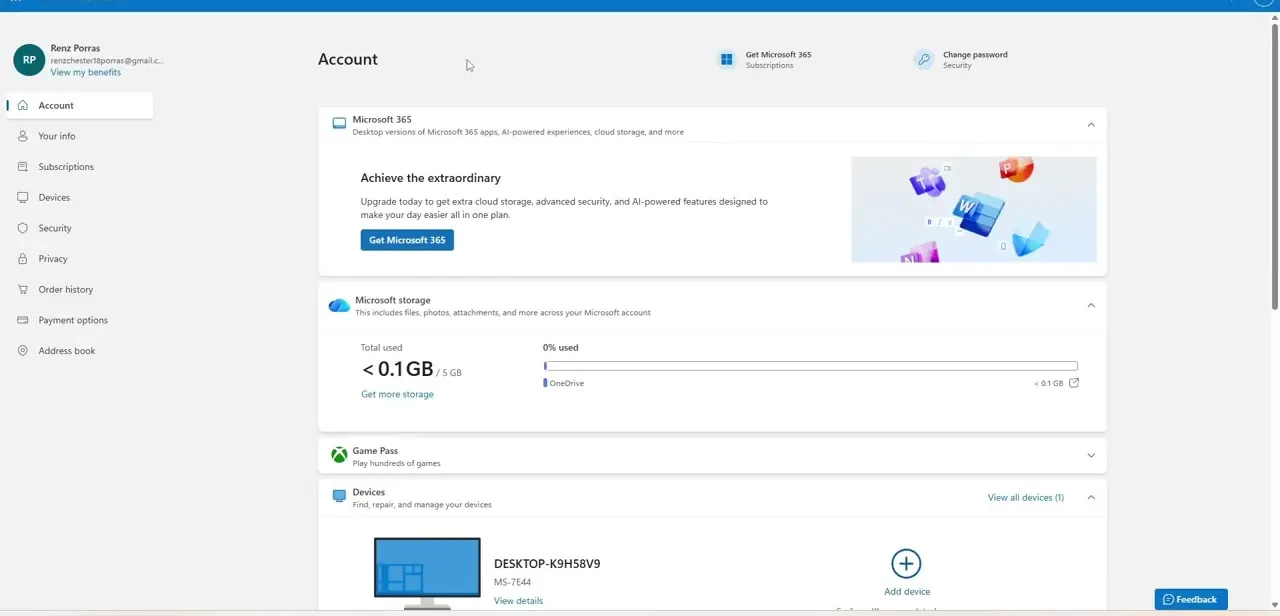
For a personal account, the edit doesn't happen inside the Teams app window — it happens on the Microsoft account website, which Teams links out to. From your account overview page you'll see your profile photo, storage usage, connected devices, and a sidebar with sections like Your info, Subscriptions, Devices, and Security. This is the same account hub that governs your whole Microsoft footprint, not just Teams, so any name change you make here can ripple out to other Microsoft apps signed in with that account.
03Edit your first and last name
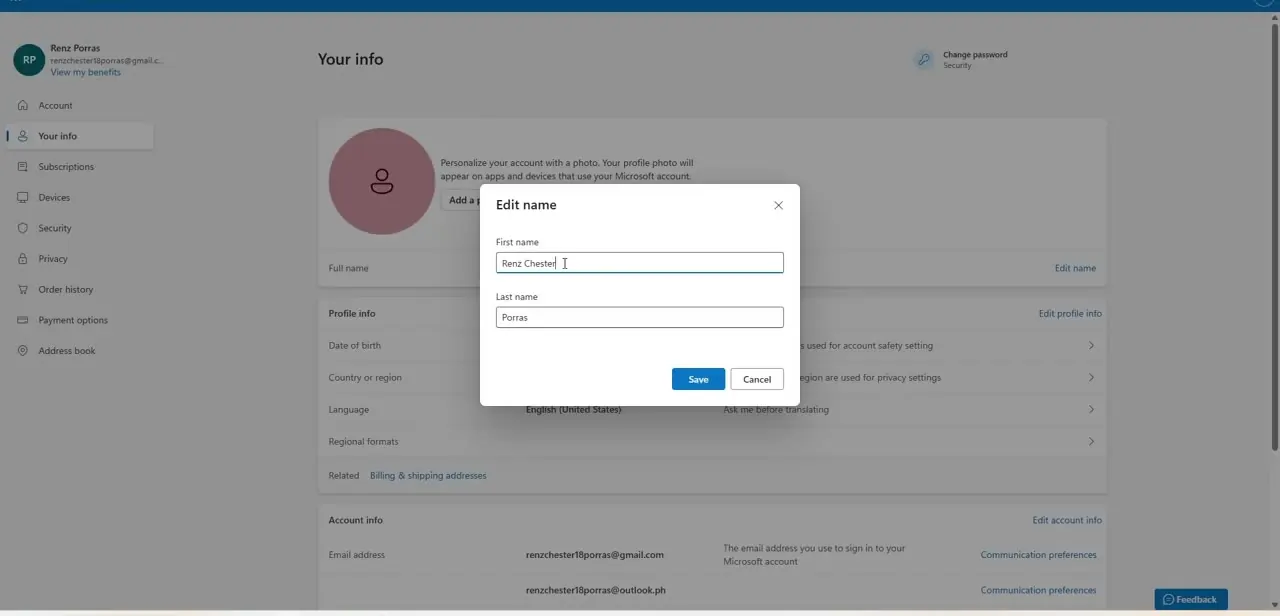
From the sidebar, click Your info, then find Edit name next to your full name. A small dialog opens with two plain text fields — First name and Last name — pre-filled with whatever's currently on file.
Clear out what's wrong, type the correct spelling or updated name, and click Save. There's no confirmation step beyond that; the change is applied to your Microsoft account immediately, which is what Teams will read from the next time it syncs.
04Force Teams to pick up the change
Because Teams caches your profile information locally, a saved name change on the Microsoft account site doesn't always appear instantly inside the app. Fully close Teams — not just minimize it — and reopen it, or sign out and back in if a simple restart doesn't do it. This forces a fresh sync with your account, and the new name should then show correctly in chats, the People panel, and meeting rosters.
05Coordinate with IT for a work or school account
If you're on a managed account, none of the steps above will work, because the name field is controlled by your organization's directory rather than your personal settings. This is intentional — company directories are usually kept consistent for compliance and searchability. Reach out to your IT or Microsoft 365 administrator with the correct spelling or preferred name, and they can update it centrally so it's consistent across Teams, Outlook, and SharePoint.
06Set a one-time name for a single meeting
Sometimes you don't want a permanent change at all — you just want a different name for one call, like joining a client meeting under a nickname or a guest identity. Join the meeting link without signing in, and Teams will prompt you for a name to display just for that session; nothing about your account changes. If you're already in the meeting signed in, open the People panel, find the ellipsis menu next to your own name, and look for an option to edit how your name displays for that call only.
Frequently asked questions
Why can't I change my display name in Teams?
If you're on a managed work or school account, your name is often controlled by your organization's directory and may require an IT administrator to update rather than a setting you can change yourself.
Do I need to restart Teams after changing my name?
Yes — fully closing and reopening the app, or signing out and back in, forces a sync with your Microsoft account so the updated name shows correctly across chats and meetings.
Can I use a different name just for one meeting?
Yes. Joining without signing in lets you type a one-time display name, and the in-meeting People panel also has an option to edit how your name shows for that session only.
Does changing my personal account name affect other Microsoft apps?
Yes — because the edit happens at the Microsoft account level in Your info, it can flow through to Outlook, OneDrive, and other connected Microsoft services, not just Teams.
Where exactly do I go to edit a personal Teams name?
Click your profile avatar in Teams, follow the link to your Microsoft account, open Your info, and click Edit name next to your full name to update the first and last name fields.
About the author

Impran M N
I've been hooked on technology for as long as I can remember — especially the new tools and AI apps that seem to land every other week. Easy Tech Tuts is where I write up whatever I've just worked out: I do the task in the real product, record the screen, and turn it into the guide I wish I'd found first.