 Easy Tech Tuts
HubSpot Tutorial for Beginners, How to use Hubspot in 2026
By Impran M N
HubSpot's pitch is one connected system for contacts, deals, and communication, but the fastest way to actually understand it is to look at a single contact record and see how much lives in one place. This tutorial walks through the core CRM building blocks a beginner touches first: the contacts list, an individual contact's record with its AI-generated summaries, and the task system that keeps follow-ups from falling through. It skips the marketing-site pitch and focuses on the actual screens you'll work in once you're logged in.
01Start from the Contacts list
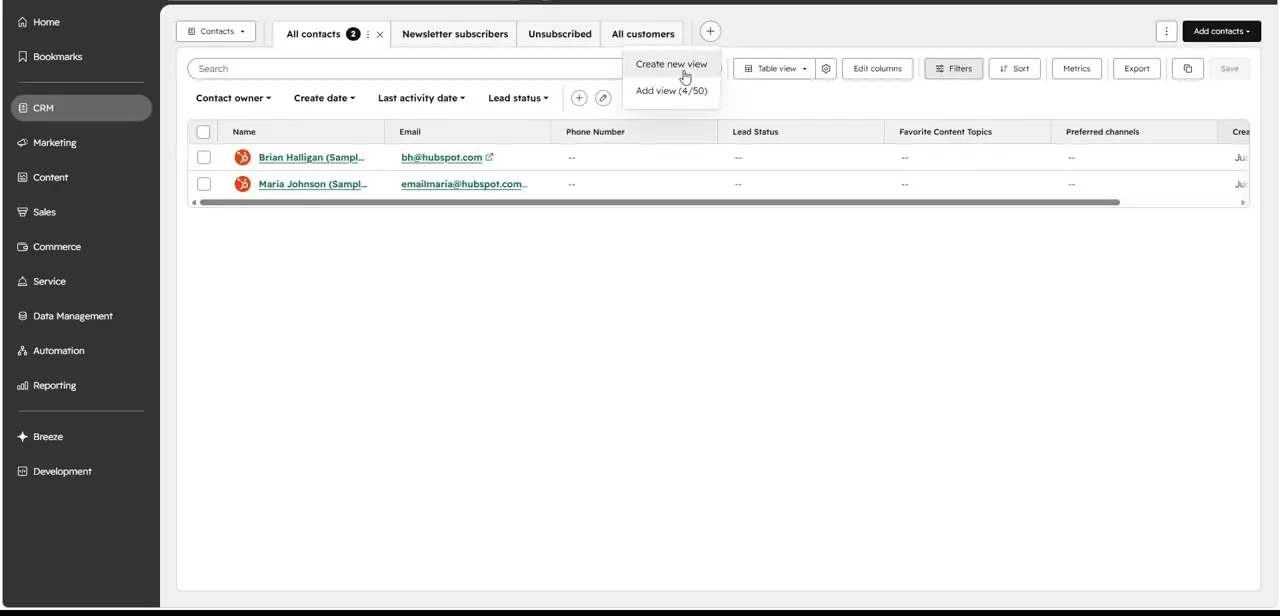
The CRM menu in the left sidebar opens into Contacts, where every person in your database shows up as a row in a table — name, email, phone number, lead status, and any custom properties you've set up like Favorite Content Topics or Preferred Channels. Tabs across the top let you save different filtered views, such as Newsletter Subscribers or All Customers, and a Create New View option lets you build your own from scratch. For a new account this list starts with just a couple of sample contacts, which is a fine place to click around before importing your real data.
02Open a single contact record
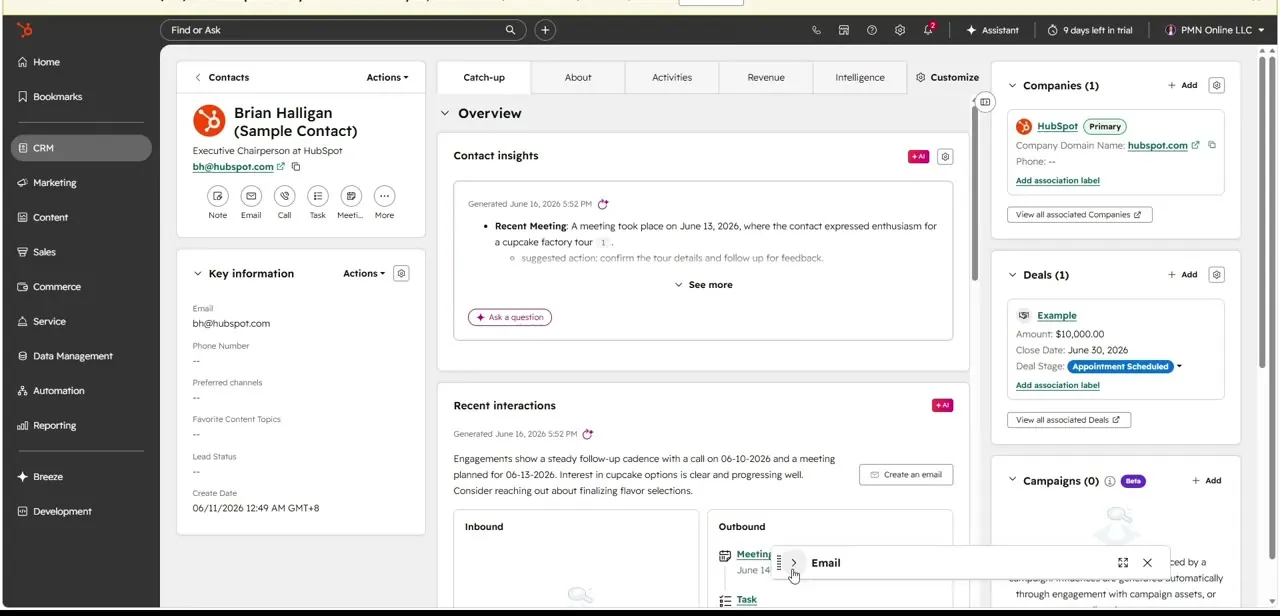
Clicking into a contact opens their full record, split into a left column of key information and contact details, and a main panel with tabs for Catch-up, About, Activities, Revenue, and Intelligence. The Overview section under Catch-up is where HubSpot pulls everything together — contact insights, recent interactions, and quick actions like Note, Email, Call, Task, and Meeting sit right at the top so you're not hunting through menus to log an interaction.
03Read the AI-generated contact insights
Under Contact Insights, HubSpot auto-generates a plain-language summary of recent activity — in a working example this looked like: a meeting took place on a specific date where the contact expressed interest in something specific, with a suggested next action underneath it, like confirming details or following up for feedback. A similar Recent Interactions summary describes the pattern of contact over time, such as a steady follow-up cadence with a call and a scheduled meeting. These summaries are generated on demand, timestamped, and sit alongside an "Ask a question" prompt if you want to query the record directly rather than read the full activity log.
04Check associated companies and deals
On the right side of the same record, Companies, Deals, and Campaigns each get their own collapsible panel. A linked company shows its domain and phone number with a shortcut to view all associated companies, and an open deal shows its amount, close date, and current stage — Appointment Scheduled, for instance — right in the sidebar without opening a separate page. This is the part of HubSpot that actually earns the "CRM" label: the deal, the company, and the person are all cross-referenced from a single screen instead of living in disconnected spreadsheets.
05Create a task from a record
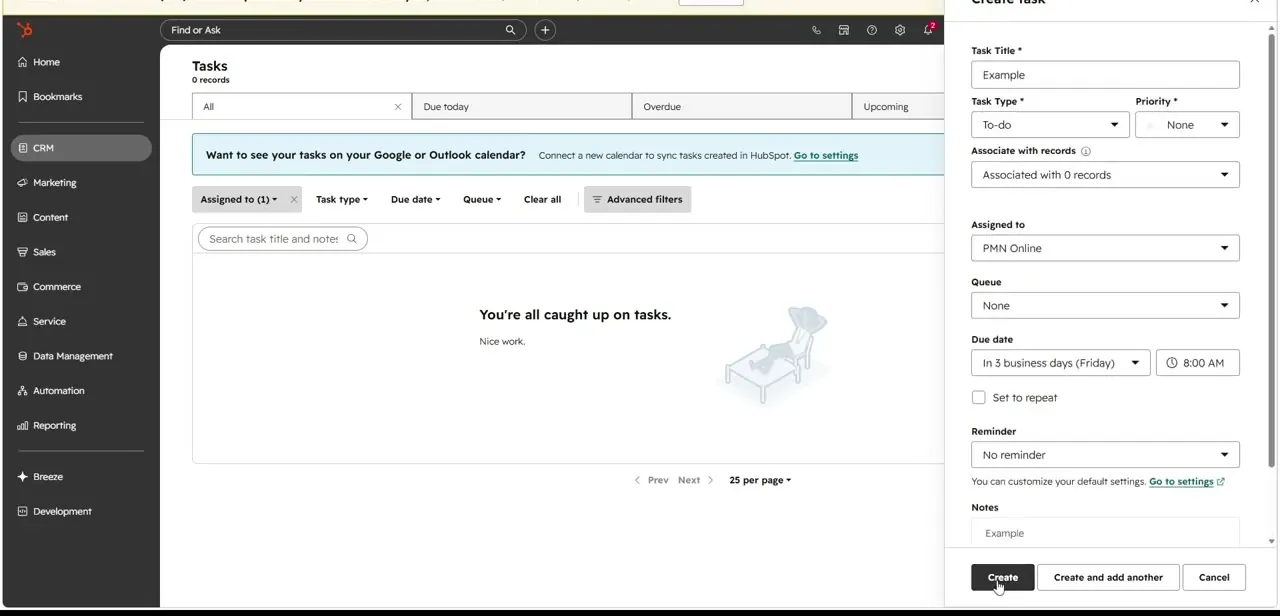
Clicking Task from the quick actions bar — or the Tasks item under CRM — opens a Create Task panel with fields for Task Title, Task Type, Priority, and an Associate With Records dropdown that links the task back to the contact you're working from. You also set who it's Assigned To, whether it belongs to a Queue, and a Due Date, which defaults to a few business days out at a set time. HubSpot even offers to sync your tasks to Google or Outlook calendar from a banner right above the task list, which is worth turning on early so follow-ups show up somewhere you'll actually see them.
06Get comfortable with the CRM before touching Marketing or Sales Hub
Everything above — contacts, insights, companies, deals, tasks — lives under the CRM menu and is available regardless of which paid hubs you eventually add. Spending your first sessions here, logging a few real notes and tasks against real contacts, builds the habit that makes the rest of HubSpot worth using; the Marketing and Sales Hub tools you'll explore later all ultimately write back to and read from these same contact records.
Frequently asked questions
Is HubSpot only for sales teams?
No — the CRM's contact records are shared across marketing, sales, and service functions, so insights, tasks, and notes logged by one team are visible to the others.
What is the AI-generated Contact Insights section?
It's a summary HubSpot generates from a contact's recent activity — meetings, calls, emails — written in plain language with a timestamp and a suggested next action, so you don't have to read the full interaction history to catch up.
Can I create a task without leaving a contact's record?
Yes — the Task quick action at the top of a contact's Overview opens the Create Task panel pre-associated with that contact, so you don't need to navigate to the separate Tasks list to log a follow-up.
Do tasks sync with my calendar?
HubSpot can sync tasks to a connected Google or Outlook calendar, with a prompt to set this up shown directly above the Tasks list if it isn't connected yet.
Where do deals and companies show up for a contact?
On the individual contact record's right-hand sidebar, with collapsible panels for associated Companies, Deals, and Campaigns — each showing key details like deal stage or company domain without opening a separate page.
About the author

Impran M N
I've been hooked on technology for as long as I can remember — especially the new tools and AI apps that seem to land every other week. Easy Tech Tuts is where I write up whatever I've just worked out: I do the task in the real product, record the screen, and turn it into the guide I wish I'd found first.