 Easy Tech Tuts
How to Create a Landing Page on Gumroad Easily 2026
By Impran M N
On Gumroad, your product listing is your landing page — there's no separate page builder to learn, which is exactly why it's worth getting the details right. The dashboard where you manage products doubles as your sales record, and your creator profile shapes what buyers see alongside every listing you publish.
This guide walks through the real dashboard you'll be working in: where your products live, how a fresh listing starts out, and how your profile and logo tie into the page a buyer actually lands on. It's grounded in what the Gumroad dashboard looks like today, not a generic checklist.
01Open your Products dashboard
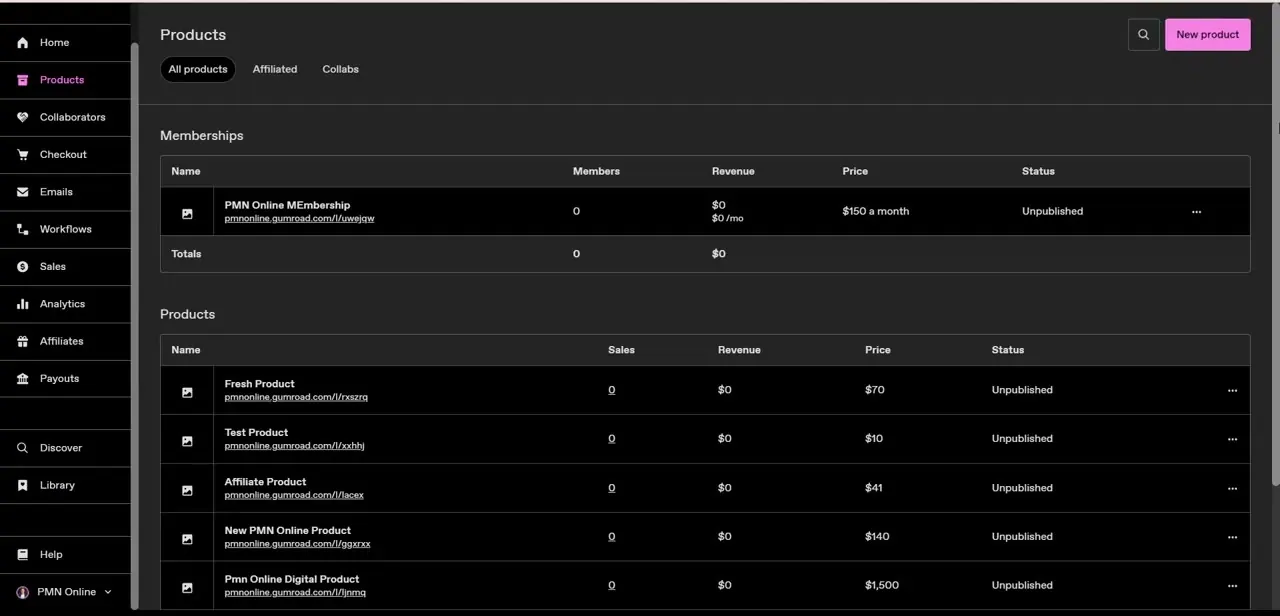
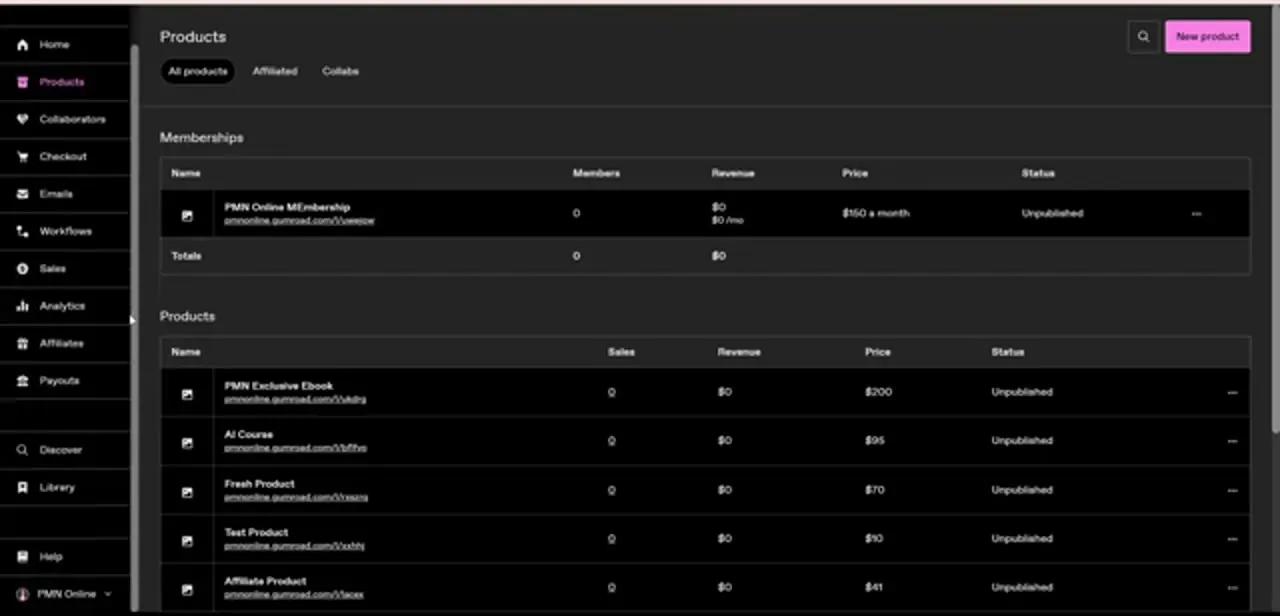
Log in to Gumroad and click Products in the left-hand sidebar. This page is the control center for everything you sell — memberships at the top, one-off products below, each row showing its name, direct link, sales count, revenue, price, and status.
A brand-new listing starts life as "Unpublished," which is your cue that the page exists but isn't visible to buyers yet. The New product button sits in the top right, and that's where a landing page begins: click it to open a fresh, empty listing canvas ready for a title and price.
02Set your title and price first
Every new product opens with two fields that matter more than they look: the product name, which becomes your page's headline, and the price, which anchors the whole offer. Keep the name specific about what the buyer gets rather than generic — "How to Play Ukulele" tells a browser exactly what they're clicking into, which is the same instinct that should guide your own title. Set a real price now even if you plan to adjust it later; Gumroad uses it immediately in the preview pane, so seeing the number next to your copy helps you judge whether the page reads as worth it.
03Write the sales copy in the rich-text editor
The product description field is a full rich-text editor, not a plain textbox — you can add headers, bold key phrases, and build bulleted feature or benefit lists the same way you would in a document editor. Structure this the way a landing page should read: a short opening line stating the outcome, a bulleted list of what's included, and a closing line that removes hesitation. Buyers scan before they read, so headers and bullets do more work here than a wall of paragraphs ever will.
04Upload a cover image and thumbnail
Drag a high-resolution cover banner into the media section near the top of the editor — this is the first visual a visitor sees, so it should represent the product clearly rather than being purely decorative. Add a square thumbnail as well, since that's the image Gumroad uses when your product appears in search, on your profile grid, or in a customer's library. Mismatched or blurry images here are one of the fastest ways to make an otherwise strong listing look unfinished.
05Customize your call-to-action button
The purchase component — the button a buyer actually clicks to pay — has editable copy, and the default "Add to cart" or "I want this!" text isn't always the strongest choice. Swap it for language that matches your offer's tone: a course might say "Start Learning," a template pack might say "Get the Files." It's a small edit, but it's the single element every buyer's eye lands on right before converting, so it's worth a second look before you publish.
06Check your creator profile and logo
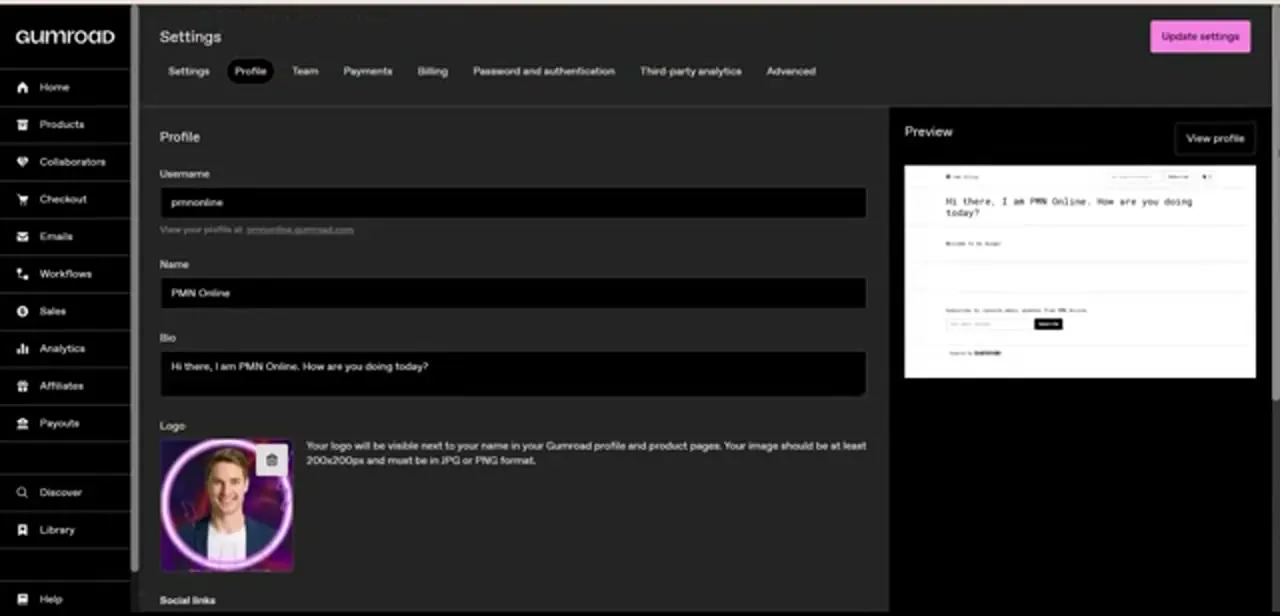
Your product page doesn't exist in isolation — it's framed by your Gumroad profile, which you manage under Settings → Profile. Your username, display name, bio, and logo all appear alongside your listings, and the panel includes a live preview so you can see how your profile page itself will look before saving. A clear headshot or brand mark here, paired with a bio that states plainly what you sell, gives a first-time visitor context the product page alone can't provide.
07Preview on mobile and desktop, then publish
Before you publish, use Gumroad's preview toggle to check how the finished page renders on both a phone-width layout and a full desktop view — long bullet lists and wide images can behave differently at each size. Once it reads cleanly on both, hit Publish, and the listing flips from "Unpublished" to live on your Products dashboard, ready to share as its own link.
Frequently asked questions
Can I fully customize the text on a Gumroad product page?
Yes. The rich-text editor lets you format headers, bulleted lists, and body copy, so the description section can carry the full structure of a real landing page rather than a plain paragraph.
Can I change the buy button text?
Yes, the call-to-action copy on the purchase component is editable, so you can replace the default wording with language that matches your specific offer.
Does my Gumroad landing page work on mobile?
Gumroad product pages are responsive by default, and the editor includes a preview toggle so you can check the mobile layout before publishing rather than finding out after.
Does my profile show up on my product page?
Yes. Your Gumroad profile — name, bio, and logo, set under Settings → Profile — appears alongside every product you publish, so it's worth filling out before you start driving traffic to a listing.
Can I add images throughout the description, not just the cover?
Yes, the rich-text editor supports embedding images within the body of your product description, not only in the dedicated cover and thumbnail slots.
About the author

Impran M N
I've been hooked on technology for as long as I can remember — especially the new tools and AI apps that seem to land every other week. Easy Tech Tuts is where I write up whatever I've just worked out: I do the task in the real product, record the screen, and turn it into the guide I wish I'd found first.