 Easy Tech Tuts
Google Sheets vs Excel, Best Google Sheets Alternatives in MS Excel, Smartsheet, Notion in AI ERA
By Impran M N
Google Sheets and Excel solve the same basic problem — rows, columns, formulas — but they diverge the moment you look at how each one handles templates, sharing, and where your files actually live. This comparison walks through both interfaces directly: Excel Online's template gallery and workbook list, then Google Sheets' sharing dialog and file home screen, so the differences aren't abstract claims but things you can see happening in each product. It closes with where tools like Smartsheet and Notion fit for teams whose needs have outgrown a plain spreadsheet.
01Excel Online's template-first home screen
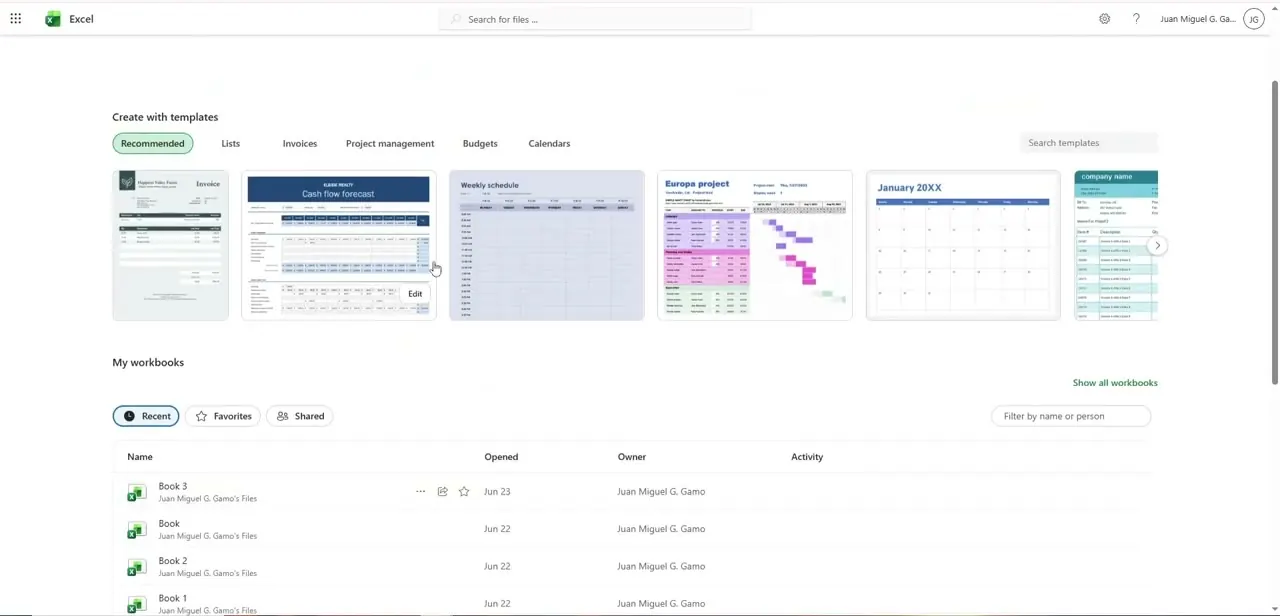
Opening Excel Online drops you on a home screen organized around "Create with templates," with tabs for Recommended, Lists, Invoices, Project management, Budgets, and Calendars, and a scrollable row of thumbnails — an invoice, a cash flow forecast, a weekly schedule, a project timeline, a monthly calendar. Below that sits My workbooks, listing recent files with Opened date, Owner, and Activity columns, plus Recent, Favorites, and Shared filters. It's a genuinely template-heavy starting point, which suits users who want a polished structure — a Gantt-style project layout, a formatted invoice — without building one from scratch.
02Google Sheets' sharing model, front and center
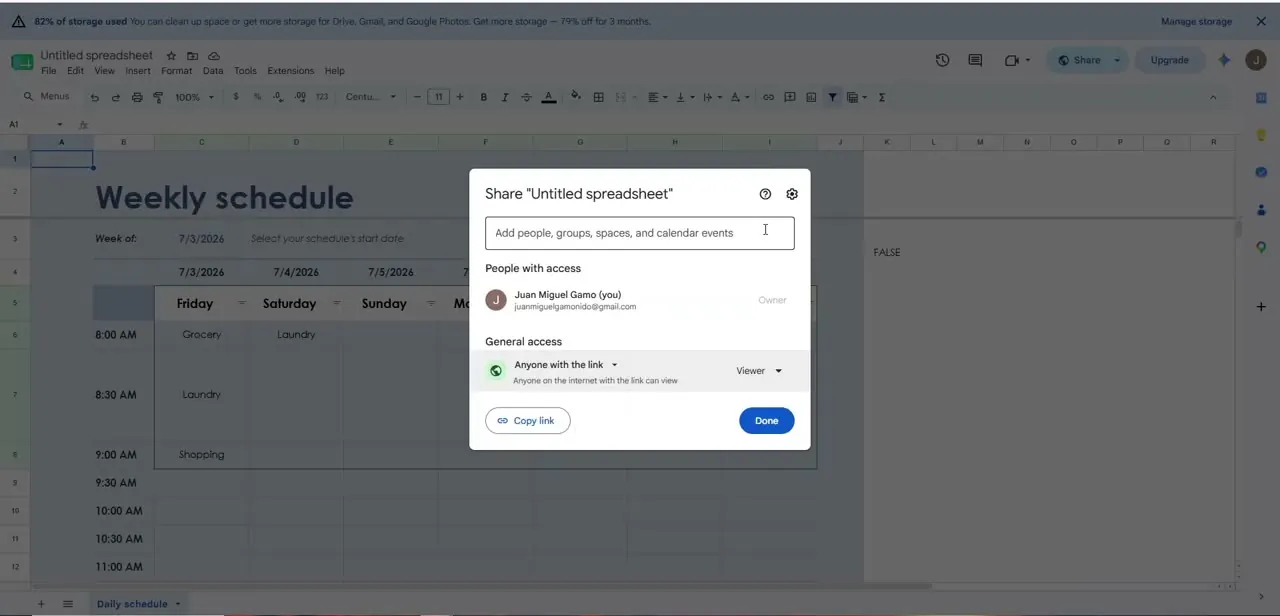
Google Sheets takes a different approach to the same job: the Share dialog opens directly over your document, listing "People with access" — here, just the owner — and a "General access" setting showing "Anyone with the link" set to Viewer. A Copy link button sits alongside Done, making it fast to hand a read-only or editable link to someone without leaving the sheet. Where Excel Online organizes around templates first, Sheets puts real-time, link-based collaboration one click away from any open document, which is the core reason teams often default to it for anything more than one person editing.
03How each tool organizes your files
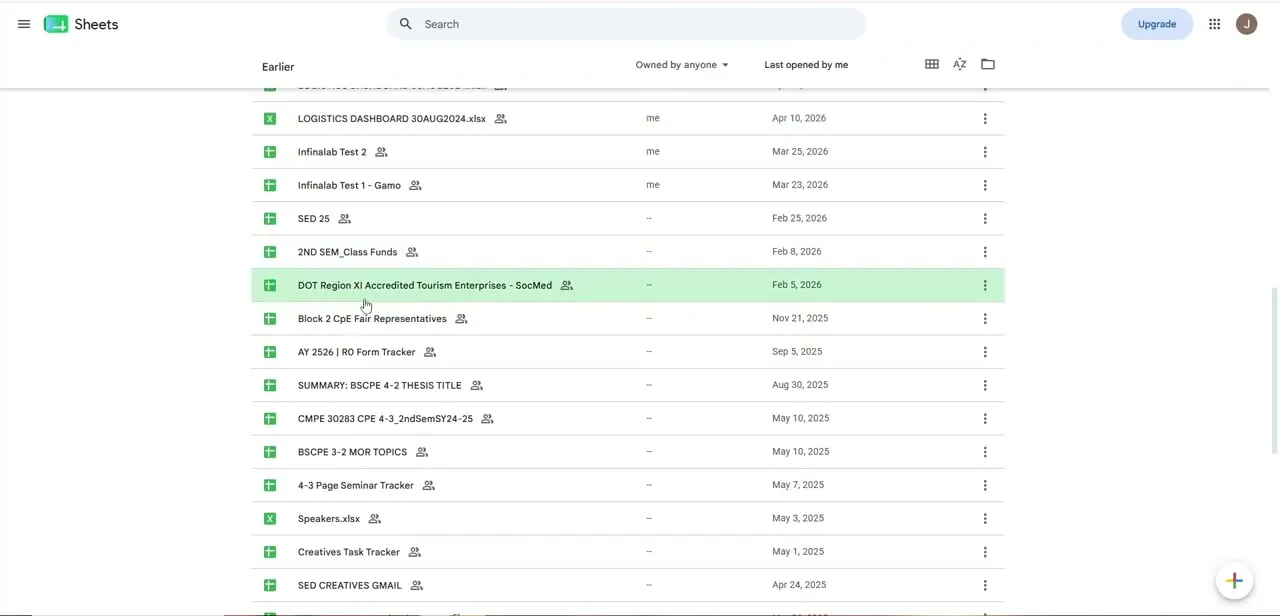
The Sheets home screen (accessible from sheets.google.com or the Google apps grid) lists every spreadsheet you've touched in a flat, searchable table — name, who it's shared with, and when it was last opened — sortable by owner or by "Last opened by me." Excel Online's My workbooks table does something similar but stays scoped to Excel files specifically, whereas Sheets' list sits inside the broader Google Drive ecosystem, meaning a spreadsheet, a Doc, and a Form a colleague shared with you all surface through the same kind of view. If your team already lives in Gmail and Drive, that shared file model is a real convenience; if you're standardized on Microsoft 365, Excel's workbook list plugs into OneDrive and SharePoint the same way.
04What Google's own documentation says about cost and compatibility
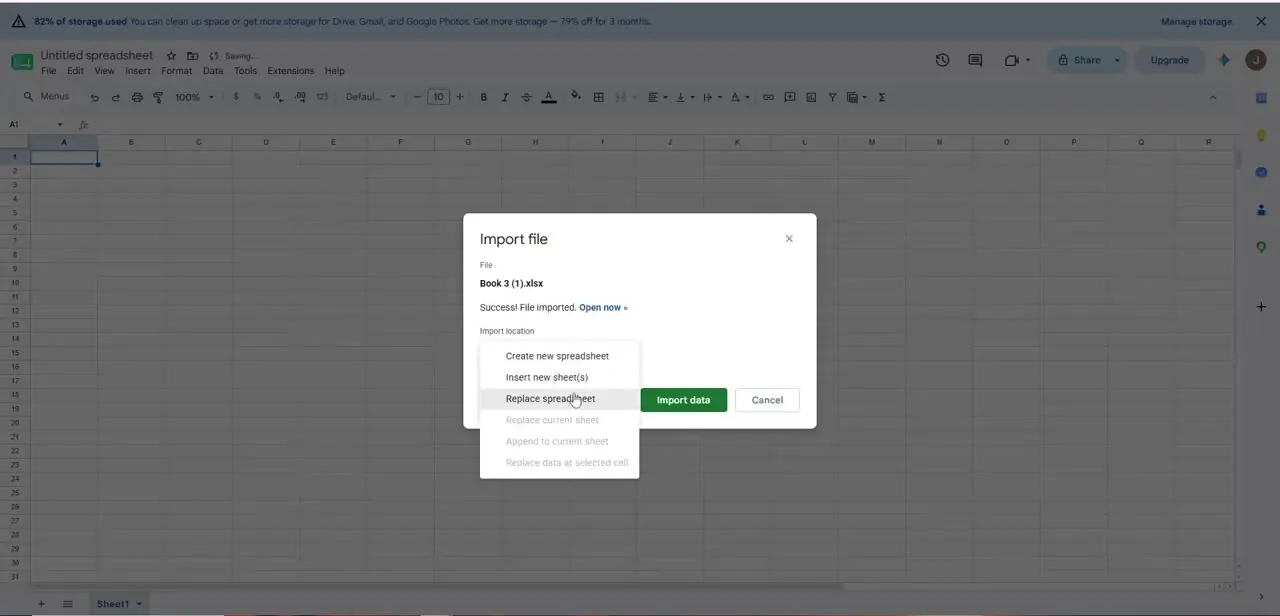
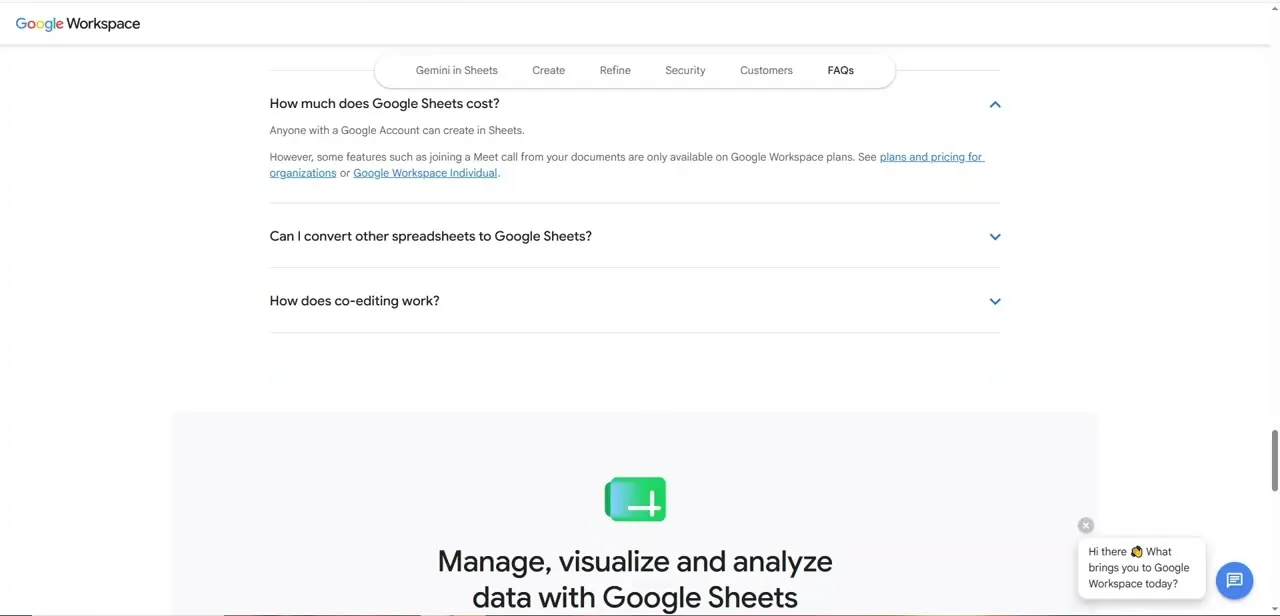
Google Workspace's own Sheets FAQ page answers two questions that come up constantly in a Sheets-vs-Excel comparison: anyone with a Google Account can create in Sheets for free, though features like joining a Meet call from a document require a paid Workspace plan; and yes, you can convert other spreadsheet formats into Sheets, which covers importing existing Excel workbooks rather than starting over. A third FAQ on how co-editing works reinforces that real-time collaboration is treated as a headline feature, not an afterthought, in Google's own framing of the product.
05Where Smartsheet fits instead of a spreadsheet
Smartsheet borrows the row-and-column look of a spreadsheet but is built around project tracking — Gantt charts, task dependencies, automated approval workflows — rather than general-purpose calculation. Teams that outgrow using a shared spreadsheet as an informal project tracker, with color-coded rows standing in for status updates, are the ones who tend to move to Smartsheet, since it turns that same visual pattern into a structured, purpose-built tool with real automation behind it.
06Where Notion fits instead of a spreadsheet
Notion approaches data from the opposite direction: it's a workspace of pages and databases where a table is one view among several — you can flip the same data into a board, a calendar, or a list. That makes it strong for teams who want data sitting alongside notes, documentation, and project context in one place, but it isn't built for heavy formula work or large-scale numeric analysis the way Sheets or Excel are, so most teams end up using it alongside a spreadsheet rather than in place of one.
Frequently asked questions
Is Google Sheets better than Excel for collaboration?
Generally yes for real-time, link-based collaboration — Sheets' Share dialog puts a shareable link with adjustable access front and center, while Excel's collaboration tools live inside the Microsoft 365 and OneDrive ecosystem.
Do I need to pay for Google Sheets?
No. Per Google's own FAQ, anyone with a Google Account can create in Sheets for free — paid Workspace plans only add extras like joining a Meet call directly from a document.
Can I convert an existing Excel file into Google Sheets?
Yes. Google confirms this directly in its Sheets FAQ, and the same conversion works through Sheets' own Import feature.
When should I consider Smartsheet instead of a spreadsheet?
When your spreadsheet has effectively become an informal project tracker — status colors, deadlines, dependencies — Smartsheet turns that same pattern into a purpose-built tool with Gantt charts and workflow automation.
Can Notion replace a spreadsheet entirely?
Not for heavy calculation or large datasets. Notion is strong for organizing data alongside notes and project context in multiple views, but most teams keep it alongside a spreadsheet rather than instead of one.
About the author

Impran M N
I've been hooked on technology for as long as I can remember — especially the new tools and AI apps that seem to land every other week. Easy Tech Tuts is where I write up whatever I've just worked out: I do the task in the real product, record the screen, and turn it into the guide I wish I'd found first.