 Easy Tech Tuts
How to Add Claude AI to Slack | Team Workflow Setup | Easily 2026
By Impran M N
Slack is where most teams already spend their day, so putting Claude there instead of asking people to open another tab is the whole point of this integration. It takes a few minutes to install, one extra step for each teammate to link their own Claude.ai account, and after that Claude behaves like any other app in your sidebar — searchable, pinnable, and available in both channels and direct messages. This guide walks through the actual install screen, what a finished setup looks like, and how to get the most out of it once it's live in your workspace, including the rollout detail that trips up most teams: installing the app once does not automatically give every member access.
01Open the Apps section of your Slack workspace
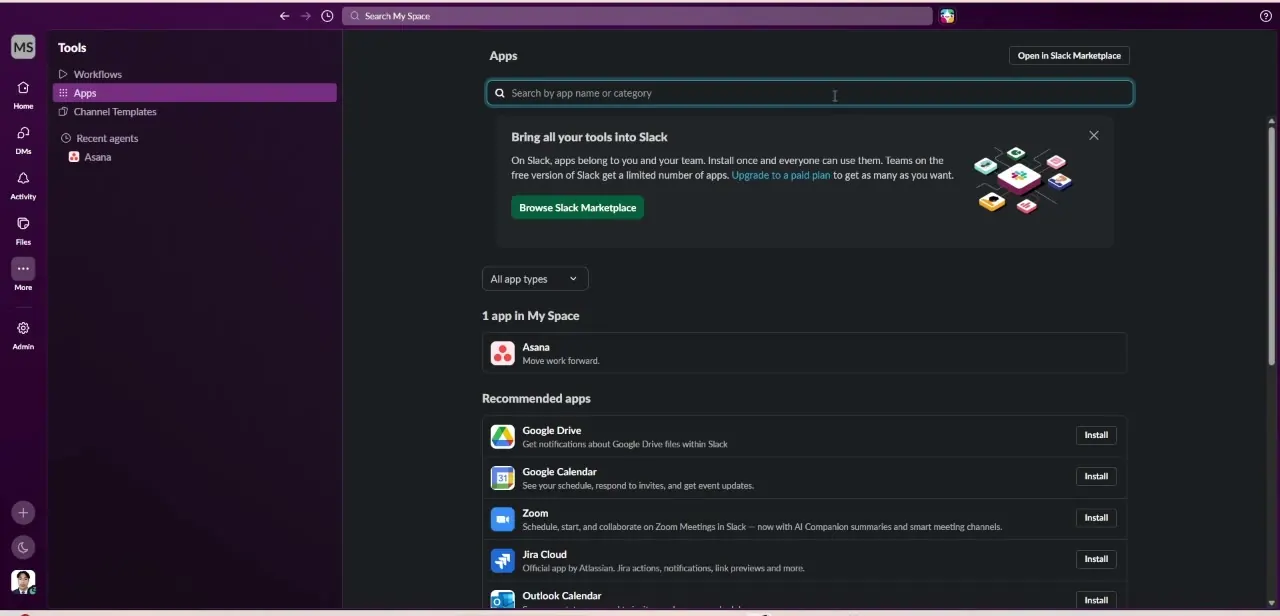
In Slack, click Apps in the left sidebar tools panel, then choose "Apps" underneath it rather than Workflows or Channel Templates. This opens a searchable directory of everything available to your workspace, split between what's already installed and what Slack recommends.
If your team already has a couple of tools connected, like a project tracker, you'll see them listed under "apps in My Space" at the top, which is a useful check that you're in the right place before hunting for Claude specifically. Whoever does this setup should ideally be a workspace admin, since some Slack plans restrict app installation to admins by default, which can stall the process if a regular member tries it first.
02Weigh Claude against your other connected tools
Before installing, it's worth glancing at what's already in your workspace's app list, since it gives you a realistic sense of how much app sprawl your team can handle. A workspace that already juggles a project tracker, a calendar app, and a video conferencing tool doesn't need Claude cluttering things further if nobody has a clear reason to use it yet — decide on at least one concrete use case, like drafting replies or summarizing threads, before adding one more icon to the sidebar.
03Search for Claude and start the install
Type Claude into the "Search by app name or category" box at the top of the Apps page. Slack's directory also surfaces a row of recommended apps by default, things like Google Drive, Google Calendar, Zoom, and Jira Cloud, each with a one-click Install button, which gives you a sense of how the Claude listing will look once you find it. Click Install on the Claude app card to kick off the authorization flow; Slack will ask which workspace to add it to if you belong to more than one.
04Confirm the installation finished
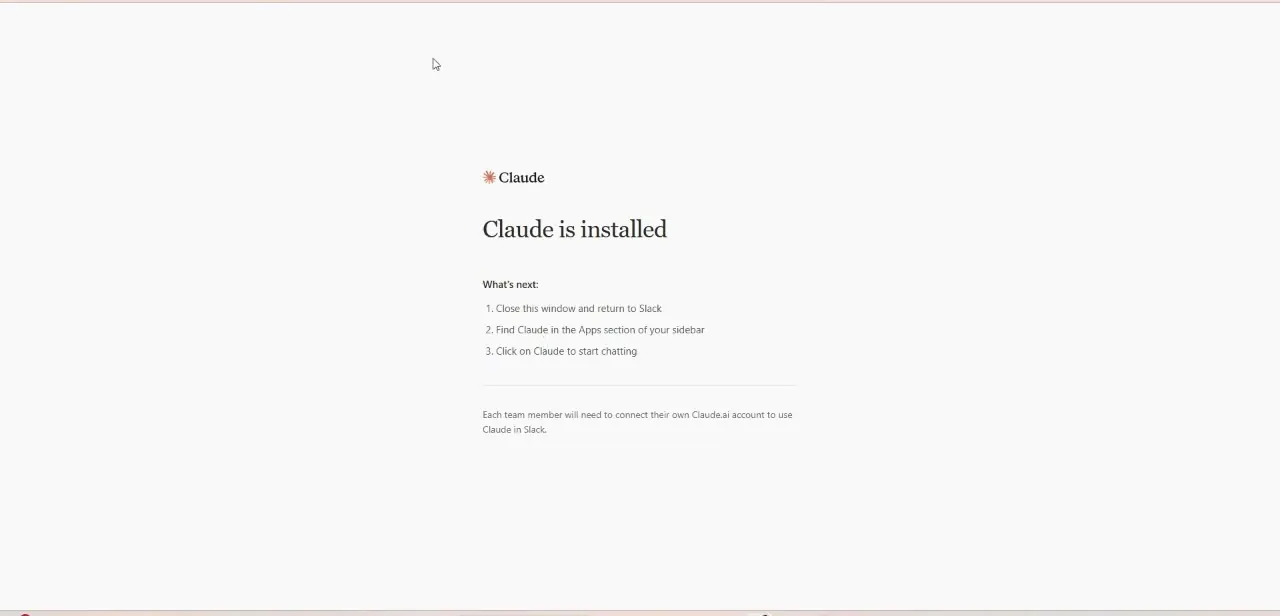
Once you approve the permissions Slack asks for, you land on a plain confirmation page titled "Claude is installed," with three short instructions: close the window and return to Slack, find Claude in the Apps section of your sidebar, and click on it to start chatting. This page also flags something worth telling your team ahead of time — each member needs to connect their own Claude.ai account before they can actually chat with it, so installing the app workspace-wide doesn't automatically give everyone access. It's worth screenshotting or pasting this exact text into your team announcement, since it saves you from having to explain the two-step process from memory later.
05Connect your individual Claude.ai account
Click into Claude from your Slack sidebar for the first time and you'll be prompted to sign in with your existing Claude.ai account, or create one if you don't have it yet. This is a per-person step, not a workspace-wide setting, which matters for rollout planning: if you're introducing this to a team of ten, expect ten individual sign-ins rather than one admin toggle that covers everyone. Anyone on a free Claude plan can still connect, though usage limits will apply the same way they would outside of Slack, so heavier users on your team may want to consider a paid plan before relying on it daily.
06Customize Claude for how your team actually works
Once people are connected, spend a little time deciding what Claude should be used for in your workspace rather than leaving it as a novelty in one channel. Common starting points are pinning it in a shared channel for quick questions, using it to draft or summarize long threads, and letting individuals DM it the way they would a colleague for scheduling help or quick research.
None of this requires extra configuration on Slack's side; it's a matter of setting expectations with your team about when to reach for it. A short pinned message in your main channel explaining two or three approved use cases does more for adoption than any settings change would.
07Roll it into real workflows
The value shows up once Claude is part of the daily routine rather than something people remember to open occasionally. Try using it to draft a status update from a scattered thread, summarize a long customer support conversation before handing it off, or answer a policy question that would otherwise mean pinging a manager.
Because it lives in Slack, none of this requires switching tools, which is the main efficiency gain over using an AI assistant separately from your team chat. Revisit adoption after a couple of weeks — if certain teammates aren't using it, a quick check-in usually reveals they either forgot it was there or never saw the announcement, both easy fixes.
Frequently asked questions
What can Claude AI actually do inside Slack?
It can assist with scheduling, reminders, and information retrieval, while also automating routine tasks and providing instantaneous answers to queries right inside a channel or DM.
Is setting up Claude AI in Slack difficult for beginners?
No. It's the same install-and-authorize flow as any other Slack app, followed by each person signing into their own Claude.ai account the first time they open it.
Does every team member need to do anything after the app is installed?
Yes — installation adds Claude to the workspace, but each person still needs to connect their own Claude.ai account before they can start chatting with it.
Who benefits from this integration?
Tech enthusiasts, business professionals, and teams looking to enhance their collaboration tools within Slack, especially anyone who wants quick answers without switching apps.
About the author

Impran M N
I've been hooked on technology for as long as I can remember — especially the new tools and AI apps that seem to land every other week. Easy Tech Tuts is where I write up whatever I've just worked out: I do the task in the real product, record the screen, and turn it into the guide I wish I'd found first.