 Easy Tech Tuts
How to Fix Access Denied Website Error in Chrome (Common Causes Solved) Easily 2026
By Impran M N
An Access Denied error in Chrome can stop you from reaching a website you need, whether it's for work or personal use, and the message alone doesn't tell you who's actually blocking the request. Sometimes it's the site itself rejecting your IP or region; other times it's Chrome's own privacy and site permission settings getting in the way, or a network-level block on a business connection filtering traffic before it ever reaches the browser.
Because the underlying causes are so different from each other, a fix that works for one person often does nothing for the next, which is why this error tends to generate so much conflicting advice online. This guide breaks down the most common causes, walks through the browser-side settings that resolve the majority of cases, and covers what to check if the problem turns out to be coming from your network instead.
01Identify whether the block is server-side or browser-side
Access Denied errors fall into two broad categories, and figuring out which one you're dealing with saves time before you start changing settings that won't help. If the error page mentions a reference number, an IP address, or comes from the website's own server — often styled like an Apache or Nginx error page rather than Chrome's own dinosaur-style error screen — the site itself is refusing the request, commonly due to geographic restrictions, rate limiting, or a firewall rule on their end that you can't fix from your side at all. If instead the page looks like a generic Chrome error, or the site loads fine for others on the same network but not you, the problem is more likely local: a cookie, a permission setting, or cached data specific to your browser and your profile.
02Review Chrome's privacy and security settings
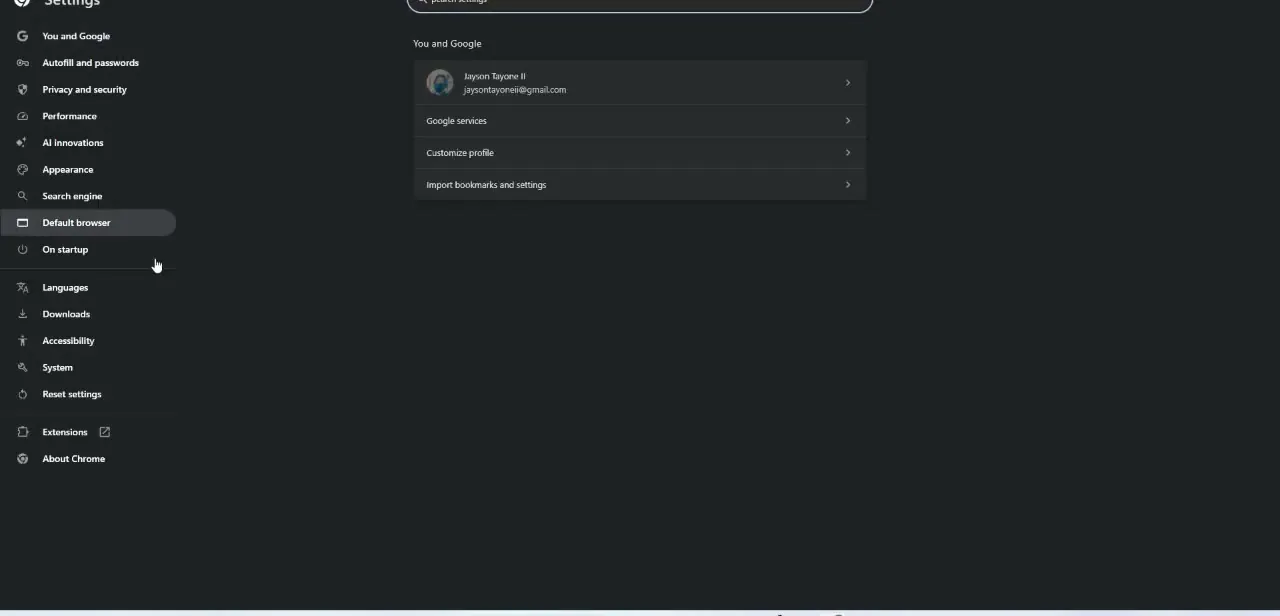
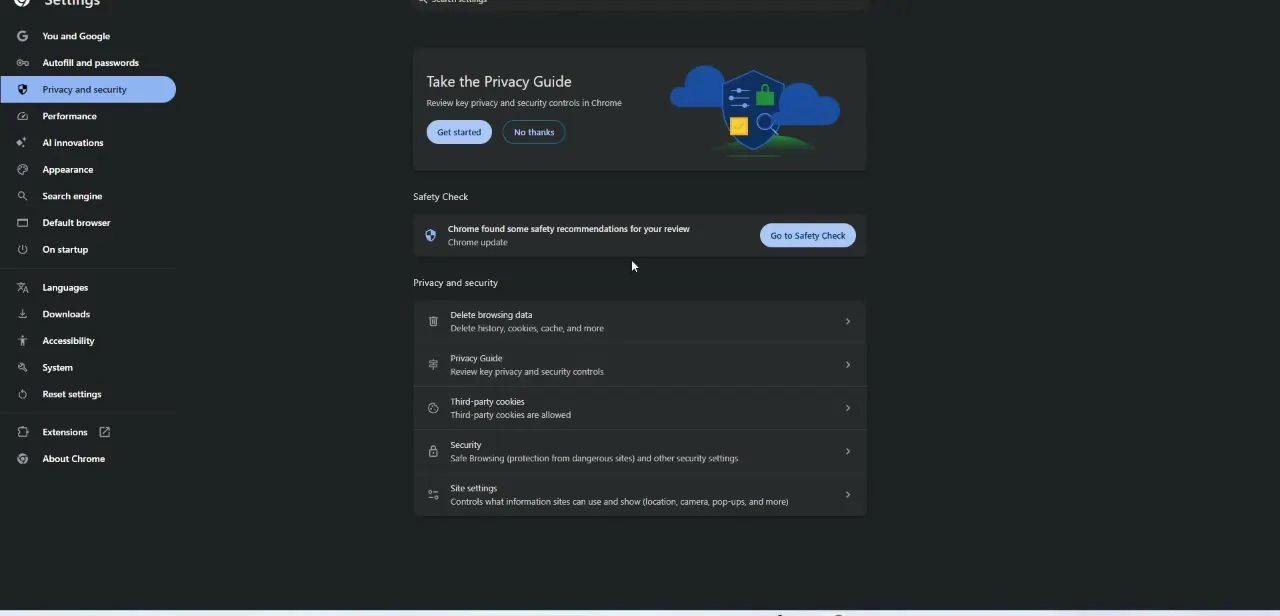
Open Chrome's Settings and go to Privacy and security. This section controls Safe Browsing, third-party cookies, and site permissions — all of which can produce an Access Denied result if configured too aggressively for a particular site.
A stricter Safe Browsing level or a blanket cookie block can prevent a page from completing its normal authentication handshake, which some sites then report back as a denied request rather than a clearer cookie or permissions error, leaving you to guess at the real cause. This page is also where you'll find the Delete browsing data shortcut and the Security section, both of which are worth knowing the location of even if you don't need them for this particular fix.
03Check and reset site-specific permissions
Inside Privacy and security, open Site settings and search for the domain that's giving you trouble, or click the padlock icon directly in the address bar while on the problem page for a shortcut to the same per-site controls. Chrome remembers individual permission decisions per site — cookies, JavaScript, redirects, pop-ups — and a stale or accidentally-denied permission here can trigger the exact error you're seeing without any obvious explanation elsewhere.
Click into the site's entry and reset its permissions back to default, then reload the page. This single step resolves a surprising share of Access Denied cases that have nothing to do with the website itself, especially on sites you've visited many times before where an old permission decision has simply gone stale.
04Clear cached data for the affected site
Cached cookies and site data can go stale, especially after a site changes its login system, rotates its SSL certificate, or migrates to a new hosting provider, and Chrome will sometimes keep trying to reuse the old cached version instead of fetching a genuinely fresh page. Clear browsing data scoped to just that site rather than wiping everything, or use the padlock icon in the address bar to view and clear the site's stored cookies directly, then reload with a hard refresh (Ctrl+Shift+R or Cmd+Shift+R) to force Chrome past its cache entirely.
05Rule out network-level blocks
If the settings and cache fixes don't help, the block is likely happening before the request even reaches Chrome, which explains why changing anything inside the browser hasn't moved the needle. On a work or school network, corporate firewalls and content filters commonly return Access Denied for specific categories of sites, and there's little to fix on your end beyond contacting IT with the specific error and URL. On a home network, try a different DNS provider or briefly disable a VPN or proxy extension, since either can cause a site to see your connection as coming from a blocked region or a flagged IP range shared by many other users.
06Try an incognito window to isolate the cause
Open the same URL in an Incognito window, which loads without your regular extensions active and without existing cookies for the site. If the page loads fine there, you've confirmed the problem lives in your normal profile — most likely an extension or a stored cookie — rather than in Chrome's core settings or your network connection, which narrows down exactly where to keep looking.
07Keep Chrome updated to avoid repeat errors
Outdated browser versions occasionally mishandle newer SSL/TLS requirements that some sites now enforce, which can surface as an access error even though nothing about your settings is actually wrong. Check chrome://settings/help periodically to confirm you're on the latest version, since this alone prevents a category of access errors tied to expired security handshakes rather than actual permission problems, and it's a five-second check that costs nothing to build into a monthly routine.
Frequently asked questions
What does Access Denied mean in Chrome?
It usually means the website or your network has blocked your request, often due to permission settings, IP restrictions, or misconfigured browser settings — the exact cause depends on whether the block is coming from the site's server or from your own browser or network.
Is the Access Denied error caused by my computer or the website?
It can be either. An error page with a reference number or server details usually means the site itself is blocking you; a generic-looking error that only affects you on an otherwise-working network points to a browser-side setting.
Can a business network cause this error?
Yes, corporate firewalls and content filters frequently trigger Access Denied errors when accessing certain external sites, and that's a network policy rather than something fixable from Chrome's settings.
Will clearing my browser data help fix this error?
Often yes. Stale cookies or cached site data can interfere with how a page authenticates, so clearing data scoped to just the affected site is worth trying before a full browser reset.
Does a VPN cause Access Denied errors in Chrome?
It can. Some sites block traffic from VPN or proxy IP ranges outright, so if the error only appears with a VPN active, disabling it and reloading the page is a quick way to confirm that's the cause.
About the author

Impran M N
I've been hooked on technology for as long as I can remember — especially the new tools and AI apps that seem to land every other week. Easy Tech Tuts is where I write up whatever I've just worked out: I do the task in the real product, record the screen, and turn it into the guide I wish I'd found first.